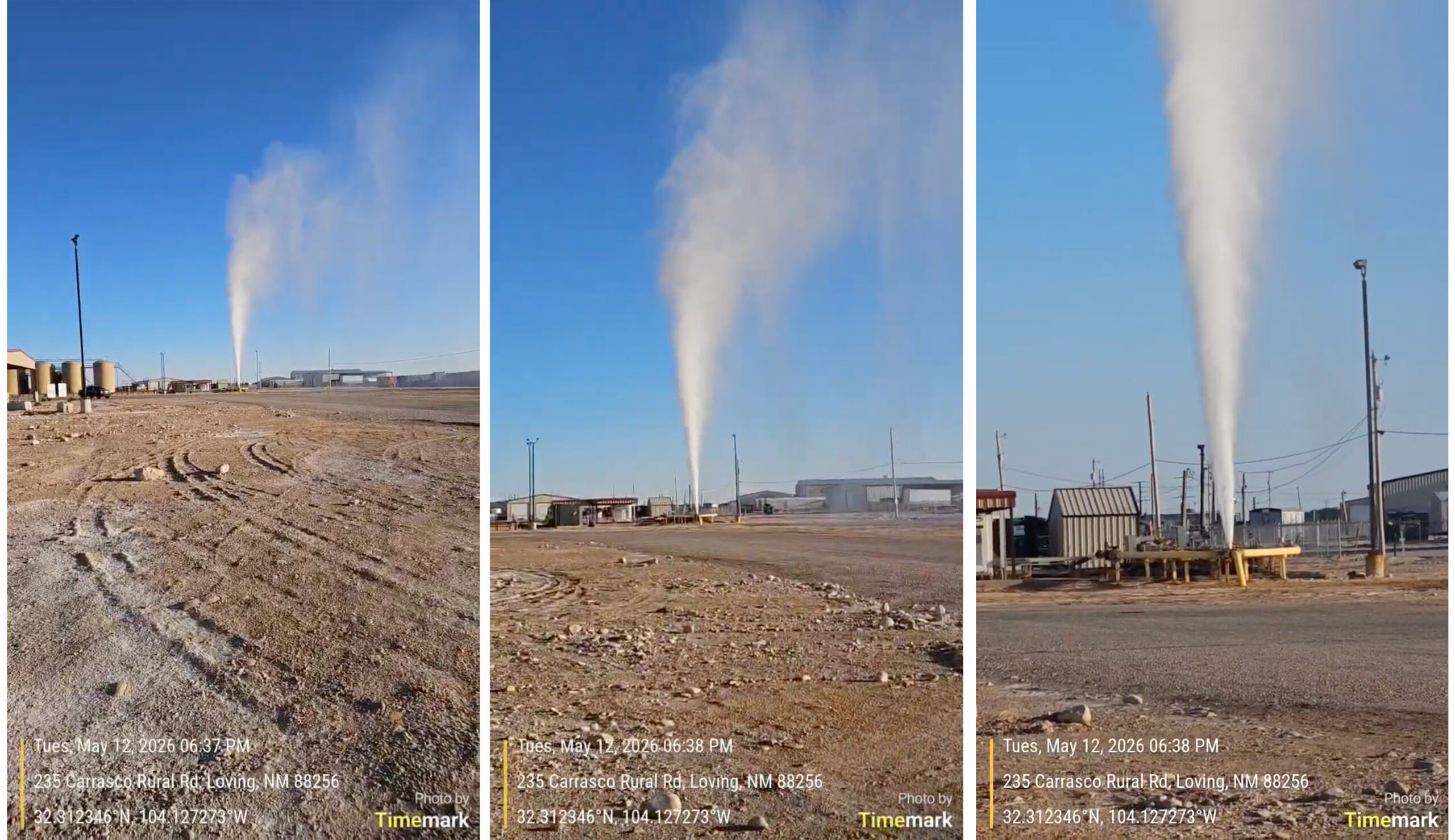
The sight of a 70-foot plume rising into the evening sky near the intersection of a bustling New Mexico highway would typically suggest a brush fire or a localized industrial accident involving smoke. For Jackie Onsurez, a local resident and engineer driving between Loving and Carlsbad on a Tuesday evening, the visual was initially deceptive. As he drew closer to the site operated by NGL Energy Partners, the reality became clear: the towering column was not smoke, but a roaring geyser of high-pressure, toxic oilfield wastewater.
This incident, while relatively small in terms of the total volume of fluid released compared to other industrial accidents, has become a potent symbol of the escalating crisis surrounding "produced water" in the Permian Basin. As New Mexico’s oil production reaches record highs, the state is grappling with the staggering quantities of contaminated water that accompany every barrel of crude oil brought to the surface. The geyser near Loving serves as a vivid reminder of the infrastructure strain, environmental risks, and regulatory battles defining the future of the American Southwest’s energy landscape.
Chronology of the Blowout and Emergency Response
The incident began when a one-inch nipple—a small but critical pipe fitting—failed on a high-pressure water injection line. According to official reports filed with the New Mexico Oil Conservation Division (OCD), the pipeline was charged to a staggering 2,600 pounds per square inch (psi). The resulting breach sent a vertical jet of briny, contaminated water approximately 70 feet into the air.
Jackie Onsurez, who serves on the New Mexico State Emergency Response Commission, arrived at the scene shortly after the failure. His presence was a matter of serendipity; only a day prior, he had attended a commission meeting specifically focused on hazardous materials spills. Onsurez immediately contacted 911, the New Mexico Environment Department, and NGL Energy Partners.
The initial response highlighted the chaotic nature of oilfield accidents. A roughneck arrived at the site in a pickup truck shortly after Onsurez but was unable to arrest the flow. Recognizing the potential for hazardous gas emissions—a common byproduct of oilfield fluids—the worker urged Onsurez to evacuate the immediate vicinity. "Get out of here. There’s gas coming out. I don’t know what’s there," the worker reportedly shouted before departing to seek further assistance.
Within minutes, the local fire department arrived and established a safety perimeter. Representatives from NGL Energy Partners reached the site shortly thereafter and managed to shut off the flow. By the time the geyser was neutralized, Onsurez had been observing the site for roughly 30 minutes, though it remains unclear how long the pipe had been spewing before his arrival.
Environmental Impact and Local Concerns
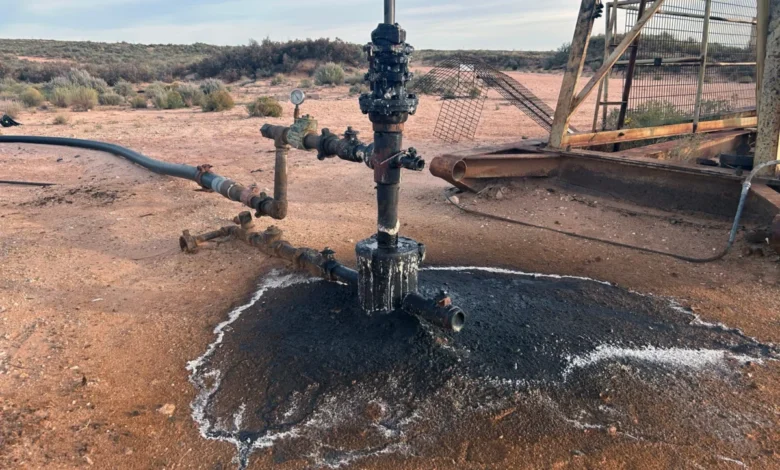
The immediate aftermath of the spill saw contaminated water flowing across the roadway and into a nearby drainage ditch. This posed a direct threat to the local agricultural infrastructure. Onsurez alerted Alisa Ogden, a farmer, rancher, and member of the Carlsbad Soil and Water Conservation District, fearing the toxic brine would infiltrate the local "acequias"—the traditional communal irrigation systems that have sustained New Mexico’s agriculture for centuries.
NGL Energy Partners reported that approximately 40 barrels of produced water escaped during the incident. While the company recovered 10 barrels, the remaining 30 flowed into the drainage ditch. Although 30 barrels (roughly 1,260 gallons) is a modest amount in industrial terms, the high salinity and chemical complexity of the fluid make even small spills a significant concern for soil health and groundwater purity.
Ogden noted that NGL has taken responsibility for the cleanup and is cooperating with the Carlsbad Soil and Water Conservation District. "Accidents do happen," Ogden stated, emphasizing that the industry’s reaction to such failures is as important as the prevention measures themselves. Soil samples have been collected from the affected ditch, and a comprehensive remediation plan is expected once the laboratory results are finalized.
The Chemistry of Toxic Brine: What is Produced Water?
To understand the severity of the Loving geyser, one must understand the nature of "produced water." It is not merely water used in the drilling process; it is a byproduct that occurs naturally within oil and gas formations. When oil is extracted, this ancient water comes with it, often in ratios of four or five barrels of water for every single barrel of oil.
Produced water is characterized by extreme salinity—often several times saltier than seawater—making it lethal to most vegetation and corrosive to infrastructure. However, the salt is only one component of a toxic cocktail that frequently includes:
- Petroleum hydrocarbons: Residual oil, benzene, and other volatile organic compounds.
- Heavy metals: Lead, arsenic, and cadmium.
- Naturally Occurring Radioactive Materials (NORM): Radium isotopes that are brought up from deep underground.
- Fracking Chemicals: A proprietary blend of friction reducers, biocides, and surfactants injected during the hydraulic fracturing process.
A significant point of contention in New Mexico is the "trade secret" status of many fracking fluids. Because companies are not always required to disclose the exact chemical makeup of their injection cocktails, emergency responders and environmental scientists often operate in the dark when assessing the risks of a spill. Tannis Fox, senior attorney at the Western Environmental Law Center, points out that this lack of transparency complicates the medical and environmental response to incidents like the Loving blowout.
Statistical Overview: A Growing Deluge
The geyser at Loving is a symptom of a much larger logistical nightmare. In 2025, New Mexico oil producers extracted more than 800 million barrels of oil. To achieve this, they also brought up a staggering 2.7 billion barrels of wastewater. This volume has doubled since 2020, tracking the aggressive expansion of the Permian Basin.
The sheer frequency of spills is a matter of public record. Between January 1 and May 19 of the current year, 48 different companies reported a total of 356 spills in New Mexico, resulting in the loss of 15,335 barrels of wastewater. While the NGL incident gained attention due to its visual drama, it was far from the largest. In January, Hilcorp Energy Company reported a 2,000-barrel spill near a residential neighborhood in Farmington. Devon Energy Corporation currently leads the state in incident frequency, reporting 93 wastewater spills in the first five months of the year, compared to just three for NGL.
The Infrastructure Crisis: Injection Wells and Earthquakes
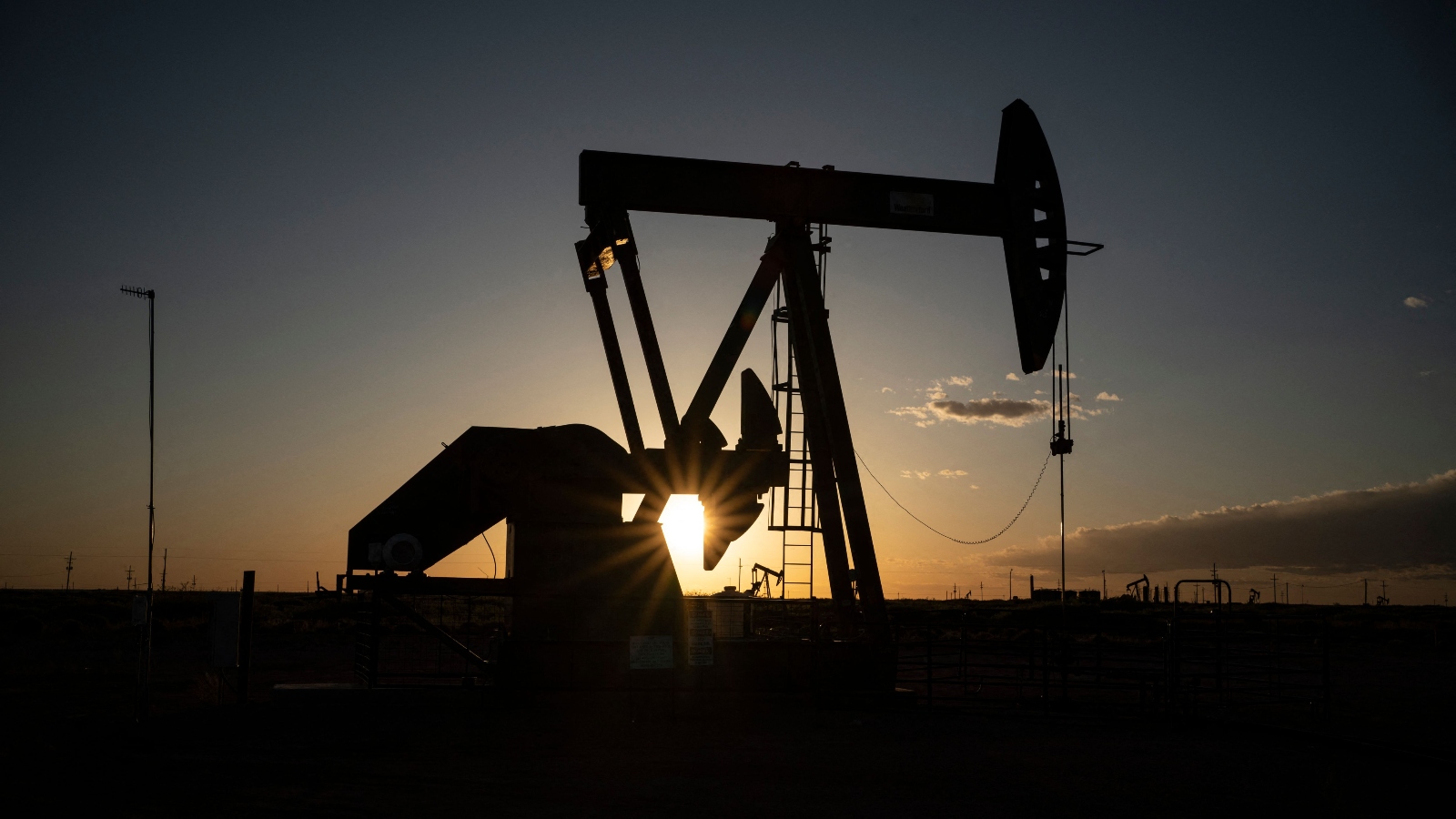
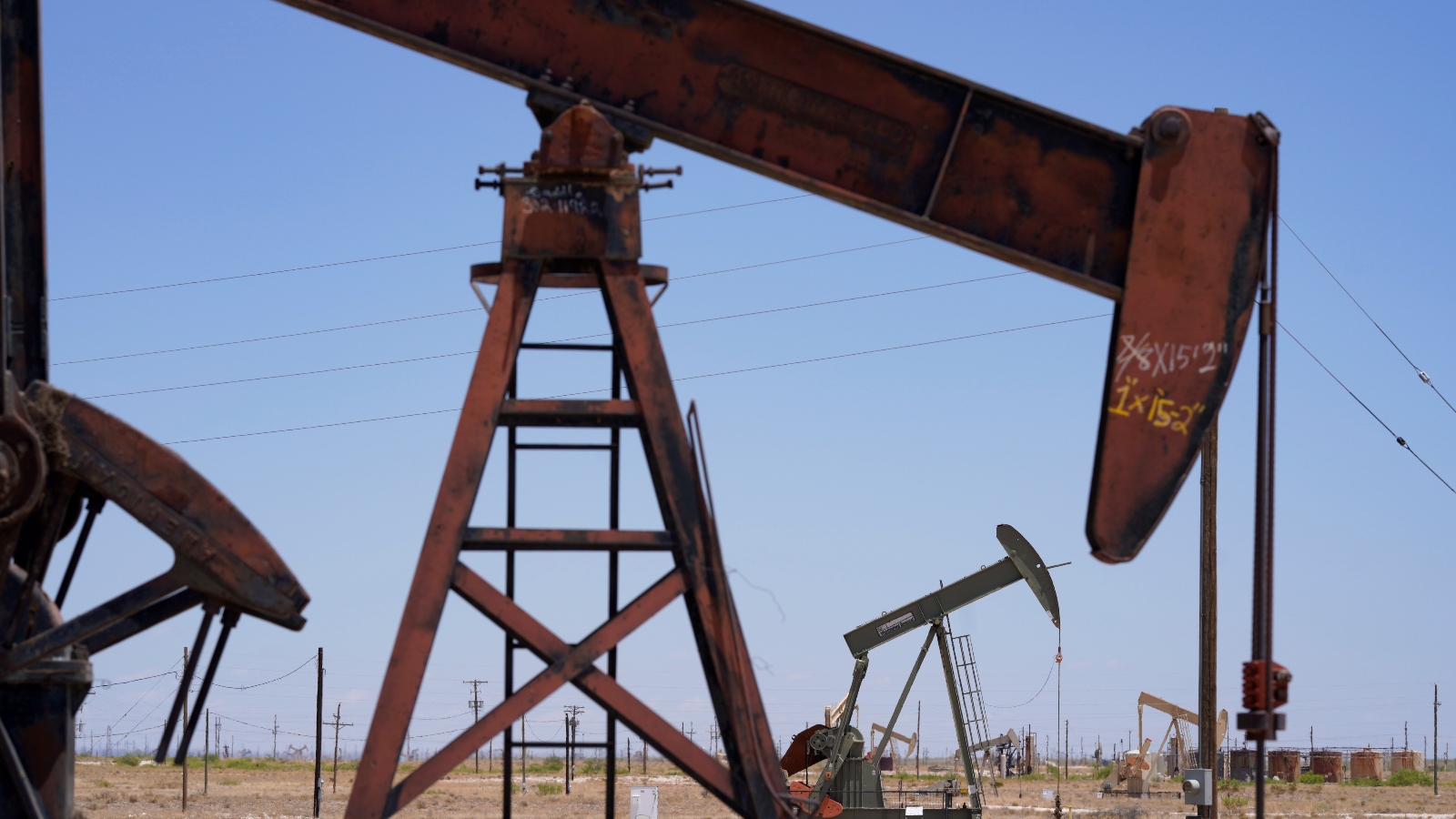
The primary method for disposing of this vast ocean of toxic water is "deep well injection." Companies like NGL Energy Partners—which identifies itself as the largest independent wastewater disposer in the U.S., handling nearly a billion barrels annually—pump the water back into deep geologic formations under intense pressure.
However, the Permian Basin is reaching a geological breaking point. The rock formations are filling up, and the extreme pressure is causing the earth to shift. This has led to a documented surge in "induced seismicity"—earthquakes caused by human activity. Regions of West Texas and Southeast New Mexico that were historically geologically stable now experience frequent tremors, some exceeding magnitude 4.0.
Furthermore, the high-pressure environment has led to "communication" between formations, where wastewater injected into one area forces its way into old, abandoned, or improperly plugged wells. This phenomenon has caused "zombie wells" to begin spewing brine and oil, creating environmental hazards in areas where drilling ceased decades ago. The 2,600 psi pressure reported in the NGL line failure is indicative of the mechanical stress required to force water into these increasingly saturated formations.
The Regulatory Battle: "Beneficial Reuse" vs. Public Safety
As the state runs out of room to hide its wastewater underground, a fierce debate has emerged over "beneficial reuse." The industry-led Water, Access, Treatment and Reuse (WATER) Alliance is currently petitioning the New Mexico Water Quality Control Commission to allow treated produced water to be used outside the oilfield.
Proponents, such as WATER Alliance co-founder Matthias Sayer, argue that with advanced treatment technologies, this wastewater could become a new resource for a drought-stricken state. They suggest it could be used for industrial processes, road construction, or even discharged into surface waters if cleaned to high enough standards. "The question is not whether it can be done, but how to craft a rule that appropriately manages the risk," Sayer argues.

Opponents, including environmental groups and some agricultural advocates, remain deeply skeptical. They argue that the science of cleaning produced water is not yet proven at an industrial scale and that the risks of introducing "forever chemicals" or radioactive isotopes into the water cycle are too great. Tannis Fox of the Western Environmental Law Center emphasizes that reuse is not a "silver bullet" for water scarcity, noting that the world does not yet have a comprehensive understanding of how to reliably remove the myriad of unknown chemicals found in the brine.
The political stakes are high. Governor Michelle Lujan Grisham has previously faced criticism for allegedly pressuring regulators to ease restrictions on wastewater reuse, viewing it as a potential solution to the state’s long-term water needs.
Broader Implications and Future Outlook
The 70-foot geyser near Loving was eventually silenced, and the 30 barrels of water in the ditch will eventually be remediated. However, the incident highlights a fundamental tension in New Mexico’s economy. The state is heavily dependent on oil and gas revenues to fund its schools, infrastructure, and social programs, yet the environmental cost of that production is becoming increasingly difficult to manage.
As production continues to climb, the volume of wastewater will only grow. The infrastructure—pipes, nipples, valves, and injection wells—will continue to age and operate under extreme pressures. Without a consensus on how to safely manage, treat, or dispose of the billions of barrels of produced water, New Mexico faces a future where dramatic blowouts like the one witnessed by Jackie Onsurez may transition from rare accidents to routine occurrences.
The investigation into NGL’s past compliance, including a leaked pump found by state inspectors in December 2024, suggests that oversight remains a challenge for state agencies. As the New Mexico Oil Conservation Division and the Water Quality Control Commission weigh new rules, the Loving geyser remains a stark, vertical reminder that the oil boom comes with a heavy, briny, and toxic price.