Trump Administration Rollback of Refrigerant Regulations Sparks Debate Over Grocery Inflation and Climate Goals



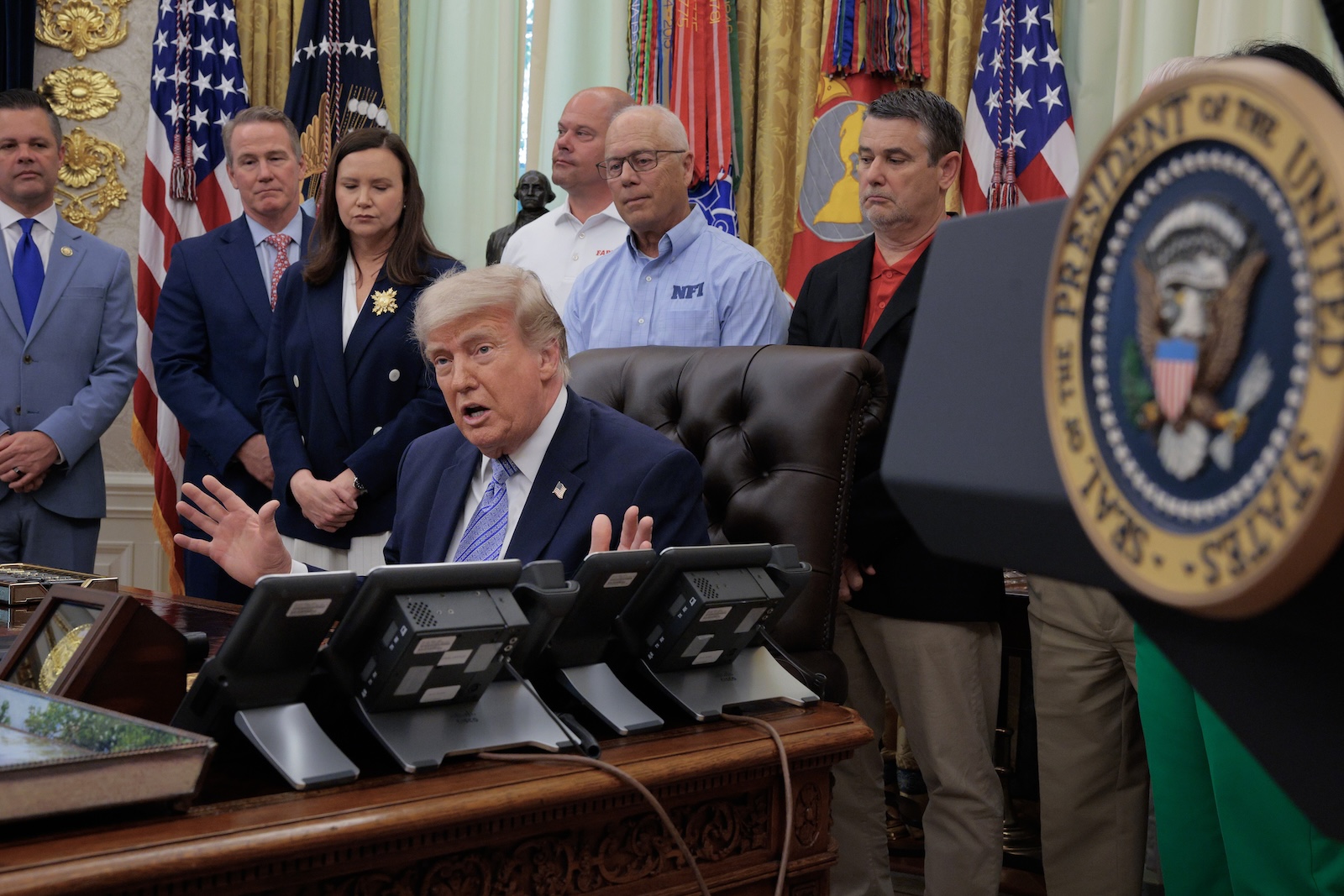
In a significant shift of environmental policy, the Trump administration has announced a sweeping rollback of federal regulations targeting hydrofluorocarbons (HFCs), a move the White House claims will lower grocery prices but which economists and industry leaders warn could destabilize the cooling sector and exacerbate long-term food costs. During a press conference at the White House last month, President Donald Trump, flanked by Environmental Protection Agency (EPA) Administrator Lee Zeldin and executives from several of the nation’s largest grocery chains, detailed plans to loosen two pivotal EPA rules governing refrigerants. The decision marks a stark reversal for the President, who nearly six years ago signed the bipartisan American Innovation and Manufacturing (AIM) Act, which was designed to phase out these potent greenhouse gases.
The new administrative directives delay the deadlines for grocery stores and air-conditioning manufacturers to transition toward climate-friendly alternatives and grant transport companies an exemption from repairing HFC leaks in commercial refrigeration equipment. President Trump framed the move as a direct intervention to provide relief to American families struggling with the high cost of living. He estimated that the reforms would save U.S. businesses and consumers approximately $2.4 billion, asserting that the deregulatory effort would have "no detriment" to the country’s environmental standing while effectively lowering supermarket bills and transportation costs. However, the announcement has met with immediate skepticism from economic experts, environmental advocates, and even segments of the manufacturing industry that have already invested billions into the transition.
The Evolution of HFC Regulation: From Bipartisan Support to Reversal
To understand the weight of the current policy shift, it is necessary to examine the history of HFC regulation in the United States. Hydrofluorocarbons were originally introduced as a replacement for ozone-depleting substances like chlorofluorocarbons (CFCs). While HFCs do not damage the ozone layer, they are "super pollutants" with a global warming potential (GWP) hundreds to thousands of times greater than that of carbon dioxide. Because they are used extensively in air conditioning, refrigeration, and insulating foams, their prevalence has grown alongside global urbanization.
In late 2020, during the final weeks of his first term, President Trump signed the AIM Act into law as part of a broader year-end legislative package. The act was notable for its broad bipartisan support, backed by both environmental groups and major U.S. chemical manufacturers like Honeywell and Chemours. At the time, the manufacturing sector argued that a clear federal phase-out schedule would allow American companies to lead the global market in producing next-generation refrigerants, such as hydrofluoroolefins (HFOs).
Following the passage of the AIM Act, the EPA under the Biden administration moved to implement a series of rules aimed at reducing HFC production and consumption by 85 percent by 2036. This timeline was designed to align the United States with the Kigali Amendment to the Montreal Protocol, an international treaty ratified by the U.S. Senate in 2022. The Biden-era rules focused on "technology transitions," setting specific dates by which new equipment—ranging from residential heat pumps to massive supermarket cooling racks—must use refrigerants with lower global warming potential.
The Trump administration’s recent reversal targets these very implementation mechanics. By extending deadlines and removing leak-repair mandates for the transport sector, the administration is effectively slowing the momentum of a transition that was already well underway.
The Economic Debate: Grocery Prices vs. Market Reality
The central pillar of the administration’s argument is that environmental regulations act as a hidden tax on the food supply chain. President Trump stated that by relaxing these rules, the "American people have lower grocery prices" and "cheaper transportation of goods." This sentiment was echoed by grocery trade groups, who have long argued that the capital expenditure required to overhaul refrigeration systems in thousands of stores is a burden that eventually reaches the consumer.
However, many economists argue that the connection between refrigerant costs and the price of a gallon of milk is tenuous at best. Chris Barrett, an agricultural economist at Cornell University, suggests that the administration’s claims do not hold up under mathematical scrutiny. According to the U.S. Department of Agriculture’s (USDA) Food Dollar data, which tracks how every dollar spent on food is distributed, the combined costs of retail, transport, storage, and energy account for roughly 20 percent of a consumer’s grocery bill. Within that 20 percent, the cost of refrigerants and the maintenance of cooling systems represent a minuscule fraction.
"We’re talking about a maximum reduction of maybe a single percentage point in a grocery bill, and even that is being generous," Barrett noted. "For a family spending $200 a week on groceries, this might save them a dollar or two at the absolute maximum. It is a drop in the bucket compared to the primary drivers of food inflation."
Furthermore, an internal assessment from the EPA itself, conducted prior to the announcement, suggested that the rule changes could inadvertently raise costs. By delaying the transition, the administration may create a "supply and demand mismatch." As the global production of older HFCs continues to drop in accordance with international treaties, the cost of those legacy chemicals is expected to skyrocket. Businesses that delay upgrading their equipment may find themselves trapped, paying premium prices for increasingly scarce older refrigerants to service leaky, inefficient systems.
Industry Disruption and the Cost of Uncertainty
The rollback has also created an unusual rift within the private sector. While grocery retailers have generally welcomed the delay, the HVAC and chemical manufacturing industries have reacted with concern. Over the last several years, American companies have invested billions of dollars in research, development, and the retooling of factories to produce HFOs and other low-GWP alternatives.
Trade organizations such as the Air-Conditioning, Heating, and Refrigeration Institute (AHRI) and the Alliance for Responsible Atmospheric Policy have previously emphasized that the industry needs regulatory certainty to protect these investments. Many manufacturers have already phased out older product lines. A sudden shift in federal requirements creates a "stranded asset" problem, where companies that followed the previous law now face competition from entities that can continue to use cheaper, older, and more environmentally damaging technology.
"The industry was already 90 percent of the way there in terms of residential and light commercial equipment," said Joseph Goffman, a former EPA official. "To move the goalposts now doesn’t just stall environmental progress; it punishes the companies that played by the rules and invested in American innovation."
The exemption for transport refrigeration is particularly controversial. Commercial transport units are notorious for high leak rates due to the vibration and harsh conditions of long-haul trucking. The EPA has estimated that supermarket systems alone leak an average of 25 percent of their refrigerant volume annually. By removing the requirement for transport companies to repair these leaks, the administration is allowing a significant volume of "super pollutants" to enter the atmosphere unchecked.
Environmental Consequences and the Feedback Loop of Food Prices
The environmental impact of the rollback is substantial. HFCs are considered "short-lived climate pollutants," meaning they do not stay in the atmosphere as long as carbon dioxide, but their heat-trapping ability is immense during their lifespan. The Kigali Amendment, which the U.S. is still technically a party to, aims to prevent up to 0.5 degrees Celsius of global warming by the end of the century.

Recent data suggests that loosening the national phase-out deadlines could increase U.S. emissions by 68 million metric tons of CO2 equivalent by 2050. Critics of the rollback point out a profound irony: by contributing to global warming, the administration may be indirectly driving up the very grocery prices it claims to be lowering.
Agricultural productivity is highly sensitive to climate volatility. In recent years, extreme weather events—ranging from prolonged droughts in the American West to unseasonable floods in the Midwest—have decimated cattle herds and upended growing seasons for staples like wheat and corn. Skyrocketing beef prices, for instance, have been largely attributed to heat-driven supply shortages.
"Climate change is a predictable driver of supply contraction," Barrett explained. "If these rule changes aggravate climate change and lead to more frequent extreme weather, the resulting hit to agricultural productivity will increase grocery prices far more than any savings from cheaper refrigerants could ever offset."
Analysis of Future Implications
The Trump administration’s move represents a broader philosophy of "energy and regulatory dominance," prioritizing immediate industrial cost-cutting over long-term environmental targets. However, the legal and international ramifications remain unclear. Since the AIM Act remains the law of the land, the administration’s attempt to weaken the rules through executive action and EPA rulemaking may face significant challenges in federal court.
For the global community, the U.S. reversal sends a confusing signal. As other nations move forward with the Kigali Amendment, the U.S. risks losing its competitive edge in the green-tech market. If American manufacturers are not incentivized to produce the world’s cleanest cooling technology, that market share may be ceded to international competitors in Europe and Asia.
In the short term, the "grocery-price theater"—as some critics have labeled it—may provide a political talking point during an era of high inflation. But for the average consumer, the reality of the supermarket checkout line is unlikely to change. As the cooling industry grapples with a fragmented regulatory landscape and the planet continues to warm, the true cost of HFCs may eventually be measured not in business savings, but in the increasing fragility of the global food system.