India’s Skyroot Aerospace Achieves Historic First Orbital Launch with Vikram-1 Rocket, Ushering in a New Era for Commercial Space.

Indian space officials erupted in celebration Saturday as Skyroot Aerospace successfully debuted its Vikram-1 rocket, marking India’s first fully commercial satellite launcher to achieve orbit. The "grand success" saw the rocket deliver its payloads into a precise 280-mile-high orbit following a liftoff from the Satish Dhawan Space Centre on Sriharikota Island, a critical milestone for India’s burgeoning private space sector. This achievement not only validates Skyroot Aerospace’s capabilities but also underscores India’s strategic push to liberalize and expand its footprint in the global commercial space market, transforming a historically government-dominated industry into a vibrant ecosystem of innovation and private enterprise.
A Flawless Ascent: The Vikram-1’s Maiden Flight
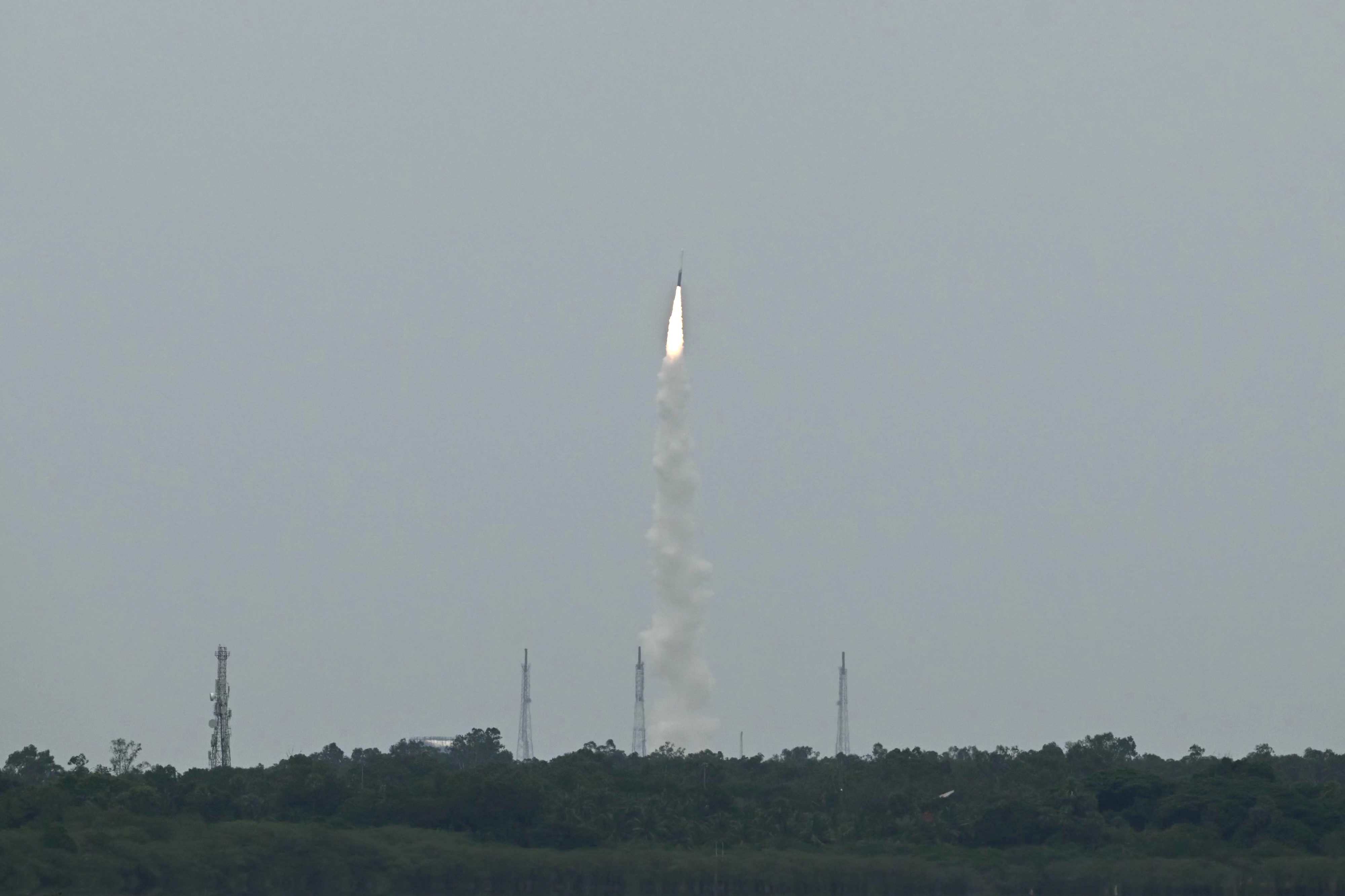
The Vikram-1 lifted off from India’s primary spaceport on Sriharikota Island at 1:35 am EDT (06:35 UTC) Saturday, corresponding to midday at the launch base situated along India’s southeast coast in the Bay of Bengal. The launch sequence, meticulously planned and executed, encountered a brief, nerve-wracking delay of over half an hour to resolve a last-minute technical issue. However, the countdown swiftly resumed, culminating in the powerful ignition of Vikram-1’s solid-fueled first-stage booster, propelling the rocket majestically off the launch pad and into the clear midday sky.
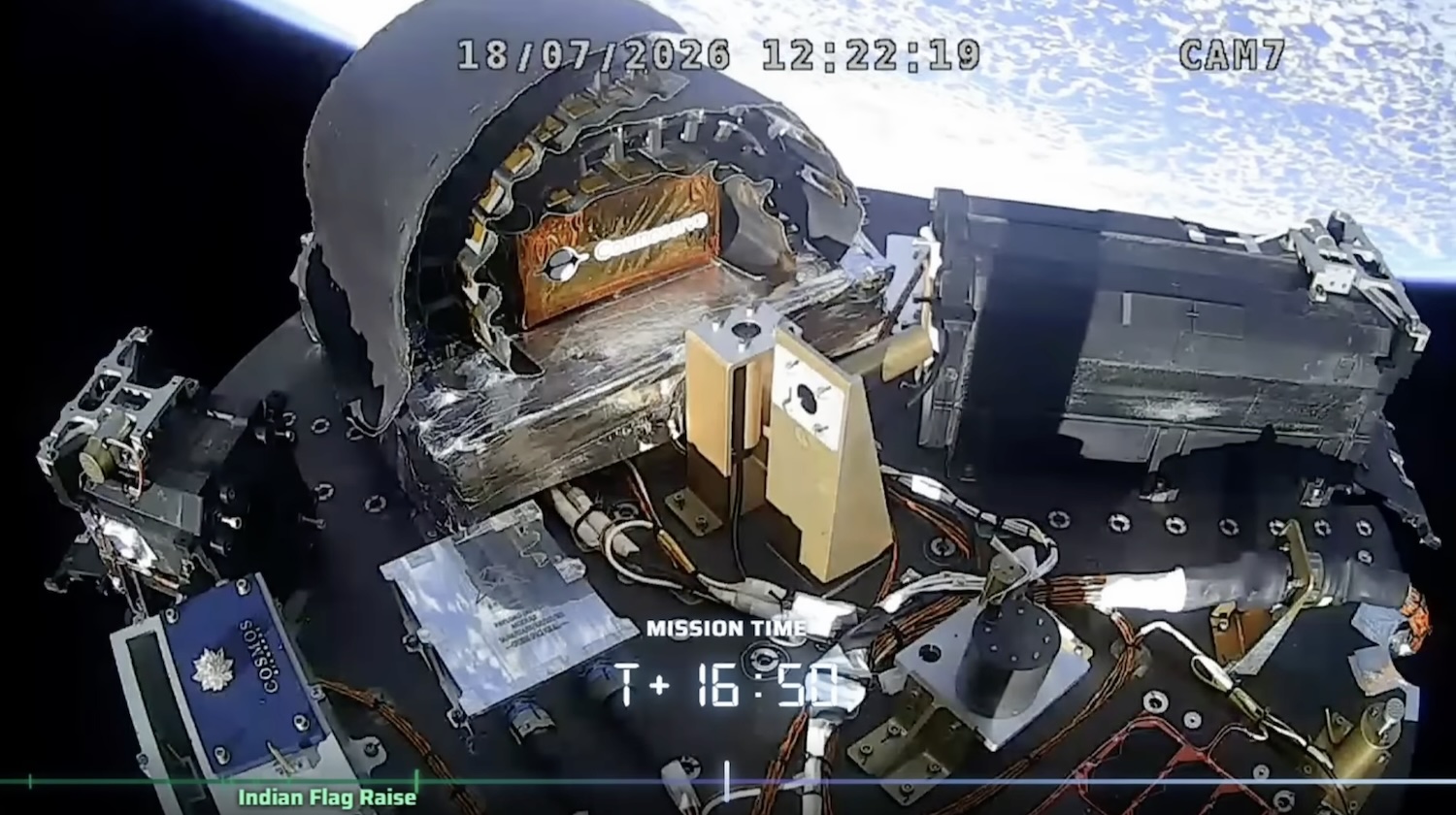
The 72-foot (22-meter) tall rocket, designed to place payloads of up to 770 pounds (350 kilograms) into low-Earth orbit, executed its flight plan with remarkable precision. The journey to space involved three solid-fueled rocket motors firing in succession, providing the initial thrust and velocity. Following this, a compact liquid-fueled fourth stage ignited, accelerating the vehicle to an impressive orbital velocity of approximately 17,000 mph (about 27,350 km/h). Onboard cameras relayed live views, showcasing each critical phase of the launch sequence, from engine ignition to stage separations, offering a dramatic narrative of the rocket’s journey.
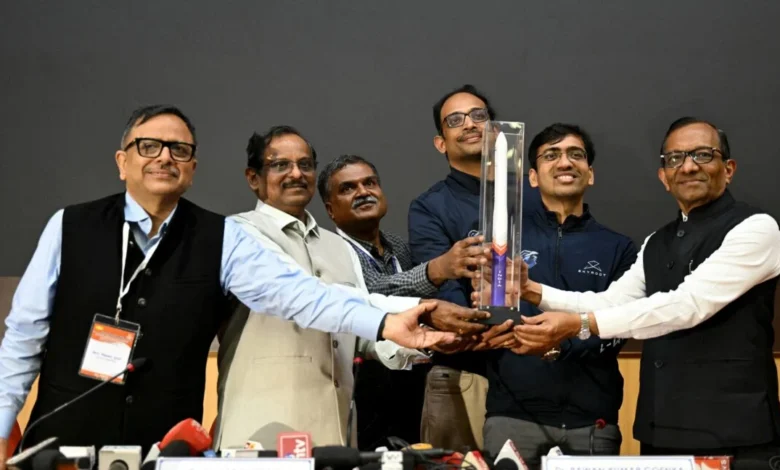
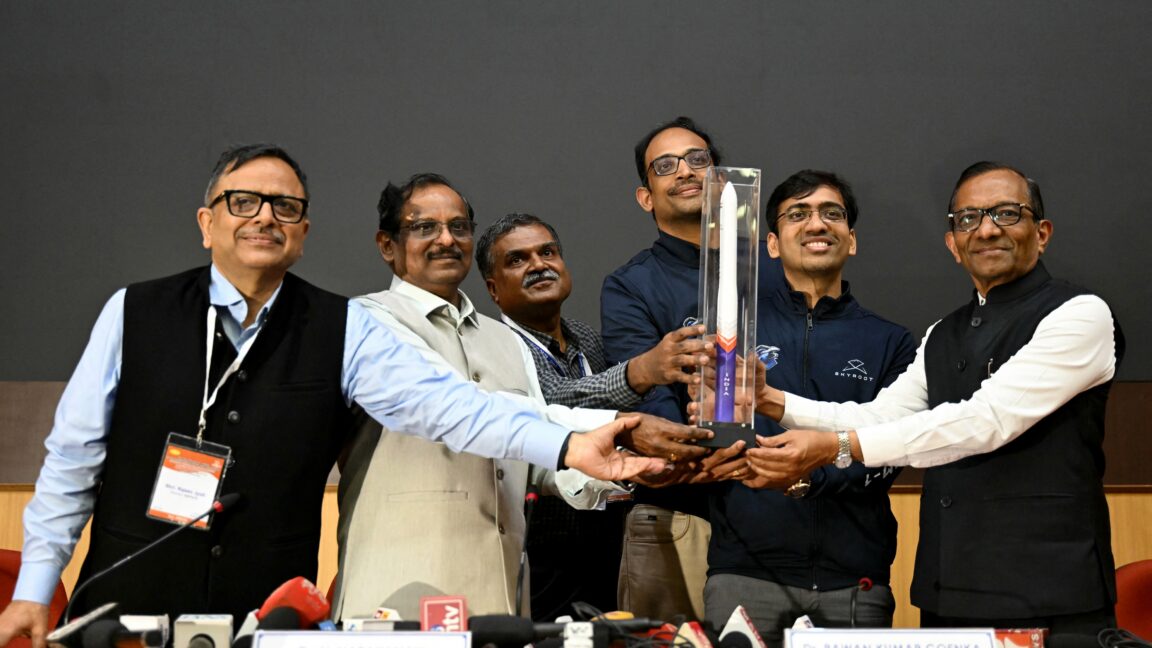
A minor anomaly was observed during the separation of the rocket’s third stage from its fourth stage, where the spent third-stage motor appeared to linger momentarily near the fourth stage rather than quickly backing away. Despite this, the fourth stage performed flawlessly, firing its advanced 3D-printed engine to achieve an orbit approximately 280 miles (450 kilometers) high with an inclination of 60 degrees to the equator. This trajectory was remarkably close to preflight predictions, a testament to Skyroot Aerospace’s engineering prowess. Crucially, independent US military tracking data subsequently confirmed the rocket’s successful arrival and deployment in orbit, solidifying the mission’s "grand success." V. Narayanan, chairman of the Indian Space Research Organization, and Pawan Kumar Chandana, CEO of Skyroot Aerospace, were seen celebrating with other senior Indian space officials, posing with a replica of the Vikram-1, encapsulating the jubilation of the moment.
Skyroot Aerospace: A Vision Forged in Innovation
Skyroot Aerospace, founded in 2018 by former ISRO engineers Pawan Kumar Chandana and Naga Bharath Daka, has rapidly emerged as a frontrunner in India’s burgeoning private space sector. The company’s strategic decision to initially focus on solid-fueled launchers was driven by the aim for the lowest development time and cost per launch, allowing them to achieve orbital capabilities within a few years. This calculated approach proved instrumental in their rapid ascent, culminating in Saturday’s historic launch.
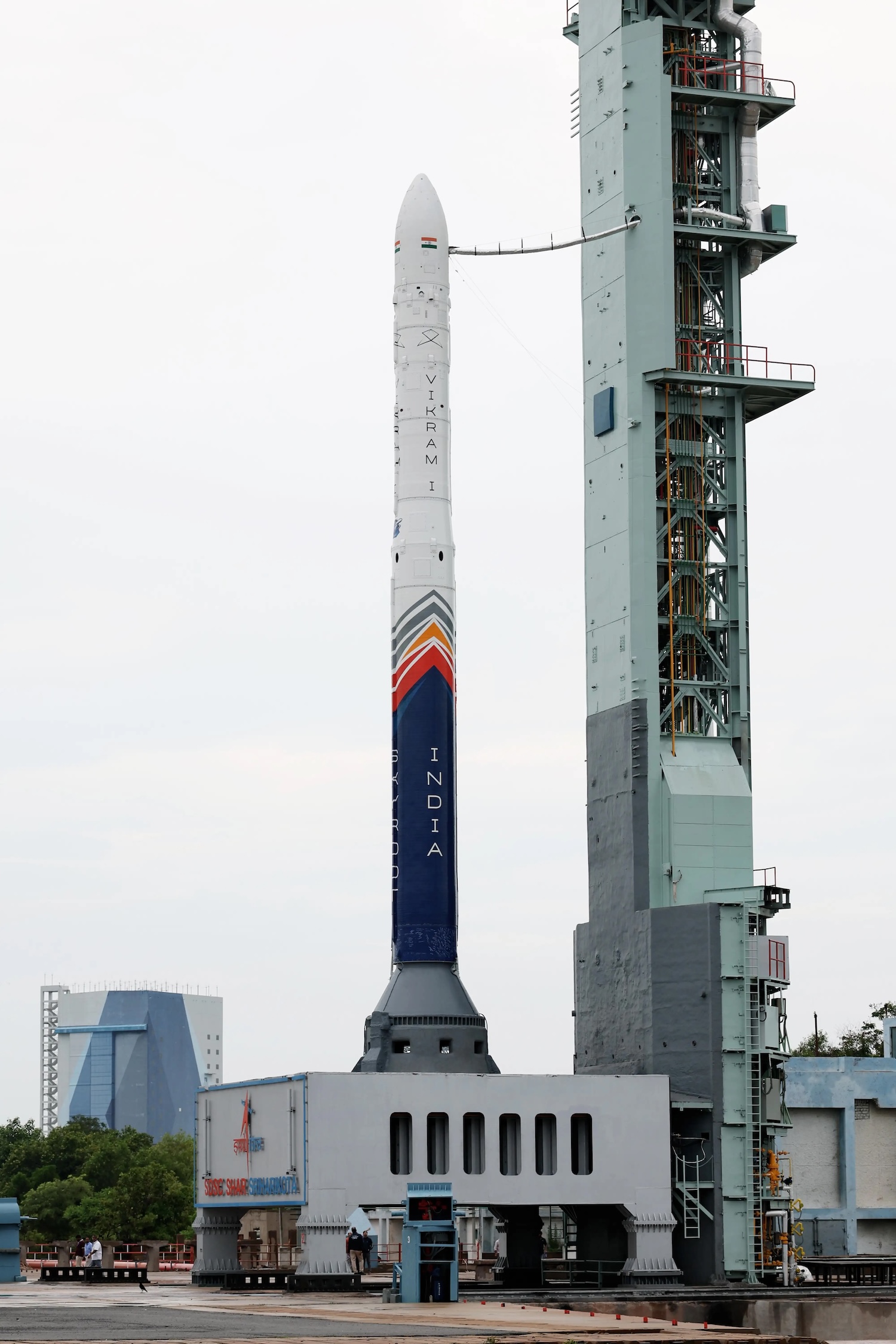
The Vikram-1 rocket, painted in a distinctive blue and white livery, is constructed from lightweight carbon composite materials, embodying modern aerospace engineering principles focused on efficiency and performance. It is named in honor of Dr. Vikram Sarabhai, widely regarded as the father of the Indian space program, a symbolic nod to the nation’s rich legacy in space exploration. Prior to this orbital triumph, Skyroot had successfully demonstrated its capabilities with the suborbital Vikram-S rocket, which soared to an altitude of nearly 300,000 feet (90 kilometers) in November 2022. This suborbital test flight provided invaluable data and experience, laying the groundwork for the more ambitious orbital mission of Vikram-1.
The company’s success has not gone unnoticed by investors, having secured approximately $160 million in capital to date, which has propelled its valuation to an impressive $1.1 billion, granting it coveted unicorn status. Skyroot Aerospace now boasts a workforce of over 1,000 employees, predominantly based at its headquarters in Hyderabad, with an average age of just 28 years old. This demographic highlights a vibrant, youthful, and innovative culture driving the company’s ambitious goals. CEO Pawan Kumar Chandana’s long-term vision extends beyond current capabilities, aspiring to develop larger liquid-fueled, fully reusable rockets capable of a "daily cadence" from multiple countries, signifying a profound ambition to revolutionize global access to space.
India’s Transformative Space Policy: Paving the Way for Private Players
The success of Vikram-1 is not merely a triumph for Skyroot Aerospace; it is a resounding endorsement of India’s far-sighted space policy reforms initiated by Prime Minister Narendra Modi’s government. Historically, India’s space program was almost exclusively the domain of the Indian Space Research Organization (ISRO), a globally respected agency responsible for numerous groundbreaking achievements, including the Polar Satellite Launch Vehicle (PSLV) and the larger Geosynchronous Satellite Launch Vehicle Mark III (LVM3) – both of which have successfully attracted commercial customers from around the world. ISRO’s accomplishments range from placing multiple satellites in orbit to achieving the remarkable feat of landing a spacecraft on the Moon in 2023 (Chandrayaan-3) and successfully sending a mission to Mars (Mangalyaan). The agency is also actively working on the Gaganyaan program, India’s ambitious human-rated crew capsule project to fly astronauts to low-Earth orbit.
Recognizing the immense potential of the private sector, the Indian government in 2020 ushered in a new era of space policy aimed at liberalizing and commercializing the industry. Key to this transformation was the establishment of the Indian National Space Promotion and Authorization Centre (IN-SPACe), a government organization specifically created to promote, authorize, and supervise private sector activities in space. Complementing this is NewSpace India Limited (NSIL), a public sector undertaking under the Department of Space, tasked with enabling Indian industries to take up high-technology manufacturing and to provide end-to-end launch and satellite services on a commercial basis.
This policy shift has fostered an ecosystem where private entities like Skyroot Aerospace can thrive. ISRO played a crucial role in supporting Skyroot’s venture, offering "handholding and support" by providing access to critical infrastructure such as solid rocket motor casting and test facilities. Furthermore, ISRO allowed Skyroot to launch Vikram-1 from one of its two active launch pads at the Satish Dhawan Space Centre, an invaluable resource for a budding private company. Pawan Goenka, chairman of IN-SPACe, underscored the government’s supportive role, stating, "The mission objective was only to lift off and clear the tower… but what we went to was 450 kilometers, and it also released all the satellites that were supposed to release. So the mission was absolutely perfect."
Prime Minister Modi has articulated an ambitious vision for India’s space sector, challenging the industry to dramatically increase its annual launch total from approximately five launches per year to an astonishing 50 before the end of the decade. This aggressive target reflects India’s aspiration to significantly expand its share of the global space economy, which is currently estimated at over $447 billion, with India aiming for a substantial portion, potentially 10-15%, by 2030. Following Saturday’s launch, the Prime Minister personally congratulated the Skyroot team, stating, "This is a defining moment in India’s space journey. The growing participation of our private sector is opening new frontiers and accelerating innovation. This achievement will encourage countless youngsters to dream bigger and innovate fearlessly."
Beating the Odds: A Testament to Engineering Prowess
The maiden flight of a new orbital-class rocket from a private company is fraught with inherent risks and historically low success rates. The annals of space history are replete with examples of initial failures from even the most prominent players. SpaceX, now a dominant force in space launch, famously took four attempts before its Falcon 1 rocket achieved orbit for the first time in 2008. Similarly, Rocket Lab’s Electron, a successful dedicated small satellite launcher, did not reach orbit on its inaugural flight in 2017. While Blue Origin’s heavy-lift New Glenn rocket successfully debuted in 2025, its engineers had the advantage of extensive experience from numerous launches of the smaller New Shepard suborbital rocket.
Against this backdrop, Skyroot Aerospace’s flawless orbital insertion on its very first attempt stands as an extraordinary achievement. Pawan Kumar Chandana himself admitted his astonishment, remarking, "On the first attempt, reaching orbit, I never thought it was possible. Skyroot’s team made it possible. A big, big, big shoutout to this phenomenal team, which made it happen. In fact, this launch was nothing short of a suspense movie." The company’s press kit had set humble objectives for the Vikram-1’s debut, primarily focusing on a successful liftoff, clearing the launch tower, and gathering maximum data during ascent. The fact that the mission not only achieved these basic goals but also flawlessly inserted payloads into the predicted orbit speaks volumes about the meticulous planning, rigorous testing, and exceptional engineering talent within Skyroot.
Future Trajectory: Skyroot’s Roadmap and Global Implications
The success of Vikram-1 is merely the first chapter in Skyroot Aerospace’s ambitious roadmap. The company plans to evolve its Vikram rocket family to cater to a wider range of payload requirements. The Vikram-1U is slated to feature additional strap-on solid rocket boosters, enhancing its capacity to haul heavier payloads. Looking further ahead, the Vikram-2 will introduce a cryogenic upper stage, significantly boosting its payload capability to 2,000 pounds (900 kilograms) to low-Earth orbit. The core purpose of the Vikram rocket family, as articulated by Skyroot officials, is to "deliver dedicated and responsive launch services for small satellites," addressing a rapidly growing segment of the global space market.

Chandana revealed in an earlier interview his ultimate aspiration for Skyroot to develop larger liquid-fueled, fully reusable rockets, capable of achieving a "daily cadence" from multiple countries. While realizing this dream will undoubtedly require substantial additional funding, Saturday’s launch has unequivocally demonstrated that Skyroot possesses the fundamental ingredients for a successful launch company: robust technology, a skilled team, and a proven track record. This achievement has elevated Skyroot Aerospace to a prominent position among space startups globally, arguably surpassing any other private space venture outside of the United States and China.
The breakthrough launch holds significant implications for the global space sector. It intensifies competition in the small-satellite launch market, offering customers another reliable and potentially cost-effective option. For India, it dramatically enhances its standing as a major player in commercial space, complementing ISRO’s long-standing achievements with a dynamic private sector. This success is expected to attract further domestic and international investment into India’s burgeoning NewSpace ecosystem, fostering more innovation and job creation.
As Chandana proudly declared after the launch, "This is a 100 percent designed in India rocket, a 100 percent made in India rocket, built by 100 percent Indian people, for India and for the world. This was a historic moment for India, but also a very proud moment for the global space sector because the world needs more access to space." Indeed, Skyroot Aerospace’s Vikram-1 has not only made history for India but has also contributed significantly to expanding humanity’s access to the cosmos, setting a precedent for what private enterprise can achieve in a supportive national framework. A second Vikram-1 launch could happen before the end of the year, signaling the rapid pace at which India’s private space industry is poised to expand its operations and influence.