Trump Drastically Reduces Utah National Monuments Rescinding Protections for Millions of Acres of Public Land

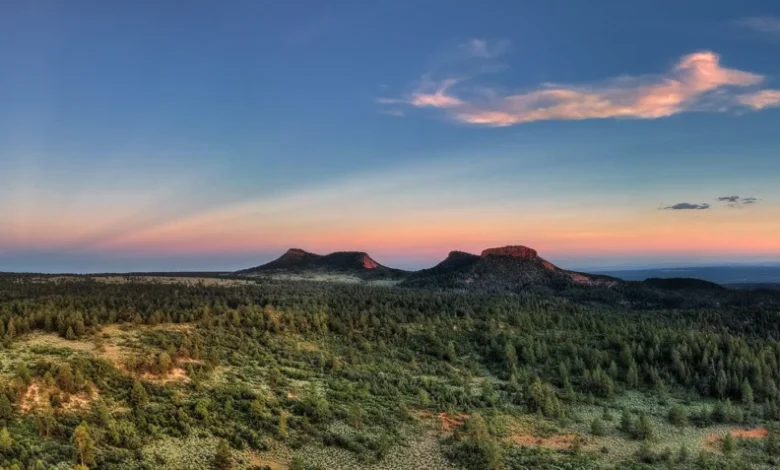
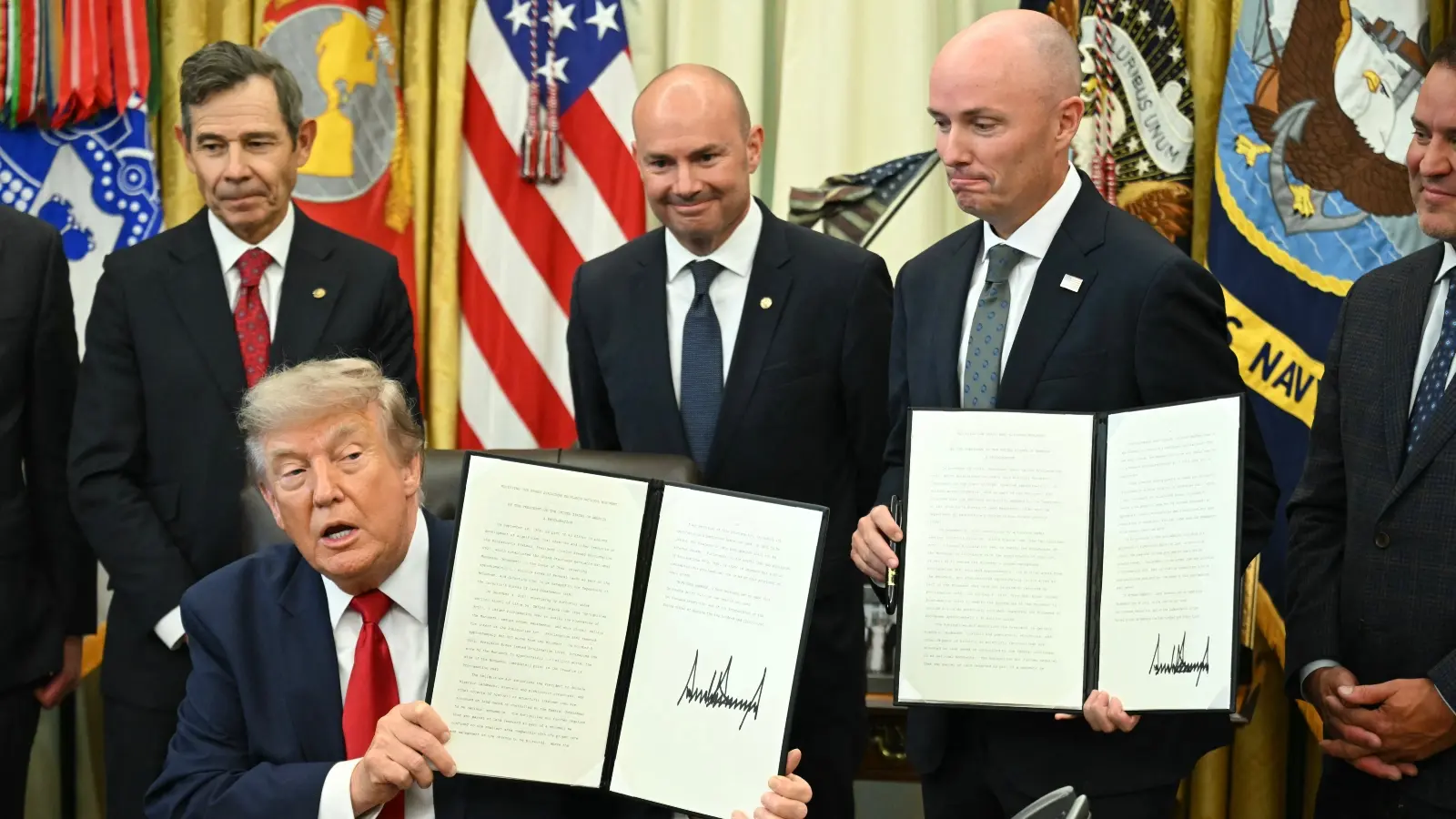
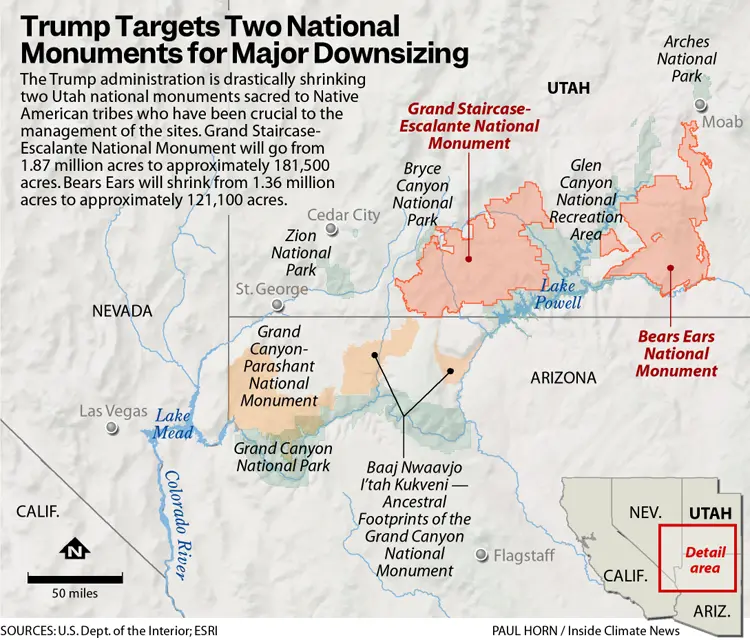
In a move that has reignited one of the most contentious battles over federal land management in American history, President Donald Trump signed two executive orders on Monday that effectively gutted the Bears Ears and Grand Staircase-Escalante National Monuments in southern Utah. The actions reduced the combined protected area from more than 3.2 million acres to just 302,600 acres, a reduction of approximately 90 percent. The decision marks a dramatic escalation of the administration’s efforts to prioritize resource extraction and local state control over federal conservation and tribal co-stewardship.
The executive orders represent the second time the Trump administration has moved to shrink these specific monuments, following a 2017 effort that was later reversed by President Joe Biden in 2021. However, the scope of Monday’s reductions is significantly more aggressive than the previous attempt. In 2017, Bears Ears was reduced by 85 percent and Grand Staircase-Escalante by nearly 50 percent. This latest action leaves both monuments at less than a quarter of the size they were even after the 2017 cuts, leaving vast swathes of high-desert wilderness and thousands of archaeological sites without federal protection from mining, drilling, and grazing.
The Justification for Reduction and the Extraction Agenda
Flanked by Utah’s Republican leadership during the signing ceremony, President Trump framed the decision as a restoration of rights to the people of Utah. He argued that the expansive monument designations made it "virtually impossible" for citizens to hunt, fish, or even traverse the land. "For too long, the federal government has overreached, locking up millions of acres of land under the guise of protection," the President stated.
Fact-checkers and land management experts have consistently challenged these claims. National monument status typically preserves existing rights for hunting and fishing, and both Bears Ears and Grand Staircase-Escalante remained open to the public for recreation under previous administrations. Instead, the primary restrictions imposed by monument status concern "new" claims for mineral extraction, such as oil and gas leasing or hard-rock mining.
The executive orders explicitly state that the new boundaries are designed to align with the administration’s goals for energy independence and economic growth. By removing these lands from the National Landscape Conservation System, the administration clears the path for private companies to stake claims on deposits of coal, uranium, oil, and gas. The Kaiparowits Plateau within Grand Staircase-Escalante, for instance, is known to contain one of the largest coal deposits in the United States, while the areas surrounding Bears Ears are rich in uranium—a mineral of increasing interest as the global demand for nuclear energy fluctuates.
A History of Conflict: The Chronology of Utah’s Monuments
The conflict over these lands dates back decades, reflecting a deep-seated philosophical divide over the Antiquities Act of 1906. This landmark legislation granted U.S. presidents the authority to designate federal lands as national monuments to protect "historic landmarks, historic and prehistoric structures, and other objects of historic or scientific interest."
1996: President Bill Clinton established the Grand Staircase-Escalante National Monument, protecting 1.9 million acres. The move was met with fierce opposition from Utah politicians who viewed it as a "land grab."
2016: In the final days of his presidency, Barack Obama designated 1.35 million acres as Bears Ears National Monument, following years of advocacy from a coalition of five Native American tribes.
2017: President Trump signed proclamations to shrink Bears Ears to 228,000 acres and Grand Staircase-Escalante to 1 million acres. This sparked a wave of lawsuits from environmental groups and tribal nations.
2021: President Joe Biden issued an executive order restoring both monuments to their original boundaries, citing the need to protect cultural heritage and biodiversity.
2024-2025: Legal challenges from the State of Utah moved through the federal court system, questioning the President’s authority under the Antiquities Act to create "oversized" monuments.
2026: The current executive orders take effect, reducing the monuments to their smallest footprints since their inception.
Tribal Sovereignty and the End of Co-Stewardship
Perhaps the most significant casualty of the new executive orders is the termination of the inter-tribal working group for Bears Ears. The monument was unique in American history as the first to be co-managed by the federal government and a coalition of tribes, including the Hopi, Navajo (Diné), Ute Indian Tribe, Ute Mountain Ute, and Zuni.
Tribal leaders expressed outrage on Tuesday, stating they were not consulted prior to the signing of the orders. Davina Smith-Idjesa, a member of the Navajo Nation and a prominent advocate for the monuments, described the decision as a profound betrayal. "Bears Ears is not a political talking point; it is home," Smith-Idjesa said during a press conference. "Our ancestors knew this land. It is our grocery store, our medicine cabinet, our classroom, and our church. You cannot draw a line through the landscape and tell us what remains is enough."
The dissolution of the co-stewardship agreement effectively removes Indigenous voices from the decision-making process regarding the protection of sacred sites, including ancient cliff dwellings, petroglyphs, and burial grounds. Critics argue that without federal monument protection, these sites are at heightened risk of vandalism and destruction from industrial activity.
Legal Precedent and the Antiquities Act
The legality of the President’s action remains a subject of intense debate among constitutional scholars. John Ruple, a law professor at the University of Utah, noted that while the Antiquities Act clearly gives the President the power to create monuments, it says nothing about the power to rescind or substantially diminish them.
"The law was intended to protect objects of interest. If a President can simply erase a monument with a pen, the protections are essentially meaningless," Ruple said. He suggested that the administration is likely banking on a favorable ruling from the current Supreme Court, which has shown an inclination toward limiting executive agency power and favoring state-level control.
The executive orders also come on the heels of a June 2026 decision by the 10th Circuit Court of Appeals, which revived a lawsuit by the State of Utah against the Biden administration’s previous restoration of the monuments. By shrinking the monuments now, the Trump administration may be attempting to render that ongoing litigation "moot," effectively resetting the legal clock in their favor.
Economic and Environmental Implications
The debate over the monuments often pits the "Old West" economy of extraction against the "New West" economy of recreation and tourism. Data from the Headwaters Economics group suggests that counties adjacent to national monuments often see increased property values and job growth in the service and outdoor recreation sectors.
However, the Trump administration argues that the "locking up" of resources stifles high-paying jobs in the mining and energy sectors. The removal of protections opens up roughly 2.7 million acres to potential development. Environmentalists warn that the ecological impact will be devastating. The region is home to a diverse array of wildlife, including desert bighorn sheep, peregrine falcons, and several endangered plant species. Furthermore, the high-desert soil is extremely fragile; once disturbed by heavy machinery or road construction, it can take centuries to recover.

National Reactions and Political Fallout
The response to the executive orders has fallen largely along party lines. Utah Governor Spencer Cox and the state’s congressional delegation praised the move, calling it a victory for "common sense" and "local voices." They have long argued that the original monument designations were an abuse of the Antiquities Act, which specifies that monuments should be limited to the "smallest area compatible with the proper care and management of the objects to be protected."
In contrast, Democratic members of Congress have vowed to fight the orders. Senator Ben Ray Luján of New Mexico emphasized that while the monuments are located in Utah, they are national assets. "These lands belong to all Americans," Luján said. "This is a trend of prioritizing corporate interests over the heritage of the American people."
Environmental organizations, including Earthjustice and the Wilderness Society, have already announced plans to file lawsuits to block the implementation of the orders, which are set to take effect in 60 days. Tracy Stone-Manning, president of the Wilderness Society, stated, "As our nation marks its 250th anniversary, these public lands should be handed down to future generations, not handed over to drilling and mining interests."
The Influence of Project 2025
Analysts point out that these executive orders align closely with "Project 2025," a comprehensive policy roadmap developed by the Heritage Foundation for the current administration. The document explicitly calls for the reduction of several national monuments and the potential repeal of the Antiquities Act itself.
The move in Utah is seen by many as a "test case" for a broader reclassification of federal lands across the Western United States. If the administration’s actions are upheld in court, it could set a precedent for the reduction of other monuments, such as the Chuckwalla in California or the Avi Kwa Ame in Nevada, fundamentally altering the landscape of American conservation for decades to come.
As the 60-day window before the orders take effect begins, the battle now moves from the Oval Office to the federal courts. For the tribal nations and conservationists who view Bears Ears and Grand Staircase-Escalante as irreplaceable cultural and natural treasures, the fight is far from over. For the proponents of extraction and state control, Monday’s signing represents the fulfillment of a long-held promise to "open up" the American West.