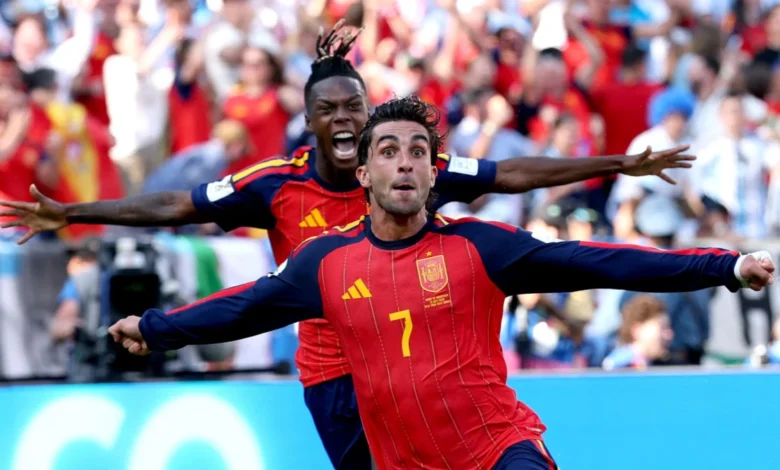
Spain has ascended to the pinnacle of international football for a second time, clinching the 2026 FIFA World Cup title with a breathtaking 1-0 victory over defending champions Argentina. The decisive moment arrived in the 106th minute of a fiercely contested final at the iconic MetLife Stadium in New Jersey, as substitute Ferran Torres unleashed a thunderous strike that etched his name into footballing history. This triumph echoes the narrative of Spain’s maiden World Cup conquest in 2010, where a similarly decisive extra-time goal secured their glory.
The echoes of South Africa 2010 resonated powerfully in the New York-New Jersey metropolitan area. Just as Andrés Iniesta provided the moment of magic against the Netherlands, it was another Barcelona player, Ferran Torres, who delivered the decisive blow for La Roja. The goal was a testament to Spain’s tactical acumen and the impact of their attacking substitutes. A perfectly weighted pass from fellow substitute Nico Williams carved open the Argentine defense, allowing the former Manchester City forward to storm onto the ball and expertly finish past the despairing dive of Aston Villa goalkeeper Emiliano Martínez. This dramatic breakthrough came mere minutes after Williams had seen an initial effort disallowed due to a foul by Mikel Merino on Nicolas Otamendi, a decision that added to the mounting tension.
Spain’s victory was a deserved culmination of a dominant performance throughout the final. From the opening whistle, La Roja dictated the tempo and displayed superior possession and attacking intent. The stark disparity in the shot count underscored Spain’s relentless pressure, with 20 attempts on goal compared to Argentina’s mere two. Even those late efforts from the Albiceleste, including a speculative, high shot from Giuliano Simeone that narrowly missed the target and could have forced a penalty shootout, failed to truly trouble the Spanish backline.
Argentina, despite facing sustained Spanish pressure, demonstrated commendable defensive resilience, particularly after the sending-off of Enzo Fernández. The Chelsea midfielder received a second yellow card for a reckless challenge at the close of normal time, a moment that significantly hampered Argentina’s ability to build from the midfield and offered Spain a numerical advantage for the remainder of the encounter. Throughout the match, Martínez was a formidable presence in goal, making a series of crucial saves that kept Argentina in contention for longer than their on-field performance might have suggested.
The dream of a fairytale ending to Lionel Messi’s anticipated final World Cup appearance was cruelly extinguished. The Argentine captain, who has graced the global stage for two decades, found himself largely anonymous for significant periods of the match. His team’s inability to retain possession effectively meant that Messi had limited opportunities to influence the game, a stark contrast to his talismanic performances in previous tournaments. Furthermore, Messi was denied the coveted Golden Boot, an award he was in contention for, by France’s Kylian Mbappé, who finished the tournament with a two-goal advantage.
For Spain, this World Cup triumph solidifies their status as a burgeoning global powerhouse under the astute management of Luis de la Fuente. The team remains undefeated in competitive matches since his tenure began, adding the sport’s ultimate prize to their European Championship title secured in 2024. This remarkable double achievement mirrors the success of Spain’s golden generation, who followed their Euro 2008 victory with the 2010 World Cup triumph. The presence of numerous players from that historic 2010 squad in the stands served as a poignant reminder of the enduring legacy of Spanish football.
The Road to Glory: A Chronological Journey
The 2026 FIFA World Cup, hosted across the United States, marked a significant chapter in international football. The tournament, renowned for its expanded format and innovative technological integrations, captured the imagination of billions worldwide. Spain’s journey to the final was a testament to their consistent performance, tactical flexibility, and the emergence of new talent alongside experienced campaigners.
Group Stage Dominance: Spain navigated the group stages with authority, showcasing a potent attacking style and a solid defensive foundation. Their performances indicated a team brimming with confidence and a clear vision under De la Fuente.
Knockout Stage Resilience: The knockout rounds presented sterner tests. Spain demonstrated their mettle by overcoming formidable opponents through a combination of tactical discipline and individual brilliance. Each victory built momentum, fostering a belief that this could be their year.
Semi-Final Thriller: The semi-final match, a tense affair against a highly-rated European rival, required extra time and a penalty shootout to separate the sides. Spain’s composure under immense pressure during the shootout highlighted their mental fortitude.
The Final Showdown: The stage was set for a monumental clash against the reigning champions, Argentina. The final, played out under the floodlights of MetLife Stadium, was a tactical battle characterized by Spain’s relentless possession-based game and Argentina’s disciplined defense.
Extra-Time Drama: After 90 minutes of goalless action, the final entered extra time, a period that has historically produced some of the most memorable moments in World Cup history. The tension was palpable as both teams sought the decisive breakthrough.
Torres’ Moment of Genius: In the 106th minute, the deadlock was finally broken. Nico Williams, a dynamic winger who had proven a constant threat, delivered a precise pass to Ferran Torres. The Spanish forward, with composure beyond his years, found the back of the net, sparking scenes of jubilation among the Spanish players and their passionate supporters.
Statistical Deep Dive: Spain’s Dominance
The statistical landscape of the 2026 World Cup final paints a clear picture of Spain’s superiority on the night. Beyond the crucial 1-0 scoreline, several key metrics highlight their control of the game:
- Possession: Spain enjoyed a significant advantage in possession, controlling the ball for approximately 70% of the match. This allowed them to dictate the pace and limit Argentina’s attacking opportunities.
- Shots: The disparity in shots on target was stark, with Spain registering 20 attempts compared to Argentina’s 2. This reflects Spain’s offensive intent and their ability to create scoring chances.
- Pass Completion: Spain’s intricate passing game was evident in their high pass completion rate, estimated to be well over 90%. This demonstrated their ability to retain possession and build attacks methodically.
- Territorial Advantage: Spain spent the majority of the match in the attacking third, consistently probing the Argentine defense and forcing them into defensive actions.
- Defensive Solidity: While the attack garnered the headlines, Spain’s defense was equally impressive. They effectively nullified Argentina’s attacking threats, limiting them to speculative efforts. The red card to Enzo Fernández, while a blow for Argentina, also highlighted the intensity of the defensive battles.
Reactions and Reflections
The victory sparked widespread celebrations in Spain, with cities erupting in joyous scenes. Fans gathered in public squares, waving flags and chanting the names of their heroes. The Spanish Royal family extended their congratulations, hailing the team’s historic achievement and praising their dedication and skill.
"This is a dream come true for the entire nation," said one jubilant fan in Madrid’s Puerta del Sol. "We have waited a long time for this, and to see our team play with such passion and skill is incredible."
Luis de la Fuente, the Spanish manager, addressed the media shortly after the final whistle, his voice filled with emotion. "This team has an extraordinary spirit," he stated. "They have worked tirelessly for this moment, and they deserve all the credit. To win the World Cup is the pinnacle of any coach’s career, and to do it with this group of players is particularly special."
The Argentine camp, understandably, was a scene of disappointment. Lionel Messi, in what is widely believed to be his final World Cup appearance, offered a brief statement to the press. "It is a difficult moment for us," he said, his gaze distant. "We fought hard, but today was not our day. I am proud of the effort of my teammates, and I wish Spain congratulations."
The performance of Emiliano Martínez, despite the defeat, drew praise. "He was outstanding," commented a former Argentine international. "He kept us in the game for so long. Football can be cruel, and today it was not on our side."
Broader Implications and Future Outlook
Spain’s triumph at the 2026 World Cup carries significant implications for the sport. It reinforces their position as a dominant force in international football and signals the successful transition from one generation of players to the next. The team’s blend of established stars and emerging talent suggests a bright future.
The victory also provides a significant boost to the development of football in Spain and across Europe. It inspires a new generation of young players and further solidifies the appeal of the sport. The successful hosting of the tournament by the United States also marks a milestone for football’s growth in North America, with record-breaking attendance figures and widespread fan engagement.
For Argentina, the loss marks the end of an era, with Lionel Messi’s departure from the World Cup stage leaving a void that will be difficult to fill. The focus will now shift to rebuilding and identifying new leaders to carry the legacy of Argentine football forward. The performance of Kylian Mbappé, securing the Golden Boot, further solidifies his claim as one of the sport’s contemporary greats and sets him up as a central figure in future tournaments.
The 2026 FIFA World Cup will be remembered not only for Spain’s glorious victory but also for its demonstration of the global passion for football, the drama of extra-time finals, and the enduring narratives of triumph and near-misses that define the beautiful game. As the dust settles on this exhilarating tournament, the footballing world looks ahead, anticipating the next chapter in this ever-evolving global spectacle. The legacy of this Spanish side, etched in extra-time brilliance, will undoubtedly inspire for years to come.
Related posts: