The Global Methane Challenge: Understanding the Science, Sources, and Solutions for Rapid Climate Action

Methane is a colorless, odorless hydrocarbon that has emerged as the most critical focal point for immediate climate intervention. While carbon dioxide (CO2) remains the primary long-term driver of global temperature increases, methane (CH4) is responsible for approximately one-third of the net warming the planet has experienced since the pre-industrial era. Composed of one carbon atom and four hydrogen atoms, it serves as the primary component of natural gas, currently generating roughly 25 percent of the world’s electricity. However, its efficiency as a fuel is rivaled only by its potency as a greenhouse gas; methane possesses a warming potential 86 times greater than that of CO2 over a 20-year period. Because methane remains in the atmosphere for only about 12 years—compared to the centuries-long lifespan of CO2—scientists argue that reducing methane emissions offers the fastest possible mechanism for slowing the rate of global heating.
The Evolution of Methane Levels: A Chronology of Crisis
The trajectory of atmospheric methane concentrations reveals a stark correlation with human industrial and agricultural expansion. In the pre-industrial era, methane levels hovered around 700 parts per billion (ppb). By the late 20th century, this figure began to climb rapidly as global energy demands and industrial meat production surged. According to the World Meteorological Organization (WMO), atmospheric methane concentrations reached a record 1,934 ppb in 2023, representing a 265 percent increase over pre-industrial levels.

The timeline of international response began to solidify in the 2010s as satellite technology provided more accurate data on "super-emitting" events. In 2021, at the COP26 United Nations climate conference in Glasgow, the United States and the European Union launched the Global Methane Pledge. This landmark agreement, which has since grown to include 159 nations, aims to reduce global methane emissions by 30 percent from 2020 levels by 2030. Despite this diplomatic momentum, real-world data from 2024 indicates that emissions have yet to peak, with fossil fuel operations and agricultural expansion continuing to drive annual increases.
Scientific Foundations and Measurement Methodologies
Methane is generated through two primary pathways: geological and biological. Geologically, it is formed over millions of years as heat and pressure act upon organic matter deep underground, creating the deposits tapped by the oil and gas industry. Biologically, the gas is a byproduct of methanogenesis—an anaerobic respiration process performed by microorganisms known as archaea. This process occurs in oxygen-poor environments such as wetlands, the digestive tracts of ruminant animals, and the depths of landfills.
Accurately quantifying these emissions requires a dual-method approach. The "bottom-up" method involves calculating emissions based on ground-level data, such as the number of cattle in a region or the known leak rates of specific oil well components. However, this method often underestimates the total volume of gas entering the atmosphere. To correct this, scientists utilize "top-down" measurements involving high-altitude aircraft and advanced satellites like GHGSat and MethaneSAT. These orbital tools have revealed that a small number of "super-emitters"—massive leaks from pipelines or coal mines—are responsible for a disproportionate share of global emissions. For instance, a single 2022 incident in Turkmenistan released methane at a rate equivalent to the entire hourly emissions of France.

Supporting Data: Primary Drivers of Human-Caused Emissions
Human activities are responsible for approximately 60 percent of total methane emissions, with three sectors dominating the landscape:
Agriculture: The Leading Contributor
Agriculture accounts for 40 percent of anthropogenic methane. Within this sector, livestock production is the primary driver, contributing 32 percent of human-caused emissions. This occurs largely through enteric fermentation, where cattle, sheep, and goats produce methane during digestion. Rice cultivation contributes another 8 percent, as flooded paddies provide the ideal anaerobic environment for methane-producing microbes. Current projections suggest that without dietary shifts or technical interventions, agricultural methane emissions will rise by 6 million metric tons per year through 2030.
Fossil Fuels: The Leakage Problem
The energy sector is responsible for 35 percent of human-caused methane. This includes 23 percent from oil and gas operations—where gas is often intentionally vented or accidentally leaked during extraction—and 12 percent from coal mining. Methane trapped in coal seams is released during the mining process for safety reasons, with underground mines being particularly high-volume emitters.

Waste Management: The Growing Challenge
Landfills and wastewater treatment systems contribute 20 percent of human-caused emissions. As organic waste decomposes in the oxygen-starved environment of a landfill, it releases significant quantities of methane. Due to rapid urbanization in developing nations, waste-related emissions are projected to grow faster than any other category, with solid waste volumes expected to increase by 73 percent by 2050.
Official Responses and the "Bridge Fuel" Controversy
The role of natural gas in the energy transition has become a subject of intense debate among policymakers and environmental scientists. For years, natural gas was marketed as a "bridge fuel" because it emits about half as much CO2 as coal when burned. This narrative fueled a massive expansion of liquefied natural gas (LNG) infrastructure, particularly in the United States, which became the world’s leading LNG exporter by 2022.
However, recent scientific analysis has challenged this status. A 2023 study concluded that if as little as 0.2 percent of methane leaks during the production and transport of LNG, its total climate impact equals that of coal. Satellite data suggests that leak rates in many basins are significantly higher than this threshold. Consequently, the Intergovernmental Panel on Climate Change (IPCC) and the International Energy Agency (IEA) have increasingly emphasized that a rapid phase-out of all fossil fuels—including gas—is necessary to limit global warming to 1.5 degrees Celsius. The U.S. Department of Energy recently paused new LNG export approvals to conduct a more thorough assessment of their long-term climate and economic impacts, signaling a shift in official policy.

Broader Impact: Public Health and Environmental Feedback Loops
The implications of methane emissions extend beyond atmospheric warming. Methane is a primary precursor to ground-level ozone (smog), a hazardous air pollutant. Ozone exposure damages lung tissue, exacerbates respiratory conditions like asthma, and reduces global crop yields. Research indicates that methane-generated ozone is responsible for approximately 500,000 premature deaths annually. Experts estimate that every million metric tons of methane reduced would prevent 1,430 heat- and respiratory-related deaths and save 145,000 metric tons of essential crops like wheat and soy.
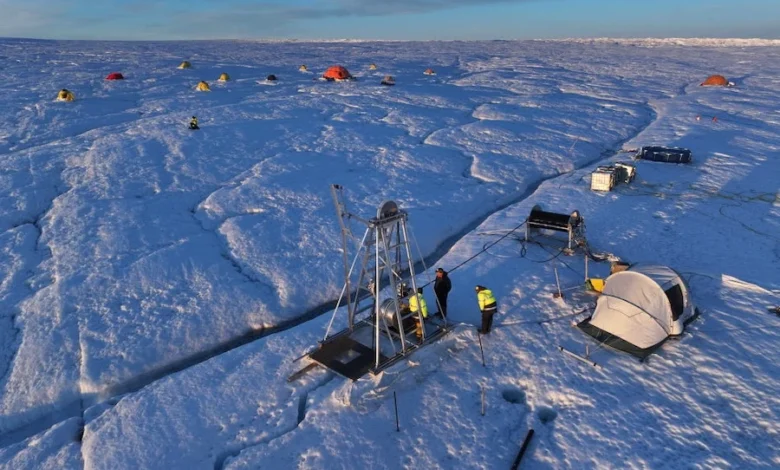
Furthermore, methane is a key component in dangerous "positive feedback loops." As the planet warms, natural systems begin to release stored methane, which in turn causes more warming. The most concerning of these is the thawing of Arctic permafrost. The Arctic contains 2.5 times more carbon than is currently in the atmosphere; as it thaws, microbes resume decomposition, releasing methane and CO2. Similarly, "wetland methane feedback" is already occurring, with tropical and Arctic wetlands expanding and releasing gas at rates higher than previously modeled.
Mitigation Strategies and Pathways to 2030
Achieving the goals of the Global Methane Pledge requires a multifaceted approach. In the energy sector, the IEA asserts that 70 percent of current oil and gas methane emissions could be eliminated using existing technology, such as vapor recovery units and regular leak detection and repair (LDAR) programs. Crucially, 40 percent of these reductions could be achieved at no net cost, as the captured gas can be sold.

In agriculture, solutions include the use of feed additives like seaweed (Asparagopsis) or the chemical 3-NOP, which can reduce enteric methane by up to 80 percent in some trials. For rice production, "Alternative Wetting and Drying" techniques can reduce emissions by 45 percent by limiting the time fields remain flooded.
On an individual level, dietary changes—specifically reducing meat and dairy consumption—remain the most impactful contribution. A study focused on the European Union found that a 34 percent reduction in meat consumption would prevent 6 million metric tons of methane emissions annually. Additionally, the transition from gas stoves and furnaces to electric heat pumps and induction cooktops eliminates the risk of indoor methane leaks and reduces overall demand for gas infrastructure.
Analysis of Future Implications
The next decade will be the "methane decade." Because of the gas’s high potency and short lifespan, the success or failure of methane mitigation will likely determine whether the world can stay within the 1.5-degree Celsius warming threshold. While the Global Methane Pledge represents a significant diplomatic achievement, the "implementation gap" remains wide. Only 13 percent of global methane emissions are currently covered by enforceable policies.

The broader impact of failing to act would be the triggering of irreversible tipping points, particularly in the Arctic and tropical wetlands. Conversely, aggressive action offers a rare "win-win" scenario: a rapid slowdown in the rate of global warming combined with immediate improvements in air quality and public health. As satellite monitoring makes methane leaks impossible to hide, the pressure on both governments and corporations to move beyond pledges and into measurable reductions is expected to intensify through 2030.