Economic Analysis Reveals Fuel Treatments Save Three Dollars and Seventy Three Cents for Every Dollar Invested in Forest Resilience

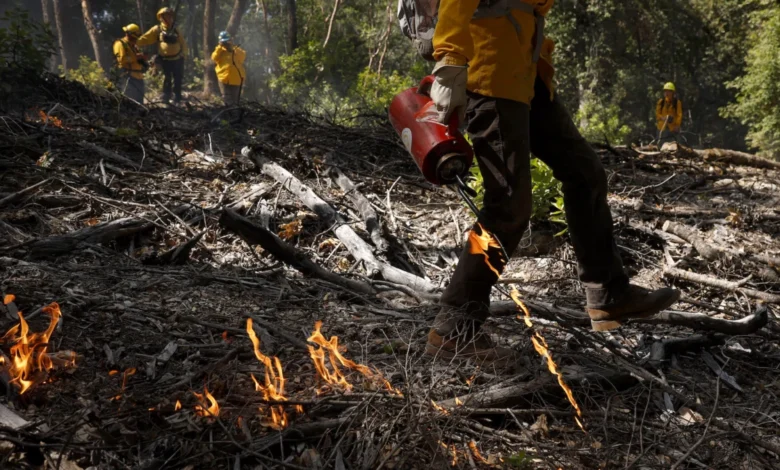
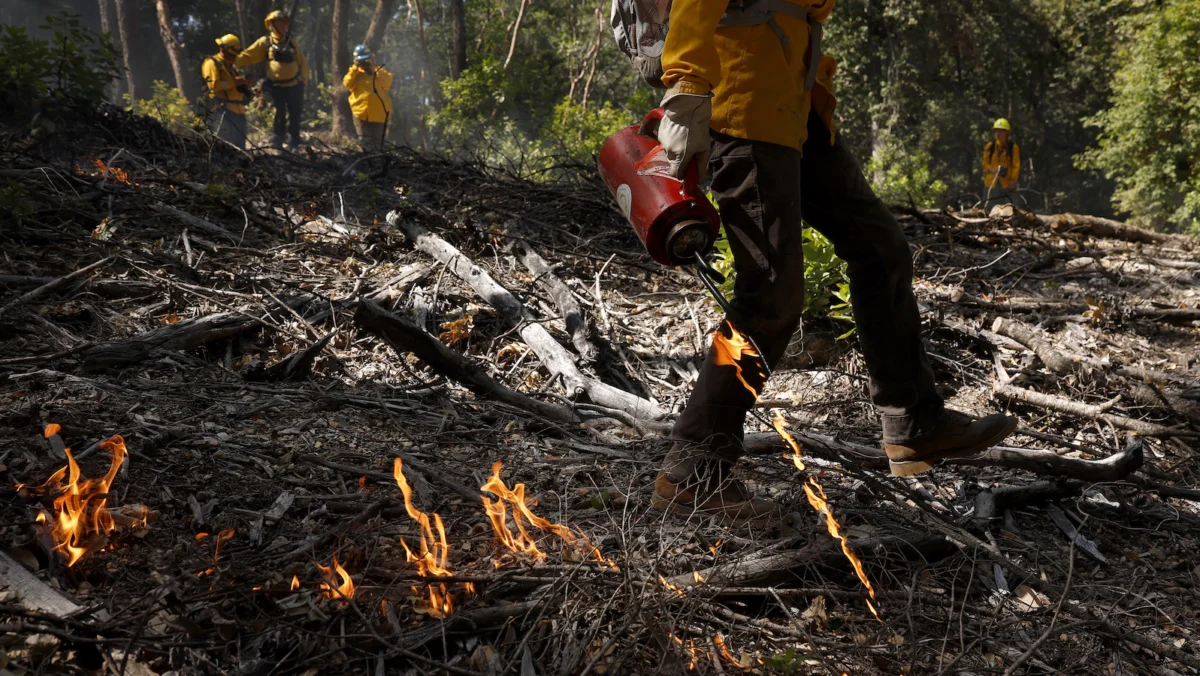
A groundbreaking study published in the journal Science has provided a definitive economic argument for proactive forest management, revealing that fuel treatments—such as thinning underbrush and conducting prescribed burns—offer a significant return on investment by reducing the catastrophic costs of wildfires. Led by Frederik Strabo, an economist at the University of California, Davis, the research indicates that for every dollar the U.S. Forest Service spends on these preventative measures, the public avoids an average of $3.73 in damages related to smoke inhalation, property loss, and carbon emissions. This finding comes at a pivotal moment as federal agencies grapple with increasingly severe fire seasons and shifting political priorities regarding land management.
For decades, the conversation surrounding forest management has been dominated by ecological and safety concerns. While scientists and Indigenous nations have long advocated for "fuel treatment" to restore forest health, the fiscal benefits remained largely anecdotal or understudied. The new analysis provides the "missing link," according to experts, by quantifying the intangible and tangible savings associated with keeping wildfires smaller and less intense. By analyzing high-resolution data from 285 wildfires across 11 Western states between 2017 and 2023, the study offers a comprehensive look at how managed landscapes behave when they inevitably encounter ignition.
The Economic Breakdown of Avoided Damages
The research team focused on areas where the U.S. Forest Service had actively reduced fuel loads before a fire occurred. Their findings were stark: fuel treatments decreased the total area burned by an average of 36 percent. More importantly, these treatments reduced the amount of land burned at moderate to high severity by 26 percent. High-severity fires are typically the most destructive, stripping the soil of nutrients and making recovery difficult, while also producing the highest volumes of toxic smoke.
When these physical reductions were translated into monetary terms, the savings were substantial. The study estimated that fuel treatments prevented $1.39 billion in losses tied to wildfire smoke, which impacts public health and workforce productivity. Wildfire smoke is a significant source of fine particulate matter (PM2.5), which has been linked to respiratory failures, cardiovascular issues, and premature death. Furthermore, the treatments were credited with avoiding $895 million in structural damage and $503 million in carbon dioxide emissions.
Lead author Frederik Strabo noted that while $3.73 is a significant ratio, it likely represents a conservative estimate. The study did not account for the multibillion-dollar outdoor recreation industry, nor did it quantify the protection of biodiversity or the preservation of critical watersheds. "We’re only capturing a specific subset of benefits," Strabo said, suggesting the true value of forest management could be even higher.
A Chronology of Management and the Fire Paradox
The practice of managing forest fuels is not a modern invention. Indigenous nations across North America practiced cultural burning for centuries to maintain ecosystem balance and prevent the buildup of volatile organic matter. However, the 20th century saw a shift toward "full suppression"—a policy exemplified by the iconic Smokey Bear campaign. This approach aimed to extinguish every fire as quickly as possible, leading to what ecologists call the "fire paradox": by preventing small, natural fires, forests became unnaturally dense, creating "tinderbox" conditions that fuel today’s mega-fires.
In recent years, the federal government attempted to pivot back toward active management. In 2022, the U.S. Forest Service released a comprehensive 10-year wildfire plan, which aimed to significantly increase the use of prescribed burns and thinning. However, this trajectory has faced hurdles. In 2025, the agency reported a decline in vegetation reduction, treating approximately 1 million fewer acres than in the previous year. A spokesperson for the Forest Service attributed this decline to extreme wildfire activity in the Southeast, which diverted resources away from preventative work.
The transition between administrations has also brought a change in philosophy. While the 2022 plan emphasized resilience, the current administration has placed a heavier emphasis on suppression and firefighting. This shift has drawn criticism from analysts like Heather Stricker of the Sierra Club, who argues that prioritizing suppression over prevention is "misguided" and ignores the mounting evidence that proactive management is the only long-term solution to the wildfire crisis.
Scientific Debate and the Complexity of Monetization
Despite the positive reception of the study, some experts remain cautious about the push to monetize public lands. David Calkin, a former Forest Service research scientist, described the analysis as "novel" but questioned the reliability of the math. He argued that many values of forest management are "non-market," making them difficult to fit into a standard cost-benefit analysis. Calkin also expressed concern that fuel treatments on federal lands might not always protect the most vulnerable assets—homes and private structures—which are often best protected through "hardening" the structures themselves rather than clearing distant forests.
Another layer of complexity involves the emissions produced by the treatments themselves. Mark Kreider, a Forest Service researcher, pointed out that intentional fires (prescribed burns) produce their own smoke and carbon dioxide. Because wildfire is unpredictable, managers must treat vast swaths of the landscape to ensure that a fire eventually interacts with a treated area. Kreider’s ongoing research seeks to determine how these "intentional" emissions balance against the "avoided" emissions of a mega-fire. Despite these uncertainties, Kreider agreed that the overall benefits of fuel treatment are clear and significant.
Scaling for Impact: The Case for Larger Treatments
One of the most actionable findings in the Science paper is the correlation between the size of a treatment and its cost-effectiveness. The research found that larger treatments—specifically those covering more than 2,400 acres—yielded the highest returns. Large-scale thinning and burning create significant "speed bumps" for advancing wildfires, allowing firefighters to establish control lines more safely and effectively.
The 2021 Caldor Fire near Lake Tahoe serves as a prime example. While the fire was still destructive, previously treated areas were credited with slowing the fire’s advance and reducing its intensity as it approached populated areas. Strabo noted that without those treatments, the catastrophe could have been far worse. This suggests that the economic value of fuel management is most apparent during extreme weather events, where the difference between a "manageable" fire and a "catastrophic" one is measured in billions of dollars.
Political Friction and Environmental Concerns
The debate over forest management is also entangled with the controversy surrounding logging. The current administration’s plans to increase logging on federal lands have sparked fears among environmental groups. While "thinning" is a recognized fuel treatment, critics argue it can be used as a pretext for clear-cutting large, fire-resistant trees that are valuable to the timber industry.
Environmental advocates emphasize that effective fuel treatment must focus on "surface fuels"—shrubs, small trees, and dead wood—rather than the removal of the canopy, which provides shade and keeps the forest floor moist. The Sierra Club and other organizations are calling for a "nuanced" approach that prioritizes community protection and ecological integrity over timber production.
The study’s authors acknowledge these tensions, noting that public pressure and "risk aversion" often skew resources toward fire suppression. Suppression is immediate and visible, whereas prevention is a long-term investment whose success is measured by what doesn’t happen—a difficult metric to sell to a public accustomed to seeing firefighters as heroes and "let-burn" policies as failures.
Implications for Future Policy
As the climate continues to warm, the window for safe prescribed burning is narrowing, and the cost of wildfire suppression is skyrocketing. The U.S. Forest Service’s characterization of 2025 as "one of the most successful wildfire years in recent history" may reflect a high rate of suppression success, but it does little to address the underlying fuel crisis.
Frederik Strabo and his colleagues hope their research provides a new tool for policymakers to justify the funding of proactive management. By framing forest resilience as a "critically underfunded public good," the study moves the conversation from the realm of ecology into the realm of fiscal responsibility.
The findings suggest that a massive scale-up of fuel treatments is not just an environmental necessity but a taxpayer imperative. As the Western United States prepares for future fire seasons, the question remains whether the federal government will heed the economic data and invest in the landscape, or continue to pay the much higher price of reacting to the flames. The evidence now suggests that the cost of inaction is nearly four times higher than the cost of prevention.
Related posts: