The Great Pivot: How the Death of the Green New Deal Network Birthed a Bipartisan Resistance Against AI Data Centers

The official dissolution of the Green New Deal Network on December 31, 2025, marked the quiet end of a political era that had once promised to fundamentally restructure the American economy through the lens of climate justice. Once a powerhouse coalition of labor, environmental, and social justice organizations, the network’s demise was precipitated by a radical shift in the American political landscape following the 2024 presidential election. As the second Trump administration moved to dismantle federal climate agencies, roll back the Inflation Reduction Act’s clean energy incentives, and execute mass layoffs across the Department of Energy and the EPA, the momentum that had sustained the progressive climate movement for nearly a decade appeared to evaporate. However, this collapse did not signify the end of climate activism; rather, it signaled a strategic migration. Thousands of activists are now pivoting toward a new, more localized front: the fight against the explosive growth of artificial intelligence (AI) data centers.
The Green New Deal Network was originally designed to capitalize on a specific political window—a period of federal investment and legislative expansion. When that window slammed shut in late 2024, the coalition found itself ill-equipped for a defensive posture against a hostile federal government and a public increasingly preoccupied with the immediate pressures of the cost of living. In a final statement on its website, the coalition acknowledged that the "structure built to win a specific moment is no longer the right vehicle for what comes next." That "next" has manifested as a decentralized, bipartisan, and fiercely local movement targeting the "hyperscale" data centers required to power the global AI boom.
The Energy Crisis: Quantifying the AI Surge
The primary driver of this new movement is the sheer scale of resources required to maintain the digital infrastructure of the 21st century. According to a June 2026 report from the Lawrence Berkeley National Laboratory, data centers are projected to account for approximately one-third of all growth in U.S. electricity demand between 2024 and 2030. This surge represents a monumental challenge to the nation’s aging power grid and its decarbonization goals.
A typical AI data center consumes as much electricity as 100,000 households. However, the largest facilities currently under construction are expected to use up to 20 times that amount, effectively requiring the same power output as a small nuclear plant or several large coal-fired stations. This "thirst" for energy is not only straining existing resources but is actively driving the expansion of fossil fuel infrastructure. To meet the immediate and massive demand of tech giants like Amazon, Google, and Microsoft, utilities are increasingly turning to natural gas. In Washington state alone, new gas pipelines intended to supply data centers are projected to produce an additional 13.5 million metric tons of carbon dioxide annually—roughly 14 percent of the state’s total current emissions.
A Chronology of Activism: From Policy to Protest
The transition from national policy advocacy to local infrastructure resistance has followed a clear timeline:
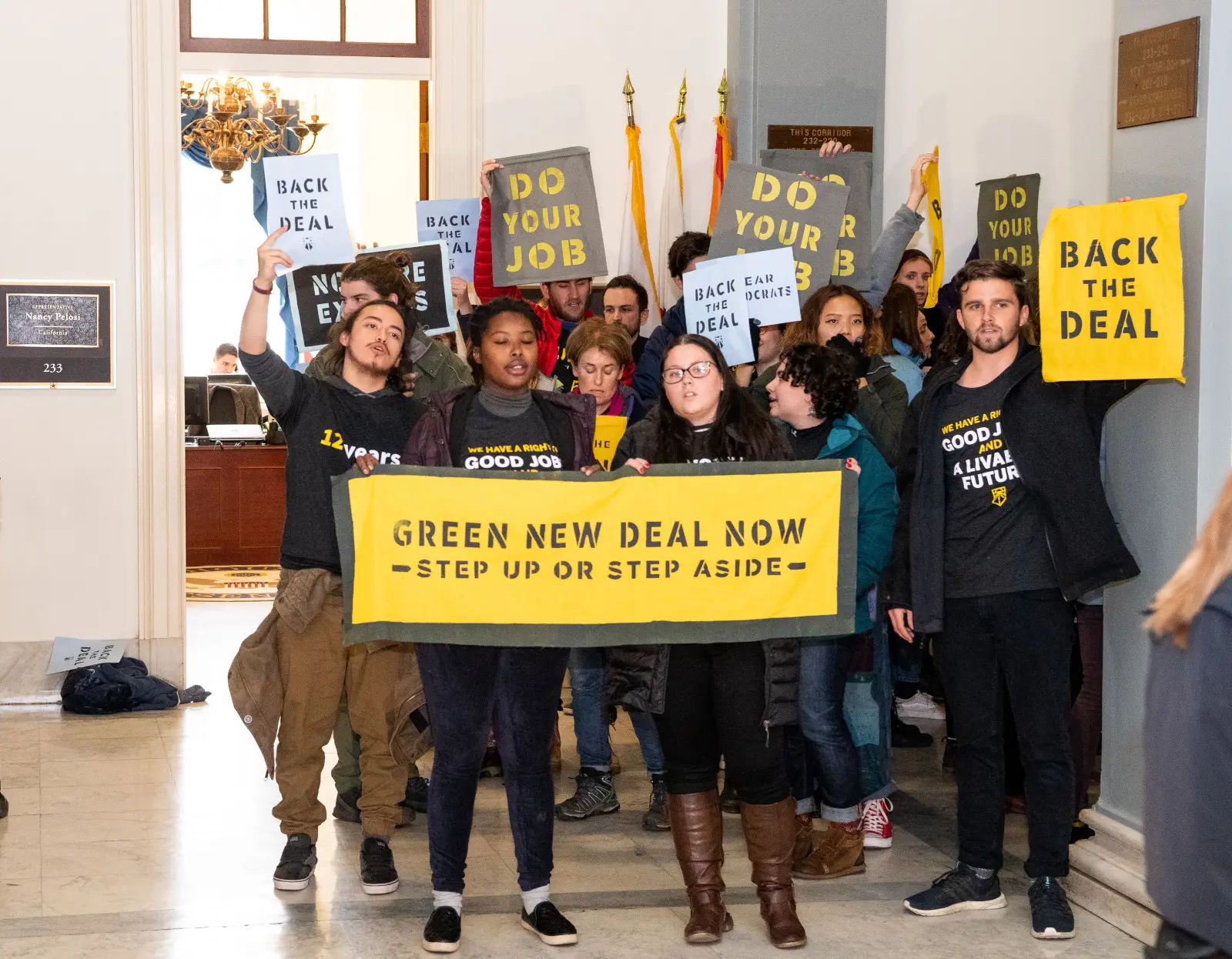
- November 2018: The Sunrise Movement gains national prominence after occupying Representative Nancy Pelosi’s office, demanding a Green New Deal.
- 2021–2024: The movement focuses on federal legislation, successfully pushing for components of the Inflation Reduction Act (IRA).
- November 2024: The reelection of Donald Trump leads to an immediate pivot in federal policy, emphasizing fossil fuel extraction and the deregulation of the energy sector.
- Late 2025: Facing a hostile federal environment, the Green New Deal Network announces its closure. Activists like Saul Levin begin organizing digital communities via Signal to track data center construction.
- Spring 2026: Local hubs in cities such as Dallas, Denver, and Pittsburgh report a surge in membership focused specifically on municipal zoning and utility rates related to AI.
- June 2026: Seattle becomes the largest U.S. city to pass a moratorium on new large-scale data centers, following intense pressure from groups like 350 Seattle and the Soapbox Project.
The Strategic Shift of the Sunrise Movement
The Sunrise Movement, which was instrumental in making the Green New Deal a household name, has been at the forefront of this tactical shift. Executive Director Aru Shiney-Ajay has noted that the fight against data centers is both a climate necessity and a strategic opportunity. Unlike the abstract nature of national carbon taxes or international treaties, data centers are physical entities that impact local water tables, noise levels, and electricity bills.
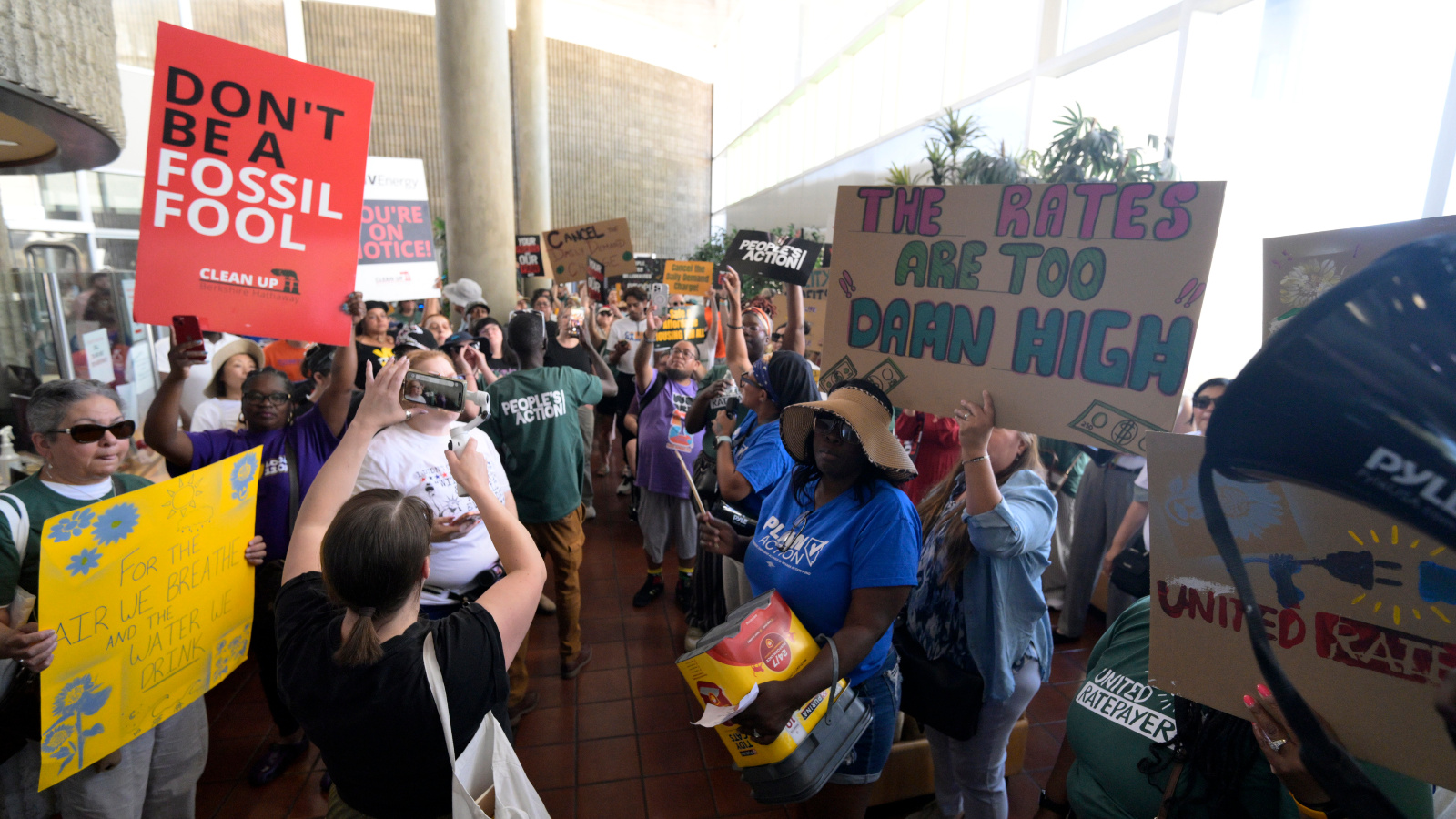
Local Sunrise hubs have identified these facilities as "carbon bombs" that threaten to undo years of progress in renewable energy adoption. By shifting the focus to these tangible targets, the movement has found a way to re-engage a public that had become disillusioned with federal politics. In cities like Lansing, Michigan, and Pittsburgh, activists are framing the issue not just as an environmental concern, but as a matter of "ratepayer justice," arguing that ordinary citizens should not see their utility bills rise to subsidize the expansion of Big Tech.
Internal Fractures: "Big Green" vs. Grassroots Movements
The rise of the anti-data center movement has exposed a rift within the broader environmental community. While grassroots organizations have moved quickly to demand moratoriums, established "Big Green" groups have been more cautious. In June 2026, a letter sent to Congress calling for a nationwide moratorium on hyperscale data centers was signed by over 500 groups, including Greenpeace USA and Food and Water Watch. Notably absent, however, were the Sierra Club, the Natural Resources Defense Council (NRDC), and the Nature Conservancy.
This hesitation often stems from a difference in philosophy. The Sierra Club, through principal advisor Jeremy Fisher, has stated that data centers "can and should be powered with renewable energy." Their strategy focuses on holding tech companies to high environmental standards and encouraging them to invest in their own clean energy generation.
Conversely, groups like Food and Water Watch argue that "greening" a data center is a zero-sum game. Thomas Meyer, the group’s organizing projects director, points out that when a company like Amazon outbids a local utility for a major solar farm’s output, it doesn’t increase the total amount of clean energy available to the public; it simply diverts it from the general grid to private servers. This "shifting of the pie" means that the public grid remains reliant on fossil fuels longer than it otherwise would.
The Bipartisan Backlash and Rural Resistance
One of the most significant aspects of the anti-data center movement is its ability to bridge the partisan divide—a feat the Green New Deal never achieved. Polling from Gallup indicates that 75 percent of Democrats and 63 percent of Republicans oppose the construction of large data centers in their immediate vicinities.
This bipartisan consensus is driven by a variety of concerns. In rural areas, where the majority of new data centers are proposed, farmers are concerned about the massive amounts of water required for cooling servers, which can deplete local aquifers. In suburban Maryland and Northern Virginia, residents cite the "hum" of giant cooling fans and the aesthetic blight of massive, windowless warehouses as primary grievances.
Saul Levin, who now hosts the podcast The Hum, notes that this movement brings together unlikely allies. "We see punk musicians in Utah working with conservative farmers in Oregon," Levin said. "They don’t have to agree on the causes of climate change to agree that a massive, energy-sucking facility next to their property is a bad deal for the community."
Case Study: The Seattle Moratorium
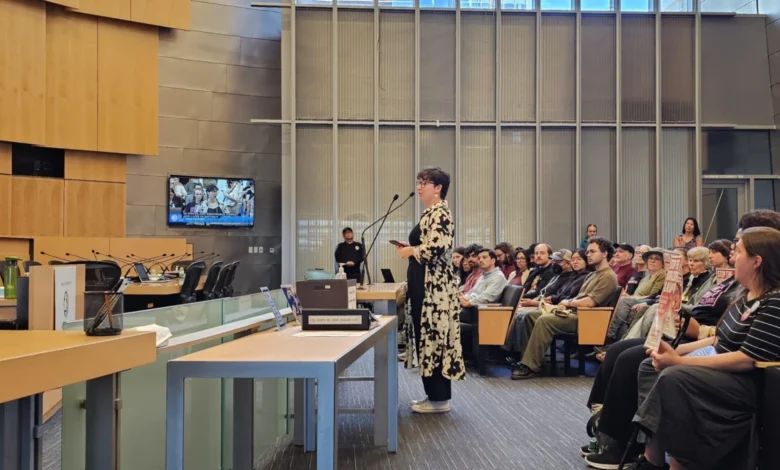
The success in Seattle serves as a blueprint for the movement’s future. When it was revealed that five major data centers were planned for the city—projects that would have consumed one-third of Seattle’s typical daily power usage—local groups organized a rapid response. The Seattle City Council’s unanimous vote to suspend approvals was a watershed moment.
For activists like Nivi Achanta of the Soapbox Project, the win was a much-needed morale booster. After years of feeling powerless against global climate trends and federal rollbacks, the local victory provided a sense of agency. The organizing was done through Signal chats and community meetings, focusing on the immediate impact on Seattle’s Climate Commitment Act goals. The state’s law requires a 95 percent reduction in emissions by 2050, a target that experts say would be impossible to hit if the AI expansion continues unchecked.
Broader Impact and Future Implications
The collapse of the Green New Deal Network and the rise of the anti-data center movement represents a maturation of American environmentalism. It marks a shift from the "top-down" legislative hope of the early 2020s to a "bottom-up" defensive strategy necessitated by the current political climate.
As the AI industry continues to grow, the tension between technological advancement and environmental preservation will only intensify. The movement’s ability to block or delay $130 billion worth of facilities in the first quarter of 2026 suggests that Big Tech can no longer assume a path of least resistance.
The long-term implications are twofold. First, tech companies may be forced to innovate more rapidly in energy efficiency and alternative cooling methods. Second, the movement may serve as a vehicle for broader civic re-engagement. By focusing on the "concrete and local," as activists in Washington and Michigan have done, the movement is stitching together a fragmented political landscape. Whether this decentralized resistance can ultimately replace the unified vision of the Green New Deal remains to be seen, but for now, the "hum" of the data center has become the new rallying cry for a movement that refused to die with its namesake.