Against the Tide Puerto Rican Fisherfolk Reclaim Sovereignty Amid Institutional Abandonment and a Warming Climate

Tomás Ayala leaps from the side of a small dinghy into the dark, rhythmic swell of the Caribbean Sea. His arms slice through the water with the precision of a cutlass as he dives deep toward the reef off the southeastern coast of Culebra, a small island-municipality of Puerto Rico. Armed with a spear gun and decades of ancestral knowledge, the 50-year-old fisher scans the perimeter of the underwater structure. Within seconds, a plume of crimson clouds the water—a large hogfish has been struck. Ayala secures his catch and ascends, his lungs burning but his mission accomplished.
Back on his boat, Ayala deposits the reef fish into a cooler and guns the motor toward the shore. He has been on the water since before dawn, practicing a trade he learned at the age of eight from his brother and grandfather. His destination is a concrete dock leading to a villa pesquera—a fishing village or landing center that serves as the lifeblood for Culebra’s traditional fisherfolk. Inside this facility are cleaning stations, industrial freezers, saltwater tanks for live lobsters, and a bustling market where the community gathers not just to trade, but to organize.
The revival of this particular villa pesquera is a testament to community resilience in the face of systemic neglect. For nearly two decades, the facility sat dormant, shuttered by the Puerto Rican government in 2002 following a volatile mix of political infighting and the withdrawal of state funding. In 2021, Ayala and marine scientist Nicolás Gómez Andújar spearheaded a grassroots movement to resurrect the site. Through four years of fundraising, volunteer labor from neighbors, and a grueling permitting process, they finally reopened the market in October 2023. However, the triumph of Culebra’s fishers masks a deeper crisis: a fragmented regulatory landscape and an accelerating climate emergency that threaten the very survival of Puerto Rico’s artisanal fishing sector.
A Legacy of Fragmentation: The Rise and Fall of CODREMAR
The current state of Puerto Rico’s fishing infrastructure is the result of a decades-long devolution of government oversight. In the early 1960s, the Puerto Rican government launched an initiative to modernize commercial fishing, transforming informal landing spots into regulated villas pesqueras. To centralize these efforts, the government established the Corporación para el Desarrollo y Administración de los Recursos Marinos, Lacustres, y Fluviales (CODREMAR) in 1979. This agency was designed to handle research, education, and conservation for the commercial sector.
By the 1980s, the government encouraged the formation of "fisher associations" to co-manage these centers alongside local municipalities, a move intended to dismantle emerging seafood monopolies. However, research by Manuel Valdés-Pizzini, a social anthropologist at the University of Puerto Rico at Mayagüez, indicates that these associations often became targets of political maneuvering. When CODREMAR was dissolved in 1990—after the government deemed its operations inefficient—its responsibilities were split between the Department of Agriculture and the Department of Natural and Environmental Resources (DNER).
This division created what experts call a "patchwork" governance model. Today, a fisher attempting to operate a villa pesquera must navigate a labyrinth of agencies. The Department of Agriculture oversees the physical equipment and lockers, while the DNER regulates licenses, boat ramps, and environmental permits. Beyond these two, fishers must answer to the Puerto Rico Planning Board, the U.S. Coast Guard, the Environmental Protection Agency (EPA), the National Oceanic and Atmospheric Administration (NOAA), and the Army Corps of Engineers, among others.
"Fishers are caught between the sword and the wall," explains Luis Alexis Rodríguez Cruz, a food systems researcher with the Caribbean Agroecology Institute. "One agency requires something that another agency counters or ignores. This disconnection creates a bureaucratic paralysis that disproportionately affects small-scale producers."
The Economic Paradox of Puerto Rican Fisheries
While commercial fishing accounts for only 0.69 percent of Puerto Rico’s gross domestic product (GDP) as of 2024, its importance to local food security is monumental. Puerto Rico currently imports an estimated 85 to 90 percent of its food supply. In isolated island communities like Culebra and Vieques, where poverty rates are more than double the U.S. national average, local fishers provide a critical buffer against food insecurity.
Data from the nonprofit Conservación ConCiencia reveals that just 12 of the island’s active villas pesqueras contribute more than $3 million annually to the local economy. Despite this, the number of active hubs has dwindled from approximately 63 in the 1980s to roughly 41 today. The DNER officially records 1,646 licensed "bonafide" fishers, but experts suggest the actual number of people relying on the sea for sustenance is significantly higher, as many operate informally due to the high cost of permits, which can range from hundreds to thousands of dollars.
Climate Change: An Existential Threat to the Coastline
The institutional abandonment of the fishing sector is colliding with an escalating environmental crisis. Since 1901, ocean temperatures around Puerto Rico have risen by nearly 2 degrees Fahrenheit, bleaching coral reefs and altering the migration patterns of key species. Furthermore, coastal erosion has reached a state of emergency. In 2023 and again in May 2024, Governor Jenniffer González-Colón declared states of emergency over coastal erosion, which now affects more than a third of Puerto Rico’s beaches.
The most acute climate stressor, however, remains the increasing intensity of Atlantic hurricanes. In 2017, Hurricane Maria decimated the archipelago’s fishing infrastructure, causing an estimated $17.8 million in damages to gear, boats, and villas pesqueras. In the small town of Ceiba, fishers Beverly Román Figueroa and Ernesto Correa Torres have spent years fighting local authorities for the repairs promised after the storm.
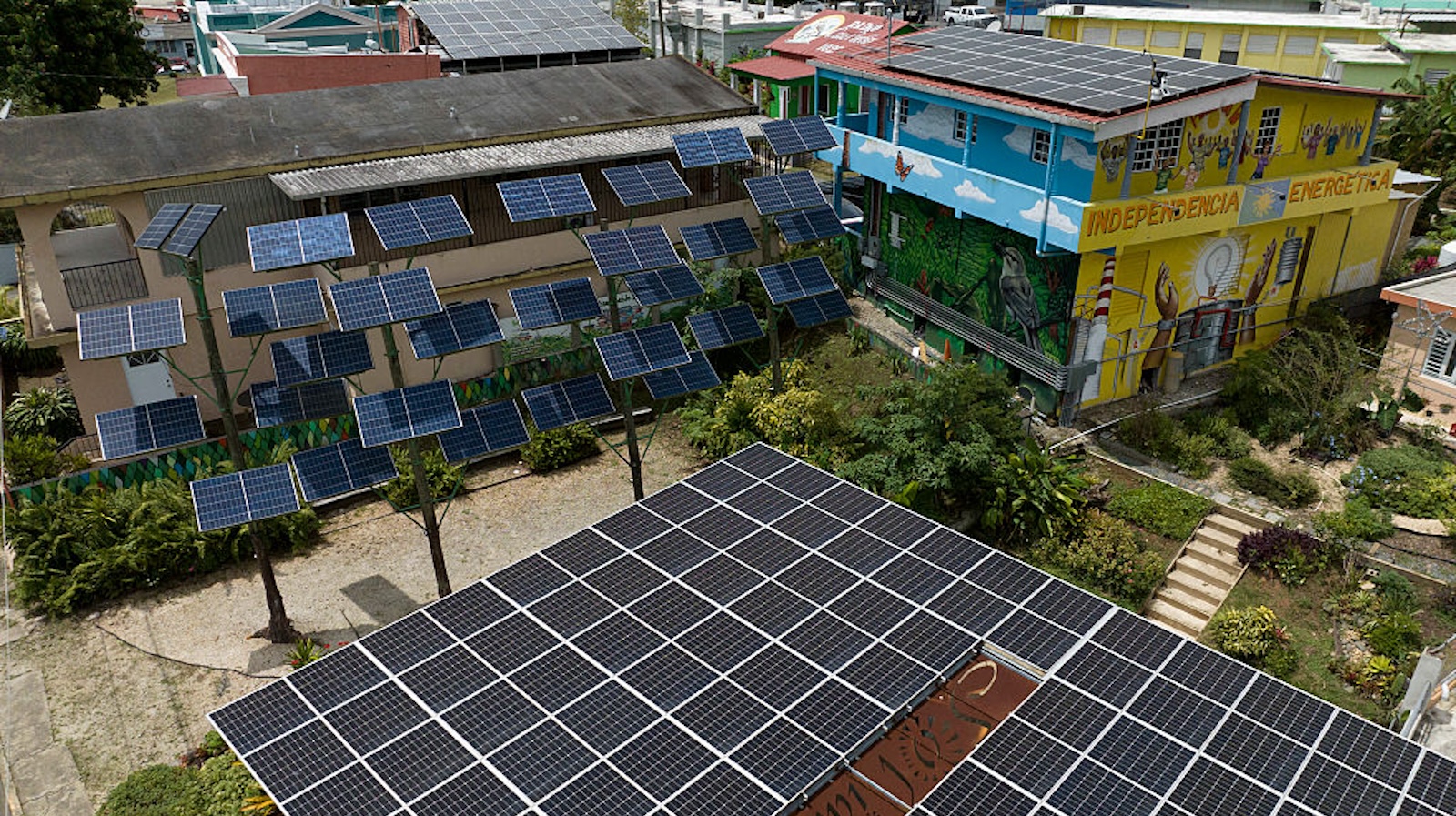
Román Figueroa reports that despite the municipality receiving $124,000 in FEMA aid for the Ceiba hub, the facility remained in a state of ruin as late as 2023, featuring waterlogged walls and destroyed plumbing. Tired of waiting, the couple invested $60,000 of their own savings to restore the site. They collaborated with nonprofits to install solar panels, ensuring the market could continue to operate during the island’s frequent power outages. "What they handed me was a neglected property," Correa Torres said. "We have worked alone to bring this back for the people."
The Audit of Inaction: Delayed Disaster Aid
The frustration felt in Ceiba is mirrored across the archipelago and is now supported by federal data. A January 2025 audit by the Office of the Inspector General at the U.S. Department of Commerce found that the Puerto Rican government had distributed only 7 percent of the $11.4 million in disaster assistance funds earmarked for fisheries since 2020. Of the 17 designated restoration projects intended to repair the damage from Hurricane Maria, only four had been completed.
When questioned about these delays, Waldemar Quiles Pérez, Secretary of the DNER, deflected responsibility, stating in a written communication that fishing spaces are either privately owned or administered by the Department of Agriculture. The Department of Agriculture, for its part, has remained silent, failing to respond to multiple requests for comment regarding the stagnant funds.
Environmental planners like Ariam Torres Cordero of the University of Puerto Rico argue that even when money is spent, it is often used poorly. "We are rebuilding the same structures that were designed decades ago, without accounting for rising sea levels," Torres Cordero says. He is currently working on a pilot project in Vieques to design "climate-proof" and "mobile" fishing infrastructure—such as docks and markets that can be moved inland before a storm—though the project has been stalled by university strikes and military tensions on the island.
Food Sovereignty as a Survival Strategy
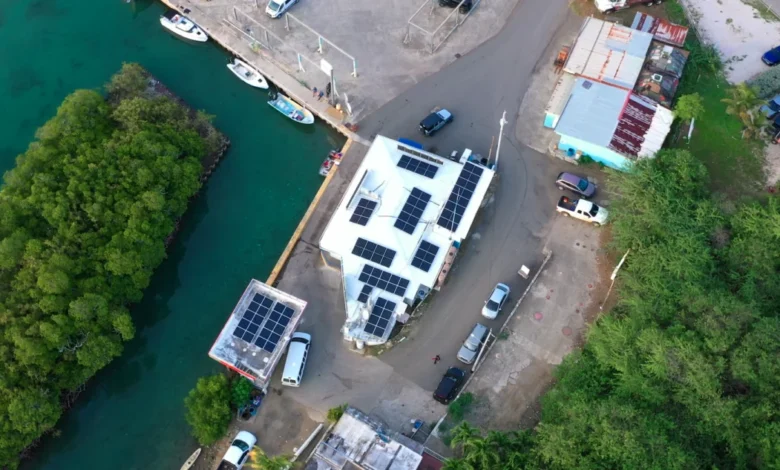
In Culebra, the villa pesquera has become a fortress of self-reliance. Its roof is lined with two dozen solar panels, its windows are hurricane-proof, and a rainwater harvesting system provides a backup water supply. These upgrades are not merely conveniences; they are essential tools for survival.
Ayala recalls the six months following Hurricane Maria when the island had no electricity and the formal seafood supply chain vanished. He organized an informal network, collecting catch from other fishers and selling it door-to-door to ensure his neighbors had protein. This experience solidified the community’s resolve to manage their own resources.
Currently, Gómez Andújar and environmental scientist Megan Considine are attempting to diversify Culebra’s output by establishing the only permitted native oyster farm in Puerto Rico. While the project offers a path toward a more resilient seafood supply, it has already run into the familiar wall of bureaucracy. Late last month, the team had to suspend half of their operations because an Army Corps of Engineers permit was at risk of expiring.
"It’s demoralizing," Gómez Andújar admits. "We are doing everything right, trying to adapt and mitigate the effects of climate change, but the government remains the biggest barrier."
Conclusion: The Road Ahead
The struggle of Puerto Rico’s fisherfolk represents a broader battle for food sovereignty in a colonial context. As the archipelago faces a future of more frequent "superstorms" and disappearing shorelines, the villas pesqueras stand as critical outposts of resilience. However, without a centralized government office to streamline permits and a dedicated effort to distribute long-overdue disaster aid, the burden of maintaining these hubs will continue to fall on the shoulders of individuals like Ayala and Román Figueroa.
For the fishers of Culebra and Ceiba, the sea is more than a source of income; it is a cultural anchor and a lifeline. As Ayala prepares for his next dive, he remains focused on the mission of teaching the next generation how to live from the ocean. In his view, the future of Puerto Rico depends on its ability to harvest its own waters, even if the government meant to support them remains adrift.