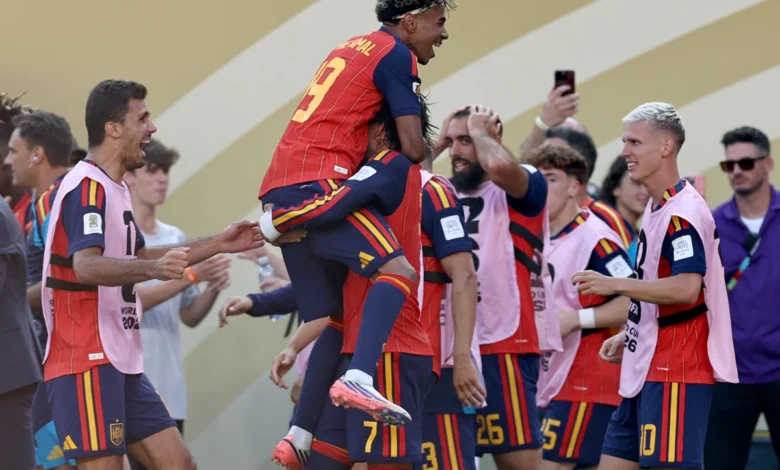
Spain has etched its name into football history once again, clinching the coveted 2026 FIFA World Cup trophy with a nail-biting 1-0 victory over Argentina in a fiercely contested final. The decisive moment came in extra time, with Ferran Torres netting the solitary goal that separated the two titans of international football. This triumph marks Spain’s second-ever World Cup title, adding to their historic win in 2010 when they also emerged victorious by a 1-0 scoreline against the Netherlands.
The culmination of a month-long global spectacle, the 2026 World Cup final unfolded at the iconic MetLife Stadium in East Rutherford, New Jersey, a venue renowned for hosting NFL giants the New York Giants and the New York Jets. For the tournament, the stadium was officially designated as New York New Jersey Stadium, reflecting its role as a key site for this groundbreaking, multi-nation hosting event. The electrifying match was broadcast to a massive global audience on Fox and Telemundo, captivating millions with its high stakes and dramatic narrative.
A Tense Encounter and a Decisive Goal
The final match between Spain and Argentina was a testament to the enduring rivalry and exceptional talent present in both nations’ footballing legacies. For 90 minutes, neither side could break the deadlock, a reflection of the strategic defensive play and near-flawless goalkeeping exhibited by both teams. The tension was palpable as the clock ticked down, pushing the match into extra time, a period often reserved for moments of individual brilliance or decisive tactical shifts.
It was in the additional 30 minutes that the game’s destiny was sealed. Ferran Torres, a dynamic forward known for his agility and clinical finishing, found the back of the net, sending the Spanish contingent and their supporters into raptures. The goal, a moment of pure skill and composure under immense pressure, proved to be the decisive blow, denying Argentina a potential third World Cup title and etching Torres’s name alongside other World Cup final heroes.
Spain’s Ascent to Footballing Supremacy
Spain’s journey to their second World Cup title is a narrative of resilience and strategic development in the sport. Their first taste of ultimate glory came in 2010 in South Africa, a victory that symbolized a golden generation of Spanish players who dominated world football for a period. The 2026 win signifies a resurgence, demonstrating the continued strength and depth of Spanish footballing talent and their ability to adapt and compete at the highest level. This victory solidifies their position among the elite nations in the sport, proving that their 2010 triumph was not a one-off but a testament to a sustained commitment to excellence.
The Messi Legacy and a Record-Breaking Final
For Argentinian superstar Lionel Messi, this World Cup final represented his third appearance on the ultimate stage. While the outcome was not the fairytale ending he and his legions of fans had hoped for, his participation in a third final is an unprecedented achievement in the history of the tournament. Messi, widely regarded as one of the greatest footballers of all time, has graced the World Cup with his unparalleled skill and artistry for years. His presence in this final, despite the loss, further cements his legendary status and the enduring impact he has had on the sport. His journey through multiple World Cup cycles, culminating in this appearance, is a testament to his longevity, dedication, and extraordinary talent.
A Groundbreaking Tournament: Shared Hosting and Global Reach
The 2026 FIFA World Cup was already historic for its unprecedented co-hosting arrangement, with the United States, Mexico, and Canada sharing hosting duties. This marked the first time in the tournament’s history that three nations collaborated to stage the global showpiece. The shared hosting model aimed to distribute the logistical and economic benefits of the event across North America, showcasing the diverse cultures and footballing passion of the region.
The tournament’s expansive nature also included a significant presence in the United States, with numerous matches played across the country. The US Men’s National Team, competing on home soil, reached the Round of 16 before their campaign was ended by a 4-1 defeat to Belgium. While the hosts did not advance further, their performance was met with considerable national enthusiasm, highlighting the growing interest in soccer within the United States.
Looking ahead, the FIFA World Cup continues to break new ground. The 2030 edition is poised to make history by being hosted across three continents: Africa, Europe, and South America. Morocco, Portugal, and Spain will be the primary hosts, with an extraordinary twist seeing the opening three matches played in Uruguay, Argentina, and Paraguay. This multi-continental approach underscores FIFA’s commitment to globalizing the sport and celebrating its centenary year with a truly international flavor.
MetLife Stadium: A Stage for Sporting History
The choice of MetLife Stadium for the 2026 final underscored the tournament’s ambition to leverage world-class sporting infrastructure. The stadium, with its immense capacity and state-of-the-art facilities, provided a fitting arena for the climax of the world’s most prestigious football competition. Its location in East Rutherford, New Jersey, within the greater New York metropolitan area, ensured accessibility for a vast audience and solidified the tournament’s presence in a major global hub. The stadium’s dual role as a premier NFL venue and a World Cup final host further highlights its versatility and importance in the sporting landscape.
Broadcasting Reach and Global Engagement
The broadcast of the 2026 FIFA World Cup final on Fox and Telemundo ensured that the event reached a diverse and extensive audience. These networks provided comprehensive coverage in both English and Spanish, catering to the significant fan bases of both competing nations and the broader international viewership. The widespread availability of the broadcast amplified the excitement and drama of the final, allowing billions of viewers worldwide to witness Spain’s historic victory and Lionel Messi’s final World Cup final appearance. The strategic selection of broadcast partners is crucial in maximizing the global engagement and commercial success of the FIFA World Cup, making it a truly universal sporting event.
The Broader Implications of Spain’s Victory
Spain’s triumph in the 2026 World Cup carries significant implications for the sport. For Spain, it reinforces their status as a global footballing powerhouse and will undoubtedly inspire a new generation of players. The victory is likely to boost domestic football interest and investment, further strengthening La Liga and the national team’s infrastructure.
For Argentina, the loss in the final, particularly after a strong tournament, will be a difficult pill to swallow. However, their consistent presence at the pinnacle of international football, largely driven by Lionel Messi’s enduring brilliance, demonstrates the strength of their footballing program. The future of Argentinian football will now look to how they transition from the Messi era and maintain their competitive edge.
From a global perspective, Spain’s win highlights the evolving landscape of international football. The success of European nations in recent World Cups, interspersed with triumphs from South America, showcases the sport’s truly global nature. The shared hosting model of the 2026 tournament, and the multi-continental plans for 2030, signal a future where the World Cup is more inclusive and accessible than ever before, fostering footballing development and passion across diverse regions. The strategic use of major stadiums like MetLife further underscores the commercial and logistical planning involved in staging such a massive global event, ensuring its continued growth and appeal.