Supreme Court Intervenes in Missouri Redistricting Dispute, Mandating 2022 Congressional Map for 2026 Midterm Elections

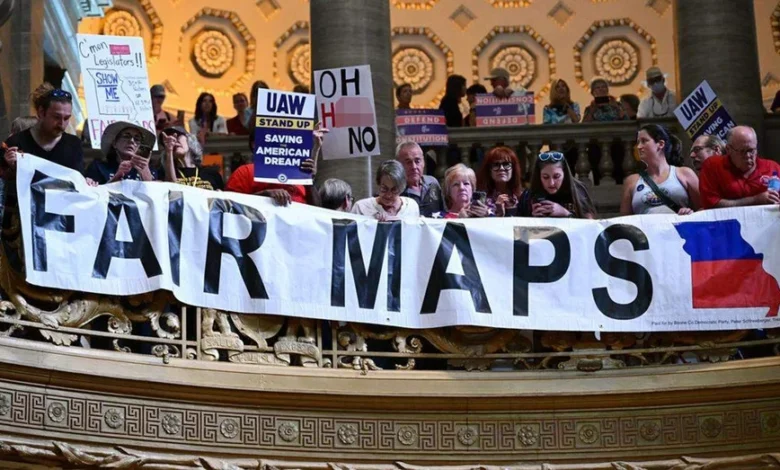
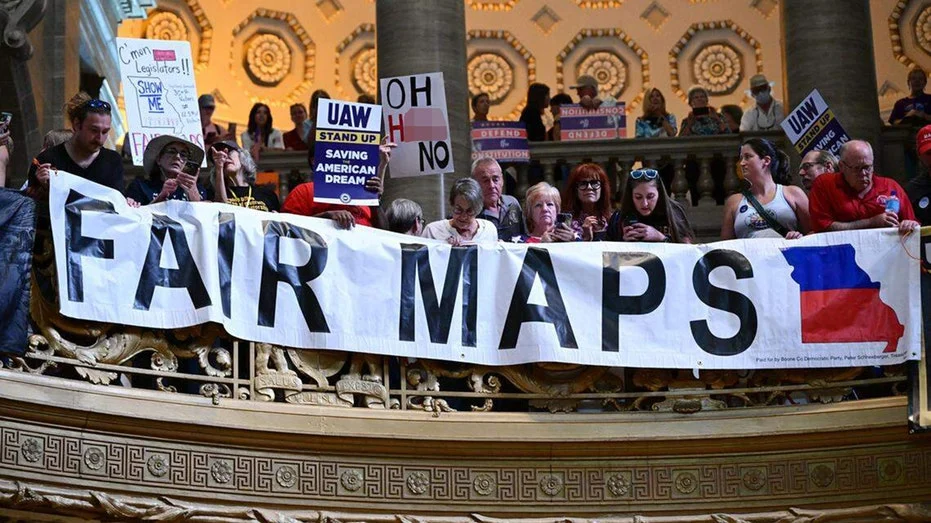
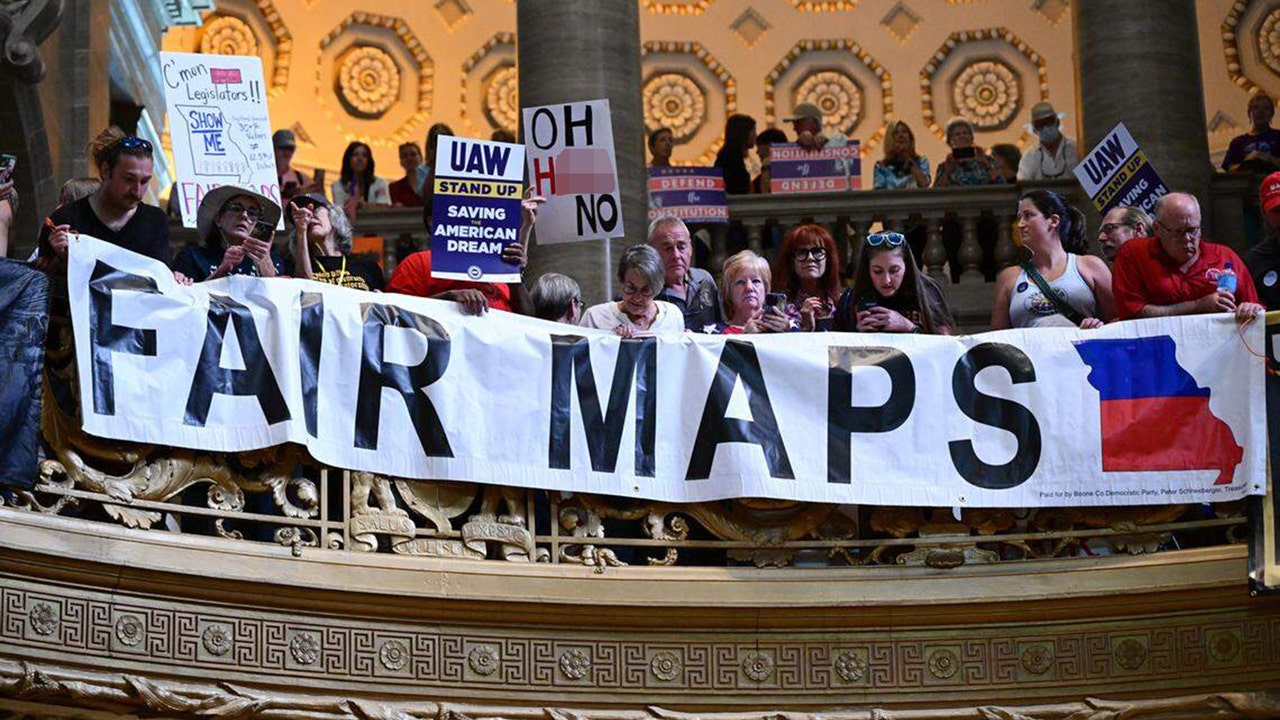
The Supreme Court of the United States issued an unsigned order directing the state of Missouri to utilize its 2022 congressional district map for the upcoming 2026 midterm elections. The ruling effectively halts a recently enacted 2025 redistricting plan that had been a subject of intense political and legal contention. The decision, which drew no noted dissents from the justices, brings a measure of temporary certainty to election administrators and candidates across the state, resolving a complex jurisdictional clash between federal courts and state legislative initiatives just as election preparation cycles reach critical phases.
Under the directive, lower federal courts are barred from prohibiting the implementation of the 2022 boundaries, and they are similarly enjoined from compelling the state to adopt the newer 2025 iteration. The intervention clears the immediate judicial docket of a high-stakes redistricting battle, ensuring that Missouri voters will cast their ballots under the same congressional lines used in the 2022 cycle rather than the revised configuration that critics argued would have reshaped the state’s political landscape ahead of the midterm contests.
Background and Context of Missouri Redistricting
The debate over Missouri’s congressional map stems from the standard decennial redistricting process following the 2020 Census, which initially resulted in the map finalized in 2022. That configuration maintained a map that largely preserved the existing balance of power within the state’s congressional delegation, featuring safe margins for incumbents and established partisan distributions.
However, political dynamics within the Missouri General Assembly prompted renewed efforts by state lawmakers to revisit the boundaries. Proponents of the 2025 map argued that adjustments were necessary to better reflect shifting demographic patterns and population movements within the state, particularly the growth surrounding suburban counties and shifts away from rural pockets. Conversely, voting rights organizations, civic groups, and opposing political factions contended that the newly drawn lines were an aggressive attempt to secure partisan advantages—specifically aiming to alter the composition of competitive districts in a manner that would favor Republican candidates in future congressional elections.
The dispute quickly transitioned from the statehouse floor to federal and state courtrooms, creating what legal scholars described as a compressed and chaotic timeline for election officials. County clerks and secretaries of state charged with printing ballots, updating voter registration databases, and establishing precinct boundaries warned that protracted litigation threatened to disrupt the administration of the 2026 primary and general elections.
Chronology of the Legal Battle
The legal trajectory leading to the Supreme Court’s intervention unfolded across several months of escalating tension between legislative actions and judicial challenges:
- Post-2020 Census (2021–2022): Following the release of official census data, the Missouri legislature engaged in protracted negotiations over new congressional boundaries, ultimately finalizing and implementing a map in 2022 that guided that year’s midterm elections.
- Late 2024 to Early 2025: Amid shifting political pressures, state lawmakers introduced legislation to redraw the congressional map, culminating in the passage and enactment of the 2025 redistricting plan, which faced immediate opposition from civil rights advocates and minority party representatives.
- Spring 2025: Lawsuits were filed in federal district court challenging the constitutionality and fairness of the 2025 map. Plaintiffs sought preliminary injunctions to block its use, arguing that the revised boundaries infringed upon voting rights and constituted an unfair partisan gerrymander.
- Summer and Fall 2025: Lower courts issued conflicting rulings regarding the legality of the new boundaries, creating a legal vacuum that complicated administrative preparations for the upcoming election cycle. Election officials flagged the impending deadlines for candidate filing and ballot finalization.
- Early 2026: With the legal impasse unresolved and the risk of administrative gridlock mounting, emergency appeals were brought before the Supreme Court of the United States to establish a definitive rule for the 2026 election cycle.
- February 2026: The Supreme Court issued its unanimous-in-outcome, unsigned order mandating the reversion to the 2022 map for the 2026 congressional elections and prohibiting lower courts from enforcing the 2025 plan.
Supporting Data and Administrative Implications
Redistricting controversies frequently create severe logistical hurdles for local election authorities, and the Missouri case was no exception. Election administration relies heavily on precise geographic data to assign voters to correct precincts, municipal wards, and congressional districts.
According to data compiled by nonpartisan election administration groups, changing congressional boundaries late in an election cycle increases the rate of administrative errors, complicates voter education campaigns, and significantly elevates the cost of printing and processing absentee and mail-in ballots. By stabilizing the map at the 2022 boundaries, local county clerks across Missouri’s 114 counties and the independent city of St. Louis gain a familiar framework, mitigating the risk of widespread voter disenfranchisement caused by administrative confusion.
Furthermore, political data analysts noted that the 2022 map preserves the current distribution of seats within Missouri’s congressional delegation, which consists of six Republican-held seats and two Democratic-held seats. The 2025 map, by contrast, had been projected by independent modelers to potentially endanger one of the competitive districts or alter the electoral margins in ways that could expand the majority party’s advantage. The Supreme Court’s order effectively freezes this political equilibrium for the duration of the 2026 cycle.
Official Responses and Stakeholder Reactions
Reactions to the Supreme Court’s order fell along predictable partisan and advocacy lines, reflecting the high stakes associated with congressional control in Washington.
Supporters of the 2022 map and opponents of the 2025 redistricting initiative hailed the high court’s decision as a victory for judicial stability and the protection of voter predictability. Representatives from voting rights coalitions emphasized that allowing the 2025 map to proceed would have inflicted irreparable harm on the electoral process by utilizing contested boundaries born out of last-minute legislative maneuvering. Spokespersons for these groups argued that stability is paramount when fundamental democratic rights are being exercised, asserting that courts were entirely justified in preventing a disruptive shift in district lines.
On the other side of the aisle, legislative leaders who championed the 2025 map expressed disappointment with the ruling, maintaining that the state legislature possesses the constitutional authority to determine the boundaries of its congressional districts. Proponents of the newer map argued that elected representatives are best positioned to evaluate demographic shifts and ensure that constituents are fairly and accurately represented. While acknowledging the binding nature of the Supreme Court’s emergency order, defenders of the 2025 plan indicated that broader legal arguments regarding legislative authority over redistricting would likely continue to be litigated in the lower courts beyond the immediate scope of the 2026 election.
Legal scholars analyzing the order noted the notable absence of any published dissents, suggesting a broad consensus among the justices that maintaining the status quo was necessary to prevent administrative chaos, regardless of the underlying merits of the partisan debates. The unsigned nature of the order underscores the emergency posture of the review, focusing primarily on the practical realities of election administration rather than establishing a sweeping new precedent on partisan gerrymandering doctrine.
Broader Impact and Future Outlook
The Supreme Court’s decision carries significant implications not only for Missouri voters and candidates but also for the broader national landscape of congressional redistricting. As control of the United States House of Representatives remains fiercely contested between political parties, state-level redistricting battles have increasingly become national focal points.
By stepping in to resolve the Missouri dispute prior to the 2026 midterms, the high court has reinforced a judicial preference for avoiding eleventh-hour disruptions to ongoing election cycles—a principle frequently referred to in legal jurisprudence as the Purcell principle. This doctrine counsels federal courts against altering election rules close to an election date to prevent voter confusion and administrative paralysis.
Looking ahead, the litigation surrounding Missouri’s congressional boundaries is expected to persist in the lower courts, where questions regarding the constitutionality of the 2025 map may be examined at a more deliberate pace. However, for the immediate future of the 2026 primary and general elections, the rules are firmly set. Candidates will campaign, parties will organize, and voters will cast their ballots under the familiar geographic boundaries established in 2022, bringing a definitive, if temporary, conclusion to one of the most contentious episodes in modern Missouri election history.
Related posts: