Estonia Dismisses Full-Scale Russian Invasion Fears While Warning of Escalating Hybrid Warfare Along NATO’s Eastern Flank

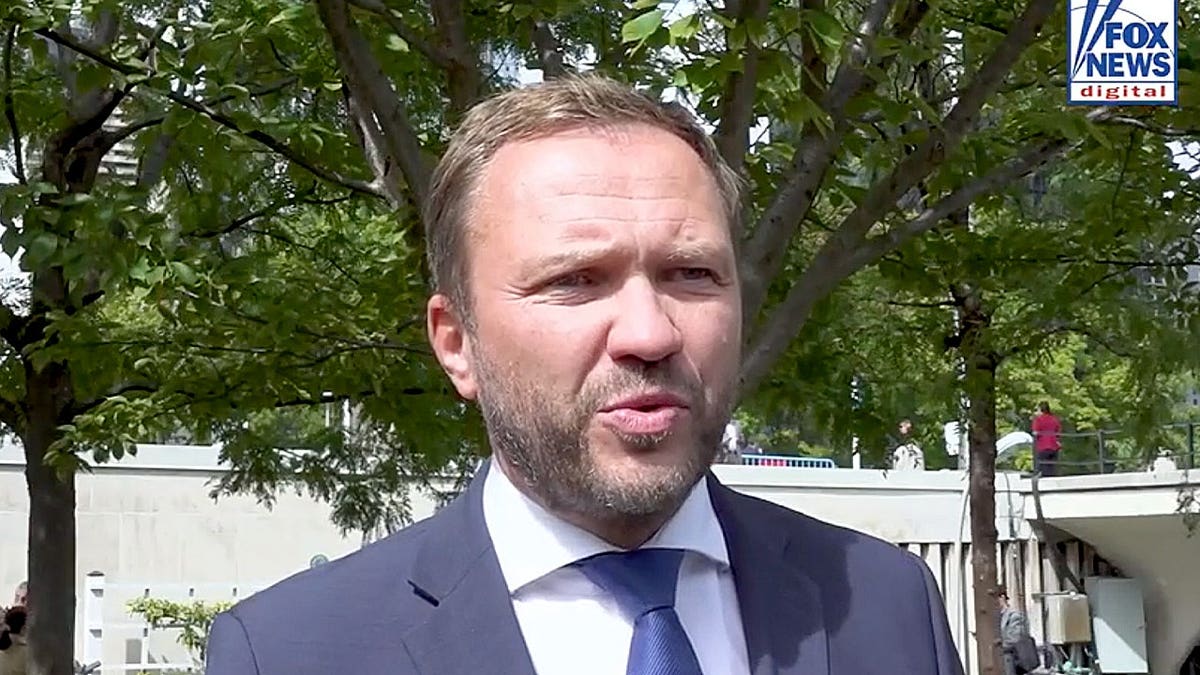
NEW YORK — Amid rising anxieties across Europe regarding a potential direct military confrontation between Moscow and the North Atlantic Treaty Organization (NATO), Estonian Foreign Minister Margus Tsahkna has offered a measured and reassuring assessment. Speaking in an exclusive interview on the sidelines of the United Nations General Assembly in New York City, Tsahkna asserted that Tallinn’s advanced intelligence networks detect no operational preparations or force concentrations indicating that Russian President Vladimir Putin is planning a full-scale conventional invasion of the Western military alliance.
While acknowledging an atmosphere of palpable panic spreading across various European capitals, the top Estonian diplomat drew a sharp, strategic line between large-scale conventional military buildups and the persistent, sub-threshold campaign of hostile actions that has come to characterize modern geopolitical conflict. As nations along NATO’s eastern flank—including Poland, the Baltic states, and Germany—grapple with an increasing frequency of airspace violations, sophisticated cyberattacks, infrastructural sabotage, and GPS jamming, Tsahkna emphasized that the immediate danger does not stem from armored divisions massing at the border, but rather from a calculated "shadow war" engineered to test Western resolve without triggering collective defense clauses.
The Estonian perspective carries substantial weight within the alliance. Sharing an approximate 180-mile border with the Russian Federation, Estonia has historically served as one of NATO’s most vocal and vigilant members regarding the security architecture of Eastern Europe. Tsahkna, who previously served as Estonia’s defense minister from 2016 to 2017, reflected on the stark contrast between the current security environment and the geopolitical landscape of a decade ago. Back then, he recalled, approximately 120,000 Russian troops were strategically positioned near regional borders, maintaining a high state of readiness that could enable offensive maneuvers within a 48-hour window. Today, by contrast, Tsahkna described the Russian side of the Estonian frontier as operationally empty of massed combat formations, reinforcing the conclusion that Moscow currently lacks the immediate conventional capacity to mount a multi-front war against NATO.
Evolving Security Dynamics and the Shift Toward Hybrid Warfare
Tsahkna’s assessment arrives against a backdrop of escalating tensions in European airspace and critical infrastructure nodes. Just days prior to his remarks, a Russian military helicopter crossed into Polish airspace, an incident military analysts in Warsaw characterized as a deliberate probe to evaluate the reaction time and effectiveness of Polish air defenses. This followed a series of alarming events over the past several years, including airspace violations by Russian fighter jets over Estonia and sustained electronic warfare campaigns targeting civil aviation and maritime navigation in the Baltic region.
European and NATO defense officials have frequently warned that while Moscow’s conventional forces remain heavily committed to the grinding attrition of the war in Ukraine, the Kremlin’s ongoing defense industrial mobilization and sweeping military reforms are designed to rebuild its long-term capabilities. Intelligence reports from various allied nations suggest that within the latter half of the decade, Russia could regenerate sufficient force posture to pose a direct conventional threat to the alliance if deterrence fails.
However, Tsahkna argued that focusing exclusively on a hypothetical future full-scale invasion obscures the insidious nature of the hybrid warfare campaign already underway.
"What Russia is doing now is waging these attacks, which are not crossing Article 5," Tsahkna told Fox News Digital, referencing the foundational collective-defense clause of the NATO treaty. "It’s sabotage attacks, terror attacks… The main purpose for Putin is to play with the Western part of the fear of escalation. He’s trying to divide the Western parts of the world. Divide the unity, divide this kind of consensus."
Estonia itself remains on the frontline of this digital and electronic attrition. Operating as one of the world’s most digitized societies—where virtually all public services, governance operations, and commercial transactions are conducted online—Estonia reported weathering approximately 40,000 cyberattacks last year alone. Alongside pervasive state-sponsored hacking attempts, the country has routinely managed widespread GPS interference and hostile disinformation campaigns attributed directly to Russian intelligence services.
"We are witnessing already, yes, any kind of different level attacks," Tsahkna noted, characterizing the constant barrage as an unfortunate new normal for frontline states.
The Strategic Logic of Sub-Threshold Provocations
To counter these persistent, low-intensity aggressions, Tsahkna argued that NATO must modernize its strategic posture and operational flexibility. Because hybrid tactics—such as cyber intrusions, cable sabotage, industrial arson, and localized airspace incursions—deliberately remain below the threshold required to invoke Article 5, the alliance must develop dynamic and multifaceted responses that leverage economic sanctions, rapid public attribution, and robust political countermeasures.
Using a stark metaphor, Tsahkna likened Moscow’s current strategy to the proverbial fable of boiling a frog. By incrementally raising the temperature through a series of calculated provocations and minor breaches of international norms, the Kremlin seeks to habituate Western populations to escalating levels of aggression, thereby eroding political cohesion and testing the limits of allied solidarity.
The foreign minister recalled a severe security incident from the previous year, during which three Russian fighter jets violated Estonian airspace for approximately 12 minutes. The provocation prompted Tallinn to officially invoke consultations under NATO’s Article 4—which provides for emergency consultations whenever the territorial integrity, political independence, or security of any ally is threatened—and to formally raise the issue at the United Nations Security Council.
Reflecting on subsequent diplomatic and strategic engagements, Tsahkna noted that firm rhetoric from international partners, including former U.S. President Donald Trump’s assertion that aircraft violating allied airspace should be intercepted, helped establish a clearer deterrent boundary. He observed that while traditional aircraft incursions have largely subsided, they have been partially replaced by frequent drone incursions, demonstrating that NATO’s integrated air and missile defense systems—described by Tsahkna as functioning "like a Swiss clock"—must adapt to incorporate cheaper, more cost-effective kinetic and electronic countermeasures to neutralize unmanned aerial vehicles without depleting expensive interceptor missile stockpiles.
Geopolitical Implications and the Path Forward in Ukraine
Beyond the borders of the Baltic states, the security of Eastern Europe remains inextricably linked to the ongoing war in Ukraine. Tsahkna emphasized that altering Moscow’s strategic calculus requires exerting sustained economic, military, and diplomatic pressure to convince Russian leadership that continued aggression carries an unsustainable cost.
Following a recent visit to Kyiv, the Estonian foreign minister asserted that President Vladimir Putin responds exclusively to signals of undeniable strength. He highlighted Ukraine’s expanding domestic defense capabilities and its increasing reliance on deep-strike operations targeting strategic infrastructure deep within Russian territory—such as recent successful long-range drone strikes on critical energy and industrial facilities in Russia’s northern and arctic regions—as vital components of this pressure campaign.
"If Putin is under heavier pressure, and also Ukraine is delivering more deep-strike capabilities and attacks, there will be a momentum when Putin may really start some kind of ceasefire or energy ceasefire, or real talks," Tsahkna stated.
At the same time, Tsahkna expressed skepticism regarding the Kremlin’s current diplomatic posture. While acknowledging that Ukrainian President Volodymyr Zelenskyy has repeatedly demonstrated a willingness to engage in serious ceasefire discussions, he cautioned that Moscow has historically utilized diplomatic overtures primarily to buy time and reconstitute its battered forces. Commenting on international mediation efforts, Tsahkna noted that despite extensive diplomatic energy expended by Western leaders—including former U.S. President Donald Trump—over the past year, the Russian leadership has largely treated the diplomatic process as a tactical diversion rather than a genuine pathway to peace.
"President Trump has put lots of energy during the last year to find a way, but Putin has just played with him and also winning the time," Tsahkna said. "Putin can just decide like today or tomorrow to have a ceasefire. Unfortunately, we don’t see any change for now."
Reassuring the Eastern Flank: The U.S. Military Footprint
Amid ongoing strategic reviews in Washington regarding the broader posture of American armed forces across Europe—including adjustments to U.S. brigade combat teams and force allocations—Estonian leadership has received formal assurances concerning the continuity of allied deployments.
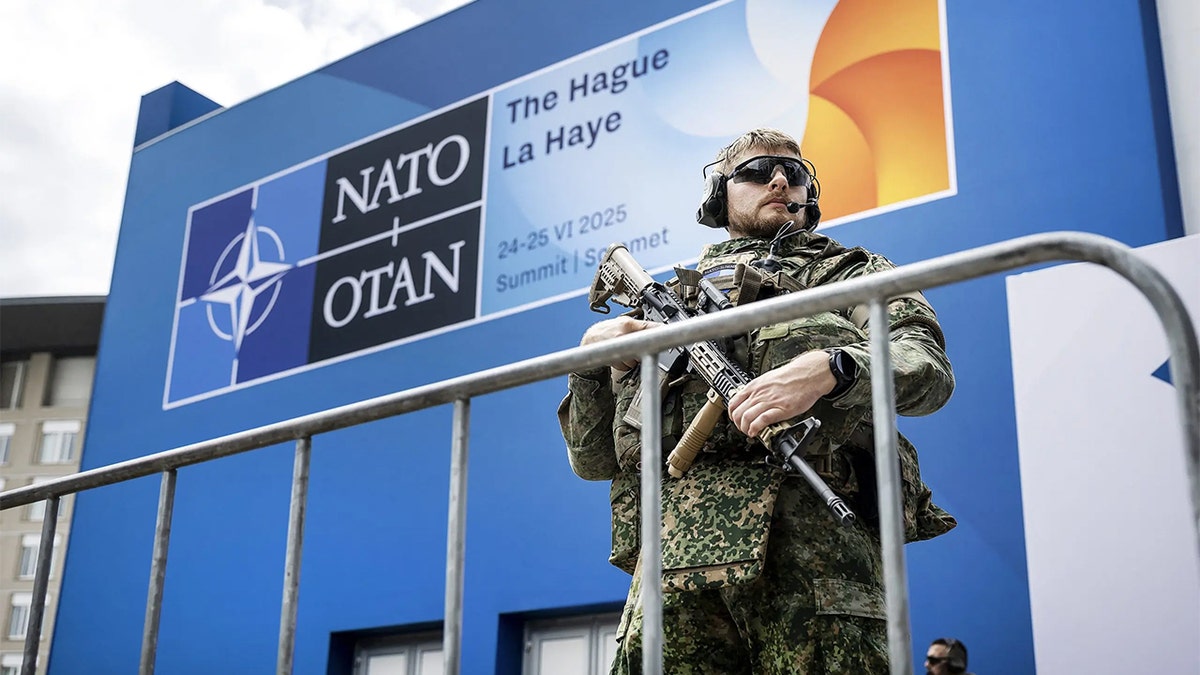
Tsahkna confirmed that Tallinn has been briefed on the forthcoming rotation of U.S. military personnel to the region, underscoring that the physical presence of American troops serves an indispensable role in maintaining robust deterrence along NATO’s eastern perimeter.
"We got the information that it will happen soon," Tsahkna said regarding the upcoming troop rotation. Reaffirming the psychological and strategic value of the deployment, he added, "U.S. troops are keeping the peace in our region. The flag of the troops is so important to give the message to President Putin" regarding the absolute red lines governing the security of the transatlantic alliance.
Related posts: