A Global Climate Reckoning: The Super El Niño and the Transformation of Earth’s Weather Systems



Off the Pacific coast of South America, a meteorological phenomenon is currently unfolding that challenges the boundaries of historical record-keeping. The band of warm water known as El Niño is undergoing a significant mutation, reaching surface temperatures more than 3 degrees Celsius above the long-term average. This development marks the warmest El Niño event recorded since satellite monitoring of sea surface temperatures commenced half a century ago. According to current projections from climate modeling groups, including Berkeley Earth, the phenomenon is expected to intensify further, potentially reaching a deviation of 4 degrees Celsius by the final quarter of the year.
This atmospheric anomaly does not exist in a vacuum. It is occurring alongside an inverse trend in the Atlantic basin, where the hurricane season—typically marked by high-energy tropical cyclone activity starting in June—has remained unnervingly quiet. While the average hurricane season typically yields four named hurricanes, including two major systems by late September, the Atlantic has yet to record a single hurricane this year. This surpassed the previous record for the latest first hurricane of the season, which had stood since September 11.
The Mechanism of Atmospheric Suppression
The divergence between the Pacific and Atlantic basins is a demonstration of the complex, interconnected nature of global climate dynamics. To understand why the Atlantic remains stagnant while the Pacific experiences extreme volatility, one must analyze the "engine" of hurricane formation. Tropical cyclones require specific conditions to generate and maintain intensity: warm ocean temperatures acting as fuel, high humidity to sustain convection, and low vertical wind shear to maintain the structural integrity of the storm’s core.
While the Atlantic Ocean currently possesses an abundance of thermal energy—the primary fuel for hurricanes—it is hampered by the atmospheric consequences of the Pacific El Niño. The current El Niño event has significantly altered global circulation patterns, resulting in heightened vertical wind shear across the Atlantic. Wind shear refers to the change in wind speed or direction at different altitudes; when this shear is high, it prevents the vertical alignment necessary for a tropical storm to organize and intensify. Furthermore, the El Niño pattern is currently inducing sinking, dry air over much of the Atlantic basin. This creates a hostile environment that suppresses convective activity, effectively acting as a lid on what would otherwise be a volatile hurricane season.
The Pacific Experience: Rapid Intensification and Human Impact
While the Atlantic experiences a period of suppression, the Pacific side of the Americas is confronting a starkly different reality. The same thermal energy fueling the Pacific’s El Niño is contributing to the phenomenon of rapid intensification, where a tropical system increases its sustained wind speeds by at least 35 mph within a 24-hour period.
Hurricane Polo serves as a primary case study for this trend. Within a 24-hour window, the system evolved from a tropical storm into a Category 5 hurricane. This rapid transition is increasingly linked to the combination of long-term anthropogenic climate change—which has raised the baseline temperature of the world’s oceans—and the compounding influence of the current El Niño. As Polo moved toward a projected landfall in Baja California, Mexico, it underscored the vulnerability of coastal regions to storms that maintain peak intensity for longer durations. Similarly, the development of tropical storm Nolo into a hurricane, with the capacity to deliver massive rainfall totals to the Hawaiian Islands, highlights the shifting geography of extreme weather risk.
Data and Historical Context: A New Baseline
The magnitude of this El Niño is significant not only for its immediate weather impacts but for its role as a precursor to future climate conditions. Scientists at the Scripps Institution of Oceanography emphasize that the ocean possesses a thermal capacity 1,000 times greater than that of the atmosphere. Consequently, even a deviation of a few degrees represents an enormous transfer of energy into the global climate system.
Climate researchers have observed that this event is taking place on a baseline temperature significantly higher than that of the mid-20th century. Zeke Hausfather of Berkeley Earth notes that this "hotter baseline" ensures that the impacts of the current El Niño are amplified. Projections regarding human health are equally concerning; scientific models estimate that the heat and climate instability associated with the first nine months of this event could be linked to as many as 451,000 global deaths, driven by thermal stress and the disruption of essential services.
Economic and Agricultural Implications
The implications for global food security are profound. El Niño historically disrupts rainfall patterns, leading to excessive precipitation in regions such as the American Southwest and California, while simultaneously inducing severe, prolonged drought in Southeast Asia, the Amazon basin, and parts of sub-Saharan Africa.
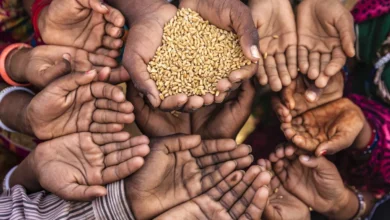
The economic fallout of these shifts is primarily felt by subsistence farmers, whose livelihoods are inextricably linked to predictable seasonal weather. The failure of critical crops—such as rice, maize, and wheat—in these regions has historically served as a primary driver of humanitarian crises. Experts suggest that governments must move beyond reactive measures to establish robust climate adaptation strategies. These include the implementation of sophisticated financial transfer systems to support agricultural sectors during harvest failures and the strategic stockpiling of food supplies to buffer against regional shortages.
Mitigation and Government Response
As the climate shifts toward a more volatile state, the burden on public infrastructure is expected to increase. Fire management represents a critical area of focus. With landscapes becoming increasingly susceptible to combustion due to heat and moisture stress, the traditional methods of fire suppression are proving insufficient.
Strategic policy responses currently under discussion among international environmental agencies include:
- Fuel Reduction: Increased reliance on controlled, or "prescribed," burns to remove dead biomass that acts as fuel for wildfires.
- Waste Management Policy: Stricter regulations on the burning of agricultural waste, which frequently serves as an ignition source for larger fires.
- Resource Allocation: Significant investments in fire-fighting infrastructure, including the training of specialized crews and the procurement of advanced aerial suppression technology.
The Future of the Global Climate
The current El Niño is a transitory event, and global temperatures are expected to stabilize once the phenomenon wanes. However, climate scientists warn that this episode provides a realistic preview of the global climate in the coming decades. As greenhouse gas concentrations continue to influence the planetary energy balance, future El Niño cycles will occur against a backdrop of higher average temperatures, likely resulting in events of even greater intensity.
The convergence of record-breaking ocean temperatures and shifting atmospheric circulation patterns serves as a diagnostic tool for understanding the Anthropocene. While the suppression of Atlantic hurricanes may provide a temporary respite for some coastal regions, the overall volatility of the global system—manifested in the rapid intensification of Pacific storms and the widespread threat of drought—presents a persistent challenge to global policy, economic stability, and disaster preparedness. The current data indicates that the climate is not merely changing, but entering a period of fundamental reorganization, requiring a shift in how societies prepare for the compounding nature of extreme weather events.
Related posts: