Hawaii Supreme Court Justice Delivers Blistering Rebuke of Roberts Court, Accusing It of Weakening Constitutional Rights and Damaging Democracy


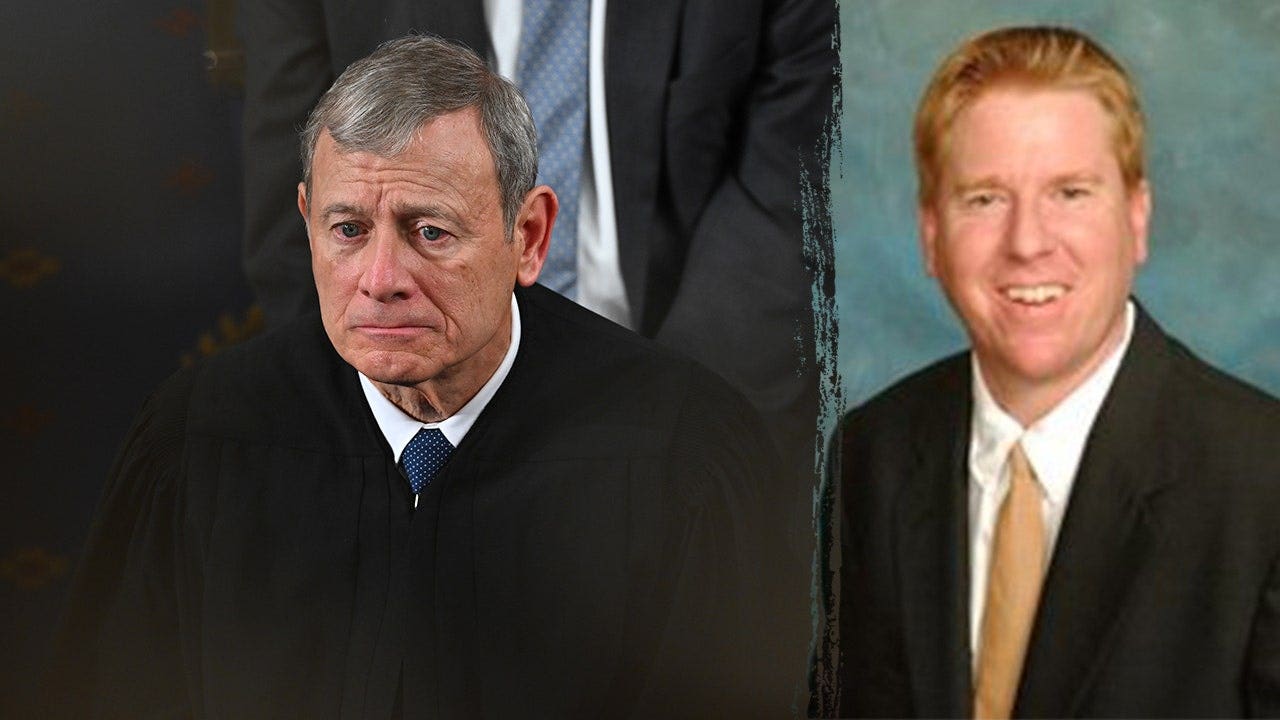
In an extraordinary and unusually sharp critique, Hawaii Supreme Court Justice Todd Eddins has publicly accused the United States Supreme Court, under Chief Justice John Roberts, of systematically weakening constitutional rights, damaging democratic institutions, and advancing a political agenda. The powerful denunciation, spanning approximately eight pages of a 91-page majority opinion in a criminal case, signals a deepening rift in constitutional interpretation between federal and state judiciaries, highlighting the ongoing national debate about the direction of America’s highest court.
The Granillo Ruling: A Platform for Profound Constitutional Discontent
Justice Eddins’ scathing commentary was embedded within the ruling of State v. Granillo, a case decided on Wednesday, [Insert specific date if available, otherwise generalize as ‘recently’]. The primary purpose of the ruling was to overturn a decades-old criminal conviction from 1990. The case involved a man convicted of kidnapping and sexually assaulting a woman on Maui, a conviction that the Hawaii Supreme Court deemed unreliable due to its reliance on now-discredited hair and fiber evidence presented by an FBI expert. The court ordered a new trial, underscoring the critical importance of sound forensic science in criminal justice.
However, Justice Eddins seized the opportunity presented by this procedural victory to articulate a much broader and more profound legal philosophy. Rather than merely addressing the specifics of the Granillo case, his opinion morphed into a comprehensive indictment of the Roberts Court’s jurisprudence, arguing forcefully that Hawaii’s courts should no longer defer to the federal Supreme Court when interpreting the state constitution. This strategic use of a state court opinion to deliver such a pointed federal critique is highly uncommon and underscores the gravity of Eddins’ concerns.
State Constitutions as a Bulwark Against Federal Erosion
Central to Justice Eddins’ argument is the principle that state constitutions can and should provide stronger protections for individual rights than those guaranteed by the U.S. Constitution, especially when the federal interpretation is perceived to be receding. He articulated this stance with a direct challenge: "When six justices walk away from those they are supposed to protect, state constitutions hold the line. That is not defiance. That is the design." This statement refers to the Supreme Court’s six conservative justices, whose majority decisions have frequently drawn criticism from the left and from advocates of broader civil liberties.
This concept, often referred to as "new judicial federalism," emerged in the latter half of the 20th century, particularly after the Warren Court era. As the U.S. Supreme Court’s conservative shift began in the 1970s and accelerated, many state supreme courts increasingly looked to their own state constitutions to expand or maintain rights that the federal court was narrowing or declining to protect. Justice William Brennan Jr., a prominent liberal justice, famously encouraged this approach in a 1977 law review article, urging state courts to become "independent guardians of our individual liberties." Eddins’ opinion is a stark modern-day manifestation of this legal philosophy, asserting the autonomy and, indeed, the duty of state courts to act as primary protectors of fundamental rights within their jurisdictions. Hawaii’s Constitution, like many state constitutions, contains its own bill of rights, which can be interpreted more expansively than its federal counterpart.
Historical Echoes: Dred Scott, Plessy, and the "Hubristic Originalists"
Justice Eddins drew stark historical parallels, accusing the Roberts Court of adopting an originalist approach that, in his view, mirrors the discredited constitutional interpretations of infamous past rulings. He wrote, "The Court that now defines federal due process does not honor the work of 1954. It revives the work of 1857. The work of 1896." These dates are deliberate and deeply significant:
- 1954: Brown v. Board of Education. This landmark decision famously declared state-sponsored segregation in public schools unconstitutional, overturning the "separate but equal" doctrine and representing a pinnacle of civil rights advancement through judicial interpretation. Eddins suggests the current Court has moved away from this progressive legacy.
- 1857: Dred Scott v. Sandford. This notorious ruling denied citizenship to African Americans, whether enslaved or free, and declared the Missouri Compromise unconstitutional, thereby allowing slavery to expand into new territories. It is widely regarded as one of the worst decisions in Supreme Court history, a profound failure of justice and constitutional interpretation.
- 1896: Plessy v. Ferguson. This decision upheld racial segregation under the "separate but equal" doctrine, providing legal justification for Jim Crow laws for over half a century. It institutionalized systemic racism and inequality.
By invoking Dred Scott and Plessy, Eddins dramatically argues that the Roberts Court’s "originalist approach" — a judicial philosophy that seeks to interpret the Constitution based on the original public meaning of its text at the time of its adoption — is being applied in a way that is regressive and dangerous, rather than protective of rights. He contends that today’s "hubristic originalists use the same method to control modern life," implying that their adherence to historical interpretations, stripped of evolving societal understandings and moral considerations, risks re-entrenching injustices and undermining established civil liberties. This critique resonates with broader academic and public debates about the practical application of originalism, particularly regarding issues not explicitly foreseen by the Constitution’s framers.
Specific Rulings Cited: A Pattern of Erosion
Justice Eddins meticulously pointed to a series of consequential decisions by the Roberts Court, presenting them as evidence of a systematic dismantling of constitutional protections and democratic safeguards. These include:
- Dobbs v. Jackson Women’s Health Organization (2022): This landmark ruling overturned Roe v. Wade and Planned Parenthood v. Casey, eliminating the federal constitutional right to abortion and returning the authority to regulate or ban abortion to individual states. Eddins views this as a significant rollback of individual liberty and bodily autonomy. The decision immediately led to a patchwork of state laws, with some states banning abortion outright, profoundly impacting reproductive healthcare access for millions of Americans.
- Citizens United v. Federal Election Commission (2010): This decision held that corporations and unions have the same First Amendment rights as individuals, effectively allowing unlimited independent political spending in elections. Critics, including Eddins, argue that this ruling exacerbated the influence of wealthy interests in politics, drowning out the voices of ordinary citizens and undermining the democratic process.
- Rucho v. Common Cause (2019): In this case, the Supreme Court ruled that federal courts have no authority to hear cases challenging partisan gerrymandering, leaving the issue to state courts and legislatures. Eddins sees this as a weakening of democratic institutions, allowing political parties to manipulate electoral maps for partisan gain without federal judicial oversight, thereby disenfranchising voters and distorting representation.
- Trump v. United States (recent developments and ongoing cases): While the specific case cited in the original text about presidential immunity is currently ongoing (e.g., related to January 6th events), Eddins’ reference likely pertains to a broader concern about the Court’s perceived inclination to expand executive power or shield high-ranking officials from accountability, particularly in decisions that have touched upon the scope of presidential authority.
- New York State Rifle & Pistol Association v. Bruen (2022): This decision significantly expanded Second Amendment protections, ruling that states cannot require individuals to show "proper cause" to carry a handgun in public. Eddins and others interpret this as prioritizing gun rights over public safety and potentially undermining states’ abilities to enact reasonable gun control measures, contributing to a sense of weakened societal protections.
Collectively, these decisions, in Eddins’ view, illustrate a consistent pattern: the Court systematically reducing individual rights, expanding the power of the state or wealthy actors, and disengaging from its role in upholding democratic fairness.
The "Colorblind" Critique and the Equal Protection Clause
Perhaps one of the most provocative criticisms leveled by Justice Eddins concerns the Roberts Court’s interpretation of the Equal Protection Clause of the Fourteenth Amendment. He asserted, "The Roberts Court sees only white. It refuses to acknowledge who the Equal Protection Clause was written to protect."

The Fourteenth Amendment, ratified after the Civil War, was fundamentally designed to guarantee civil rights and equal protection under the law to formerly enslaved Black Americans. It was a direct response to the Dred Scott decision and the discriminatory Black Codes. Eddins’ critique suggests that the Roberts Court’s "colorblind" approach to equal protection, which often disfavors policies that consider race (such as affirmative action), fundamentally misinterprets the amendment’s historical context and original purpose. He argues that by insisting on a "colorblind" standard without acknowledging historical and ongoing racial disparities, the Court effectively perpetuates inequality rather than dismantling it. This perspective is at the heart of the ongoing national debate surrounding affirmative action, diversity initiatives, and the role of race in American law and society. Critics of the "colorblind" approach argue it ignores systemic racism and the necessity of targeted interventions to achieve true equality.
A Court That "Tramples Human Dignity"
Justice Eddins concluded his broader critique with an unequivocal statement of judicial independence: "A court that systematically dismantles democratic safeguards, steamrolls constitutional liberties, and tramples human dignity does not chart the course for the Hawaiʻi Constitution." This declaration solidifies his stance that the Hawaii Supreme Court will chart its own course, guided by its state constitution and its own interpretation of justice, rather than following a federal judiciary that he believes has strayed from its core principles. This sentiment reflects a deep ideological chasm between Eddins’ progressive view of constitutional rights and what he perceives as the Roberts Court’s conservative retrenchment.
Immediate Reactions from Legal Observers
The extraordinary nature of Justice Eddins’ opinion quickly drew strong reactions from legal commentators, many of whom expressed surprise and criticism regarding its tone and scope.
Eric Wessan, the Iowa Solicitor General, took to social media platform X (formerly Twitter) to express his dismay, calling the opinion an "unhinged attack on the legitimacy of the Supreme Court" and stating, "I haven’t ever seen something like this. And it’s not good." His reaction highlights the perceived breach of traditional judicial decorum and the unusual intensity of Eddins’ language.
Similarly, George Washington University law professor Jonathan Turley, a frequent commentator on legal affairs, described the opinion as "devoid of judicial restraint and decorum." Turley further elaborated on X, writing that the Hawaii Supreme Court "just issued a truly shocking opinion that unleashed a torrent of rage and recrimination against the majority of the United States Supreme Court, including suggesting that they are de facto racists." Turley’s strong condemnation underscores the controversial nature of Eddins’ accusations, particularly the charge of racial bias implicit in the "sees only white" comment. The consensus among many legal scholars is that while state courts are certainly free to interpret their own constitutions more broadly than federal ones, using a judicial opinion as a platform for such an extensive and pointed critique of the nation’s highest court is highly irregular.
Recent Context: Hawaii’s Loss at the U.S. Supreme Court
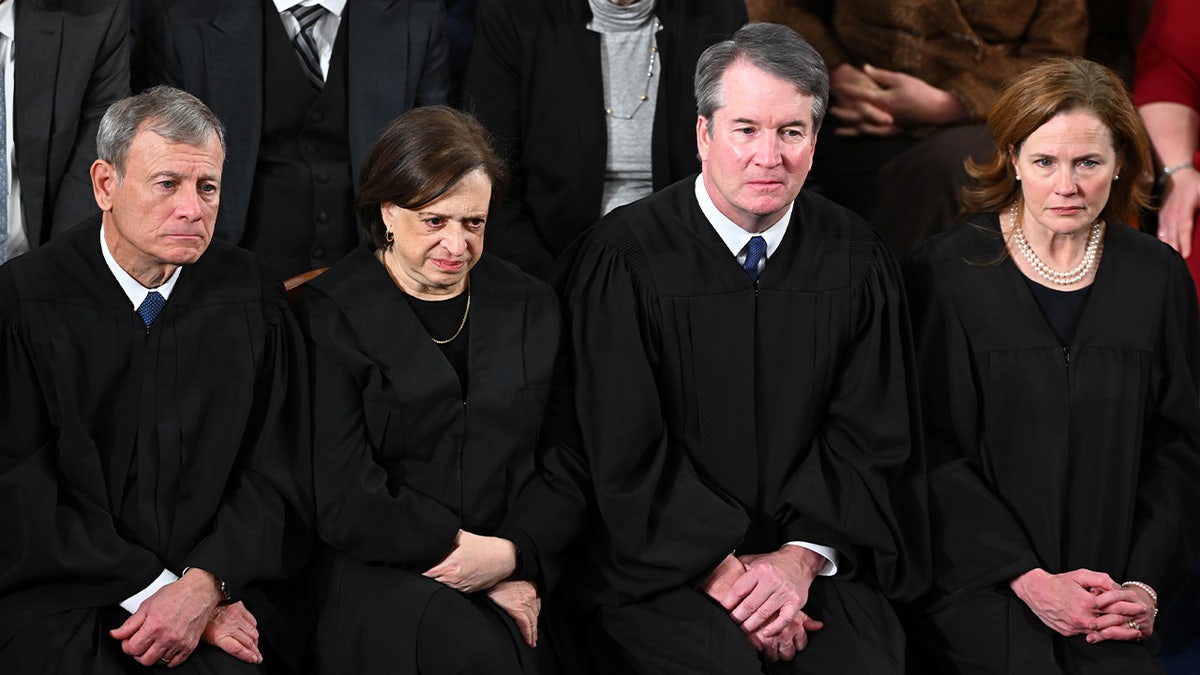
The timing and intensity of Justice Eddins’ critique may also be understood in the context of a recent setback for Hawaii at the U.S. Supreme Court. Just weeks prior, the Supreme Court delivered a major loss to the state in Wolford v. Lopez. In a 6-3 decision, the Court struck down Hawaii’s so-called "vampire rule," which had required gun owners to obtain permission from a property owner before carrying a firearm into businesses and other private property open to the public, even if the property was generally accessible to the public.
This ruling was a direct application of the Bruen decision, which emphasized a historical tradition of gun regulation. For Hawaii, a state with historically strict gun laws, the Wolford decision was a significant blow to its regulatory authority. It is plausible that this recent loss, coupled with the broader trend of conservative decisions, contributed to Justice Eddins’ decision to voice such a comprehensive and impassioned dissent against the Roberts Court’s philosophy.
Justice Eddins’ Background and the Broader Implications
Justice Todd Eddins has served on the Hawaii Supreme Court since 2020, having been appointed by then-Democratic Governor David Ige. His background and the political leaning of his appointing authority offer some context for his judicial philosophy, which appears to align with a more progressive interpretation of constitutional rights.
The Granillo opinion, with its dual focus on forensic science reform and federal judicial critique, represents more than just a legal ruling; it is a significant statement on the evolving landscape of American constitutional law. It highlights several critical implications:
- Increased State Court Activism: This opinion could embolden other state courts in jurisdictions with similar judicial philosophies to more aggressively interpret their own constitutions, creating a further divergence in rights and protections across states. This trend would exacerbate the "patchwork" effect seen after Dobbs, where fundamental rights vary significantly based on geography.
- Debate Over Judicial Role: It reignites the perennial debate over the proper role of the judiciary. Is it to strictly adhere to the text and original intent (as perceived by originalists), or to interpret the Constitution as a living document that adapts to contemporary societal values and challenges? Eddins’ critique firmly places him in the latter camp, arguing for a judiciary that actively protects and expands rights.
- Legitimacy of the Supreme Court: Such direct attacks from a state supreme court justice, while rare, contribute to broader discussions about the perceived legitimacy and political neutrality of the U.S. Supreme Court. In an era of increasing political polarization, concerns about the Court acting as a political body rather than a neutral arbiter of law are growing, particularly after highly controversial decisions.
- Federal-State Tensions: The opinion signals escalating tensions between federal and state judicial systems, particularly when their constitutional interpretations diverge sharply. This could lead to more legal battles and a complex interplay of rulings, requiring citizens and legal practitioners to navigate differing standards of rights and responsibilities.
- Impact on Public Discourse: The strong language used by Justice Eddins is likely to resonate in public discourse, galvanizing those who share his concerns about the Roberts Court’s direction and further entrenching the positions of those who defend its originalist approach.
In conclusion, Justice Todd Eddins’ blistering opinion in State v. Granillo is far more than a technical legal document. It is a powerful ideological declaration, a rallying cry for state judicial independence, and a stark reflection of the profound disagreements currently shaping American constitutional law. His accusations of weakened rights, damaged democracy, and a political agenda underscore a moment of significant tension and redefinition within the nation’s legal framework, pushing the boundaries of judicial dialogue and setting the stage for continued debate over the future of fundamental liberties in the United States.
Related posts: