Legislative Deadlock Deepens as Senate Agriculture Committee Fails to Secure Path for New Farm Bill



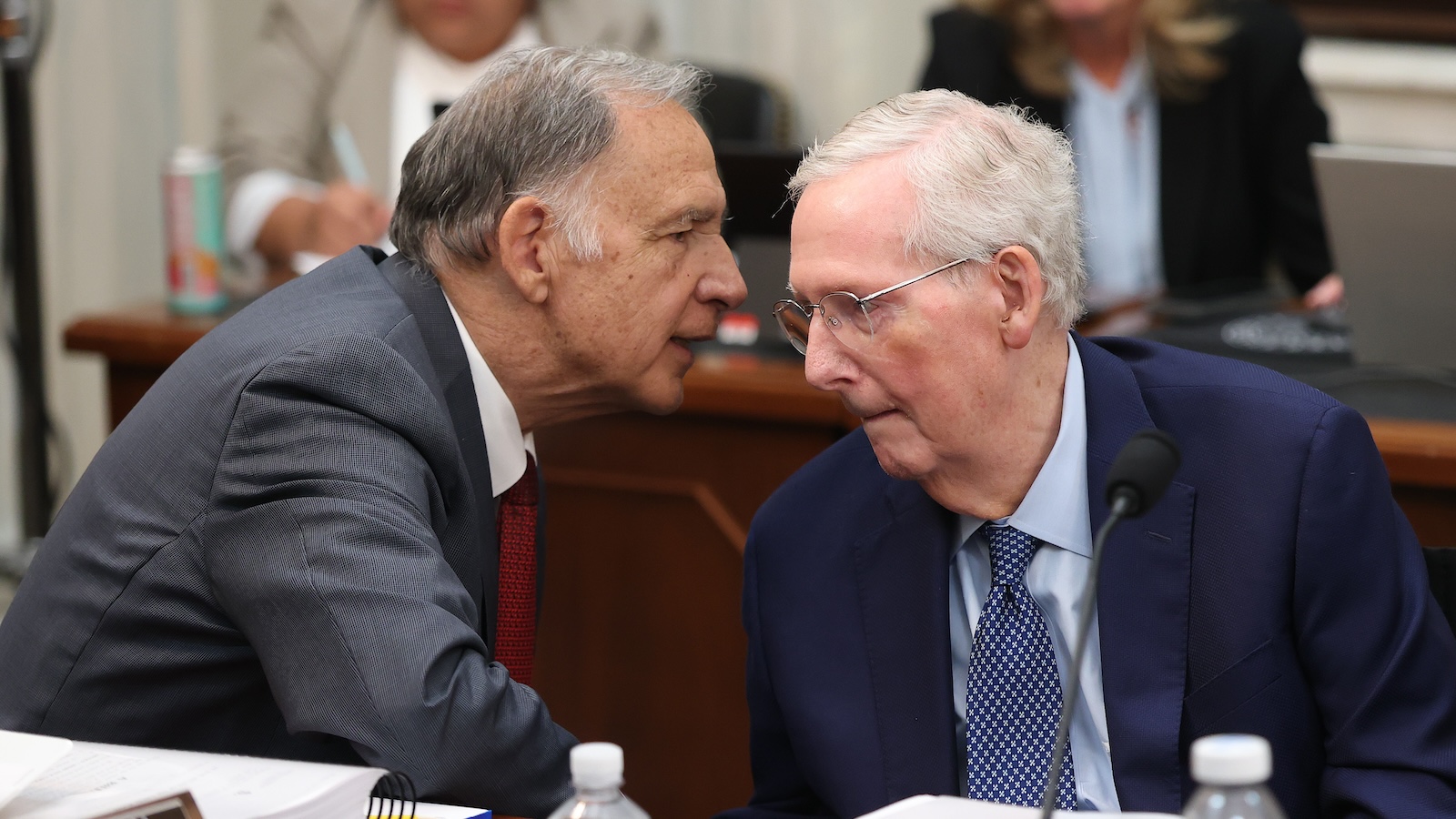
Senator Mitch McConnell’s return to the Capitol last Tuesday after a three-month hiatus signaled a brief, focused burst of legislative activity, most notably culminating in his tie-breaking vote within the Republican-led Senate Agriculture Committee. The move was intended to nudge the chamber’s version of the long-delayed farm bill toward a full floor vote. However, despite the procedural progress, the legislation remains caught in a deepening partisan stalemate that threatens to leave the nation’s foundational agricultural policy in limbo for the fourth consecutive year.
The farm bill, a sprawling legislative package typically renewed every five years, dictates everything from national food assistance programs and crop insurance to conservation efforts and rural development. The current impasse reflects a profound divide over fiscal priorities, specifically regarding the Supplemental Nutrition Assistance Program (SNAP). With the midterm elections looming in November, the political window for negotiation is rapidly closing, and the path to securing the 60 votes required to overcome a filibuster in the Senate remains fraught with obstacles.
A Chronology of the Legislative Stagnation
The failure to pass a comprehensive farm bill is not a new phenomenon, but rather the culmination of years of gridlock. The 2018 farm bill, which provided the previous framework, has been extended through various stopgap measures as lawmakers struggled to reconcile competing visions for the agricultural economy.
In August, Senate Democrats successfully stalled the committee’s version of the current bill, citing deep concerns over funding levels for food security. The committee’s inability to advance the bill to the floor for months left a vacuum in policy certainty for farmers and state administrators alike. McConnell’s recent participation in the committee was a tactical attempt to bypass this blockade, yet it did little to address the underlying ideological friction.
The timeline of the current failure is marked by two distinct eras of legislation: the stability of the 2018 framework and the subsequent disruption caused by the “One Big Beautiful Bill Act.” Signed into law by President Donald Trump last summer, this legislation introduced sweeping changes to federal spending, most notably a $186 billion reduction in SNAP funding. This cut, which significantly altered the landscape of federal safety nets, serves as the primary point of contention preventing a bipartisan consensus.
The SNAP Controversy: Implications for Food Security and Rural Economies
At the heart of the Democratic opposition is the refusal to move forward with a bill that codifies the massive cuts to SNAP. For millions of low-income Americans, these benefits are the difference between food security and hunger. However, the ripple effects of these cuts extend far beyond urban centers, hitting the agricultural producers who rely on SNAP recipients as a core customer base.
Jody Osmund, a founding member of the FACE Ag Network, a coalition of pasture-based livestock producers, emphasizes that the impact on rural communities is often overlooked. “The farmers in our network live in rural areas,” Osmund stated. “Rural areas have a higher uptake of SNAP participation than urban areas. When you slash these programs, you are not just hurting the individuals on the program; you are hurting the rural economy, which relies on that purchasing power.”
Beyond the direct reduction in benefits, the current draft of the bill fails to delay a controversial administrative change that would shift significant financial burdens onto state governments. Mike Lavender, policy director of the National Sustainable Agriculture Coalition, warns that this creates a zero-sum game for state budgets. “States are going to have to rethink their priorities,” Lavender explained. “When you force a state to absorb higher administrative costs for running a federal program, they are forced to choose between funding education, infrastructure, or nutrition assistance. It forces difficult, potentially damaging decisions at the state level.”
Economic Pressures on Small and Medium-Sized Farms
The legislative gridlock arrives at a precarious time for American agriculture. Farmers are currently navigating a volatile economic environment characterized by record-high input costs—most notably for diesel and fertilizers—and unstable global trade markets. While large corporate agribusinesses possess the capital to hedge against these fluctuations, small and medium-sized operations are increasingly vulnerable.
Data suggests that as the financial calculus of farming becomes more complex, the lack of a stable federal farm bill exacerbates the risk of bankruptcy for family farms. Without the certainty provided by a multi-year bill, farmers struggle to secure long-term loans, plan for seasonal plantings, or invest in necessary equipment upgrades. The current reliance on temporary extensions creates a “wait-and-see” environment that discourages long-term investment in sustainable agriculture.
Conservation and the “Save Our Bacon” Provision
While the bill faces significant criticism, it has received rare, albeit cautious, praise for one specific omission: the exclusion of the “Save Our Bacon Act.” This proposed provision would have relaxed federal standards for livestock confinement, allowing for more intensive and, according to animal welfare advocates, less humane practices.
The coalition represented by Osmund played a direct role in this outcome, having traveled to Washington, D.C., to lobby lawmakers against the measure. Their success in keeping the provision out of the bill is seen as a victory for ethical animal husbandry. However, this success is shadowed by the broader dissatisfaction with how the bill handles conservation funding.
Critics argue that even if the bill were to pass, the current allocation of funds within the Environmental Quality Incentives Program (EQIP) and the Conservation Stewardship Program (CSP) is misaligned. Instead of prioritizing climate adaptation and regenerative practices, a significant portion of conservation funding remains directed toward managing waste on industrial-scale livestock operations. “We need a redesign,” Osmund argued. “We should be directing money to the practices that actually improve soil health and resilience against climate change, rather than subsidizing the status quo of industrial farming.”
Looking Toward 2027: The Case for Inaction
Given the current political climate, many industry observers and agricultural advocates are beginning to argue that inaction may be the lesser of two evils. If the choice is between a flawed, deeply partisan farm bill and an extension of the existing 2018 framework, many farmers prefer the latter.
“A continuation of the 2018 farm bill may be better,” Osmund suggested. “It’s not ideal, but no deal on the current versions is much better than a very, very bad deal.” This sentiment reflects a growing exhaustion among stakeholders who see the current legislative process as fundamentally broken.
If Congress fails to pass a bill before the November midterms, the issue will inevitably be pushed into the next session. This would effectively mean that lawmakers will have to return to the drawing board in 2027 to draft a new version from scratch. While this offers the potential for a more comprehensive and bipartisan approach, it also ensures that the uncertainty currently plaguing the American food and agricultural sectors will persist for at least another year.
As the Senate faces the reality of its 53-47 majority, the math remains stubbornly against them. To pass the bill, the Republican leadership must peel away several Democratic votes—a task that seems increasingly unlikely given the current polarization regarding SNAP funding. As the clock ticks down, the legislative record of this session may ultimately be defined not by what was passed, but by the fundamental policy shifts that remained just out of reach.
Related posts: