Bridging the Gap: Why Global Climate Finance Continues to Bypass Indigenous Guardians of the Planet


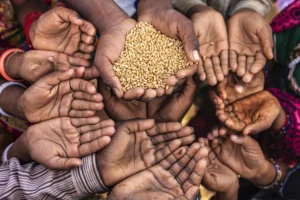
The disparity between international rhetoric and financial reality has reached a critical juncture as multi-billion-dollar climate funds continue to bypass the very communities designated as the world’s most effective conservationists. At the 25th session of the United Nations Permanent Forum on Indigenous Issues in New York City, global leaders, including U.N. Secretary-General António Guterres, lauded Indigenous peoples as the "great guardians of nature" and a "living library of biodiversity." However, beneath the accolades lies a systemic failure: despite managing approximately 80 percent of the world’s remaining biodiversity, Indigenous communities receive less than one percent of global climate finance. This financial exclusion persists even as Indigenous territories face the frontlines of climate-induced devastation, from the melting permafrost of the Arctic to the incinerated forests of the Amazon and the submerged coastlines of the Pacific.
The Financial Paradox: Billions Pledged, Pennies Received
The architecture of global climate finance was designed to mobilize massive resources to combat global warming, yet the mechanisms for delivery have proven largely inaccessible to grassroots Indigenous organizations. According to an exhaustive analysis by Rainforest Foundation Norway, between 2011 and 2020, Indigenous peoples and local communities involved in land tenure and forest management received less than one percent of the total international aid earmarked for climate change mitigation and adaptation. This figure is particularly striking when contrasted with the Intergovernmental Science-Policy Platform on Biodiversity and Ecosystem Services (IPBES) data, which confirms that biodiversity is declining less rapidly on lands managed by Indigenous peoples than in other areas.
The Green Climate Fund (GCF), the primary financial mechanism of the Paris Agreement, currently boasts a portfolio of approximately $20 billion. Despite its massive scale and a mandate to support vulnerable populations, the fund has yet to accredit a single Indigenous-led organization to receive direct funding. Helen Magata, an Indigenous Kadaclan Igorot and member of the GCF’s Indigenous advisory committee, noted that the lack of a tracking mechanism makes it nearly impossible to determine how much money, if any, actually reaches these communities through third-party intermediaries. Without a dedicated framework for transparency, the claim that Indigenous peoples are "benefiting" from these funds remains anecdotal rather than empirical.
Structural Barriers and the "Accreditation Hoop"
The primary obstacle cited by Indigenous advocates is the rigorous and often culturally insensitive accreditation process required by major international funds. To qualify for direct access to the GCF, an organization must demonstrate high-level financial management, sophisticated accounting standards, and complex environmental and social safeguards. For many Indigenous organizations that operate on traditional governance models rather than Western corporate structures, these requirements represent an insurmountable barrier.
Janene Yazzie, a member of the Diné nation and a representative for the International Indigenous Peoples Forum on Climate Change, described the process as a series of "hoops" that ignore the inherent capacity of Indigenous nations. "They literally created a problem that is on us to prove our capacity to solve," Yazzie stated. Furthermore, the GCF’s minimum grant threshold of $10 million is often too large for smaller, community-based projects to manage, effectively pricing out the most localized and impactful conservation efforts. This "one-size-fits-all" approach fails to account for the decentralized nature of Indigenous land stewardship.
A History of Injustice and the Right to Direct Finance
The demand for direct access to finance is framed by Indigenous leaders not as a request for aid, but as a fundamental right grounded in international law. Joan Carling, Executive Director of Indigenous Peoples Rights International and a Kankanaey Igorot from the Philippines, emphasized that the U.N. Declaration on the Rights of Indigenous Peoples (UNDRIP) explicitly supports the right to financial assistance for the productive exercise of their rights.
"We are not asking for charity. This is a matter of social justice," Carling argued during the Permanent Forum. The argument for "climate reparations" has gained momentum following international court rulings that affirm the rights of those harmed by climate change. Indigenous communities argue that they are being forced to pay the highest price for a crisis they did not create, often having to choose between the costly rebuilding of disaster-stricken homes or the permanent relocation of entire villages from ancestral lands. Without direct financial support, these communities are left to navigate these existential crises with limited resources, even as they continue to provide global ecosystem services for free.
The Terminology Trap: Indigenous Peoples vs. Local Communities
A growing point of contention within international climate negotiations is the grouping of "Indigenous peoples" with "local communities" (often abbreviated as IPLC). While intended to be inclusive, U.N. experts and Indigenous advocates have called for a clear distinction between the two. Indigenous peoples possess distinct rights under international law, including the right to self-determination and free, prior, and informed consent (FPIC). By merging these categories, funding bodies often dilute the specific legal obligations they have toward Indigenous nations.
The Global Environment Facility (GEF), another major international fund, utilizes the "local communities" definition from the Convention on Biological Diversity, which focuses on traditional lifestyles relevant to conservation. While GEF officials argue this terminology helps reach communities in countries that do not formally recognize Indigenous rights, critics like Yazzie argue it "invisibilizes" the unique sovereignty of Indigenous nations. This linguistic ambiguity can lead to situations where funding intended for Indigenous conservation is instead diverted to broader local government projects that may not align with Indigenous priorities.
The North-South Divide and Colonial Legacies in Finance
A significant limitation of the current climate finance structure is its reliance on "Official Development Assistance" (ODA). Under this model, funds typically flow from wealthy, "developed" nations to "developing" ones. This creates a geographical vacuum for Indigenous peoples living within the borders of wealthy nations, such as the Inuit in Canada, the Diné in the United States, or the Sámi in Scandinavia. These communities face similar disenfranchisement and climate threats—such as melting permafrost and coastal erosion—but are ineligible for global climate funds because they reside in the Global North.
Janene Yazzie criticized this "false dichotomy," labeling it a continuation of colonial policies. She argued that the developed North continues to profit from the historical and ongoing extraction of resources from Indigenous lands within its own territories, while simultaneously excluding those same Indigenous peoples from international financial support. This structure effectively ignores the internal colonization that persists within wealthy nations, leaving Northern Indigenous communities to rely on domestic budgets that are often subject to shifting political whims.
Institutional Reform and the Path Forward
Recognizing these systemic failures, some international bodies are beginning to signal a shift in strategy. The Global Environment Facility has disbursed more than $27 billion over the last three decades and recently committed to increasing its dedicated funding for Indigenous peoples and local communities to $100 million for the next four-year cycle. Adriana Moreira, GEF’s head of partnerships, indicated that the fund intends to partner with five Indigenous-led trust funds, moving away from the traditional model of Western-led intermediation.
Similarly, the Green Climate Fund has acknowledged the need for better tracking and accountability. Rebecca Phwitiko, a communications specialist for the GCF, stated that the fund is working on a dedicated marker to track funding flows specifically to Indigenous organizations. A 2025 report by the GCF’s Independent Evaluation Unit concluded that the fund must create a dedicated "funding window" for Indigenous peoples to overcome the "insurmountable" barriers currently in place.
In the absence of rapid institutional reform, Indigenous groups are increasingly building their own financial infrastructure. The Community Land Rights and Conservation Finance Initiative (CLARIFI), launched in 2021, seeks to bypass traditional bureaucracy by drawing from private philanthropy to provide direct grants to Indigenous and Afro-descendant organizations. Deborah Sanchez, a Miskito leader from Honduras and director of CLARIFI, noted that the initiative was born out of the observation that "funding didn’t go to the ground."
Analysis: The Implications of Continued Financial Neglect
The failure to adequately fund Indigenous-led climate action is not merely a matter of administrative inefficiency; it is a strategic error in the global fight against climate change. Scientific consensus suggests that the Paris Agreement goals are unattainable without the preservation of the world’s primary forests and carbon sinks, most of which are located on Indigenous lands. By withholding direct finance, the international community risks the degradation of these vital ecosystems.
Furthermore, the shift toward Indigenous-led trust funds and private philanthropic models suggests a growing lack of confidence in traditional multilateral institutions. If the GCF and GEF cannot adapt their processes to accommodate the "guardians of nature," they risk becoming obsolete in the most critical areas of conservation. The transition from acknowledging Indigenous peoples as "living libraries" to treating them as equal financial partners remains the most significant hurdle in the modern climate movement. As the Permanent Forum concluded, the objective is clear: to move money from the halls of New York and Geneva to the frontlines of the forest floor. Until that transition is realized, the global response to the climate crisis will remain fundamentally incomplete.