Dixon Q. Dern, Hollywood Legal Architect Who Shaped Modern Entertainment Law, Dies at 97

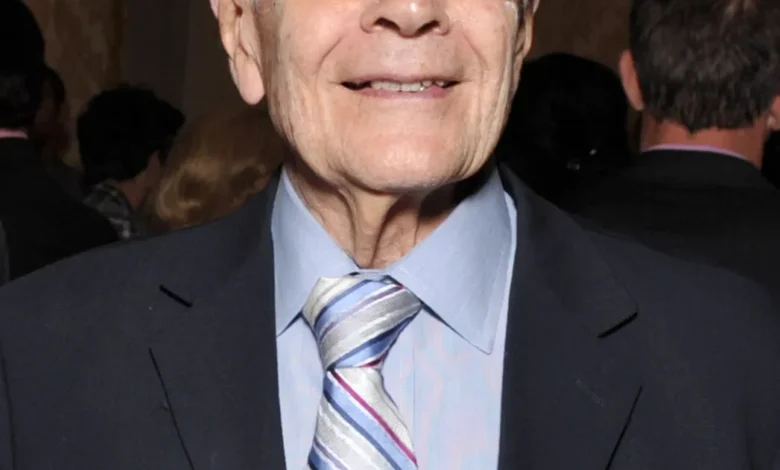
Dixon Q. Dern, a towering figure in Hollywood legal circles whose innovative business acumen and pioneering deal-making profoundly influenced the landscape of modern entertainment law, passed away on July 19th at the age of 97. His death marks the end of an era for a legal strategist who not only navigated but actively sculpted the complex financial and creative frameworks that underpin the global entertainment industry for over seven decades.
Born in Colorado Springs, Colorado, Dern’s intellectual journey began at Stanford University, where he pursued both his undergraduate studies and his law degree. It was in the burgeoning post-war era of the 1950s, as television began its meteoric ascent, that Dern arrived in Los Angeles, positioning himself at the vanguard of a rapidly evolving industry. His early career was distinguished by his representation of some of the era’s most iconic figures, including the groundbreaking duo Lucille Ball and Desi Arnaz, whose ambitious production company, Desilu Productions, would become a cornerstone of television history.
From "Mr. Magoo" to the Academy: A Legacy of Client Representation
Dern’s early success was cemented by his representation of UPA Productions, the innovative animation studio responsible for the beloved "Mr. Magoo" cartoons. This early involvement with a forward-thinking creative entity foreshadowed his career-long commitment to fostering and protecting artistic endeavors through shrewd legal and business strategies. His client roster expanded to include an illustrious pantheon of entertainment giants. Among those who benefited from his counsel were the legendary comedian and impresario Bob Hope, the versatile actor and producer Jackie Gleason, the musical phenomenon The Jackson Five, and the esteemed Television Academy, the organization behind the Emmy Awards.
Founding a Firm and Forging a New Agency
A pivotal moment in Dern’s professional life was his co-founding of the esteemed law firm Dern, Mason, Swerdlow & Floum. This venture served as a crucial incubator for his legal expertise, allowing him to build a formidable entertainment law practice that became synonymous with excellence and innovation. Beyond his own firm, Dern played an instrumental, albeit often behind-the-scenes, role in the very founding of the Creative Artists Agency (CAA). This nascent agency would go on to redefine talent representation, and Dern’s early contributions were critical in establishing its foundational principles and strategic direction. His involvement in these foundational enterprises underscores his deep understanding of the industry’s structural needs and his prescient vision for its future growth.
Pioneering Television Syndication and Business Structures
During his tenure as head of the legal department at Desilu Productions, Dern was instrumental in structuring the business affairs of the company, particularly during a critical period when television syndication was emerging as a vital economic engine for the industry. This involved navigating complex licensing agreements, intellectual property rights, and distribution models, laying the groundwork for how television content would be monetized and disseminated for decades to come. His work in this area was not merely transactional; it involved the creation of novel business structures and legal frameworks that enabled the massive expansion of television’s reach and profitability.
A Life Dedicated to Service and Advocacy
Dern’s commitment to the legal profession and the entertainment community extended far beyond his private practice. Beginning in 1967, he dedicated himself to serving as an arbitrator and mediator in a wide array of entertainment and labor disputes. This role required a unique blend of legal acumen, negotiation skills, and an understanding of the often-fraught dynamics between creators, producers, and labor unions. His impartiality and expertise made him a trusted figure in resolving contentious issues, contributing to the stability and continued progress of the industry.
His leadership and influence were recognized through numerous high-profile appointments and accolades. He served with distinction as Vice President and a Member of the Board of Governors of the State Bar of California, demonstrating his commitment to the broader legal profession. He also held the esteemed position of President of the Beverly Hills Bar Association and served as a Trustee of the Los Angeles County Bar Association, actively shaping legal discourse and practice in one of the world’s most influential legal communities. Furthermore, his dedication to intellectual property rights was evident in his role as President of the Los Angeles Copyright Society.
In 2009, the Television Academy bestowed upon him its prestigious Syd Cassyd Founders Award. This honor recognized his profound and lasting impact on the Academy, celebrating members whose contributions have significantly shaped its mission and operations. The award served as a testament to his enduring legacy as a champion of the television industry and its creators.
A Family Legacy
Dixon Q. Dern is survived by his children: Chelsea Dern, Warren Dern, Peter Dern, Rosalin Bellante, and Greg Dern. He also leaves behind five grandchildren and numerous great-grandchildren, who will carry forward his legacy and the values he instilled.
Broader Context and Implications
Dixon Q. Dern’s career spanned a period of unprecedented transformation in the entertainment industry. The transition from the golden age of Hollywood to the rise of television, and subsequently to the digital revolution, presented constant legal and business challenges. Dern’s ability to adapt and innovate within this dynamic environment made him an indispensable figure.
Timeline of Key Milestones:
- 1920s-1930s: Born in Colorado Springs, Colorado.
- 1940s-1950s: Earns undergraduate and law degrees from Stanford University. Arrives in Los Angeles as television gains prominence. Begins representing major clients like Lucille Ball and Desi Arnaz, and UPA Productions.
- 1950s-1960s: Plays a role in the founding of Creative Artists Agency (CAA). Helps structure business affairs for Desilu Productions, particularly concerning television syndication.
- 1960s: Begins serving as an arbitrator and mediator in entertainment and labor disputes.
- 1970s-1990s: Continues to build his practice and influence within the entertainment legal community. Holds leadership positions in various bar associations.
- 2000s: Recognized for his significant contributions to the Television Academy.
- 2010s: Continues to be a respected voice and advisor in the industry.
- July 19, [Current Year]: Passes away at the age of 97.
Dern’s contributions to the development of entertainment law are substantial. He was instrumental in defining the legal parameters for intellectual property in a rapidly expanding media landscape, ensuring that creators and producers could protect their work and reap the financial rewards. His work in structuring deals for television syndication, in particular, was crucial in transforming television from a niche medium to a global entertainment powerhouse. This model allowed for the repeated distribution of content, generating significant revenue streams that fueled further production and innovation.
The legal frameworks he helped to establish were not just about protecting existing assets but also about enabling new forms of creative expression and business models. His involvement in the founding of CAA, for instance, signifies his understanding of the power of centralized talent representation and its impact on negotiating leverage and career development.
Inferred Statements and Reactions:
While specific statements from clients or colleagues are not provided in the original text, it is highly probable that many individuals within the entertainment industry would have expressed profound sadness and gratitude upon learning of Dern’s passing. A legal figure of his stature, who touched so many careers and shaped so many significant deals, would undoubtedly have been remembered with deep respect. One could infer that producers, actors, writers, and fellow legal professionals would have acknowledged his sharp intellect, his unwavering integrity, and his visionary approach to complex legal and business challenges. His long-standing relationships with clients like Lucille Ball and Desi Arnaz suggest a level of trust and mutual respect that transcended mere professional association.
The Television Academy’s recognition with the Syd Cassyd Founders Award in 2009 speaks volumes about his lasting impact on that institution. This award is typically given to individuals who have made a profound and sustained contribution to the Academy’s mission, implying that Dern was a significant force in shaping its policies, governance, and overall influence within the television industry.
Analysis of Broader Implications:
Dixon Q. Dern’s career mirrors the evolution of Hollywood itself. His legal innovations were not merely technical; they were strategic responses to the industry’s growing complexity and commercial potential. As television expanded, and later as film studios diversified into television production and other media, the need for sophisticated legal counsel capable of structuring multifaceted deals became paramount. Dern was at the forefront of this evolution, helping to create the legal scaffolding that allowed for the global distribution of entertainment content and the establishment of robust intellectual property rights.
His work as an arbitrator and mediator also highlights the critical role of legal professionals in maintaining the health and stability of the entertainment ecosystem. By facilitating dispute resolution, he helped to prevent costly litigation and ensure that creative projects could continue without undue disruption. This function is often overlooked but is vital to the smooth operation of any major industry.
The fact that he was involved in the founding of CAA, a firm that revolutionized talent representation, suggests an understanding of how power dynamics and business structures could be leveraged to benefit artists. His contributions, therefore, extended beyond mere contract negotiation to shaping the very architecture of the industry.
In conclusion, Dixon Q. Dern was more than just an attorney; he was a foundational architect of modern entertainment law and business. His legacy is etched not only in the contracts he drafted and the deals he brokered but also in the enduring structures and principles that continue to guide Hollywood and the global entertainment industry today. His passing leaves a void in a profession he so profoundly shaped, but his influence will undoubtedly endure for generations to come.