Who Eats Whom is mapping the invisible architecture of global ecosystems through the power of citizen science

The traditional academic model of the food chain, often simplified in textbooks as a linear progression from primary producer to apex predator, has long failed to capture the chaotic, interconnected reality of biological survival. In nature, the sequence is rarely a straight line; it is a sprawling, multi-dimensional web defined by parasitism, scavenging, and even cannibalism. For decades, ecologists have attempted to map these interactions through intensive field observations—a labor-intensive process that often involved tracking individual predators for days or performing the unglamorous task of analyzing scat samples to identify prey remains. However, a revolutionary shift is underway as researchers turn to the vast, crowdsourced data of the digital age to visualize these complex biotic relationships.
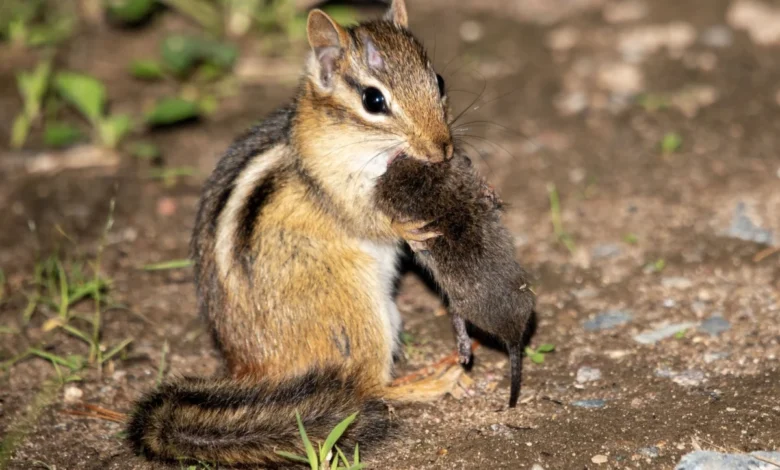
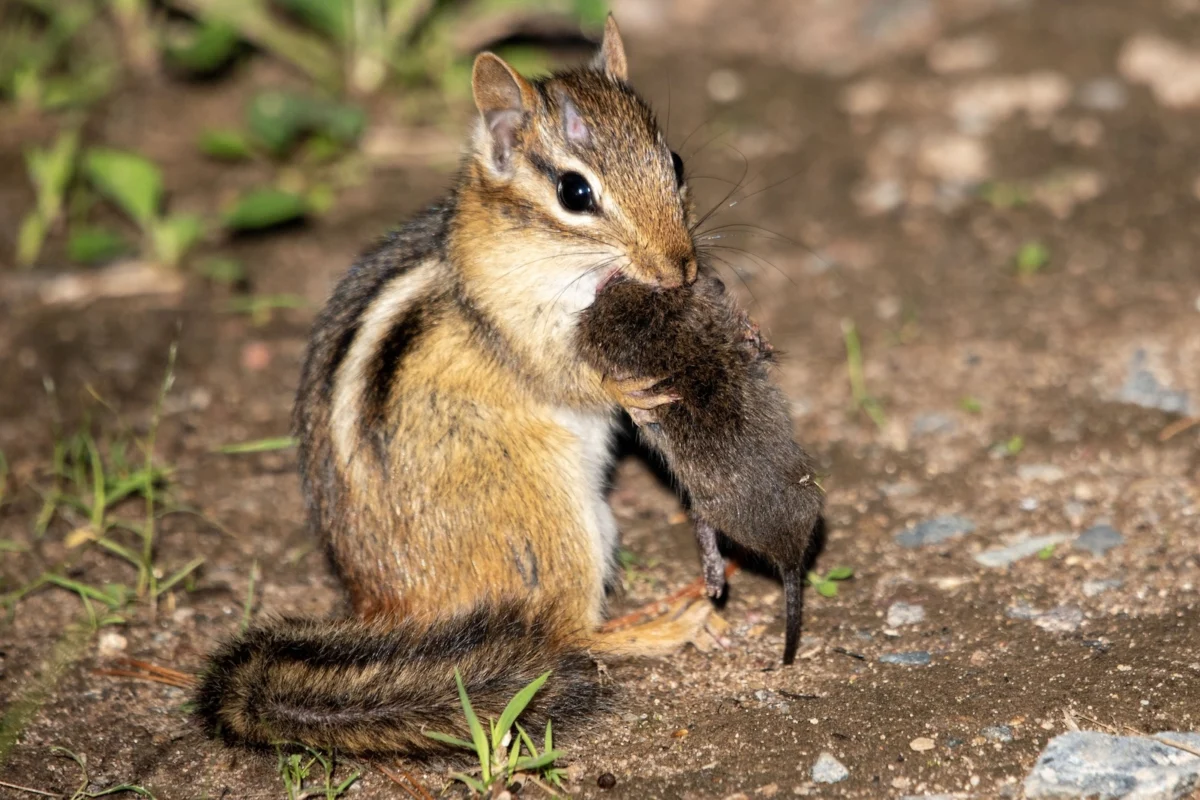
The emergence of the Who Eats Whom project, an innovative platform built upon the infrastructure of the non-profit social network iNaturalist, marks a turning point in ecological data collection. By leveraging the millions of geotagged, time-stamped photographs uploaded by amateur naturalists worldwide, the platform is creating a real-time, dynamic map of trophic interactions. This methodology allows for the documentation of species behaviors that would be nearly impossible for a single scientist to capture, ranging from the mundane pollination of a wildflower to the rare, "metal" spectacle of an American ermine hauling off a brown rat in an urban Canadian neighborhood.
The Evolution of Ecological Fieldwork
For much of the 20th century, documenting food webs required immense physical and financial commitment. Field biologists spent months in remote wilderness areas, often enduring harsh conditions to observe predator-prey dynamics firsthand. These studies were frequently limited by geographic scope, species bias, and the difficulty of witnessing rare events. For instance, determining the diet of a nocturnal raptor might involve sifting through hundreds of regurgitated pellets, a process that is as time-consuming as it is imprecise.
The transition toward citizen science began to gain momentum in the early 2010s with the rise of digital photography and smartphone technology. iNaturalist, founded in 2008 as a joint initiative between the California Academy of Sciences and the National Geographic Society, provided the necessary technical framework. By allowing users to upload images that are then identified by a global community of experts and AI-driven image recognition, the project created a repository of biodiversity data that was previously unimaginable. Who Eats Whom takes this one step further by filtering these observations specifically for trophic interactions—instances where one species is seen consuming another.
Data at Scale: A New Quantitative Frontier
Since its inception, Who Eats Whom has successfully aggregated over 17,000 documented interactions involving approximately 5,700 distinct species across more than 100 countries. This massive dataset provides a quantitative baseline that can be used to test ecological theories that were previously confined to computer simulations.
Bradley Allf, an ecologist formerly of North Carolina State University and now at Colorado State University, serves as the lead developer of the platform. According to Allf, the power of this approach lies in the "crowdsourcing of observation." By decentralizing the data collection process, the scientific community is no longer limited by the number of researchers in the field. Instead, thousands of smartphone-wielding volunteers act as a global sensor network, capturing data points that are ephemeral or geographically dispersed.
The data, recently highlighted in the journal PLOS Biology, is already revealing shifts in animal behavior. Aditi Mallavarapu, a computer scientist and co-author of the study, notes that the platform is particularly valuable for longitudinal analysis. By comparing current observations against historical data, researchers can identify subtle changes in diet or range. "It is not just about looking at what is being observed," Mallavarapu explains, "but also noticing what is not being observed." The absence of a predator in a region where it was previously common, or the sudden appearance of a prey species in a new territory, serves as a crucial indicator of ecosystem health.
Complexity Beyond the Textbook
The "Interactive Food Web" tool on the Who Eats Whom website provides a visual representation of these biological networks. When a user searches for a specific species, such as the red-tailed hawk, the interface generates a web of nodes and arrows, illustrating the predator’s diverse menu—from small mammals to specific avian species. This visualization reveals the "messiness" of nature: the fact that a single bird might eat a specific species of mammal, which in turn consumes a variety of insects and plants.
This complexity extends to the role of pollinators and parasites. For example, the Western honey bee is often viewed simply as a pollinator. However, the database demonstrates how it also serves as a critical link in the food web, often falling prey to the goldenrod crab spider. Conversely, the bee’s role in the reproduction of flora like thistles and honeysuckles illustrates the bidirectional energy flow that sustains entire biomes. This level of detail is vital for understanding how the loss of a single species can cause a cascade effect, potentially destabilizing an entire local habitat.
Conservation in a Changing Climate
The implications of this project are particularly significant in the context of global climate change. As temperatures rise, species are shifting their ranges toward the poles or to higher elevations to find suitable climates. This migration leads to the creation of novel ecosystems where species that have never interacted before are suddenly forced to compete for resources or serve as new prey items.
Peter Roopnarine, curator of invertebrate zoology and geology at the California Academy of Sciences, highlights that data acquisition is the greatest hurdle in modern conservation. "Some of these interactions are ephemeral," he notes. "They might happen once in the lifetime of a species, in a remote location, and never be recorded." By enabling the public to document these unique events, Who Eats Whom provides a mechanism to monitor the impacts of climate change on trophic stability in real-time.
Furthermore, the rise of invasive species—such as the lionfish in the Atlantic or various non-native rodents in island ecosystems—demands urgent tracking. These species can decimate native populations that are already struggling with heat stress and habitat loss. If conservationists can identify the specific prey species being consumed by an invasive predator, they can prioritize intervention efforts to protect those most vulnerable.
The Future of Ecological Stewardship
The project is fundamentally changing the relationship between the public and the scientific community. For participants, the act of contributing to the database provides a new lens through which to view their local environment. As Rebecca Johnson, director of the Center for Biodiversity and Community Science at the California Academy of Sciences, observes, it transforms passive observation into active participation in the scientific process.
The ultimate goal, however, is far more ambitious than creating a digital catalog of nature photos. It is about shifting the conservation paradigm. For decades, environmental policy has focused on land preservation—the idea that if you protect the space, the species will survive. While habitat protection remains essential, Allf and his colleagues argue that it is insufficient. "Species don’t just need space," Allf emphasizes. "They need the relationships that allow them to survive."
Ensuring that a predator has its specific prey, or that a pollinator has the plants it requires to reproduce, requires a deeper understanding of the "invisible" web that binds these species together. As the planet continues to undergo rapid environmental shifts, tools like Who Eats Whom will be essential for scientists to predict how ecosystems will respond, which species are at risk, and how humans can effectively intervene to maintain the delicate balance of life on Earth. Through the combined efforts of a global community of observers, we are finally beginning to see the full, chaotic, and beautiful picture of the food web.