Supreme Court Weighs Bond Hearings for Detained Noncitizens with Criminal Records Amid Public Safety Concerns



The legal architecture governing immigration enforcement and national security in the United States faces a critical juncture as the U.S. Supreme Court considers whether noncitizens with serious criminal records are constitutionally entitled to bond hearings during prolonged deportation proceedings. The case, Genalo v. D.C., has drawn intense scrutiny from legal scholars, federal officials, and advocacy groups alike. At the heart of the dispute is a lower court precedent that requires Immigration and Customs Enforcement (ICE) to justify continued detention by clear and convincing evidence once removal proceedings become drawn out. The Trump administration is aggressively petitioning the nation’s highest court to overturn this requirement, arguing that restricting the federal government’s ability to hold dangerous individuals poses a direct and tangible threat to public safety.
The outcome of this legal battle extends far beyond the specific litigants involved. It threatens to redefine the balance of power between federal immigration authorities and the judiciary, potentially reshaping how long individuals accused or convicted of aggravated felonies can be held without release. Legal experts warn that if the Supreme Court declines to intervene or upholds the Second Circuit’s ruling, federal authorities could find themselves severely encumbered in their mandate to remove high-risk noncitizens from American communities.
The Core Legal Dispute and the Second Circuit Precedent
The controversy centers on the interpretation of mandatory immigration detention statutes enacted by Congress. Under federal law, certain noncitizens who have committed specified crimes—ranging from drug trafficking to violent offenses—are subject to mandatory detention while their deportation proceedings play out. The intent of Congress was clear: to ensure that individuals deemed dangerous or high flight risks remain in custody until their cases are fully adjudicated, preventing them from disappearing into the interior of the country or reoffending.

However, a legal wrinkle emerged within the jurisdiction of the U.S. Court of Appeals for the Second Circuit. The appeals court established a precedent dictating that when mandatory immigration detention becomes "unreasonably prolonged," due process requires that the detainee be granted a bond hearing. Crucially, during this bond hearing, the burden of proof rests heavily on the federal government. ICE must demonstrate by clear and convincing evidence that the detainee poses either a significant flight risk or an active danger to the community.
Legal analysts point out that this standard is exceptionally difficult to meet in every single instance, particularly as administrative backlogs stretch removal proceedings across months or even years. Critics of the Second Circuit rule argue that it effectively creates a perverse incentive for detainees and their defense counsel to intentionally drag out administrative proceedings. By prolonging their cases, detainees can cross the threshold into "unreasonably prolonged" detention, thereby triggering their right to a bond hearing and increasing their chances of securing release into the general public.
Chronology of the Case and the Search for a Viable Vehicle
The pathway to the Supreme Court has been marked by procedural hurdles and mootness issues, forcing the administration to adapt its litigation strategy. The case currently before the justices, referenced in court documents as Genalo v. D.C., involves a 62-year-old citizen of the Dominican Republic who entered the United States unlawfully and accumulated a significant criminal record.
The chronology of the respondent’s legal troubles spans nearly three decades:

- 1997: D.C. was charged with multiple drug offenses, including the sale and possession of controlled substances. He subsequently skipped his trial, leading a jury to convict him in absentia. He was sentenced to a term of three to nine years in prison, though he evaded serving that time for decades.
- 2007: Law enforcement charged him with possessing a forged instrument after he presented false identification to police officers. Once again, he failed to appear for his scheduled court date, adding another failure-to-appear infraction to his record.
- 2016: D.C. became embroiled in a severe domestic dispute. He was charged with second-degree strangulation, third-degree assault, and acting in a manner injurious to a child under the age of 17. He ultimately pleaded guilty to criminal obstruction of breathing or blood circulation, resolved his older forged-instrument case via a guilty plea, and later pleaded guilty to criminal contempt.
- April 2024: Federal and local authorities finally apprehended D.C. on the outstanding warrant stemming from his 1998 drug conviction.
- September 2025: After completing his state prison sentence, ICE immediately took custody of D.C., placing him in civil immigration detention while formal removal proceedings advanced.
Following his detention by ICE, a district court ordered that D.C. be granted a bond hearing in accordance with the Second Circuit’s binding precedent, though the court denied his parallel request for immediate release. Rather than waiting for the Second Circuit to issue a final ruling on the merits, the administration took the unusual step of asking the Supreme Court to grant certiorari before judgment, seeking a definitive nationwide resolution.
The administration was forced to pivot to D.C.’s case after two previous litigation vehicles fell apart due to mootness. The first case involved Carol Williams Black, a noncitizen detained for approximately seven months who had a 2000 conviction for child sexual abuse. Black’s case became moot after he received a final order of removal and was permanently deported. The second case involved G.M., a lawful permanent resident from the Dominican Republic convicted of second-degree assault following a 2012 robbery in New York City. G.M. had been detained for 21 months without a bond hearing. However, just weeks before the Supreme Court was scheduled to hear oral arguments, New York Democratic Governor Kathy Hochul granted G.M. a full and unconditional pardon. With the underlying conviction erased, Solicitor General John Sauer agreed the case was moot, prompting the Supreme Court to dismiss it without a ruling.
Perspectives from Legal Experts and Policy Analysts
The implications of the Supreme Court’s potential intervention have sparked robust debate among legal scholars, former executive branch officials, and public policy organizations. Proponents of executive authority argue that tying the hands of immigration enforcement agents compromises national security and public safety.
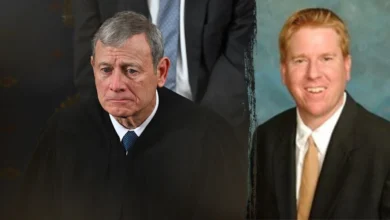
Chad Mizelle, chair of litigation at the America First Policy Institute and a former acting associate attorney general and Justice Department chief of staff, emphasized the high stakes of the litigation. "We are talking about criminal aliens here," Mizelle stated in an interview. "Those are individuals who have been accused of or convicted of an aggravated felony. Accused or convicted of murder. Accused or convicted of child rape. Accused or convicted of grievous harm upon another human being. So these are the worst of the worst individuals. Do we want those individuals walking the streets, re-committing, harming other individuals?"
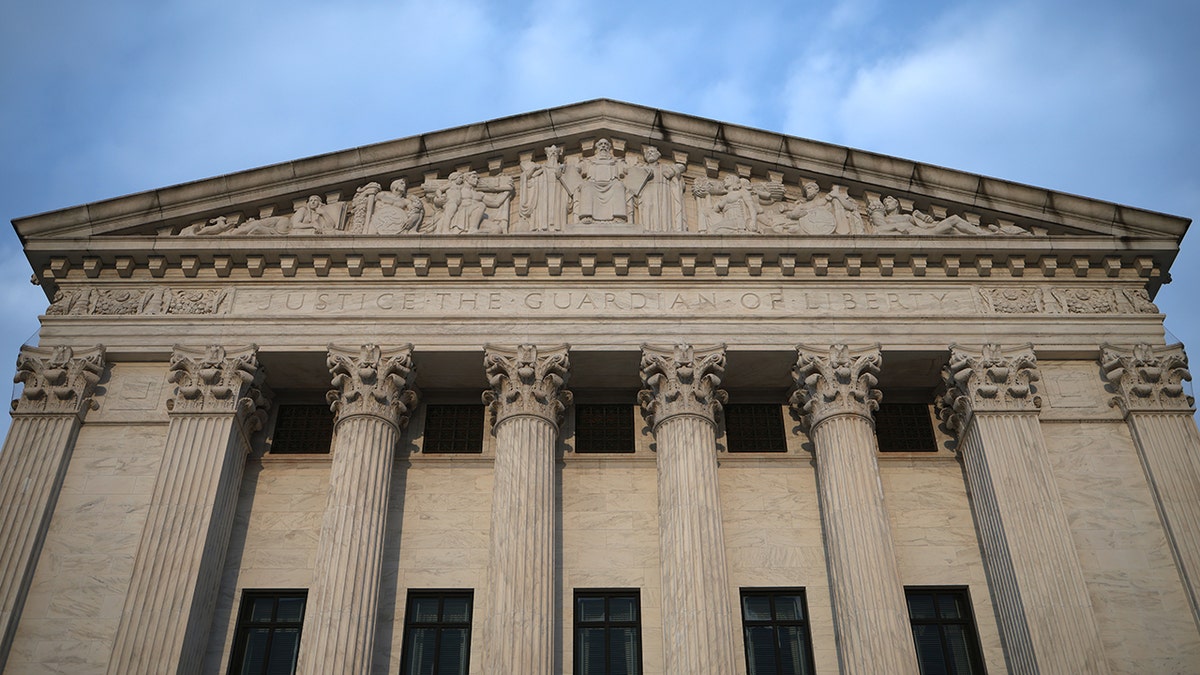
Mizelle contended that Congress enacted mandatory detention provisions precisely to isolate these populations from society while deportation mechanisms are executed, warning that judicially imposed bond requirements undermine legislative intent.
Carrie Severino, president of the Judicial Crisis Network, echoed these concerns, noting that a ruling against the government would have sweeping nationwide consequences. "This is not a question that’s only going to affect D.C., the criminal Dominican national at issue in this case," Severino explained. "This is an issue that’s going to affect criminal aliens across the country." Severino highlighted the administrative and financial burdens placed on federal agencies, noting that chronic failure to appear for court dates remains a pervasive challenge within the immigration system. "This is not something that I think the court ought to be granting on a regular basis that they’d be letting people out on bond simply on their word that they’re going to be coming back when they know that they are likely to be removed."
Conversely, civil rights advocates and immigration defense attorneys argue that indefinite or prolonged detention without individualized bond hearings violates fundamental constitutional due process protections under the Fifth Amendment. They maintain that the government should not have carte blanche to hold individuals for indeterminate periods without proving that specific, compelling reasons justify their continued confinement, particularly when administrative processing delays are often attributable to government backlogs rather than dilatory tactics by the detainee.
Broader Implications for Immigration Adjudication
The central legal question before the justices boils down to the standard of proof required to maintain custody. Under the Second Circuit framework, the government carries the heavy burden of establishing by clear and convincing evidence that a detainee is a danger or a flight risk.
Michael Morley, a law professor at Florida State University, analyzed the systemic impact of this standard if endorsed nationally. "If the Supreme Court winds up affirming what the Second Circuit held, that means it’s going to be harder for the government to be able to detain this particular population of criminal aliens or terrorism-linked aliens," Morley noted. He explained that in numerous instances, the government may struggle to meet such a heightened evidentiary threshold within existing administrative confines.
"There are going to be situations where the government is not able to show that a particular person is either likely to flee or poses a risk of danger and this dangerousness by a heightened or clear and convincing standard," Morley continued. "It means that these criminal aliens who are already subject to removal proceedings are more likely to be released into the community while those underlying removal proceedings continue to make their way slowly through the adjudicative process."
As the Supreme Court weighs whether to grant review in Genalo v. D.C., federal agencies, local law enforcement partners, and immigration advocates await a decision that will determine the legal boundaries of executive detention authority. Whether the justices choose to hear the case this term will signal how the high court views the intersection of administrative efficiency, procedural due process, and public safety in the modern immigration landscape.
Related posts: