The Climate Reserve: A Strategic Response to the Systematic Dismantling of American Environmental Science

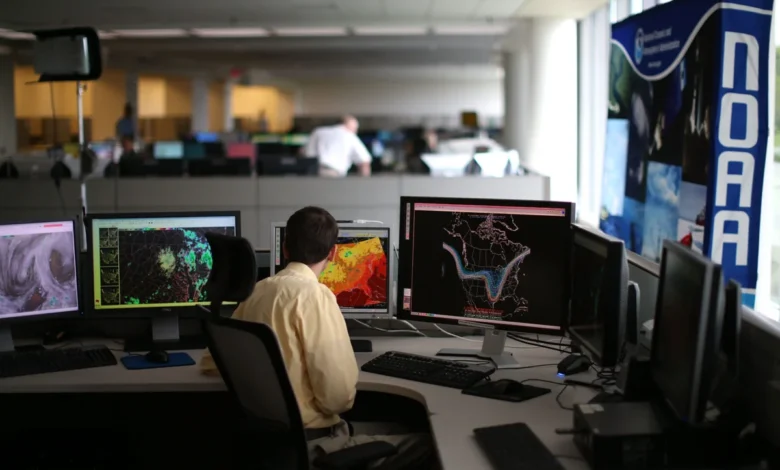

The recent, sweeping transformation of the federal scientific landscape has sent shockwaves through the global research community. Following the commencement of President Donald Trump’s second term, a series of aggressive policy maneuvers targeted the core of American climate research. The administration’s fiscal strategy involved the large-scale termination of federal employees across foundational agencies, including the Environmental Protection Agency (EPA) and the National Oceanic and Atmospheric Administration (NOAA). Beyond personnel cuts, the administration systematically scrapped billions of dollars in active research grants, effectively halting long-term longitudinal studies and data-collection projects that were deemed essential for understanding the planet’s rapidly warming climate.
For experts who have dedicated their careers to environmental stewardship, the shift represented more than a change in administration; it marked the forced obsolescence of decades of institutional knowledge. Aparna Shrivastava, a former senior climate official in the Biden administration, describes the atmosphere among these professionals as one of profound professional displacement. In private forums and encrypted chats, researchers who had suddenly found themselves unemployed—or stripped of the funding necessary to continue their work—began to aggregate, searching for a path forward. These conversations, initially centered on personal survival, soon evolved into a strategic assessment of how the nation’s critical environmental data infrastructure could be salvaged amidst a hostile regulatory environment.
A Chronology of the Crisis and Response
The seeds of the current scientific displacement were sown in the early months of the administration’s second term. By the end of the first quarter, the impact of the budget slashing had become apparent, with major environmental initiatives losing their primary funding conduits. By mid-summer, the urgency of the situation led to a critical assembly at the Aspen Global Change Institute in Colorado. More than 30 climate experts, many of whom had been displaced from federal roles, gathered to formalize a strategy to prevent the collapse of American climate science.
The resulting initiative, the Climate Reserve, was conceptualized as an emergency infrastructure—an adaptive network designed to maintain continuity for vital research projects. By the following spring, the organization had transitioned from a concept to a fully operational entity, bolstered by tens of millions of dollars in philanthropic backing. The group’s public launch marked the beginning of a concerted effort to "parachute" displaced talent into stable, private-sector, or non-profit research roles, ensuring that critical data pipelines remained active despite the withdrawal of federal support.
The Mechanism of Movement Generosity
The Climate Reserve operates on a philosophy its founders term "movement generosity." Unlike traditional academic or corporate structures that prioritize competitive grant acquisition, this model encourages cross-institutional collaboration. In practice, this means that a single researcher might be funded to split their time between two or more organizations, such as the University of Minnesota and the Environmental Protection Network, to avoid redundant administrative overhead and maximize the impact of limited resources.
This collaborative framework addresses a specific vulnerability in the modern scientific landscape: the tendency for resources to fragment during periods of extreme scarcity. By creating a shared pool of talent and funding, the Climate Reserve ensures that the most essential projects—such as the maintenance of the EJScreen, an online mapping tool that provides critical data on environmental justice and pollution exposure—remain functional. The project was successfully brought under the stewardship of the Open Environmental Data Project, ensuring that its vital, publicly available data remained accessible to local governments and advocacy groups.
Data Integrity and the Invisible Science
One of the most significant challenges identified by the Climate Reserve is the loss of "unsexy" but critical data-processing work. Sonia Wang, who leads the Center for Climate and Environmental Data at the Data Foundation, notes that much of the most important scientific work occurs in the translation and standardization of raw data. For instance, in the field of methane detection, satellite data from different sources can produce vastly different emissions estimates if the underlying meteorological models—such as wind speed calculations—are not aligned.

Without federal oversight to mandate these standards, the climate data ecosystem risks becoming disjointed, potentially leading to policy decisions based on incomplete or inaccurate information. The Climate Reserve has stepped into this void, funding experts to reconcile these datasets. This work is not only vital for scientific accuracy but also for maintaining the trust of policymakers who rely on data to allocate resources for climate mitigation. By providing the "glue" that holds these disparate datasets together, the initiative ensures that the United States remains a participant in the global climate conversation, even when the executive branch chooses to step back.
The Scope of the Operation
As of the current reporting period, the Climate Reserve has successfully funded over 50 fellowship positions, with a target to triple this capacity by the end of the next calendar year. The scope of their work is intentionally global. Projects under the network’s umbrella include:
- Regional Sea Level Analysis: Detailed mapping of sea level rise in Panamanian islands, providing crucial data for vulnerable coastal communities.
- Emissions Tracking: Measuring greenhouse gas output across five African nations to assist in global carbon reduction strategies.
- Ecosystem Feedback Loops: Researching how wetlands and other sensitive ecosystems respond to temperature spikes, a critical feedback mechanism often missing from current climate models.
The decision to maintain a degree of operational secrecy for certain projects is a calculated risk. The current administration has demonstrated a punitive approach to environmental research, and many researchers within the network continue to apply for federal funding in other, less politicized areas of science. By keeping the organizational structure fluid and somewhat decentralized, the Climate Reserve aims to insulate its fellows from direct political interference while maintaining the technical expertise necessary to perform their roles.
Broader Implications for American Science
The implications of this shift are profound. The creation of the Climate Reserve suggests a permanent change in how scientific research is conducted in the United States. If the government continues to retreat from its role as the primary patron of climate science, private-sector and philanthropic institutions may have to adopt a more structural, long-term role in funding foundational research.
John Balbus, a fellow who spent 15 years as a senior official in the Department of Health and Human Services, emphasizes that the necessity of this work is independent of the political climate. "The need is only going to get stronger every year," Balbus notes. The environmental challenges facing the country—from the health impacts of wildfire smoke to the economic toll of extreme heat—are not addressed by the absence of data. Instead, the absence of data merely complicates the task of mitigating these risks.
The Climate Reserve does not claim to replace the federal government; its leadership is acutely aware that no private entity can replicate the scale, legitimacy, or resource capacity of a federal agency. Instead, they frame their mission as a temporary bridge. The ultimate goal is to foster a more resilient, collaborative, and adaptable scientific community that can survive the oscillations of political ideology.
As the initiative moves into its next phase, the challenge will be scaling this model to meet the ever-increasing demand for environmental data. With many of the nation’s top experts still out of work—a reality highlighted by the presence of displaced climate scientists in the local workforce, including gig-economy drivers in the nation’s capital—the pool of talent is deep. The question remains whether the philanthropic and institutional support for the Climate Reserve can keep pace with the systemic dismantling of the public research infrastructure.
For now, the network remains a vital, if unconventional, lifeline for American science. By prioritizing the preservation of institutional knowledge and the maintenance of essential, often invisible data projects, the Climate Reserve is effectively ensuring that when the political landscape eventually shifts again, the foundation for evidence-based policy will not have crumbled entirely. The endurance of this "emergency group" serves as a testament to the commitment of the scientific community to remain, in the words of its participants, in the same boat, navigating a path toward a more sustainable and informed future.
Related posts: