Waymo Robotaxi Service Briefly Resumes in San Francisco After Citywide Power Outage Sparks Renewed Calls for Autonomous Vehicle Regulation

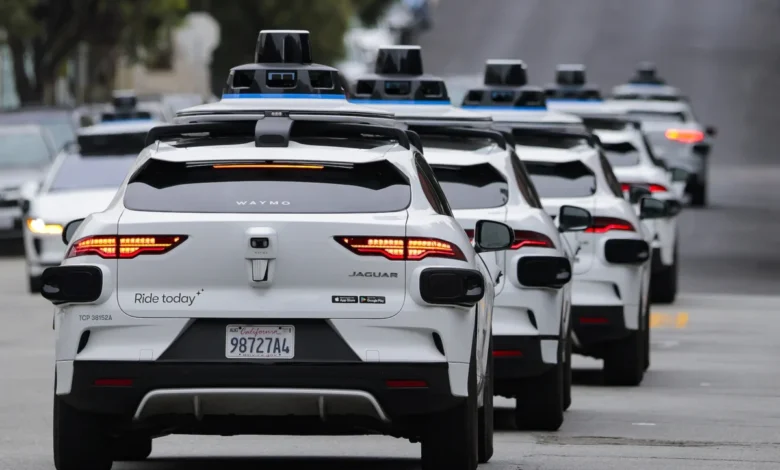
San Francisco’s nascent but rapidly expanding autonomous vehicle (AV) landscape faced another critical test on Friday, July 18, 2026, when a widespread power outage prompted Waymo, the self-driving technology company owned by Alphabet, to temporarily pause its robotaxi service across a significant portion of the city. The incident, which affected approximately 7,000 PG&E customers, reignited ongoing debates about the resilience of autonomous systems in unpredictable urban environments and underscored the urgent need for comprehensive regulatory frameworks to manage their operations during emergencies. Service was eventually restored, but the brief disruption served as a stark reminder of the vulnerabilities inherent in integrating cutting-edge technology into complex urban infrastructure.
The disruption began shortly after noon on Friday, July 18, 2026, when a significant power failure swept through parts of San Francisco. Pacific Gas and Electric Company (PG&E), the primary utility provider for much of California, reported that the outage impacted around 7,000 of its customers, causing widespread inconvenience and affecting various aspects of city life, from traffic signals to businesses and residential areas. The exact cause of the outage was not immediately detailed by PG&E, but such incidents, whether due to equipment failure, maintenance issues, or external factors, are not uncommon in large urban centers.
Immediate Impact and Waymo’s Response
Almost concurrently with the onset of the power outage, Waymo’s autonomous vehicle network in San Francisco began experiencing operational difficulties. Customers attempting to hail a Waymo robotaxi through the company’s app received notifications indicating that service was "temporarily paused" and that "freeway routes are unavailable." This immediate cessation of service, while a safety measure, highlighted the intricate dependencies of autonomous systems on stable infrastructure.
When initially contacted for comment, a Waymo spokesperson confirmed the adjustments, stating, "We are making temporary adjustments to our service while we monitor local conditions. We know riders depend on us, and we will return to normal operations as soon as possible." This initial statement emphasized the company’s cautious approach to ensure passenger safety and operational integrity amidst uncertain external conditions. Approximately an hour after the initial pause, Waymo issued an updated statement, confirming that service had resumed. The spokesperson clarified that the company "decided to pause service for approximately one hour to assess the scale of the power outage affecting a large portion of San Francisco and coordinate with local officials." This proactive decision-making process, aimed at evaluating the safety landscape before resuming operations, reflects the company’s protocol for handling unforeseen external disruptions.
Chronology of a Disruption: From Outage to Restoration
The timeline of events on July 18, 2026, unfolded rapidly:
- Approximately 12:30 PM PDT: A power outage begins affecting thousands of PG&E customers in San Francisco.
- Shortly After 12:30 PM PDT: Waymo’s robotaxi service begins to experience interruptions. Customers are notified of a temporary pause in service and unavailability of freeway routes via the Waymo app.
- Mid-Afternoon: Waymo issues an initial statement confirming "temporary adjustments" to its service while monitoring conditions.
- Roughly One Hour Later: Waymo completes its assessment of the outage’s scale and coordination efforts.
- Late Afternoon: Waymo announces that its robotaxi service has resumed normal operations, confirming the approximately one-hour pause.
This swift response and subsequent restoration of service by Waymo, while commendable for its speed, nonetheless drew attention to the inherent challenges autonomous vehicle operators face when critical urban infrastructure fails. Unlike human drivers who can often navigate manual detours or rely on immediate visual cues, self-driving cars depend heavily on a constant stream of data from traffic signals, GPS, and communication networks, all of which can be compromised during power outages.
Previous Incidents and Escalating Regulatory Scrutiny
This latest incident is not an isolated event for autonomous vehicle operators in San Francisco. The city has become a crucible for AV testing and deployment, leading to both significant advancements and highly publicized operational hiccups. Waymo, along with other AV companies like Cruise (which faced a complete suspension of its California operations in late 2023), has encountered various challenges in the dynamic and often unpredictable urban environment.
Notably, Waymo vehicles have previously been affected by power outages. In December 2025, a number of Waymo robotaxis stalled on city streets during a blackout, causing localized traffic disruptions. Another incident occurred during a Fourth of July fireworks show, where a similar power disruption or communication failure led to AVs paralyzing traffic near the Golden Gate Bridge. These events, though varying in scale and cause, collectively paint a picture of autonomous systems struggling with situations that deviate significantly from their programmed parameters or when external dependencies are compromised.

The cumulative impact of these incidents has not gone unnoticed by local authorities. San Francisco Mayor Daniel Lurie has emerged as a vocal proponent for stricter oversight of autonomous vehicles. Following the Waymo traffic fiasco during the Fourth of July celebrations, Mayor Lurie publicly called for tougher state regulations. His primary concern, articulated in statements earlier this month, is to "adequately address how autonomous vehicles operate during major incidents, planned or not." This sentiment reflects a growing impatience among city leaders who perceive current state-level regulations as insufficient to ensure public safety and minimize disruption when AVs encounter unexpected events.
The Broader Context: Power Outages and Urban Resilience
Power outages are a recurring challenge for any major metropolis. San Francisco, with its dense urban fabric and reliance on complex infrastructure, is no stranger to such disruptions. PG&E, while continually working to upgrade its grid and enhance reliability, often contends with factors ranging from aging infrastructure to extreme weather events and even localized equipment failures. When power goes out, the ripple effects are immediate and far-reaching. Traffic lights cease to function, communication networks can be strained, and public safety systems may face operational challenges.
For autonomous vehicles, which are essentially sophisticated robots relying on sensors, artificial intelligence, and constant connectivity, power outages pose a unique set of challenges. Their operational parameters are often calibrated for a stable, predictable environment. When traffic signals go dark, for instance, AVs must rely on more complex computer vision and decision-making algorithms to interpret the situation and safely navigate intersections, often reverting to a more conservative, cautious driving style, or in severe cases, requiring human intervention or coming to a complete stop. The absence of reliable data streams, whether from GPS, cellular networks, or V2X (vehicle-to-everything) communication, can severely degrade an AV’s situational awareness and decision-making capabilities.
Regulatory Framework and the Path Forward
The regulatory landscape for autonomous vehicles in California is primarily managed by the California Public Utilities Commission (CPUC) and the Department of Motor Vehicles (DMV). While the DMV oversees testing and deployment permits, the CPUC regulates AV companies as transportation service providers. Both bodies have been under increasing pressure to re-evaluate and strengthen regulations in light of operational challenges faced by AVs in real-world scenarios.
Mayor Lurie’s call for tougher state regulations highlights a fundamental tension: the desire to foster innovation in AV technology versus the imperative to ensure public safety and minimize urban disruption. Currently, regulations often focus on accident reporting, permit requirements, and operational boundaries. However, the incidents in San Francisco suggest a need for more explicit protocols regarding AV behavior during widespread infrastructure failures, natural disasters, or large-scale public events. This could include mandatory fallback modes, enhanced communication protocols with emergency services, or even designated "no-go" zones during certain types of emergencies.
One of the key implications of incidents like Waymo’s recent pause is the impact on public trust and the pace of AV adoption. While proponents argue that AVs are inherently safer than human-driven cars due to their consistent adherence to rules and lack of fatigue, every operational failure, however minor, erodes public confidence. For autonomous vehicles to achieve widespread acceptance, they must not only demonstrate superior safety in ideal conditions but also robust reliability and graceful degradation in adverse, unpredictable circumstances. The ability of an AV to either safely complete its journey, pull over to a safe spot, or communicate effectively with remote operators and emergency services during a crisis is paramount.
Technological Resilience and Future Developments
The recurring challenges faced by AVs during power outages and other infrastructure disruptions underscore the need for enhanced technological resilience. Future developments in autonomous driving technology will likely focus on:
- Improved Redundancy: Developing systems that can function effectively even when primary data sources or communication channels are compromised. This might involve more robust on-board processing capabilities that are less reliant on real-time external data.
- Enhanced Perception in Low-Information Environments: Advancements in sensor fusion and AI algorithms to allow AVs to navigate safely even when traffic lights are out, or road markings are obscured, relying more heavily on object detection and predictive modeling.
- Better Communication Protocols with City Infrastructure: While V2X technology is promising, its widespread implementation is still years away. In the interim, AV operators need to establish clearer, faster, and more reliable communication channels with city traffic management centers and emergency services to receive real-time updates and guidance during crises.
- Graceful Degradation and Safe Harbor Protocols: Ensuring that when an AV encounters an unsolvable problem or critical system failure, it can safely pull over to a designated "safe harbor" location or at least stop in a way that does not impede traffic or create a hazard, rather than stalling in the middle of an intersection.
- Battery Backup Systems: More extensive on-board battery systems to power critical components and communication systems for extended periods during outages, allowing vehicles to complete journeys or reach safer locations.
The incident on July 18, 2026, serves as a significant case study in the ongoing evolution of autonomous vehicle technology and its integration into smart cities. While Waymo’s swift decision to pause and then resume service demonstrates a commitment to safety and adaptive operations, the event highlights the complex interplay between advanced technology, urban infrastructure, and human governance. As autonomous vehicles become an increasingly common sight on city streets, the focus will inevitably shift from merely demonstrating capability to ensuring robust, resilient, and socially responsible operation across the full spectrum of real-world conditions. The calls for tougher regulations from city leaders like Mayor Lurie reflect a societal demand for these systems to not just work, but to work reliably and safely, even when the lights go out.