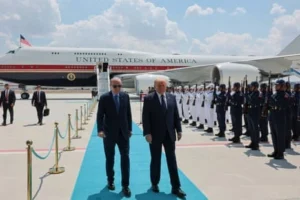
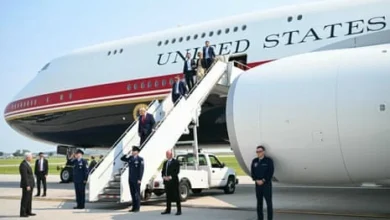
Middle East Erupts as US Launches Eighth Consecutive Night of Strikes on Iran, Regional Allies Face Retaliation

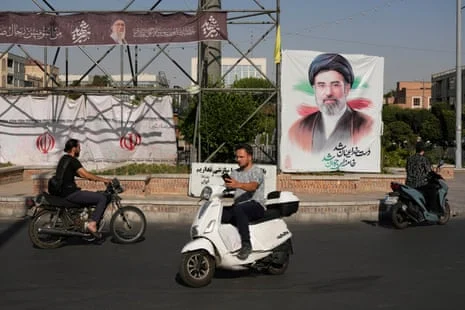
The Middle East is facing an alarming escalation of conflict as the United States launched its eighth consecutive night of airstrikes against Iran, a direct retaliation for an Iranian attack in Jordan that killed two American service members. This intensified military action comes as regional allies, including Kuwait and Bahrain, report sustained missile and drone attacks from Iran, and a major Jordanian port city undertakes evacuations amidst a "credible threat." The fragile ceasefire established just a month prior has completely collapsed, pushing the region closer to an all-out war with potentially devastating global consequences.
The latest wave of US strikes, ordered by President Donald Trump, began at 6 pm ET (10 pm GMT) on Saturday. The US military’s Central Command (Centcom) stated that these operations were designed to "swiftly punish" Iran’s Revolutionary Guard (IRGC) for the Friday assault in Jordan, which also left one American service member missing and four hospitalized. Furthermore, Centcom indicated the strikes aimed to "further degrade" Iran’s capacity to threaten commercial shipping in the vital Strait of Hormuz. Iranian state media, including Irna news agency and state-run broadcaster Irib, reported targets near Sirik and Hajiabad in Hormozgan province, as well as Qeshm Island in the Strait, with explosions heard in the port city of Bandar Abbas around 1:30 am local time. Centcom later confirmed it had struck "Iranian military coastal surveillance and air defense facilities, maritime capabilities, and missile and drone storage sites."
A Deepening Crisis: Regional Retaliation and Warnings
The Iranian response has been swift and far-reaching, targeting several US-allied nations in the Gulf. Bahrain’s defense force issued a strong condemnation of Iran’s "repeated attacks targeting (its) civilians," confirming its air defense systems had intercepted and destroyed multiple Iranian missile and drone attacks on Sunday morning. Sirens blared across Bahrain’s capital, Manama, prompting the interior ministry to urge residents to seek immediate shelter. The Bahraini General Command emphasized that the deliberate targeting of civilians and private property constitutes a "flagrant violation of international humanitarian law."
Kuwait also found itself under direct assault. The Kuwaiti army reported dealing with hostile missile and drone attacks, describing them as "Iranian aggression." While the success or interception of these attacks remained unclear, the Iranian army claimed it had targeted two US bases in Kuwait with drones: an ammunition depot at Camp Buehring (formerly Camp Udairi) and radar and air surveillance systems at Ali Al Salem air base. These strikes were presented as retaliation for the US actions overnight. Critically, Kuwaiti authorities and the Kuwait Petroleum Corporation reported significant damage on Saturday to a water desalination plant and an oil facility. This marks the second attack on a desalination plant in two days in the small nation, which relies on desalinated water for approximately 90% of its drinking supply, highlighting the severe civilian impact of the escalating conflict.

Further north, in Iraq, a base near Irbil belonging to the Kurdistan Freedom party, an Iranian Kurdish dissident group, was struck by a drone early Sunday, wounding eight of its members, according to a military official from the group. This broadens the geographical scope of Iran’s retaliatory actions across the region.
Strait of Hormuz: A Chokepoint for Global Stability
Amidst the heightened military exchanges, the Strait of Hormuz remains a critical flashpoint. Iran’s Revolutionary Guards Corps (IRGC) reported that two ships were involved in an "accident" after attempting to transit the strait via an "unsafe route," while two other vessels abandoned that route. The IRGC, through the Tasnim news agency (though the report remains independently unverified), asserted that these four vessels had "ignored Iranian warnings and acted with US backing." An IRGC statement ominously warned that "vessels that are influenced by the words of the Americans and enter unsafe routes will certainly face accidents."
This statement underscores the ongoing dispute over maritime passage in the Strait. The US has consistently advised mariners to use the southern route through Oman’s territorial waters to avoid Iranian claims. However, Iran has established its own system of lanes through the north of the strait, close to its coast, insisting that all vessels use this route or "face consequences." Control over this narrow waterway, through which a significant portion of the world’s oil supply passes, grants Tehran substantial leverage over global energy prices – a politically sensitive issue for President Trump, especially with US midterms approaching.
A Ceasefire Undone: Political Rhetoric and Strategic Calculations
The current surge in hostilities follows the breakdown of a framework ceasefire deal signed by the US and Iran just a month ago. President Trump had already "angrily declared the ceasefire ‘over’ earlier this month," on July 8, 2026. Speaking to NewsNation about the American service members killed in Jordan, Trump stated they died "in service of our country" and reiterated that the war on Iran was initiated to prevent Tehran from acquiring nuclear weapons. When pressed on Iran’s assertion that it would no longer honor the memorandum of understanding if Washington failed to uphold its obligations, Trump dismissed it with a curt, "I couldn’t care less."

In contrast, Iran’s supreme leader, Mojtaba Khamenei, issued a stark warning before the latest US strikes, asserting that Washington would "pay for seeking to escalate the conflict." He later stated, in remarks carried by official social media accounts and state media, that US actions had rendered Trump’s signature "utterly worthless and devoid of credibility," threatening "even heavier costs and further humiliation" for the United States. These statements highlight the deep mistrust and unyielding positions on both sides, making diplomatic de-escalation increasingly challenging.
Humanitarian and Economic Fallout
The escalating conflict carries severe humanitarian and economic implications. Dan Sabbagh, The Guardian’s defense and security editor, provided analysis highlighting Iran’s capacity to inflict damage despite the US’s superior military power. Sabbagh noted that Iran could expand the conflict through its regional allies, citing a Reuters report that Iran had requested Yemen’s Houthis to prepare to close the Red Sea oil route if the US strikes Iranian power infrastructure. Such a move would wreak havoc on the global economy.
Furthermore, Iran could inflict significant damage on US-allied Gulf countries through "sustained and widespread attacks on desalination plants across the region," leading to devastating civilian costs. The recent attacks on Kuwaiti desalination facilities serve as a grim precursor, demonstrating Tehran’s willingness to target critical infrastructure essential for daily life. Kuwait’s extreme reliance on desalination for its drinking water makes it particularly vulnerable to such assaults. While these attacks have been "relatively limited in scope" so far, their potential for widespread suffering is immense.
Casualty Toll and US Preparedness
The human cost of this renewed conflict continues to mount. The two US troop deaths on Friday mark the first fatalities from direct Iranian fire since the initial days of the war. US Defense Secretary Pete Hegseth posted on X that "Their sacrifice only stiffens our resolve," signaling no backing down from Washington. These latest deaths bring the total number of US service members killed since the war began to 16, with more than 430 injured. On the Iranian side, the health ministry reported on Saturday that 50 people had been killed and over 500 injured in US strikes on the country over the past three weeks, though independent verification of these figures is difficult.
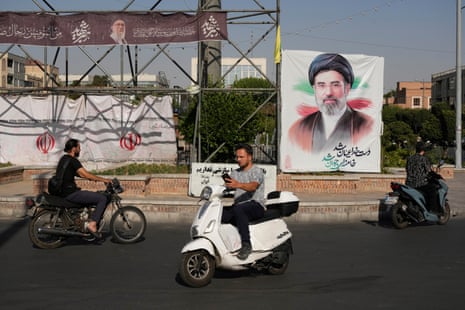
Sabbagh’s analysis also delved into the US’s strategic dilemma. Despite considering military escalation options such as bombing another deep-lying nuclear site at Pickaxe Mountain or seizing strategic Kharg Island (through which 90% of Iran’s oil exports flow), the US is not prepared for a "substantial ground campaign." While capturing small locations is feasible, holding them against Iranian missile and drone attacks would be a significant challenge. Moreover, continued US bombing campaigns are depleting stockpiles of "hard-to-make air defense interceptors" (down by half) and "expensive missiles" (down by a quarter to a third), according to estimates from the Center for Strategic and International Studies think tank, raising questions about the sustainability of prolonged high-intensity conflict.
Timeline of Recent Escalations (All dates 2026)
- March 2: US State Department orders non-emergency US government employees and their families to leave Jordan due to safety risks.
- July 8: US President Donald Trump declares the ceasefire with Iran "over."
- Friday, July 18: An Iranian attack in Jordan kills two US service members, leaves one missing, and injures four. This marks the first direct Iranian fire fatality for US troops since the war’s outset.
- Saturday, July 19 (6 pm ET / 10 pm GMT): The US military launches a new round of airstrikes against Iran, marking the eighth consecutive night of strikes, targeting military facilities and infrastructure.
- Saturday, July 19: Iran appears to target Saudi Arabia, other US Gulf allies, and Jordan. Significant damage reported in Kuwait to a water desalination plant and an oil facility. Iran’s health ministry states 50 killed and over 500 injured in US strikes over the past three weeks.
- Sunday, July 20 (Morning):
- Bahrain’s air defense systems intercept multiple Iranian missile and drone attacks. Sirens sound in Manama.
- Kuwait’s army reports dealing with hostile missile and drone attacks, claiming Iranian aggression and targeting US bases.
- A base of the Kurdistan Freedom party in Iraq near Irbil is struck by a drone, wounding eight members.
- The US embassy in Jordan announces the evacuation of Aqaba’s international airport and seaport due to a "specific and credible threat," advising US citizens to avoid travel to these locations, military bases, protests, and large gatherings.
- Iran’s Revolutionary Guards claim two ships were involved in an "accident" in the Strait of Hormuz after defying warnings and taking an "unsafe route" with US backing.
The rapid succession of these events paints a grim picture of a region spiraling deeper into conflict. The direct engagement between US and Iranian forces, coupled with widespread retaliatory strikes across the Gulf, signals a dangerous new phase in the long-standing tensions, with profound implications for international security and global economic stability.
Related posts: