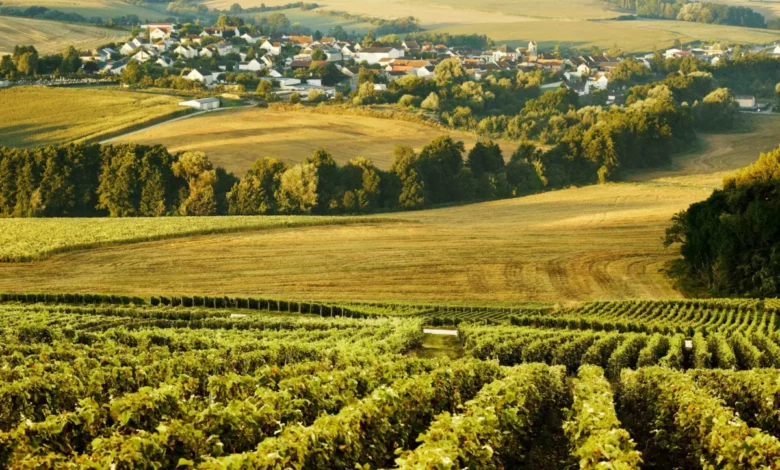
The Champagne region of France, located approximately 100 miles east of Paris, continues to solidify its status as a global epicenter for enotourism, drawing thousands of visitors annually to its rolling vineyards and historic cellars. While the region is synonymous with luxury and celebration, the modern travel experience in Champagne has evolved into a rigorous exploration of viticulture, history, and sensory science. This shift reflects a broader trend in the global tourism industry where travelers seek authentic, educational engagements with local heritage rather than superficial consumption. From the underground chalk pits of Reims to the steep slopes of Aÿ, the region offers a complex narrative of family-owned "grower" estates and centuries-old prestigious houses, each contributing to a multi-billion-euro industry that remains a cornerstone of the French economy.
The Economic and Cultural Landscape of Champagne Viticulture
Champagne is a strictly regulated appellation d’origine contrôlée (AOC), meaning that only sparkling wines produced within this specific geographic area under stringent rules can legally bear the name. The region encompasses approximately 34,000 hectares of vineyards, divided among thousands of growers and several hundred "houses." In recent years, the market has seen a significant rise in the popularity of "grower Champagnes," produced by the same farmers who cultivate the grapes. This stands in contrast to the traditional "Grandes Marques" or larger houses, which often purchase grapes from various sources across the region to maintain a consistent house style.

Estate producers like Bérèche et Fils exemplify this artisanal shift. Located in Ludes, this family-owned operation focuses on site-specific wines that emphasize the "terroir"—the unique combination of soil, climate, and topography. For many visitors, visiting a grower estate provides a more intimate look at the production cycle, which begins immediately after the autumn harvest. During this period, cellars are filled with the scents of fermenting yeast and raw dough, and the air is thick with the carbon dioxide naturally produced during fermentation. Safety protocols in these cellars are strict; the concentration of gas can be hazardous, requiring workers and visitors to exercise caution when inspecting open barrels.
Historical Foundations of the Grandes Marques
While grower estates offer a niche perspective, the historical weight of the region is anchored by houses that have operated for centuries. Champagne Bollinger, established in 1829, remains one of the few remaining independent family-owned houses of its scale. Its history is deeply intertwined with the landscape, particularly the "La Côte aux Enfants" vineyard. This legendary plot, located on a steep hill in Aÿ, is historically significant for its difficulty to farm. Local lore suggests the incline was so punishing that only children were nimble enough to navigate the slopes for harvesting—a practice that has long since ceased in favor of modern, albeit still labor-intensive, manual picking.
Further north, Champagne Delamotte, founded in 1760, and its sister house, Salon, represent the pinnacle of exclusivity and longevity in the region. Salon is particularly noted for its rarity, producing wine only during exceptional vintage years. The archives of these houses serve as museums of French culinary history, preserving menus from iconic Parisian institutions like Maxim’s that date back to the mid-20th century. These documents provide a timeline of how Champagne transitioned from a niche beverage of the aristocracy to a global symbol of prestige.

The Technicality of Production: From Forest to Bottle
A critical but often overlooked component of Champagne production is the role of the cooperage. Many of the region’s top wines are aged in oak barrels, some of which are over a century old. These barrels are frequently sourced from the nearby forests of Burgundy, and their maintenance is a specialized craft. Large houses often employ dedicated coopers to manufacture and repair the wooden slats, or staves, ensuring the barrels remain airtight while allowing the wine to breathe and develop complex notes of hazelnut and cream.
The aging process takes place in vast underground networks of tunnels known as crayères. These limestone and chalk caverns provide a naturally consistent temperature and humidity level, which is essential for the secondary fermentation that occurs inside the bottle. This secondary fermentation is what creates the "sparkle" or effervescence that defines the wine. For the traveler, descending into these cool, dark spaces offers a physical connection to the geological history of the Marne department, where the soil’s high chalk content provides the drainage and mineral qualities essential for Chardonnay, Pinot Noir, and Pinot Meunier grapes.
The Science of the Palate and Sensory Perception
The experience of tasting Champagne is increasingly being framed through the lens of sensory science and psychology. For professionals such as sommeliers, the act of tasting involves a systematic dissection of flavors—identifying "primary" notes from the fruit, "secondary" notes from the fermentation (such as brioche or yeast), and "tertiary" notes from aging (such as dried fruits or nuts). However, for the average visitor, the "palate" is often a subjective record of personal experience rather than a professional toolkit.

Recent studies in neurogastronomy suggest that flavor perception is heavily influenced by memory and cultural background. A professional might detect "flint" or "stone fruit," but a consumer’s reaction is often dictated by their own "flavor library." This was evidenced in a recent cultural exchange in Paris, where visitors compared the fermented notes of high-end Taiwanese coffee at shops like Laïzé to the complex profiles of vintage wines. In one instance, a taster identified the distinct aroma of "stinky tofu"—a fermented staple of Taiwanese cuisine—in a cup of Tainan-blend coffee. While a Western-trained sommelier might describe the same sensation as "earthy" or "funky," the individual’s cultural heritage allowed for a more precise, albeit unconventional, descriptor. This highlights the "imagistic reach" of the palate, where taste serves as a bridge to personal and collective history.
Chronology of a Champagne Expedition
To understand the current state of the region, one must look at the typical trajectory of a modern enotourism itinerary:
- The Arrival: Most international visitors begin in Paris, taking the high-speed TGV train to Reims or Épernay, a journey of less than an hour.
- The Vineyard Education: Tours typically start in the fields to explain the importance of the "cru" system and the specific drainage of the undulating hills.
- The Cellar Descent: Visitors move underground to witness the "remuage" (riddling) process and the long-term storage of bottles.
- The Tasting Room: The climax of the visit involves a flight of wines, often starting with a non-vintage Brut and progressing to vintage or "Prestige Cuvée" offerings.
- The Culinary Integration: The journey often concludes back in Paris, where the "bistronomy" movement (as seen in venues like Early June) emphasizes pairing these wines with diverse, modern cuisine rather than just traditional French fare.
Broader Implications for the Global Wine Industry
The evolution of tourism in Champagne reflects a broader global movement toward transparency and education in the food and beverage sectors. As consumers become more knowledgeable about production methods, there is a growing demand for "low-intervention" or "natural" wines, even within the traditionally conservative framework of Champagne. This has forced even the largest houses to re-evaluate their environmental footprints and viticultural practices.
.PNG)
Furthermore, the integration of diverse cultural perspectives—such as the aforementioned comparison between Taiwanese coffee fermentation and French wine—suggests that the future of gastronomy is increasingly globalized. The ability to "build" a palate is no longer seen as an elite skill but as an accessible form of cultural literacy.
Conclusion: The Endurance of the Champagne Brand
Despite economic fluctuations and the challenges posed by climate change, which is affecting harvest dates across Europe, the Champagne region remains a vital part of France’s cultural identity. The region’s success lies in its ability to balance rigorous technical standards with a romanticized narrative of history and heritage. For the traveler, the value of the experience is found not just in the liquid in the glass, but in the "delicate electricity" of the atmosphere—the combination of geological history, artisanal craft, and the personal memories sparked by a single sip. As the industry moves forward, the focus on sensory education and historical preservation ensures that Champagne will continue to be more than just a beverage; it is a living record of the land and the people who tend it.