The World’s Most Beautiful Airports for 2026: From Sky Forests to Terminals Inspired by Nature

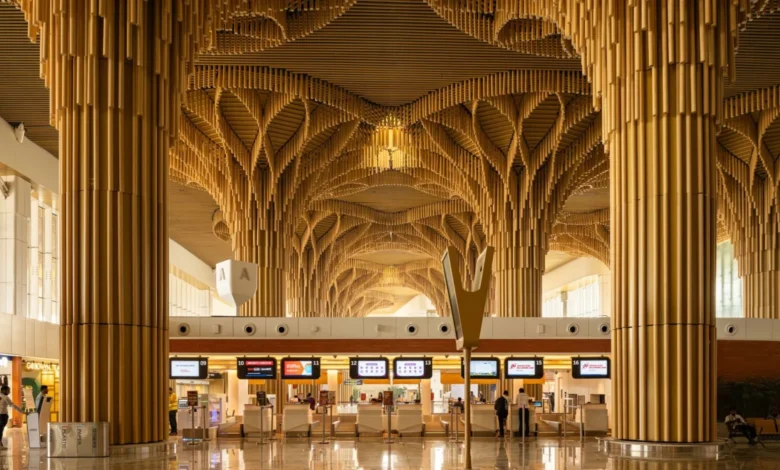
The Prix Versailles, an esteemed global architectural award associated with UNESCO, has officially unveiled its 2026 list of the World’s Most Beautiful Airports, highlighting seven international terminals that redefine the boundaries of transit infrastructure. Announced in Paris on June 15, the selection underscores a pivotal shift in aviation architecture, where terminals are no longer viewed merely as functional "non-places" for transit, but as cultural landmarks and destinations in their own right. This year’s winners, spanning China, Germany, India, Cambodia, and the United States, were chosen for their ability to harmonize high-volume logistics with aesthetic brilliance, ecological sensitivity, and a profound "sense of place."
The 2026 list includes Guangzhou Baiyun International Airport Terminal 3 (China), Frankfurt Airport Terminal 3 (Germany), Lokapriya Gopinath Bardoloi International Airport Terminal 2 (Guwahati, India), Navi Mumbai International Airport Terminal 1 (India), Techo International Airport (Phnom Penh, Cambodia), Pittsburgh International Airport (USA), and San Diego International Airport Terminal 1 (USA). According to the Prix Versailles Secretariat, these projects were evaluated based on several criteria, including innovation, creativity, the reflection of local heritage, and ecological efficiency. Three of these seven laureates will be selected later this year to receive the prestigious World Titles for Interior and Exterior design at a ceremony at UNESCO Headquarters.

A Paradigm Shift in Aviation Architecture
The evolution of airport design reflects a broader change in how societies view global mobility. Jérôme Gouadain, Secretary General of the Prix Versailles, noted during the unveiling that contemporary airports have become "innovative, inescapable hallmarks of their regions and their eras." He emphasized that the challenge for modern architects is to resolve the tension between the increasing frequency of travel—which demands speed and efficiency—and the desire for a tourism experience that values the traveler’s time and psychological well-being.
Historically, airports were designed as utilitarian sheds focused on processing passengers and aircraft. However, as global air traffic is projected to reach record highs in the coming decade, the competition for "hub status" is increasingly fought on the ground. By integrating gardens, local art, and regional architectural motifs, these terminals serve as the first and last impression of a nation’s culture.
Detailed Profiles of the 2026 Laureates
Guangzhou Baiyun International Airport, Terminal 3 (China)
Guangzhou, long celebrated as China’s "City of Flowers," has seen this identity manifested in the sprawling Terminal 3. Designed by Artelia in collaboration with the Guangdong Architectural Design and Research Institute, the terminal is one of the largest transport buildings ever constructed. The architecture draws heavily on Lingnan culture, a regional tradition shaped by the subtropical climate of southern China.
.jpg)
The interior is a rhythmic sequence of curves and terraces, featuring light-filled atriums that mimic the movement of clouds and water. Beyond its aesthetic appeal, the terminal prioritizes passenger wellness through integrated gardens that break up the monumental scale of the facility. A standout feature is the airport’s open-air public observation deck—the highest in China—allowing travelers to engage with the airfield environment in a way rarely permitted in modern aviation security environments.
Frankfurt Airport, Terminal 3 (Germany)
In Europe, Frankfurt Airport’s Terminal 3 represents a masterclass in urban-inspired transit design. Architect Christoph Mäckler eschewed the traditional sprawling corridor model in favor of a layout resembling city streets, plazas, and neighborhood squares. This "city within an airport" approach provides passengers with familiar points of orientation, reducing the stress associated with navigating large-scale infrastructure.
The terminal is also a venue for significant public art, most notably three massive rings composed of colored aluminum discs that rotate continuously, creating a kinetic light show for those below. From a technical standpoint, the terminal utilizes a modular design, ensuring that the spaces can be reconfigured as aviation technology and passenger habits evolve over the next several decades.

Lokapriya Gopinath Bardoloi International Airport, Terminal 2 (India)
Located in Guwahati, the gateway to Northeast India, Terminal 2 is a tribute to the region’s biodiversity and craft traditions. Architect Nuru Karim took inspiration from the bamboo orchid, a flower native to the area. The most striking feature is the "sky forest"—an indoor landscape of branching structures and vaulted ceilings that evoke the dense vegetation of the Assam region.
The floor and ceiling patterns are not merely decorative; they trace the winding path of the Brahmaputra River, serving as a natural wayfinding system for passengers. By incorporating Indigenous art and tribal narratives into the lounges and waiting areas, the terminal functions as an informal gallery of Assamese culture, grounding the high-tech environment in local history.
Navi Mumbai International Airport, Terminal 1 (India)
Designed by the world-renowned Zaha Hadid Architects, Terminal 1 at Navi Mumbai is a feat of both engineering and artistic vision. The terminal’s canopy is designed to resemble a lotus flower opening to the morning sun. This project required an extraordinary transformation of the physical landscape, involving the redirection of rivers, the reclamation of marshland, and the relocation of high-voltage power lines.

Inside, the lotus motif is sustained through fluted columns and geometric portals that extend into the ceiling. The terminal also integrates interactive digital artworks that respond to passenger movement, adding a layer of contemporary dynamism to the transition spaces. As Mumbai’s second major airport, this terminal is expected to significantly alleviate the congestion at the existing Chhatrapati Shivaji Maharaj International Airport.
Techo International Airport (Cambodia)
In Phnom Penh, Techo International Airport showcases the signature style of Foster + Partners. The terminal’s undulating roofline draws inspiration from the architecture of Cambodian palaces and temples. A unique aspect of the design is the use of a ceiling inspired by traditional basketry, which filters natural light through a pattern resembling woven bamboo and rattan.
The terminal is designed with a "forest" of giant structural columns that support the roof, while native rumduol trees—Cambodia’s national flower—grow within the central atriums. The layout is intentionally simplified, maintaining clear sightlines from the check-in area to the boarding gates to minimize the "travel anxiety" often caused by complex terminal layouts.

Pittsburgh International Airport (USA)
Representing a major shift in American airport design, the new Pittsburgh terminal moves away from the "hub and spoke" models of the 20th century toward a more passenger-centric "destination" model. Designed by Gensler and HDR in association with Luis Vidal + Architects, the roofline mimics the rolling Allegheny Mountains.
The interior features 38 steel columns that branch out like trees, creating a man-made forest. One of the most innovative features is the "Petal Tunnel," inspired by the city’s famous Fort Pitt Tunnel. The terminal also emphasizes outdoor access, featuring four terraces where passengers can breathe fresh air while waiting for flights—a luxury rarely found in U.S. airports.
San Diego International Airport, Terminal 1 (USA)
San Diego’s new Terminal 1 focuses on the city’s relationship with the Pacific Ocean. The defining feature is an 800-foot-long curved glass wall developed by Gensler and artist James Carpenter. This facade is engineered to flood the hall with sunlight while filtering heat and glare, maintaining a comfortable temperature without excessive reliance on air conditioning.

The structural design of the terminal is equally innovative; by reducing the number of internal columns, the architects created a vast, open space that recalls a waterfront promenade. This efficiency contributed to a 30% reduction in the building’s carbon footprint compared to traditional designs. As the busiest single-runway airport in the United States, the project also involved a massive overhaul of the surrounding transit connections to improve regional accessibility.
Chronology of Development and Future Milestones
The journey to the 2026 Prix Versailles list began years ago with the commissioning of these massive infrastructure projects. Most of the featured terminals were initiated between 2018 and 2021, navigating the global disruptions of the COVID-19 pandemic to reach completion or significant milestones by 2025.
- June 15, 2024: Official unveiling of the 2026 World’s Most Beautiful Airports List in Paris.
- Late 2024: Announcement of the World Titles for Interior and Exterior design.
- 2025-2026: Full operational launch for several of the featured terminals, including Navi Mumbai and Techo International.
- Post-2026: Continued monitoring of the environmental and social impact of these designs on their respective regions.
Analysis: The Impact of "Destination" Terminals
The shift toward aesthetically superior airports is driven by more than just vanity. There is a strong economic and psychological rationale behind these investments. Data from aviation industry analysts suggests that passengers who experience less stress during the transit process are likely to spend more at airport retail and dining outlets. By creating "beautiful" spaces, airports are successfully increasing their non-aeronautical revenue.

Furthermore, these airports serve as critical tools for regional branding. In an era of global competition for investment and tourism, a terminal that reflects a nation’s soul can be a powerful marketing asset. The inclusion of sustainable features—such as San Diego’s carbon reduction and Frankfurt’s modularity—also reflects the aviation industry’s urgent need to address its environmental footprint. These terminals demonstrate that sustainability and luxury are not mutually exclusive; rather, they are the twin pillars of future global travel.
As the world looks toward 2026, these seven airports stand as monuments to human ingenuity. They prove that even in our fastest-paced environments, there is room for the slow appreciation of beauty, culture, and the natural world.