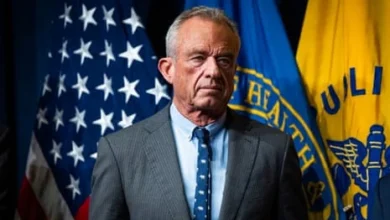
Burnham suggests social care reform would come after 2029, saying voters will be asked to back it at election

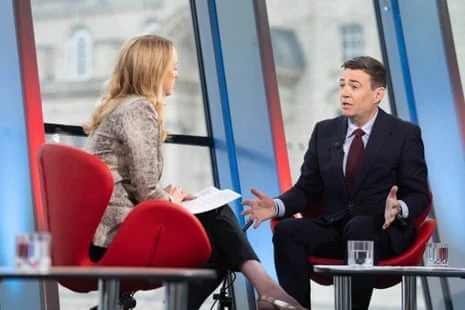
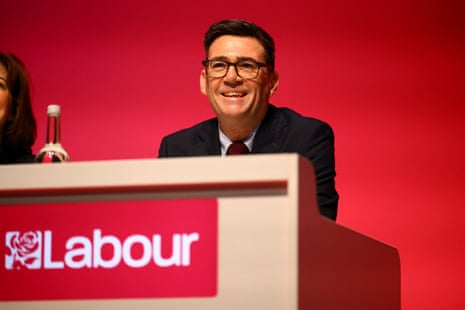
The Labour Party conference in Liverpool opened under a canopy of political recalibration and intense scrutiny on Sunday, as Prime Minister Andy Burnham used a high-profile broadcast appearance to outline his administration’s long-term legislative agenda. Speaking to the BBC’s Sunday with Laura Kuenssberg, Burnham addressed the monumental challenges facing the United Kingdom, focusing heavily on systemic reforms to adult social care, welfare expenditure, and immigration management. Most notably, Burnham indicated that comprehensive structural reform of the social care system will not take place until after the next general election scheduled for 2029, establishing that voters must explicitly endorse the plan at the ballot box before it becomes law.
The announcement sets the stage for a prolonged national debate over how to fund and administer care for an aging population, drawing immediate reactions from across the political spectrum. While Burnham’s supporters praised the strategy as a necessary exercise in democratic consensus-building, critics and former colleagues have questioned the timeline, pointing to the acute, daily pressures currently facing the National Health Service (NHS).
The Roadmap for Social Care Reform and the 2029 Mandate
Burnham’s appearance on Sunday morning was dominated by questions regarding adult social care, an issue he has championed for nearly two decades. Facing mounting pressure to resolve a sector widely described by health experts as broken, Burnham acknowledged that the current system is unsustainable and acts as a primary bottleneck for acute hospital care. He warned that without decisive intervention, the financial and operational strain on social care will ultimately cause the NHS to collapse under the weight of delayed discharges and corridor care.

When pressed on whether major structural reform would be enacted during the current parliamentary term, Burnham ruled out immediate implementation before 2029. He cited the strict tax pledges outlined in the Labour manifesto—which explicitly rule out increases to income tax, national insurance, and value-added tax (VAT)—as a constraint on immediate funding mechanisms.
Instead, Burnham argued that any fundamental overhaul requires deep public trust and political consensus, elements he believes have been lacking in British politics due to what he termed "cowardice" and short-term point-scoring.
"Trust is really important to me here. I don’t think you can reform this system without it, without consensus," Burnham told viewers. "So I’m saying to you that I will develop a very clear plan, and I will put that plan to the public at a general election. That will be where the plan gets tested. And people will then be able to decide."
He added that he is prepared to court unpopularity to achieve lasting reform, confirming that he will outline his broader vision during a major conference speech on Tuesday. Details of the implementation and financial framework are being developed in consultation with Baroness Louise Casey, with cross-party talks intended to build a unified front against partisan opposition.
Economic Realities and Comparisons to Global Models
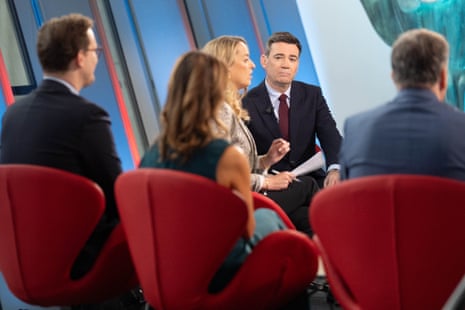
The debate over social care funding inevitably turned to the question of cost and taxation. Kuenssberg pressed the Prime Minister on figures from the Health Foundation suggesting that establishing a universal social care system free at the point of delivery—modeled similarly to the NHS—would cost upwards of £18bn.
Burnham rejected the £18bn estimate as exaggerated while openly conceding that a universal model operating on NHS principles is the only viable long-term solution. He drew a sharp comparison between the current English social care system and the American healthcare model, arguing that vulnerable citizens in England are currently subjected to a devastating financial toll, often forced to exhaust their life savings and lose their family homes to pay for essential care charges.
"Social care in England is as unfair as American healthcare, where the most vulnerable in society can lose everything," Burnham said. "They can be wiped out not just by the condition that they have, but wiped out financially. So there is a massive cost, and there is also a cost to the National Health Service."
Darren Jones, former chief secretary to the Prime Minister during the Starmer administration, appeared on the same broadcast panel and evaluated Burnham’s proposals. Describing the strategy as "very bold and brave," Jones noted that successfully landing such a policy would mark a historic achievement for the government, provided it manages to navigate the perilous politics of public finance and taxation.
Migration, Border Security, and Cabinet Unity
Beyond domestic health and social care, the conference has been overshadowed by debates surrounding immigration, border security, and recent controversies within the cabinet. Burnham used his BBC interview to address the ongoing challenge of small boat crossings and legal migration figures, pledging to remain "relentless" in his approach while simultaneously condemning far-right intimidation on British streets.
The Prime Minister faced pointed questions regarding recent protests in southern England and the tactics of activist groups. He labeled the presence of masked protesters creating fear and intimidation in local communities as "unacceptable," emphasizing that such behavior has no place in British society.
At the same time, Burnham highlighted statistical progress made by Home Secretary Shabana Mahmood, noting that net migration has fallen significantly compared to previous administrations, and small boat crossings have decreased by approximately 50% relative to figures from the early 2020s.
The immigration debate also intersected with internal government dynamics. Earlier in the weekend, reports in national media suggested a cabinet split between Housing Secretary Angela Rayner and Home Secretary Shabana Mahmood over proposed transitional arrangements that would require foreign care workers to wait up to 15 years before applying for permanent residency.
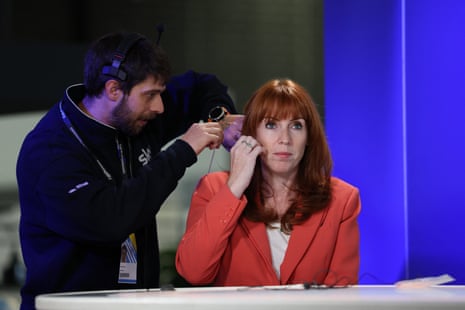
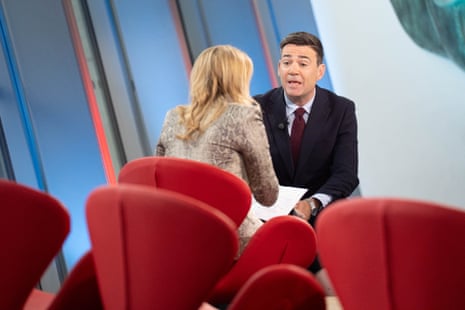
Appearing on Sky News, Rayner forcefully dismissed claims of a government "civil war," insisting that she and her cabinet colleagues are entirely united. Rayner stated that she had actively contributed to Mahmood’s consultation process and expressed full confidence that the Home Secretary would arrive at a balanced and fair conclusion that respects both domestic workers and those arriving from abroad to contribute to the economy. Political analysts note that Mahmood has previously signaled a willingness to compromise, mitigating the risk of a full-scale ministerial fracture.
Welfare Spending and Broader Conference Agenda
Economic policy and welfare reform formed another critical pillar of the weekend’s discussions. When questioned on whether he intends to drive down overall welfare spending ahead of the 2029 election, Burnham expressed a desire to see expenditure fall organically through employment and educational reform, but explicitly rejected implementing "crude cuts."
"I don’t think you get the welfare bill down on a sustainable basis if it’s crude cuts, because that just plunges people into crisis, and then they will appear in a different part of the system, and you have to spend more public money," Burnham explained.
The government highlighted ongoing educational reforms aimed at creating vocational pathways and referenced forthcoming recommendations from the Alan Milburn review to reduce the number of young people classified as NEETs (not in education, employment, or training).
These welfare discussions complemented a flurry of policy announcements made on the eve of the conference formal opening. Labour revealed a revitalized housing strategy titled "Your First Home," a 2.5% deposit equity loan scheme aimed at helping first-time buyers navigate the property market without relying on the "bank of mum and dad." Additionally, the government announced guaranteed jobs for disabled and health-condition young people out of work, alongside strengthened local authority powers via streamlined Empty Dwelling Management Orders (EDMOs) to bring long-vacant properties back into residential use.
Chronology and Outlook for the Conference
As the conference formally opened in Liverpool—billed by organizers as the "Hope Again" conference—the political mood surrounding the Labour Party has undergone a dramatic transformation compared to the previous year. Recent MRP polling figures from More in Common project a substantial recovery in voter support, contrasting sharply with polling trends from earlier in the electoral cycle that favored Nigel Farage’s Reform UK.
The agenda for the remainder of the week includes keynote addresses from Deputy Leader and Education Secretary Lucy Powell, First Secretary of State Louise Haigh, and Work and Pensions Secretary Pat McFadden. However, all eyes remain fixed on Tuesday afternoon, when Prime Minister Andy Burnham will take to the main hall to deliver his defining address, expected to unveil the broader structural vision for his government and lay the groundwork for the generational reforms he intends to place before the British electorate in 2029.