Pope Leo warns against a paradise of machines as he focuses on AI concerns during historic state visit to France

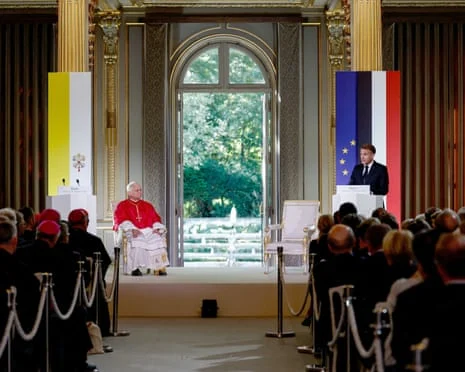
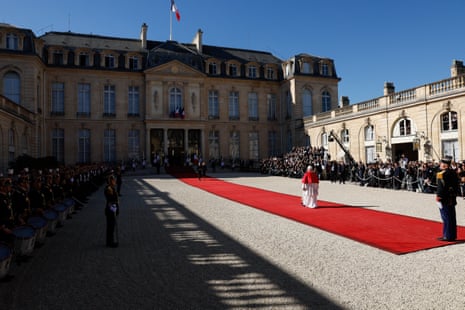
Pope Leo XIV arrived in France on Friday, September 25, 2026, marking the beginning of a high-profile, four-day apostolic journey that represents the first official papal state visit to the country in nearly two decades. Touching down at Paris Orly Airport at 10:00 a.m. local time, the pontiff was formally welcomed by French President Emmanuel Macron and First Lady Brigitte Macron. The arrival was met with widespread public resonance across the traditionally secular republic, underscored by the chiming of church bells nationwide for seven minutes to mark the solemnity of the occasion without disrupting civil infrastructure.

The visit carries substantial political, cultural, and diplomatic weight. While Pope Francis made three trips to France during his tenure, none were classified as formal state visits. For President Macron, hosting Pope Leo in the final months of his presidential term is widely viewed as a significant domestic and diplomatic milestone. Despite France’s deeply embedded tradition of laïcité—strict public secularism—and demographic statistics indicating that only about 5% of the nation’s 69 million residents regularly attend Catholic services (even though roughly 40% self-identify as Catholic), the current tour has drawn an unexpected surge in public interest, with organizers estimating that over a million people will turn out over the course of the four-day itinerary.
The Intersection of Faith and Secular Governance
The diplomatic engagements at the Élysée Palace quickly moved beyond ceremonial pleasantries to address the complex relationship between the French Republic and the Catholic Church. France’s strict adherence to secularism has frequently created friction with Church teachings, most notably regarding reproductive rights and end-of-life legislation. In recent years, France enshrined abortion as a constitutional right in March 2024 and subsequently implemented a major assisted dying law in August 2026—both measures having faced staunch opposition from the French Catholic hierarchy. However, diplomatic observers noted that Pope Leo is unlikely to directly challenge these established legal frameworks during his stay.
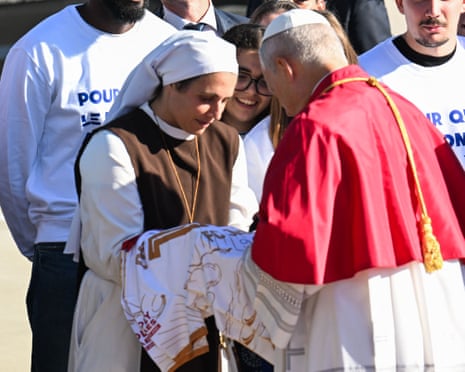
President Macron addressed the philosophical balance of French governance in his welcoming remarks, emphasizing that the republic’s secular framework is not a "negation of religion," but rather an intellectual and legal position designed to protect individual freedom of conscience.
"The Republic’s secularism is not a negation of religion, but an intellectual position that enables every individual to think and express their views in all spheres of life, to believe or not believe," Macron stated to the assembled dignitaries. He further addressed the rise of religious intolerance, pledging state protection for all places of worship regardless of denomination, while weaving historical references to France’s 2,000-year Christian heritage, the historic landscape of cathedrals, and the international significance of the recently restored Notre-Dame Cathedral.
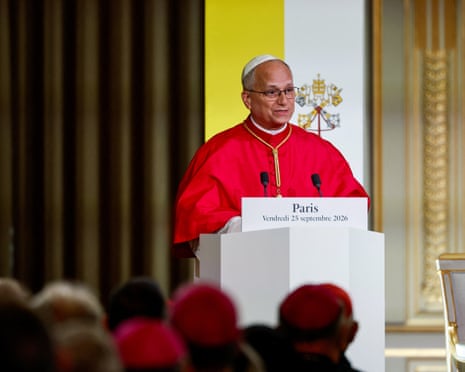
Responding in fluent French to the delight of his hosts, Pope Leo acknowledged his own paternal French ancestry and praised the nation as a historical beacon of art, culture, and spirituality. Drawing connections between France’s national motto and gospel teachings, the pontiff remarked that the principles of liberty, equality, and fraternity find an inexhaustible source of moral inspiration within Christian tradition.
A Landmark Address on Artificial Intelligence at UNESCO
A central pillar of the pontiff’s itinerary focused on the rapid evolution of technology and artificial intelligence. Delivering a major address at UNESCO in Paris later on Friday, Pope Leo issued a stark warning regarding the unchecked advancement of digital automation and advanced computing models.
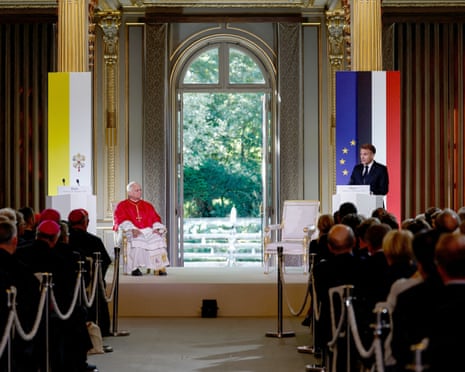
While acknowledging that technological innovation has substantially improved global living conditions, the pope cautioned against the emergence of what he termed "a paradise of machines." Borrowing conceptual phrasing from French writer Georges Bernanos’s 1947 critique, France Against the Robots, the pontiff warned that society faces an urgent risk of losing its humanity amid automated systems that increasingly invade and condition daily life.
"There is an urgent concern that we do not lose our humanity amid the paradise of machines that are invading and conditioning our daily lives," Pope Leo told the audience. "There is an urgent need to train minds in ethical discernment, capable of recognizing what is morally good."
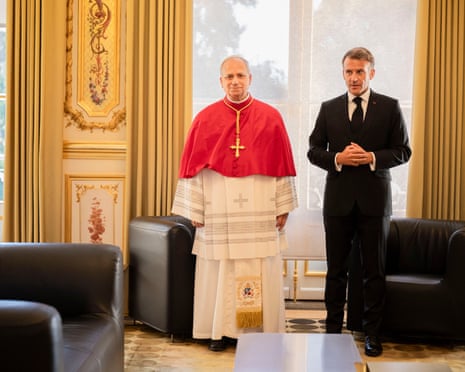
President Macron echoed these sentiments during the Élysée Palace ceremony, reinforcing France’s recent regulatory stances on technology, which included pioneering European legislation to restrict social media access for minors under 15 earlier in the year.
"Artificial intelligence must be a servant, not a master," Macron asserted. "The digital revolution must lead, not enslave. It is therefore our responsibility to prevent the most advanced models from falling into the hands of a few who would then decide for all of humanity."
Detailed Itinerary and Chronology of the Four-Day Visit
The four-day apostolic journey is structured across several distinct regional hubs in France, combining high-level diplomatic meetings with grassroots pastoral engagements:
- Friday, September 25 (Paris): Arrival at Paris Orly Airport; official state welcome at the Élysée Palace with President Emmanuel Macron; address on artificial intelligence at UNESCO; a walking tour through central Paris; a visit to the newly restored Notre-Dame Cathedral; and an evening prayer vigil with approximately 80,000 young people at the Stade de France.
- Saturday, September 26 (Paris to Lourdes): Visit to the Maison Bakhita social support and integration center; academic meetings at the Catholic Institute of Paris; a massive open-air holy mass held between Place de la Concorde and the Avenue des Champs-Élysées; followed by travel onward to the southwestern pilgrimage town of Lourdes.
- Sunday, September 27 (Lourdes): A full day spent in the Sanctuary of Lourdes, culminating in a solemn Sunday Mass, followed by a sensitive, private meeting with victims of historical clerical sexual abuse within the Church, addressing the ongoing institutional efforts to repair credibility following past scandals.
- Monday, September 28 (Metz and Departure): Travel to the northeastern city of Metz for a major address focusing on the historical roots and future unity of Europe; a public street walk; a final mass at Metz Cathedral; and a formal departure flight returning to Rome.
Broader Geopolitical and Domestic Implications
Pope Leo’s visit occurs against a complex backdrop of European and international developments. Domestically, the high public turnout serves as a validation of President Macron’s outreach to the Vatican, securing a formal state visit that eluded his predecessor. Analysts suggest the engagement allows Macron to project stability and cultural continuity on the global stage during the closing months of his presidential mandate.
Simultaneously, European political circles have closely monitored the broader subtext of the pope’s European engagements, particularly his scheduled address in Metz concerning continental solidarity. The intersection of religious diplomacy, ethical technology governance, and historical identity highlights an ongoing effort by the Holy See to reassert moral authority in increasingly secularized Western European democracies. As Pope Leo continues his journey toward Lourdes and Metz, the dialogue established in Paris regarding human dignity in the digital age is expected to resonate across international policy forums.