Iran Awaits Formal US Response to Strait of Hormuz Peace Proposal as Skepticism Mounts in Washington

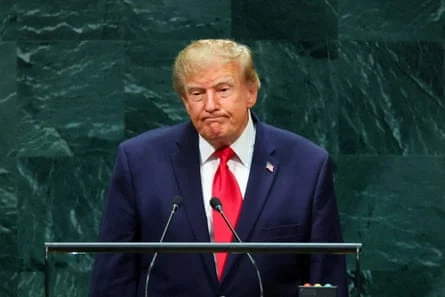
The geopolitical landscape of the Middle East hangs in a delicate balance as Tehran awaits an official response from the United States regarding a comprehensive diplomatic initiative aimed at ending the seven-month-old regional conflict and reopening the vital Strait of Hormuz. The proposal, transmitted to American officials via Qatari mediators during the United Nations General Assembly in New York, outlines a rapid seven-day roadmap to de-escalation, maritime security, and renewed nuclear negotiations. However, initial signals from Washington suggest steep hurdles, with reports indicating that President Donald Trump remains deeply skeptical of the overture and may favor a renewed military campaign following the upcoming US midterm elections.
The high-stakes diplomatic maneuver comes at a critical juncture for the global economy, energy markets, and regional stability. The ongoing conflict—sparked by joint US and Israeli military operations on February 28—has severely restricted maritime trade through the Strait of Hormuz, a critical global energy chokepoint through which a significant portion of the world’s petroleum passes. While Iranian officials express readiness to restore normalcy and resume diplomatic channels, the juxtaposition of backchannel optimism with reports of presidential reluctance underscores the immense complexity of breaking the cycle of hostilities.
The Outline of the Iranian Proposal
Detailed publicly by Iranian Foreign Minister Abbas Araghchi outside the UN Security Council, the seven-day proposal is conditioned on specific concessions from the United States and its allies. Under the terms of the initiative, Iran has offered to lift its restrictions on the Strait of Hormuz, resume formal talks concerning its nuclear program, and observe a comprehensive regional ceasefire—including Lebanon—provided that Washington takes reciprocal steps.
Specifically, the Iranian plan requires the United States to lift its ongoing naval blockade of Iranian ports, waive sweeping economic sanctions targeting Iranian oil sales, and commit to the broader regional ceasefire. According to Araghchi, once the US formally accepts the framework, a strict seven-day timeline will commence.
The mechanics of the plan are structured to build mutual trust through phased execution:
- Days One through Five: Implementation of initial confidence-building measures, cessation of hostilities, and the rolling back of naval restrictions.
- Day Six: The complete reopening of the Strait of Hormuz to international commercial and energy shipping.
- Day Seven: The official restart of high-level negotiations between Tehran and Washington to draft a comprehensive, mutually agreed-upon final deal regarding Iran’s nuclear program.
“If there is seriousness on the US side to come to a deal and reopen the Strait of Hormuz, everything is now prepared,” Araghchi told reporters, emphasizing that Tehran views the initiative as a genuine test of American willingness to pursue a diplomatic settlement.
Washington’s Hesitation and Domestic Political Pressures
Despite characterizations by some American officials that preliminary discussions facilitated by Qatar have been positive and constructive, the upper echelons of the Trump administration are reportedly withholding endorsement. Citing unnamed US officials, reports indicate that President Trump views the proposal with skepticism, preferring to defer decisive strategic shifts until after the November US midterm elections.
Behind this hesitation lies a complex domestic political calculus and deep-seated distrust between Washington and Tehran. The administration has weighed the immediate economic benefits of lowering global energy prices—which have spiked due to persistent disruptions in Middle Eastern shipping lanes—against the political risks of appearing accommodating to a longtime adversary ahead of crucial domestic elections.
Furthermore, hardliners within the US national security establishment argue that previous diplomatic arrangements have failed to curb Iran’s regional proxy activities or permanently constrain its nuclear ambitions. Consequently, intelligence briefings submitted to the White House suggest that some military planners are already modeling potential scenarios for an accelerated bombing campaign should the current diplomatic push collapse.

President Trump has maintained a public posture of strategic patience, repeatedly stating that his administration is under no immediate pressure to rush into a binding agreement. This stance places the ball firmly in Washington’s court, leaving international observers to question whether the administration will seize the diplomatic opening or let it wither amid electoral politics.
Internal Dynamics and Leadership Perspectives in Tehran
The current diplomatic overture also reflects a delicate internal balancing act within Iran’s political structure. President Masoud Pezeshkian, representing a more moderate faction within the Iranian government, has sought to signal a willingness to engage constructively with the international community. In an interview with CBS News, Pezeshkian reiterated that Tehran is prepared to negotiate in good faith regarding its nuclear capabilities and regional stability, while drawing a firm line against foreign coercion.
“Iran is not seeking war, but will defend itself against pressure, threats, and attacks,” Pezeshkian stated, reaffirming that the nation remains committed to the principle that it is not developing nuclear weapons.
However, analysts note that Pezeshkian’s administration must navigate domestic pressures from powerful conservative and hardline factions, including elements within the Islamic Revolutionary Guard Corps (IRGC) and the country’s security apparatus. These groups have historically opposed sweeping compromises with the West and retain significant veto power over foreign policy decisions. For the seven-day proposal to hold, Tehran’s leadership must maintain internal cohesion, ensuring that hardliners do not undermine the diplomatic process through escalatory actions on the ground.
Chronology of the Conflict
The current crisis traces its roots to a systematic escalation of tensions that culminated in open warfare earlier this year. A comprehensive timeline highlights the trajectory of the conflict:
- February 28: A combined wave of US and Israeli military strikes targets strategic infrastructure within Iran, formally initiating the current state of war.
- March–May: Continuous military engagements degrade Iran’s conventional military capabilities, while retaliatory actions and naval confrontations effectively close the Strait of Hormuz to commercial shipping.
- June–August: The conflict expands across regional flashpoints, drawing in allied actors. Energy markets experience acute volatility as tankers are targeted, leading to rising global inflation and severe strain on the Iranian economy.
- September 12: Saudi Arabia temporarily shuts down a major domestic oil pipeline following a drone attack attributed to Iraqi-based, Iran-aligned militias.
- Early September: Yemen’s Saudi-led coalition intercepts drones launched by the Iran-backed Houthi movement targeting the Saudi capital, Riyadh, demonstrating the multi-theater nature of the proxy conflict. Simultaneously, ongoing skirmishes persist between Israeli forces and Hezbollah in Lebanon.
- Late September: During the United Nations General Assembly in New York, Iranian diplomats utilize Qatari intermediaries to present the seven-day peace and maritime reopening initiative to US officials.
Broader Regional and Economic Implications
The international community has watched the developments in New York with bated breath, fully aware that the stakes extend far beyond bilateral relations between Washington and Tehran. The Strait of Hormuz is the world’s most critical petroleum transit chokepoint, moving roughly a fifth of the globe’s consumed petroleum liquid. Prolonged closures and disruptions have directly impacted global supply chains, fueling inflationary pressures in Western economies and constraining energy supplies throughout Asia and Europe.
Regional powers have also scrambled to protect their national interests. Notably, Iran engaged in direct diplomatic outreach to its traditional regional rival, Saudi Arabia, regarding the security of the strait. This pragmatic pivot underscores how severely the seven-month conflict has disrupted regional stability, prompting even fierce adversaries to explore cooperative security arrangements to shield their economies from further devastation.
Despite these diplomatic conversations, the shadow of active conflict remains visible. The recent interception of Houthi drones over Riyadh and the ongoing sabotage of energy infrastructure in the Arabian Peninsula illustrate that decentralized proxy networks retain the capacity to derail peace initiatives at a moment’s notice.
Outlook and Next Steps
As the diplomatic ball sits in Washington’s court, the international community faces a narrow window of opportunity. The juxtaposition of Iran’s detailed, conditional roadmap with reports of American electoral hesitation sets the stage for a tense October.
If the United States chooses to engage constructively with the Qatari-mediated proposals, the world could witness a rapid de-escalation, the reopening of the Strait of Hormuz within a week, and the resumption of long-dormant nuclear talks. Conversely, a rejection or indefinite stalling of the initiative risks plunging the region back into full-scale conflict, with potentially catastrophic consequences for global energy security, economic stability, and human life across the Middle East. For now, diplomats and market analysts alike continue to monitor Washington for the definitive response that will dictate the region’s immediate future.
Related posts: