President Trump’s Friday Sees Election Fraud Allegations Persist Amidst FIFA Engagement, Escalating Iran Conflicts, and Contentious Domestic Policies.

The political landscape vibrated with a series of high-profile events and pronouncements from President Donald Trump on Friday, July 17, 2026, encompassing everything from controversial claims about election integrity and escalating international conflicts to personal endorsements and a unique appearance at a FIFA reception. The day underscored a presidency marked by assertive rhetoric, a challenging of established norms, and a continuous stream of headline-generating activity, often drawing sharp criticism from political opponents and independent observers.
The Election Integrity Debate: Unverified Claims and Fierce Pushback
A central theme dominating Friday’s news cycle was the administration’s continued focus on unsubstantiated claims of election fraud. Homeland Security Secretary Markwayne Mullin held a press conference to elaborate on alleged findings that formed the basis of President Trump’s televised address the previous evening. Mullin asserted that the Department of Homeland Security (DHS) had identified "250,000 non-citizens registered to vote in California, Pennsylvania, New Jersey, and Nevada." He further claimed that 28,000 non-citizens were found on voter rolls across more than 20 states collaborating with the administration’s "Save program," a DHS tool designed to verify citizenship status.

However, these figures and the methodology behind them immediately drew skepticism and condemnation. David Becker, executive director of the non-partisan Center for Election Innovation and Research, characterized Mullin’s presentation as "a dud," stating there was "absolutely nothing here that was news. Nothing here that even calls into question past elections. Certainly not the 2020 election." Becker highlighted the administration’s lack of transparency regarding their data collection and analysis. He conceded that 28,000 non-citizens on voter rolls might be plausible, but emphasized this represented a minuscule 0.04% of the 68 million eligible voters in those states, a figure far too small to impact election outcomes significantly.
State officials from the mentioned states swiftly rebutted the DHS claims. Al Schmidt, Pennsylvania’s Republican Secretary of State, reiterated that Pennsylvania law requires voters to verify identity and that "all evidence has shown that noncitizen voting is extremely rare across the country, including in Pennsylvania." Similarly, California’s Democratic Governor Gavin Newsom’s office posted on X (formerly Twitter) that "California law is clear: You MUST be a U.S. citizen to vote state and federal elections," adding that "voter fraud is EXTREMELY RARE – and almost always committed by U.S. citizens." Jena Griswold, Colorado’s Democratic Secretary of State, went further, stating that for the 2026 elections, "our biggest threat is not foreign adversaries, it’s a federal adversary. It’s the White House, it’s the weaponization of the federal government against us."
The controversy extended to voting machines, which Trump had repeatedly labeled "vulnerable" and "easily compromised." Mullin echoed these assertions, claiming foreign adversaries had "vital pieces in our voting machines." This harked back to a long-debunked conspiracy theory that Venezuela’s Maduro regime controlled electronic voting software and influenced the 2020 US election, a claim for which conservative news outlets faced hundreds of millions in defamation damages in 2023. Election experts, including Becker, countered that voting machines are not connected to the internet, undergo rigorous security testing, and are backed by auditable paper ballots in nearly every state, allowing for transparent manual recounts.
Adding to the administration’s aggressive stance, Mullin threatened to withhold Federal Emergency Management Agency (FEMA) grant funding from states unwilling to adopt the administration’s "election security" measures. This move follows previous unsuccessful attempts by the Trump Justice Department to gain access to state voter rolls, which states have largely resisted due to privacy concerns and the lack of evidence of widespread fraud. Critics argue this represents an unprecedented federal overreach into state-run election processes, aiming to coerce states into adopting policies that could disenfranchise legitimate voters.
Democrats universally decried the president’s Thursday night address and Mullin’s subsequent press conference. Senate Minority Leader Chuck Schumer called the address a "pathetic attempt" to undermine the 2020 election results and accused Trump of "working to rig the midterms before a single vote has even been cast." Schumer also vowed that Trump’s proposed "Save America Act," requiring proof of citizenship for voter registration, would not pass Congress. Massachusetts Congressman Jim McGovern openly mocked Trump’s shifting narrative on election rigging, while Republican pollster Sarah Longwell warned of Trump’s "preemptively working to delegitimize America’s elections."
International Tensions: Escalating Strikes in Iran and a Diplomatic Row with Canada
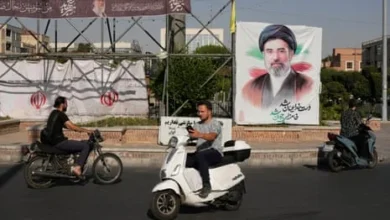
Beyond domestic political battles, the Trump administration engaged in significant international actions. The US expanded its aerial campaign against Iran, targeting critical civilian infrastructure. Airstrikes hit bridges in Iran’s southern Hormozgan province, reportedly killing at least seven people and disrupting transit to Bandar Abbas, Iran’s main port. Further strikes destroyed a tower in Chabahar port, which the US military alleged was used by the Islamic Revolutionary Guard Corps (IRGC) to facilitate attacks in the Strait of Hormuz. Electrical infrastructure and Iranshahr airport were also targeted.
These actions prompted Iran’s energy ministry to urge citizens to conserve electricity amid power grid strain and soaring temperatures, citing "extreme heat and attacks on power infrastructure." Human rights experts immediately raised concerns that strikes on civilian infrastructure not being used for military purposes could constitute war crimes. Iran’s health ministry reported that renewed US strikes had resulted in at least 38 deaths and over 400 injuries by Friday morning. This escalation of military action in the Gulf region signifies a dangerous increase in tensions between Washington and Tehran, with potential for broader regional destabilization and retaliatory strikes against US allies. The US has maintained a strong military presence in the region, citing threats to shipping and regional security, but these direct strikes on Iranian soil mark a significant shift in strategy.
Meanwhile, President Trump initiated a diplomatic spat with Canada over persistent wildfires whose smoke has blanketed large parts of the US. In a Truth Social post, Trump "blasted" Canada, accusing its government of "willful negligence" for "not properly maintaining their Forests, and Brush therein." He claimed the smoke was an "unnecessarily invaded by filthy, polluted, and unhealthy air," costing the US "Billions of Dollars," and threatened to add the "cost of this pollution" to existing tariffs on Canadian goods.
This strong condemnation followed a letter from four Republican Michigan representatives to Canadian Prime Minister Mark Carney, echoing concerns about Canada’s wildfire management. Carney, however, responded by emphasizing the broader context of climate change. "Climate change is everyone’s responsibility," he stated in French during a press conference, adding, "Including the United States." This exchange highlights a growing point of contention between the two North American neighbors, linking environmental issues to economic and diplomatic pressure, and potentially complicating future cross-border cooperation on climate and disaster response. As of Friday, over 880 active fires were burning across Canada, impacting air quality for over 109 million people across the US Midwest, Mid-Atlantic, and Northeast regions.
Presidential Engagements: FIFA, Endorsements, and Ethical Questions
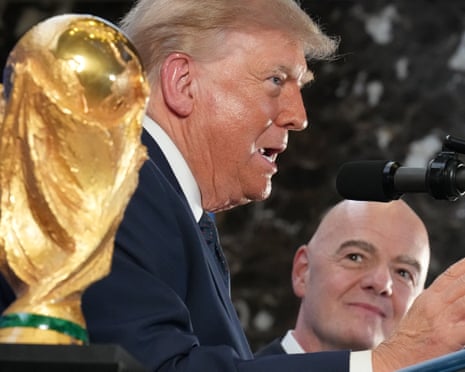
Amidst the high-stakes international and domestic policy discussions, President Trump made a notable appearance at a FIFA reception in Trump Tower, New York, ahead of the World Cup final. Entering to the strains of his rally theme song, Lee Greenwood’s "God Bless the USA," Trump used the platform for a characteristically freewheeling address.
He recounted his initial skepticism when FIFA President Gianni Infantino proposed hosting a World Cup in the US, citing America’s perceived lack of enthusiasm for "soccer." This overlooked the fact that the US had previously hosted the World Cup in 1994, a detail not mentioned in his remarks. Trump then reminisced about his interactions with football stars, referring to Cristiano Ronaldo as "a great guy" (who attended a White House dinner honoring Saudi Crown Prince Mohammed bin Salman) and Harry Kane as "a great player" (who allegedly "stopped scoring" after playing golf with Trump).
The President then offered his "own analysis" of England’s semi-final loss to Argentina, describing Lionel Messi’s winning assist with painstaking detail, claiming he "just noticed it. Nobody talked about it." This was quickly fact-checked, as Messi’s tactical movement to create space for the cross was widely discussed by commentators and fans. Trump further undermined his footballing insights by suggesting England made a mistake by making Harry Kane "a defensive player" after taking a lead, a tactical misinterpretation suggesting a misunderstanding of football roles.
In a moment of apparent irony, the "anti-immigrant president" then "waxed lyrical" about the joy of people from foreign nations attending the World Cup, particularly mentioning his Scottish mother and German-conceived father’s heritage. The event concluded with Trump and Infantino being played off stage to "YMCA," a staple of Trump’s rallies. Infantino’s earlier remarks praised Trump for creating a "safe and secure" environment for the World Cup, a statement notably made without acknowledging the administration’s immigration crackdown that had reportedly denied entry to a FIFA referee from Somalia and many fans.
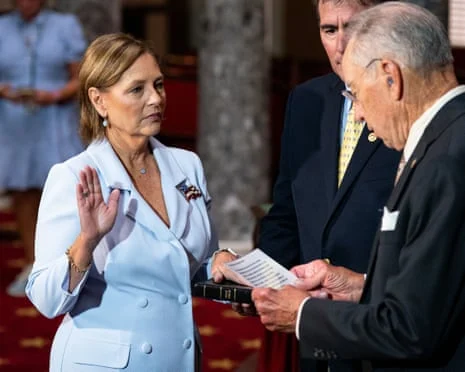
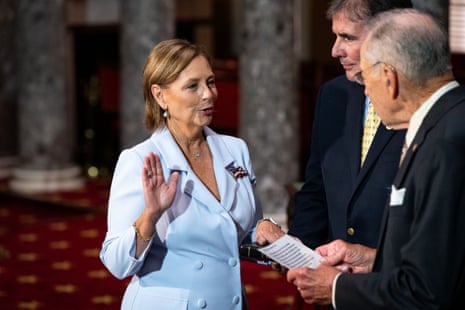
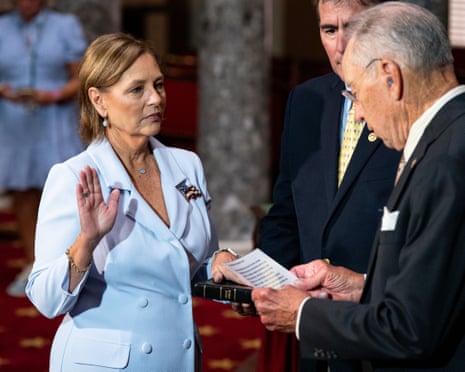
In another significant political move, President Trump publicly urged Darline Graham Nordone, the newly appointed interim senator for South Carolina, to run for a full term in the US Senate. Darline Graham, sister of the late Senator Lindsey Graham, was sworn in this week to serve the remainder of her brother’s term, which ends in January 2027, following his sudden death. Trump’s social media post declared, "should she accept, has my Complete and Total Endorsement in the Special Election for U.S. Senate in South Carolina – SHE WILL NEVER LET YOU DOWN. RUN, DARLINE, RUN!" This endorsement, coming quickly after her appointment, positions a career civil servant known for her work with disability programs for an August 11, 2026, special Republican primary. Her entry into electoral politics would mark her first elected office and could have implications for the balance of power in the Senate and House.
Adding to the ethical scrutiny surrounding the presidency, Trump’s media company announced plans to charge for "special high-speed access" to Truth Social posts, including potentially the President’s own. This new service, "Truth PSI," aims to allow Wall Street trading firms and other institutions to gain early access to news from top Truth Social contributors, enabling them to potentially profit from subsequent market movements. Critics immediately labeled this a "brazen corruption" and an "improper exploitation of government power to enrich himself," given that Trump is the largest shareholder of the publicly traded parent company. Kathleen Clark, a Washington University School of Law expert on government conflict of interest rules, highlighted the unique nature of a sitting president directly benefiting from the monetization of potentially market-moving information disseminated through a platform he owns.

Domestic Infrastructure and Alleged Vandalism
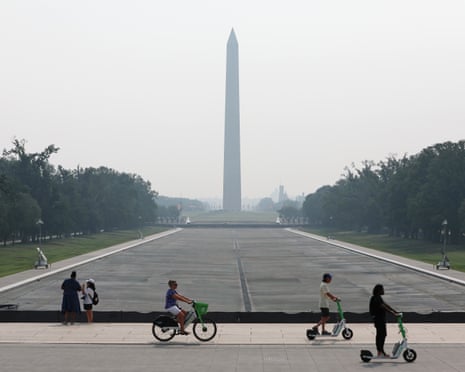
Finally, the President continued to push his narrative regarding alleged "vandalism" at the Lincoln Memorial Reflecting Pool. Trump stated on Truth Social that the pool had been "so badly damaged by Deranged Vandals" and was now emptied for repairs, with his administration actively seeking "Vandal Proof material." He called for the "Scum in Court" to be "prosecuted to the MAX."
This controversy dates back to the completion of a costly renovation project (exceeding $16 million) that Trump had rushed to coincide with the Fourth of July celebrations. The renovation notably included painting the pool’s bottom "American flag blue." However, shortly after its completion, the water quickly turned green due to algal blooms, and the new coating began to peel. Critics have attributed the damage to shoddy workmanship rather than vandalism.
Despite the National Park Service reporting a June 9 incident involving a knife or razor cutting the new liner, and several arrests made, including former Olympic canoe racer David Hearn who pleaded not guilty to deliberately damaging the pool, the debate over the cause of the damage persists. Hearn’s attorneys argue he is being scapegoated for a poorly executed renovation. This ongoing saga highlights the administration’s focus on maintaining a narrative of external sabotage while facing questions about the quality and cost of public works projects.
In sum, Friday, July 17, 2026, presented a multifaceted snapshot of the Trump presidency, characterized by persistent challenges to electoral processes, assertive international maneuvers, and a blend of traditional and unconventional presidential engagements, all generating considerable debate and scrutiny.
Related posts: