Trump braces for loss in lawsuit brought by media organizations, expects to ‘go for appeal’

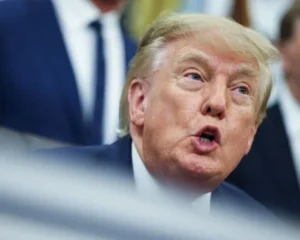
President Donald Trump has expressed public resignation over an impending legal defeat in a federal lawsuit filed by three major news organizations—CNN, MS Now, and Politico—challenging their sudden expulsion from the White House press grounds. Writing on Truth Social, the president acknowledged that the judicial assignment of District Judge Tim Kelly heavily favors the plaintiffs, citing the judge’s 2018 precedent ordering the administration to restore press credentials to CNN correspondent Jim Acosta. Anticipating an adverse ruling, Trump asserted that the administration would take the matter to the appellate courts, doubling down on his characterization of critical media coverage as a threat to national security.

The legal challenge represents the latest escalation in a protracted standoff between the executive branch and major independent newsrooms. Last Friday, the White House announced a surprise directive stripping the three outlets of their physical access to the executive mansion, citing what administration officials described as a pattern of biased and unfavorable reporting. The move triggered immediate institutional pushback, culminating in a joint federal lawsuit filed in the U.S. District Court for the District of Columbia. In their complaint, the media organizations argued that the blanket revocation of access without due process violates the First Amendment and undermines the public’s right to an independent press.
The fallout from the White House ban rapidly expanded across the journalistic landscape on Monday. In a coordinated display of solidarity, the four remaining networks comprising the White House television pool—ABC, NBC, CBS, and Fox News—announced they would temporarily halt daily pooled video coverage of the president. Major print and digital publications joined the collective protest; outlets including The New York Times and The Washington Post announced temporary moratoria on publishing still photographs of presidential events through midnight on Monday.
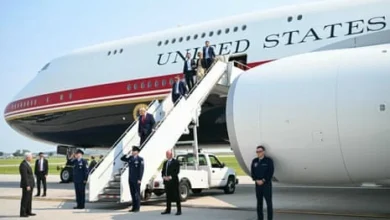
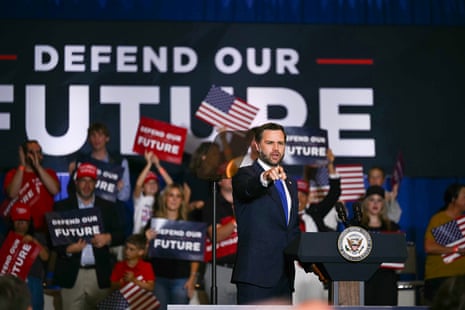
The administration has defended the policy as a measure of accountability rather than censorship. Vice President JD Vance, speaking to reporters on the tarmac at Joint Base Andrews, asserted that the restrictions do not constitute a ban on news reporting. Vance argued that while the outlets retain their freedom of speech and the ability to gather information through public channels, they are not entitled to coveted workspace and special privileges within the White House if they engage in what the administration classifies as partisan narrative-building.
Chronology of Events and Escalating Press Tensions
The friction between the current administration and the press corps has intensified steadily over recent months, marked by shifting protocols and open hostility toward outlets deemed uncooperative. The timeline of the current crisis highlights a rapid sequence of institutional confrontations:

- Friday: The White House issues a surprise administrative directive barring CNN, MS Now, and Politico from the executive grounds, citing generalized grievances over unfavorable coverage and "fake news."
- Monday Morning: The targeted news organizations formally file a joint lawsuit in the U.S. District Court for the District of Columbia, alleging violations of the First Amendment and the Due Process Clause.
- Monday Midday: The remaining members of the White House television pool suspend regular daily video rotations in protest. Prominent national newspapers institute temporary holds on distributing pool photography.
- Monday Afternoon: President Trump departs for New York City for the United Nations General Assembly, where he reacts to the ongoing legal battle on social media, highlighting Judge Tim Kelly’s historical rulings and signaling an immediate appeal.
Legal Precedents and Judicial Outlook
The core of the legal dispute centers on whether physical press access to the White House constitutes a protected First Amendment right once a public forum has been established. Legal scholars note that the administration faces a steep uphill battle in defending the blanket exclusion, primarily due to established constitutional case law.
In 2018, U.S. District Judge Tim Kelly—appointed to the federal bench by Trump himself during his first term—ruled in favor of CNN when the network sued the administration over the revocation of reporter Jim Acosta’s hard pass. Judge Kelly found that the abrupt removal violated due process protections, as the administration failed to provide clear criteria, notice, or an opportunity to respond before stripping credentials.

Trump’s recent social media commentary acknowledged this legal history with palpable frustration. Referencing Judge Kelly, Trump wrote, "They have drawn a great Judge, for them, a man who ruled in favor of Jim Acosta… The Judge’s name is Tim Kelly, and he was, sadly, appointed by ‘TRUMP.’ In other words, almost without question and, as usual, we’ll go for appeal." Legal analysts suggest that repeating the pattern of the 2018 Acosta litigation could lead to a swift preliminary injunction ordering the restoration of press credentials while the underlying constitutional questions are litigated.
Broader Domestic and International Implications
The confrontation with the media unfolds against a backdrop of compounding political and economic challenges for the administration. As Trump travels to New York for the annual United Nations General Assembly, his administration is grappling with soaring domestic energy prices, fallout from ongoing military engagements, and internal dissent within the Republican Party.
Average retail diesel prices across the United States reached a record $6.51 per gallon, driven largely by supply chain shocks and the ongoing conflict involving Iran and the closure of the Strait of Hormuz. The soaring fuel costs have severely impacted the agricultural sector, prompting influential Republican allies, such as Iowa Senator Chuck Grassley, to publicly pressure the White House for drastic market interventions, including a potential embargo on diesel exports. Simultaneously, midterm election anxieties are mounting within the GOP, as rural voters and agricultural producers express growing discontent over rising operational costs and trade policies.
Furthermore, the administration’s foreign policy maneuvers are facing international scrutiny. A recent briefing note issued by a United Nations human rights special rapporteur concluded that U.S. military strikes on vessels allegedly operating along narcotics-trafficking routes in the Pacific and Caribbean may constitute crimes against humanity. The findings directly challenge the administration’s self-defense justifications presented to Congress, adding another layer of controversy to an already turbulent diplomatic week that includes scheduled meetings with world leaders, Ukrainian President Volodymyr Zelenskyy, and New York City Mayor Zohran Mamdani.

Fact-Based Analysis of the Media Conflict
The unprecedented suspension of pooled coverage by major broadcast and print networks signals a structural shift in the relationship between the executive branch and the institutional press. While previous administrations frequently engaged in adversarial rhetoric with journalists, the outright barring of specific newsrooms from physical workspaces represents an escalation in executive gatekeeping.
The defense articulated by Vice President Vance—that the restriction is merely a denial of "special access" rather than an abridgment of free speech—will likely form the core of the government’s legal defense. However, constitutional experts emphasize that the government, having opened the White House press facilities to the press corps generally, cannot selectively exclude organizations based on the viewpoint or content of their reporting without running afoul of the First Amendment.
As the federal court prepares to weigh emergency motions for injunctive relief, the outcome is expected to set a critical modern benchmark for executive power, administrative discretion, and the constitutional protections afforded to independent journalists covering the presidency.
Related posts: