A fresh round of survey data released by Emerson College and The Hill reveals that key United States Senate contests in Texas and Michigan remain deadlocked within the margin of error, posing critical strategic challenges for both major political parties as the November midterm elections approach. In traditionally deep-red Texas, Democratic challenger James Talarico has managed to secure a razor-thin, one-percentage-point lead over his Republican opponent, Ken Paxton. Meanwhile, in the critical Midwestern battleground of Michigan, progressive candidate Abdul El-Sayed holds a narrow advantage over former Republican congressman Mike Rogers, pulling 48 percent of voter support compared to Rogers’s 46 percent.
These tightly contested battleground figures arrive amid a volatile political climate characterized by shifting voter loyalties, intense legislative battles on Capitol Hill, and mounting public scrutiny over the Trump administration’s domestic and foreign policy agenda. As both campaigns enter their final, high-stakes weeks, the converging pressures of economic anxiety, immigration enforcement, and foreign policy friction are fundamentally redefining the political map.
Shifting Margins in Traditional and Swing Strongholds
The prospect of a competitive Senate race in Texas has historically been dismissed by political strategists as an improbable endeavor for the Democratic Party. The last major electoral challenge occurred six years ago, when former Texas congressman Beto O’Rourke came within three percentage points of unseating incumbent Republican Senator Ted Cruz. However, the dynamics of the current race shifted dramatically during the primary cycle when Ken Paxton—the scandal-plagued Texas attorney general—backed by President Donald Trump, successfully unseated long-serving incumbent Senator John Cornyn.

Paxton’s controversial political history has energized Democratic mobilization efforts behind Talarico, transforming a long-shot prospect into a statistical toss-up. Conversely, the state’s gubernatorial race indicates a more traditional partisan split, with Democratic challenger Gina Hinojosa trailing incumbent Republican Governor Greg Abbott by three percentage points.
In Michigan, the contest between Abdul El-Sayed and Mike Rogers reflects stark demographic divides. Polling indicates that Rogers retains solid backing among non-college-educated voters and older demographic cohorts, whereas El-Sayed maintains a decisive lead among independent voters. These divergent voting blocs underscore the delicate coalition-building required to secure victory in the Rust Belt.
Legislative Flashpoints and Congressional Maneuvering
The polling data runs parallel to intense legislative maneuvers in Washington, D.C., where the House of Representatives recently passed the Lindsey O. Graham Sanctioning Russia and Iran Act of 2026 by a 262-159 vote. Named after the late senator who co-authored the legislation prior to his passing earlier this year, the sweeping bill grants the executive branch expanded authority to levy tariffs of up to 100 percent on top purchasers of Russian energy, including China, and targets Moscow’s illicit "shadow tanker" fleet used to bypass international energy restrictions.
Despite the bipartisan support that pushed the bill through the House ahead of the midterm recess, House Democratic Leader Hakeem Jeffries sharply criticized the legislation, arguing that it contains significant loopholes that could dilute its intended impact on Russia while granting the administration unchecked authority to impose economically damaging tariffs on American consumers.

Concurrently, the House schedule experienced unexpected disruptions when Speaker Mike Johnson canceled scheduled votes, triggering an early district recess. Political analysts noted that the abrupt calendar change successfully averted an imminent, highly contentious floor vote on a resolution introduced by Republican Representative Thomas Massie seeking to draft articles of impeachment against Defense Secretary Pete Hegseth amid ongoing fallout from military conflicts abroad.
Immigration Policy and Political Liabilities
Immigration enforcement continues to serve as both a central pillar of the administration’s platform and a mounting political vulnerability for vulnerable congressional incumbents. This dynamic was underscored by Florida Republican Representative María Elvira Salazar, who released a campaign advertisement recorded outside the White House openly criticizing the administration’s mass deportation initiatives.
In the 30-second spot, Salazar warned that immigration enforcement efforts had "gone too far," citing federal data indicating that half of the roughly 50,000 individuals detained in July possessed no criminal record. Representing a Miami-area district that is nearly three-quarters Hispanic—where Trump secured a 15-point victory in 2024—Salazar is facing a competitive reelection challenge from Democratic nominee and former television news anchor Eliott Rodriguez.
Democrats were quick to challenge Salazar’s public pivot, highlighting her previous legislative votes in June 2026, when she supported a $70 billion funding package allocating tens of billions of dollars to Immigration and Customs Enforcement (ICE), Customs and Border Protection (CBP), and the Department of Homeland Security (DHS) through September 2029.
The immigration debate has also sparked direct legislative pushback from the progressive wing of the party. Minnesota Representative Ilhan Omar announced plans to introduce the "Make ICE Pay Act," a legislative measure designed to strip nearly $140 billion in funding from federal immigration enforcement agencies and redirect those funds toward local municipal recovery efforts, non-profit organizations, and small businesses affected by aggressive federal enforcement operations.
Public Infrastructure and International Friction
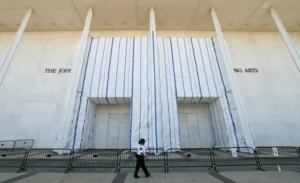
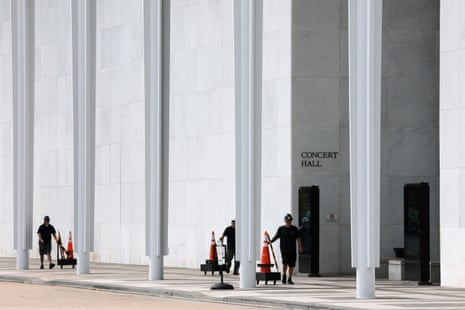
Administrative controversies have extended beyond immigration to encompass federal institutions and foreign relations. In Washington, U.S. District Judge Christopher Cooper issued a federal injunction requiring the administration to provide at least 30 days of public notice prior to executing any major structural changes or demolition plans regarding the John F. Kennedy Center for the Performing Arts. The ruling followed the abrupt, unannounced closure of the cultural landmark by its leadership, citing acute safety risks and structural deterioration. Opponents and congressional trustees, including Democratic Representative Joyce Beatty, have expressed deep concern that the closure serves as a pretext for retaliation or demolition following legal blocks preventing the addition of President Trump’s name to the building’s facade alongside former President John F. Kennedy.
On the international front, diplomatic tensions flared following a proposal by European Commission President Ursula von der Leyen to grant Canada a first-of-its-kind "associated member status" within the European Union. Canadian Prime Minister Mark Carney expressed openness to deepening strategic cooperation with the EU during an address in Strasbourg, focusing on critical minerals, artificial intelligence, and energy security. The proposal drew swift condemnation from President Trump, who characterized the potential pact as a hostile act and threatened broad retaliatory tariffs against European economies.
Implications for the November Midterms
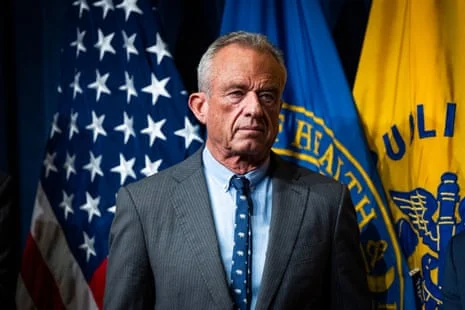
As the electoral calendar draws closer to the November 3 midterm elections, the convergence of tightening Senate margins in Texas and Michigan, ongoing debates regarding federal health policies led by Health and Human Services Secretary Robert F. Kennedy Jr., and legislative friction over foreign policy and trade suggest a highly unpredictable electoral landscape. Both parties are navigating a delicate balance between energizing their core ideological bases and appealing to crucial independent and moderate voters whose decisions will ultimately determine control of both chambers of Congress.