Methane Emissions and the Global Climate Crisis: Understanding the Potency, Sources, and Urgent Mitigation Strategies for a Warming Planet

Methane, a colorless and odorless hydrocarbon, has emerged as one of the most significant challenges and opportunities in the global effort to mitigate climate change. While carbon dioxide (CO2) remains the primary long-term driver of global warming due to its centuries-long persistence in the atmosphere, methane (CH4) acts as a high-intensity, short-term accelerator of the greenhouse effect. Composed of one carbon atom and four hydrogen atoms, methane is the primary component of natural gas, which currently accounts for approximately 25 percent of global electricity generation. However, its role in the atmosphere is far more complex than its utility as a fuel source suggests. As the second most important contributor to the climate crisis, methane is responsible for roughly one-third of the total global heating observed since the industrial era.
The Chemical Profile and Potency of Methane
The significance of methane lies in its Global Warming Potential (GWP). Although methane remains in the atmosphere for a relatively short duration—approximately 12 years compared to the centuries-long lifespan of CO2—it is far more efficient at trapping heat. Over a 20-year period, methane is estimated to be 86 times more potent than carbon dioxide on a per-unit-of-mass basis. Over a 100-year horizon, this potency remains 28 times higher. This unique profile makes methane reduction a critical "short-term lever" for climate action; curbing emissions today can lead to a rapid stabilization of global temperatures within a decade or two, providing a vital buffer as the world works toward long-term decarbonization.

Methane is produced through both geological and biological pathways. Geologically, it is formed over millions of years as heat and pressure act upon organic matter deep underground, creating the fossil fuel deposits extracted today. Biologically, the gas is produced through methanogenesis—a process where specialized microorganisms known as archaea break down organic material in oxygen-free (anaerobic) environments. This occurs naturally in wetlands and the digestive tracts of animals, but human activity has significantly amplified these biological outputs through intensive agriculture and waste management.
A Chronology of Rising Concentrations
The trajectory of atmospheric methane reflects the acceleration of human industrial and agricultural activity. Before the Industrial Revolution, methane concentrations in the atmosphere were relatively stable. However, data from the World Meteorological Organization (WMO) indicates that by 2023, atmospheric methane levels reached a record 1,934 parts per billion (ppb), representing a 265 percent increase over pre-industrial levels.
The 2010s marked a particularly concerning decade, during which methane growth rates surged. Scientists attribute this rise to a combination of expanded oil and gas operations—specifically the fracking boom in North America—and increased biological emissions from tropical wetlands and livestock. Despite international agreements like the Global Methane Pledge launched at COP26 in 2021, emissions have continued to climb, with 2024 data showing no signs of a significant slowdown in the energy sector’s output.

Methodologies of Measurement: The Satellite Revolution
Historically, methane emissions were calculated using "bottom-up" inventories. This method involves taking a known source—such as a single cow or a specific type of valve on a gas pipeline—measuring its average emissions, and multiplying that figure by the total number of units in a region. While useful for general planning, this method frequently underestimates actual totals. A landmark study published in the journal Science revealed that U.S. oil and gas methane emissions were 60 percent higher than Environmental Protection Agency (EPA) inventory estimates.
To address this gap, "top-down" measurement has become increasingly prevalent. This involves using airplanes, high-altitude sensors, and sophisticated satellites like MethaneSAT and GHGSat to detect plumes of methane from space. These technologies have revolutionized the identification of "super-emitters"—specific facilities or leaks responsible for a disproportionate share of total emissions. In 2022, satellite monitoring identified over 1,000 super-emitting incidents, including a massive leak in Turkmenistan that released 427 metric tons of methane per hour. Experts now believe that just five percent of leaks in the gas industry are responsible for more than half of its total leakage volume.
The Triad of Human-Caused Emissions
Approximately 60 percent of global methane emissions are the result of human activities, categorized into three primary sectors:

Agriculture
Agriculture is the largest anthropogenic source, contributing roughly 40 percent of human-caused methane. Within this sector, livestock—particularly ruminants like cattle, sheep, and goats—are the dominant contributors. Through enteric fermentation, microbes in their digestive systems produce methane, which is then released primarily through burping. Manure management, particularly in large-scale swine and dairy operations where waste is stored in anaerobic lagoons, adds to this total. Additionally, rice cultivation accounts for 8 percent of human emissions, as flooded paddies provide the perfect oxygen-free environment for methane-producing archaea.
Fossil Fuels
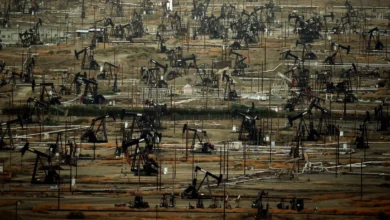
The extraction, processing, and transport of fossil fuels account for 35 percent of human-caused methane. In oil and gas operations, methane is often intentionally vented or flared (burned) when it is considered an unprofitable byproduct of oil extraction. Accidental leaks across vast networks of pipelines and storage tanks are also pervasive. Coal mining is another significant contributor; methane trapped in coal seams is released during the mining process or continues to seep from abandoned mines. Underground mines are particularly problematic, representing 70 percent of coal-related methane emissions.
Waste Management
Landfills and wastewater treatment systems contribute approximately 20 percent of human-caused emissions. As organic waste—such as food scraps and paper—decomposes in the anaerobic environment of a landfill, it generates "landfill gas," which is roughly 50 percent methane. With global solid waste production expected to rise by 73 percent by 2050, this sector represents the fastest-growing source of methane in many developing nations.

The Fossil Fuel Paradox: Natural Gas and the Bridge Fuel Myth
For years, natural gas was marketed as a "bridge fuel" that could help transition the global economy from coal to renewables. The logic was based on the fact that burning natural gas for electricity produces roughly half the CO2 of coal. However, recent scientific analysis has largely debunked this narrative by accounting for methane leakage.
If as little as 0.2 percent of methane leaks during the lifecycle of natural gas—from extraction to the burner tip—its climate impact can equal or exceed that of coal over a 20-year period. Recent studies on Liquefied Natural Gas (LNG) exports suggest that the energy-intensive process of cooling, transporting, and regasifying gas makes it even more damaging. A 2023 analysis concluded that LNG could have a 33 percent greater global warming potential than coal when accounting for full-lifecycle methane losses.
Natural Feedback Loops and Tipping Points
Beyond human activity, natural sources like wetlands account for 40 percent of methane emissions. However, these natural systems are increasingly being influenced by human-induced warming, creating dangerous "positive feedback loops."

The "wetland methane feedback" occurs as rising temperatures and shifting rainfall patterns cause tropical wetlands to expand and Arctic permafrost to thaw. As permafrost melts, it exposes long-frozen organic matter to microbes, which then release methane. The Arctic currently holds 2.5 times more carbon than is present in the entire atmosphere; if a significant portion of this is released as methane, it could trigger a "tipping point" where warming becomes self-sustaining and irreversible. Similarly, the increasing frequency of wildfires contributes to methane spikes, with California’s 2020 wildfire season alone contributing 14 percent of the state’s annual methane emissions.
Socio-Economic and Public Health Implications
Methane’s impact extends beyond temperature rise. It is a primary precursor to ground-level ozone (smog), a hazardous air pollutant. Ozone damages lung tissue, exacerbates asthma, and is linked to approximately 500,000 premature deaths annually worldwide. Furthermore, ozone reduces agricultural yields by inhibiting plant growth. Estimates suggest that for every million metric tons of methane reduced, 1,430 deaths from respiratory and heart diseases could be prevented, alongside the preservation of 145,000 metric tons of staple crops like wheat and rice.
Strategic Mitigation: Technical and Systematic Solutions
The Intergovernmental Panel on Climate Change (IPCC) asserts that methane emissions must be reduced by 34 percent by 2030 to keep the 1.5-degree Celsius warming target within reach. This requires a multi-pronged approach:

- Energy Sector Fixes: The International Energy Agency (IEA) reports that 70 percent of oil and gas methane emissions could be eliminated with existing technology, often at low or zero net cost, simply by upgrading valves, fixing leaks, and banning non-emergency flaring.
- Agricultural Innovation: Introducing feed additives like 3-NOP or certain seaweeds (such as Asparagopsis) has been shown to reduce enteric methane in cattle by over 80 percent. In rice farming, "Alternative Wetting and Drying" techniques can cut emissions by nearly half without reducing yields.
- Circular Waste Economy: Diverting organic waste from landfills toward composting or anaerobic digesters can prevent methane formation while creating useful soil amendments or biogas.
- Direct Removal: Emerging research into "methane removal" includes using iron salt aerosols to break down atmospheric methane or enhancing the natural methane-absorbing properties of tree bark.
Global Policy and the Implementation Gap
The Global Methane Pledge, now signed by nearly 160 nations, represents a significant diplomatic milestone. However, the gap between policy and implementation remains wide. As of 2023, only 13 percent of global methane emissions were covered by binding national regulations. While the European Union and the United States have recently introduced stricter methane fees and leak detection requirements, global emissions continue to reach new heights.
The challenge ahead is as much political as it is technical. The expansion of LNG infrastructure and the continued subsidies for industrial livestock production often run counter to methane reduction goals. Achieving the necessary cuts will require not only technological deployment but also systemic shifts in how the world produces food and energy.
Broader Impact and Final Analysis
The fight against methane is uniquely positioned in the climate discourse. Because of its potency and short lifespan, methane represents the most effective "emergency brake" available to policymakers. Success in reducing methane emissions could provide the world with the crucial time needed to solve the more intractable problem of long-term CO2 emissions. Conversely, failure to address methane—particularly the feedback loops in the Arctic and tropics—could overwhelm all other efforts to stabilize the climate. As satellite technology brings unprecedented transparency to where and how methane is escaping, the responsibility now shifts to governments and industries to act on this data before natural tipping points are permanently crossed.