Public Sentiment Clashes with Political Action as Polls Reveal Majority Support for Utah’s National Monuments Amid Massive Federal Reductions

In a move that has reignited a decades-old debate over federal land management and executive authority, President Donald Trump has signed two executive orders drastically reducing the size of the Bears Ears and Grand Staircase-Escalante national monuments in southern Utah. The decision, which slashes the protected areas by approximately 90 percent, was framed by the administration and Utah’s top Republican leaders as a victory for "the people" and a return to "fairness." However, a mounting body of empirical evidence, including multiple high-quality longitudinal studies and regional surveys, suggests a profound disconnect between the actions of elected officials and the preferences of the Utahns they represent.
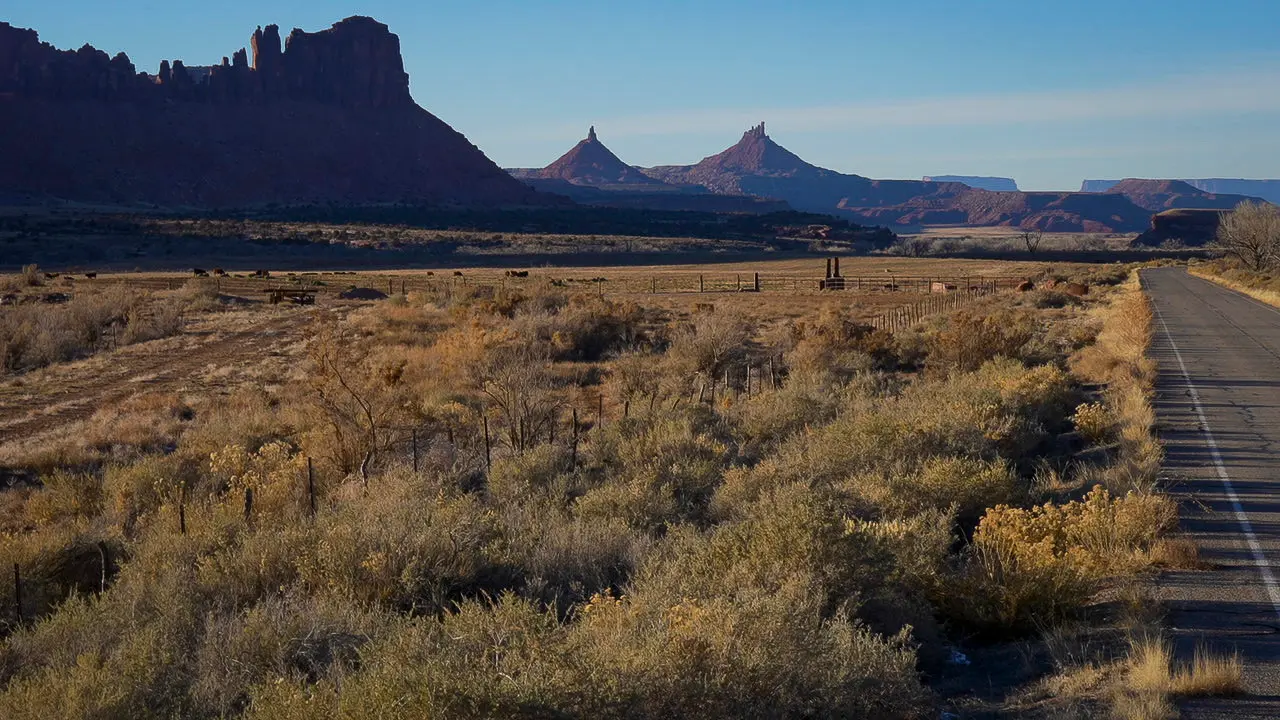
The executive orders effectively dismantle the expansive boundaries of two of the nation’s most culturally and ecologically significant landscapes. Bears Ears, which previously spanned 1.35 million acres of red-rock canyons and ancestral tribal lands, has been reduced to roughly 121,000 acres. Similarly, Grand Staircase-Escalante, a nearly 1.9-million-acre expanse known for its paleontological treasures and rugged wilderness, has been whittled down to just over 181,500 acres. The administration cited the need to "align the use of these public lands with the public interest," specifically highlighting the presence of critical mineral deposits such as copper, nickel, and uranium as a primary justification for the rollback.
The Disconnect: Polling Data vs. Political Rhetoric
While Utah’s political establishment—including Governor Spencer Cox, Representative Celeste Maloy, and Senator Mike Lee—has long campaigned against large-scale monument designations, recent data from Utah State University (USU) and other research institutions paints a different picture of the state’s electorate. According to surveys conducted between 2024 and 2025 by USU’s Community and Natural Resources Institute, 61 percent of Utahns support or strongly support the preservation of Bears Ears as a national monument. In contrast, only 19 percent expressed opposition.
The discrepancy becomes even more pronounced when addressing the specific act of shrinking the monuments. The USU data reveals that 53 percent of respondents were opposed to reducing the size of Bears Ears, while only 26 percent supported the reduction. These findings challenge the narrative put forth by Representative Celeste Maloy, who claimed during the Oval Office signing ceremony that the cuts were a response to "locals who are worried about losing multiple uses on these federal lands."
Michaelann Nelson, a professor of environmental rhetoric at Utah State University and lead author of the study, noted that the political rhetoric appears to be selective. "It is very contradictive of our findings," Nelson said. "They’re kind of picking and choosing which Utahns they’re paying attention to and listening to."
The sentiment is not limited to the more urbanized Wasatch Front. Researchers utilized rigorous methods to ensure that rural residents, who are often cited by politicians as the primary opponents of federal land protections, were accurately represented. Despite this, the majority of respondents across the state expressed a desire for conservation over industrial or extractive development.
A History of Protection and Conflict
The conflict over these lands is rooted in the Antiquities Act of 1906, a law that grants U.S. presidents the authority to protect "objects of historic or scientific interest" by designating them as national monuments. This power has been a flashpoint in Utah for nearly thirty years.
Grand Staircase-Escalante was designated by President Bill Clinton in 1996, a move that was met with immediate and fierce resistance from Utah Republicans. Over the ensuing two decades, however, the monument became an integral part of the regional economy, fueling a boom in tourism and recreation. Professor Nelson suggests that because Utahns have "existed with it for more than 20 years," support for Grand Staircase may actually be higher than for the more recently established Bears Ears.
Bears Ears National Monument was created by President Barack Obama in 2016 following an unprecedented proposal from a coalition of five Native American tribes: the Navajo Nation, Hopi Tribe, Ute Mountain Ute Tribe, Ute Indian Tribe, and Pueblo of Zuni. The designation was intended to protect tens of thousands of archaeological sites and cultural landscapes sacred to these nations.
The timeline of these monuments has been characterized by a political "see-saw." President Trump first reduced the monuments in 2017 during his first term, only for President Joe Biden to restore their original boundaries in 2021. This latest reduction marks the third major boundary shift in less than a decade, creating a climate of uncertainty for land managers, local businesses, and tribal governments.
Regional Trends: The "State of the Rockies" Poll
The preference for conservation is not an isolated phenomenon within Utah; it reflects a broader trend across the Mountain West. The annual Conservation in the West Poll, conducted by Colorado College’s State of the Rockies Project, has tracked public opinion on public lands for years. Their 2026 data shows that 91 percent of voters across eight Western states—Arizona, Colorado, Idaho, Montana, Nevada, New Mexico, Utah, and Wyoming—want existing national monuments kept in place.
This support is remarkably bipartisan. The poll found that 87 percent of Republicans, 92 percent of independents, and 96 percent of Democrats in the West favor maintaining current monument designations. Even among those identifying as supporters of the "MAGA" movement, support for monument preservation rose from 81 percent in 2025 to 87 percent in 2026.
Lori Weigel, a principal with New Bridge Strategies, which assists with the poll, emphasized the consistency of these results. "What we have seen very consistently in the data is that people want additional protections for these public lands," Weigel said. The data further indicates that voters prioritize conservation, recreation, and renewable energy over fossil fuel and mineral development by significant margins.
Economic Drivers: Mining and Critical Minerals
A central component of the Trump administration’s justification for the cuts is the "public interest" in domestic mineral production. The proclamation specifically mentions copper, nickel, and uranium—minerals that are increasingly vital for electronics, national security, and the transition to various energy technologies.
However, critics point out that the push for mining is often driven by corporate interests rather than a broad public mandate. Records from Trump’s first term showed that uranium mining companies had actively lobbied administration officials to shrink the boundaries of Bears Ears to facilitate easier access to deposits. By removing monument protections, the land returns to a "multiple-use" status under the Bureau of Land Management (BLM), which allows for new mining claims and industrial leasing that would otherwise be prohibited.
Governor Cox has argued that the sheer size of the monuments—which he noted were "bigger than the state of Delaware"—exceeds the Antiquities Act’s mandate to protect the "smallest area compatible" with the care of the resources. State leaders contend that the massive designations have led to "degradation" by attracting excessive tourism without providing the infrastructure or law enforcement necessary to manage it.
Tribal Sovereignty and Management
One of the most significant casualties of the new executive orders is the formal role of Native American tribes in land management. The original Bears Ears designation established an inter-tribal commission, a historic collaborative body that allowed federal agencies to consult with tribal leaders on the protection of cultural resources.
Trump’s latest order has disbanded this commission, a move that runs counter to public opinion. The 2024 New Bridge Strategies survey found that nearly 90 percent of Utahns support Native American tribes having a strong role in managing their ancestral lands. Furthermore, 81 percent of respondents believed the administration should honor existing agreements with tribes regarding Bears Ears.
The removal of these protections leaves thousands of sacred sites—including cliff dwellings, petroglyphs, and burial grounds—vulnerable to looting, vandalism, and the impacts of industrial development. For the five tribes of the Bears Ears Commission, the reduction is viewed not just as a policy shift, but as a violation of sovereignty and a disregard for cultural heritage.
Fact-Checking Access and Recreation
During the signing ceremony, President Trump claimed that monument designations "closed off" the land, stating, "You can’t do anything. You can’t go hunting. You can’t go fishing… You can virtually not even walk on it."
These assertions, however, are contradicted by the management plans of the monuments themselves. Both Bears Ears and Grand Staircase-Escalante explicitly allowed for continued hunting and fishing under state regulation. They also permitted the use of off-road vehicles on designated trails and continued grazing for existing permit holders. Unlike National Parks, which have more stringent prohibitions, National Monuments are generally managed to allow for a variety of traditional uses, provided those uses do not damage the specific objects the monument was created to protect.
Broader Implications and Legal Outlook
The reduction of Utah’s monuments is expected to trigger a fresh wave of litigation. Environmental groups, such as the Southern Utah Wilderness Alliance (SUWA), and tribal coalitions have historically sued to block such reductions, arguing that while the Antiquities Act gives a president the power to create a monument, it does not explicitly grant the power to abolish or drastically diminish one.
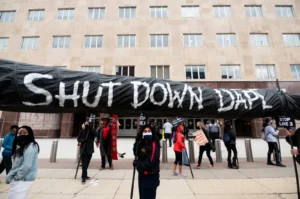
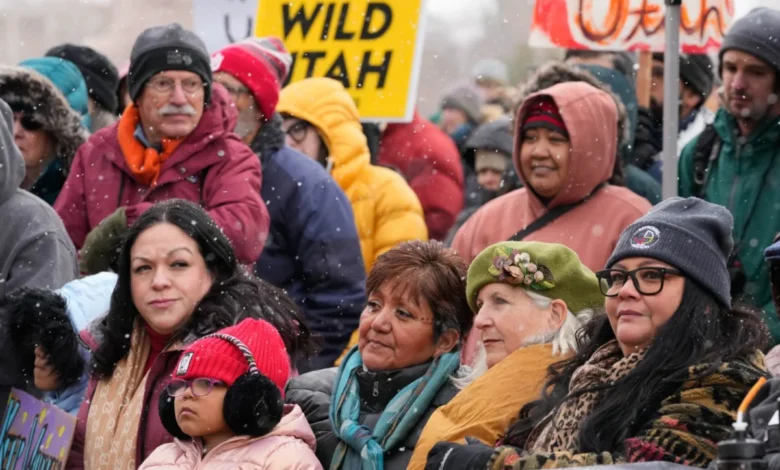
As hundreds of protesters gathered outside the Governor’s Mansion in Salt Lake City this week, the atmosphere was one of resolve. For many Utahns, the battle over Bears Ears and Grand Staircase-Escalante is about more than just acreage; it is about the future of the American West and the question of whether public lands should be managed for the benefit of the many or the profit of a few.
The ongoing discrepancy between public polling and political action suggests a volatile political landscape in Utah. As sociology professor Jessica Schad observed, "It seems like this issue has become really politicized, and our politicians aren’t taking into account what residents are preferring." Whether this gap in representation will lead to shifts at the ballot box remains to be seen, but for now, the red rocks of southern Utah remain at the center of a national struggle over the definition of the public interest.