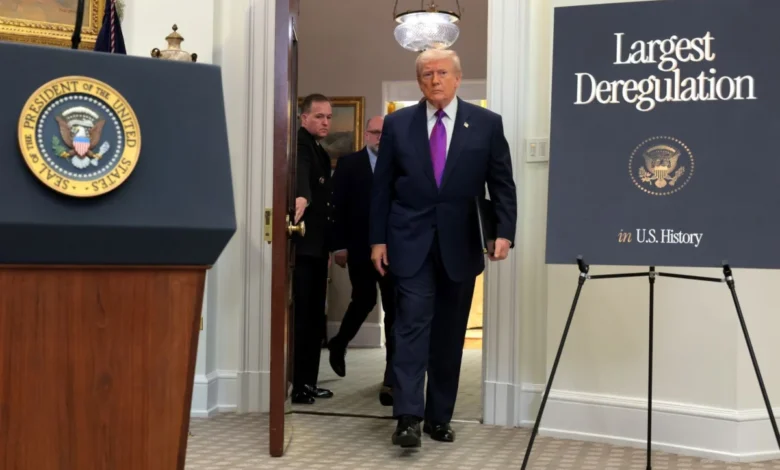
The federal government’s role in curbing carbon pollution from the transportation sector—a source accounting for approximately 16 percent of total U.S. greenhouse gas emissions—has effectively collapsed following a final rule announced by the Trump administration on Monday. By easing fuel-efficiency requirements and leveraging previous legislative successes that eliminated automaker penalties for non-compliance, the White House has moved to dismantle the regulatory framework that once governed the environmental footprint of the American auto industry.
This shift marks the culmination of a multi-year effort to reorient federal environmental policy. With the administrative removal of these standards, the burden of climate-related transportation policy has shifted almost entirely to the states, most notably California. As the legal and regulatory battleground narrows, the nation is witnessing a profound decoupling of federal and state climate ambitions, creating a period of unprecedented uncertainty for manufacturers, consumers, and environmental regulators.
A Chronology of Regulatory Retrenchment
The erosion of federal climate authority over vehicles did not happen overnight; it is the result of a systematic, years-long campaign to prioritize industrial flexibility over emissions reductions.
The trajectory began in earnest during the mid-2020s. In February 2026, the Trump administration took a foundational step by revoking the "Endangerment Finding" of 2009—a scientific determination that had previously empowered the Environmental Protection Agency (EPA) to regulate climate-warming emissions under the Clean Air Act. By severing this legal tether, the administration effectively stripped the EPA of its primary mandate to address tailpipe pollutants as a climate concern.
Following this, the legislative branch moved to formalize the deregulation. Throughout 2025 and 2026, Congress passed a series of measures that removed financial disincentives for automakers who failed to meet federal fuel-economy targets. By neutralizing the threat of fines, the government transformed mandatory standards into essentially voluntary guidelines. The announcement on Monday served as the final administrative seal on this policy, signaling a formal retreat from the climate goals that had defined the preceding decade.
The California Exception and the Battle for Supremacy
While Washington has vacated the field, California remains the primary obstacle to a total national deregulation. Due to a half-century-old exemption—granted in the wake of the 1950s smog crises in Los Angeles—California maintains the unique authority to set its own vehicle emission standards. This power, enshrined in the Clean Air Act, allows the state to adopt regulations that are more stringent than those mandated at the federal level.
This authority is not merely a local issue. Under the Clean Air Act, other states are permitted to adopt California’s more rigorous standards. As of 2022, 19 states and the District of Columbia had adopted these rules, representing roughly 40 percent of all new car sales in the United States. For automakers, the economic reality of this "California effect" is clear: it is often more efficient to design a single fleet that meets the most stringent requirements than to manufacture separate vehicle configurations for different regional markets.
The Trump administration, recognizing this influence, has engaged in a two-front war against California. First, it has pressured Congress to revoke the state’s waiver to set zero-emission mandates, such as the state’s 2035 phase-out of gasoline-powered vehicles. Second, the administration is currently litigating the underlying authority of the state to regulate greenhouse gases at all, arguing that such rules represent an illegal encroachment on federal fuel-efficiency policy.
Data-Driven Market Dynamics
The current regulatory shift comes at a time when the automotive industry is grappling with volatile market preferences and geopolitical instability. Recent data indicates that the aggressive transition toward electric vehicles (EVs), which was a central pillar of the Biden-era regulatory strategy, has slowed.
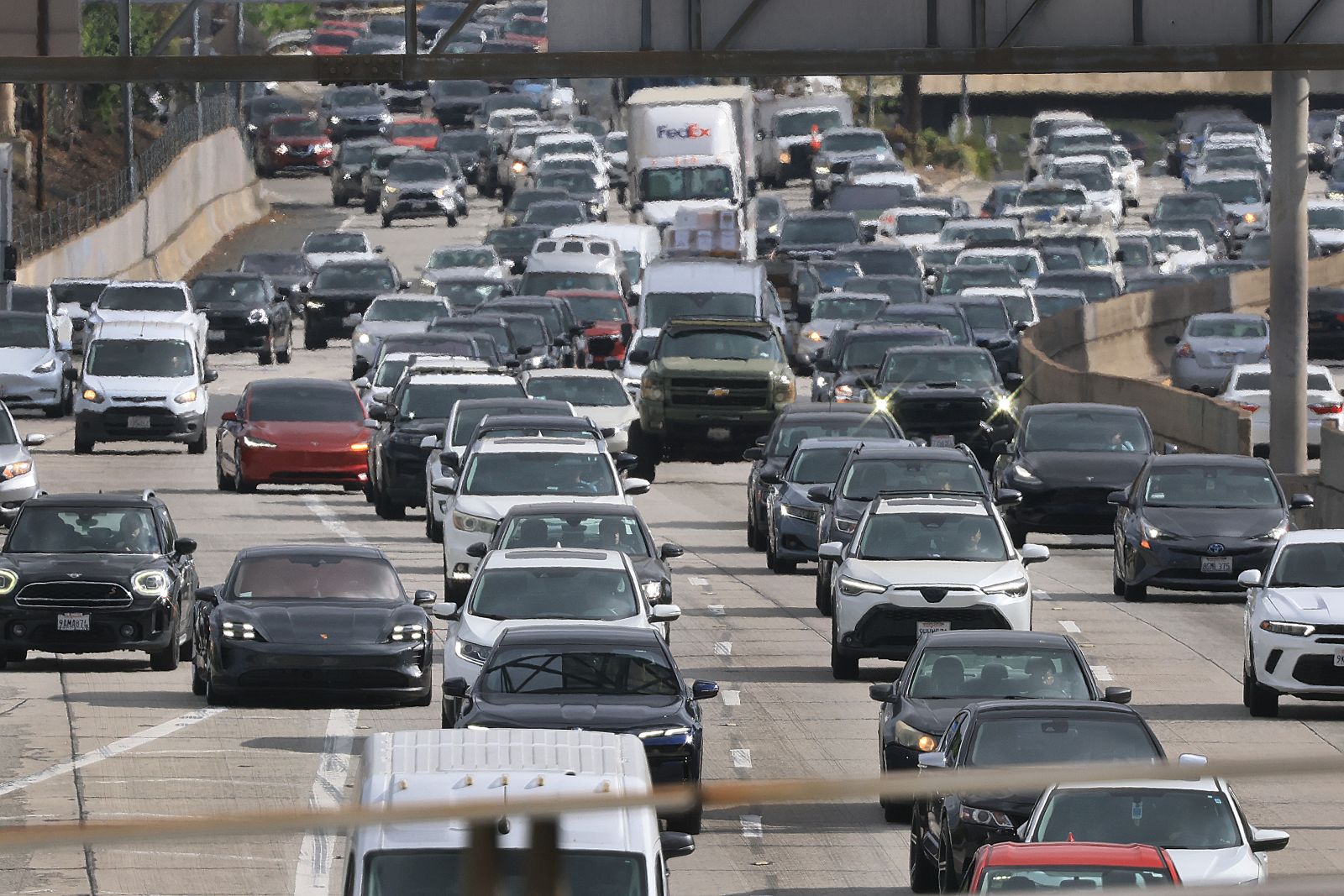
Industry analysts point to several factors:
- Consumer Demand: While manufacturers invested billions into EV platforms, consumer adoption has lagged behind early projections, hampered in part by the removal of federal tax credits in 2026.
- Geopolitical Pressure: The escalation of tensions in the Middle East and the resulting war on Iran have led to significant spikes in gasoline and diesel prices, forcing consumers to reconsider the fuel economy of their vehicles.
- Hybrid Resurgence: Perhaps in response to these fuel price fluctuations, hybrid vehicles have seen a surge in popularity, reaching a record 16 percent of passenger vehicle sales by mid-2026.
Despite the regulatory rollback, some industry leaders maintain that the global shift toward electrification is inevitable. General Motors President Mark Reuss noted during a recent industry conference that while the pace of adoption in the U.S. may be slower than previously anticipated, the underlying investments in EV platforms remain a permanent fixture of the company’s long-term strategy.
Official Responses and Legal Shenanigans
The legal landscape has become a mosaic of conflicting rulings. In early September 2026, a federal judge blocked an attempt by the Trump administration to force Congress to overturn California’s existing emission standards. California Attorney General Rob Bonta has framed the administration’s actions as a retaliatory effort against the state’s environmental leadership.
"What we’re seeing is a thinly veiled attempt by the president to retaliate against California for choosing progress over regression," Bonta said following the filing of a lawsuit against the administration.
Legal experts warn that the situation is fraught with "shenanigans." Rebecca Higgins, vice president of Policy at the Eno Center for Transportation, points out that the process used to revoke California’s waiver was highly irregular. Both the Government Accountability Office and the Senate parliamentarian questioned the legality of the maneuver at the time, creating a "tremendous uncertainty" that permeates the entire transportation sector.
Implications for the Future
The long-term implications of this regulatory reset are twofold. In the short term, the absence of federal enforcement removes the pressure on automakers to innovate beyond current standards, potentially stalling the reduction of carbon emissions from the transport sector.
However, the more significant threat to the status quo lies in the pending litigation before the federal courts. The administration’s lawsuit challenging California’s fundamental authority to regulate emissions could, if successful, reach the Supreme Court. A ruling against California would not only dismantle the state’s current standards but could also permanently restrict the state’s ability to act as a climate policy laboratory.
For the automotive industry, this represents a period of extreme "policy whiplash." As manufacturers balance the immediate desire to capitalize on current market trends against the potential for future regulatory reversals—particularly in the event of a change in federal administration in 2028—the sector faces a difficult path forward.
Ultimately, the nation is left with a fragmented regulatory environment. While the federal government has effectively stepped back, the legal struggle over California’s authority ensures that the battle over the tailpipe will continue in the courtroom, if not in the halls of Congress. The result is a landscape defined by uncertainty, where the future of American transportation policy depends as much on judicial interpretation as it does on market forces or executive orders.