California joins the plug-in solar revolution as new legislation empowers renters and homeowners to bypass utility gridlock

The transition to renewable energy has long been characterized by significant financial and structural barriers, often leaving apartment dwellers and low-to-middle-income households on the sidelines. While the global cost of solar photovoltaic (PV) technology has plummeted by more than 90 percent over the past decade, the traditional path to solar adoption—installing rooftop arrays—remains prohibitively expensive for many. It requires substantial upfront capital, homeownership, and complex electrical upgrades. However, a legislative breakthrough in California this week signals a shift toward a more democratic, decentralized energy model: the official sanctioning of balcony solar, also known as plug-in or micro-solar systems.
By signing a landmark bill into law on Wednesday, Governor Gavin Newsom has officially cleared the way for residents to adopt plug-in solar technology. This move, championed by state Senator Scott Wiener, represents a critical departure from the rigid interconnection requirements that have historically allowed utility companies to control the pace of residential solar expansion. As California joins a growing cohort of states, including Utah and Maine, that have already moved to codify the legality of these systems, the implications for the national power grid are profound.
The Anatomy of Plug-in Solar
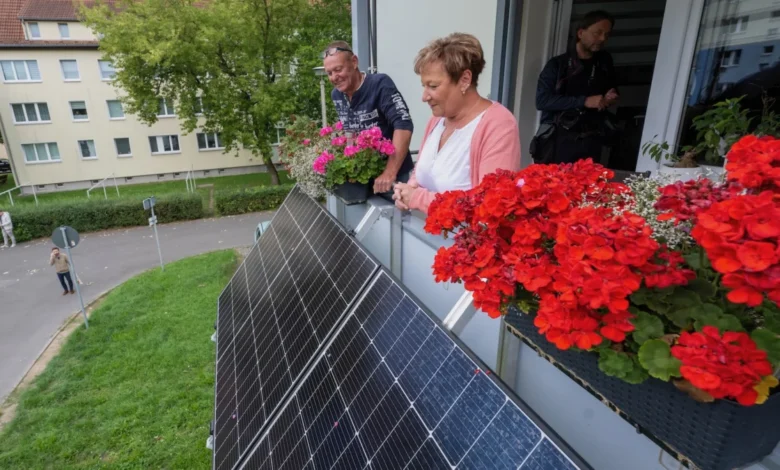
At its core, balcony solar is a study in simplicity. Unlike traditional rooftop installations that require professional mounting, complex permitting, and integration into the main electrical panel, plug-in solar arrays are designed to be "self-installable." These systems typically consist of one or two solar panels connected to a micro-inverter that plugs directly into a standard household wall outlet.
When sunlight strikes the panels, the generated electricity flows into the home’s local circuit, powering appliances and electronics. By directly offsetting the amount of electricity a home draws from the grid, these systems lower monthly utility bills. According to recent estimates, a modest balcony setup can save households hundreds of dollars annually, depending on local electricity rates. While the capacity of a plug-in system is merely a fraction of a full rooftop array, its scalability across millions of apartments and condos offers a transformative potential for urban energy consumption.
A Chronology of Policy and Adoption
The momentum for balcony solar did not emerge in a vacuum. It follows a decade of aggressive solar growth globally, most notably in Germany, where the government incentivized the installation of over half a million balcony systems. This "Balkonkraftwerk" movement served as a proof-of-concept for policymakers in the United States.
- 2014–2020: Rapid decline in global PV module prices leads to increased interest in residential solar; however, policy focus remains almost exclusively on single-family home rooftops.
- 2021–2023: As utility bills rise across the U.S. due to grid modernization costs and inflation, energy advocates begin pressuring state legislatures to address the "solar divide" that excludes renters.
- 2024: Several states, including Utah and Maine, pass legislation clarifying that small-scale, plug-in solar does not require the same interconnection agreements as utility-scale or rooftop projects.
- August 2025: California, the nation’s most populous state and a leader in renewable energy policy, passes SB868, eliminating the "massive barrier" of utility negotiations for small-scale plug-in systems.
Breaking the Utility Monopoly
The primary obstacle to the widespread adoption of plug-in solar has been the administrative burden imposed by utility companies. Traditionally, connecting any energy-generating device to the grid requires an "interconnection agreement." This process is designed for large systems and can involve months of paperwork, inspection fees, and sometimes the requirement for expensive electrical panel upgrades.
Senator Scott Wiener, the architect of California’s new law, noted during a press conference that the legislation effectively dismantles this gatekeeping. By classifying small, plug-in systems as consumer appliances rather than utility-interconnected generation sites, the state removes the requirement for users to negotiate with entities like Pacific Gas and Electric (PG&E). This shift essentially treats the solar panel like any other home appliance, such as a refrigerator or a television, significantly lowering the barrier to entry for the average consumer.
Economic and Environmental Implications
The move toward distributed energy comes at a time when the electrical grid is under unprecedented stress. The electrification of the economy—driven by the adoption of electric vehicles, the shift from natural gas to induction cooking, and the massive power demands of AI-driven data centers—has pushed demand to record highs.
The grid faces a dual challenge: maintaining a constant balance between supply and demand while transitioning from fossil-fuel-heavy generation to intermittent renewables like wind and solar. Because solar generation is often highest during the middle of the day—precisely when cooling demand peaks due to extreme heat—plug-in solar acts as a localized pressure release valve. By generating electricity at the point of consumption, these systems reduce the burden on local transformers and distribution lines.
Bernadette Del Chiaro, senior vice president for California at the Environmental Working Group, characterized the technology as a "twofer" for the public. It offers an immediate, tangible solution for households struggling with high energy costs while simultaneously contributing to the state’s aggressive decarbonization goals.
The Future of the Distributed Grid
The transformation of the grid from a centralized, one-way system to a multi-directional, distributed network is already underway. Historically, utilities generated electricity at large plants and transmitted it to consumers. Today, millions of homes are acting as "prosumers," feeding excess energy back into the grid. While plug-in systems are not designed to sell power back to the utility, they reduce the net load, which is functionally similar to increasing the efficiency of the entire grid.
Amanda Smith, a senior scientist at Project Drawdown, emphasizes that using renewable electricity exactly where it is generated minimizes transmission losses. In a conventional system, electricity is lost as it travels over high-voltage wires from power plants to homes. By generating that power on a balcony or a patio, that loss is eliminated.
Financial Viability and Market Outlook
For the average consumer, the financial equation is increasingly favorable. A basic plug-in solar kit—including the panel, micro-inverter, and mounting hardware—typically costs between $500 and $1,500. Depending on the state’s electricity rates, experts suggest a return on investment (ROI) period of roughly four years.
However, observers note that for low-income households, even a $500 initial investment can be a hurdle. The next phase of policy advocacy, therefore, will likely focus on state-sponsored rebates and incentive programs similar to those offered for electric vehicles or energy-efficient heat pumps.
As California’s law takes effect, the market is expected to see a surge in demand for plug-in solar hardware. Retailers are already anticipating a broader rollout, and manufacturers are scaling production to meet the expected regulatory shift. Given California’s history of influencing national energy trends, it is highly probable that other states will adopt similar frameworks to address energy affordability and grid resilience.
The adoption of plug-in solar represents more than just a change in technology; it represents a change in philosophy. By empowering individuals to take ownership of a small portion of their energy production, the state is creating a more resilient, responsive, and democratic power system. As the grid continues to face the challenges of the 21st century, these small, balcony-based interventions may ultimately provide the flexibility necessary to bridge the gap between our current infrastructure and a fully decarbonized future.