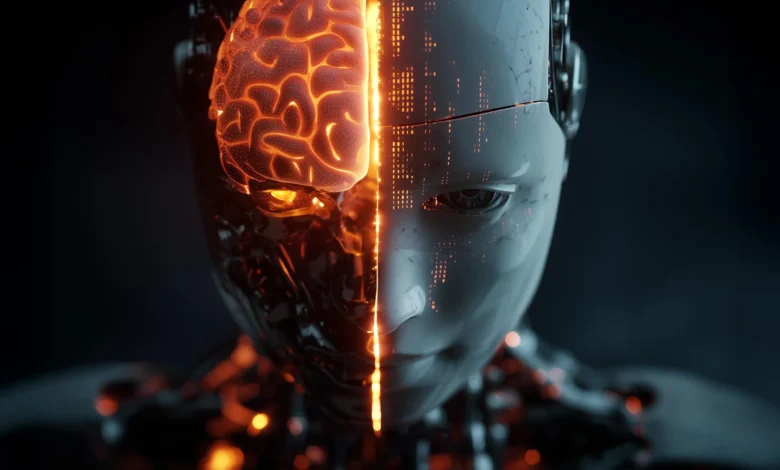
For decades, the field of computational neuroscience has operated on a foundational, if largely unverified, premise: that if an artificial intelligence system can replicate the output of the human visual cortex, it must, by extension, be processing information in a manner analogous to biological neural circuits. This assumption has fueled the rise of artificial neural networks (ANNs) as the gold standard for modeling human cognition. However, groundbreaking research conducted at York University has shattered this consensus, revealing a fundamental, "hidden" disconnect between the inner workings of current AI models and the complex architecture of the primate brain.
The study, recently published in the journal Nature Machine Intelligence, suggests that while AI may be an expert at mimicking the end results of human vision—such as object recognition—it frequently arrives at these conclusions through internal computational strategies that have no biological basis.
The Evolution of the Brain-AI Comparison
The reliance on ANNs in neuroscience is not accidental; it is the result of a decade-long acceleration in machine learning capabilities. Beginning roughly in 2012, with the advent of deep convolutional neural networks (DCNNs), researchers observed that these systems could reach human-level accuracy in image categorization. By the mid-2010s, neuroscientists were using these networks to "predict" the activity of individual neurons in the visual cortex. If an AI could predict whether a specific neuron would fire when shown a picture of a car, researchers inferred that the AI’s internal layers were effectively functioning like the brain’s hierarchical visual processing stream.
This methodology—testing whether AI can "foretell" brain activity—became the cornerstone of modern visual neuroscience. It allowed scientists to create, in theory, digital proxies for biological systems, providing a window into how the brain organizes sensory input into coherent concepts.
Challenging the One-Way Street
The York University research team, led by Assistant Professor Kohitij Kar, identified a critical flaw in this logic: the test was strictly unidirectional. Scientists had been measuring the ability of AI to predict the brain, but they had never systematically tested whether the brain could predict the AI.
"Artificial intelligence systems are often described as ‘brain-like’ because they can predict activity in parts of the brain that help us recognize objects," explains Kar, who serves as the Canada Research Chair in Visual Neuroscience at York’s Centre for Vision Research. "Until now, scientists mostly tested this in one direction. They asked whether AI models can predict brain activity. We decided to approach this question from the opposite direction."
To test this, the researchers developed a "reverse predictivity" protocol. By utilizing a dataset consisting of 1,320 natural and synthetic images—ranging from common household objects like chairs and apples to animals like elephants and birds—the team recorded neuronal activity from primates and compared it against the internal features of various ANN models.
The results were stark. While the AI models were proficient at predicting neural responses, the reverse was not true. The biological neuronal activity, when mapped against the models, failed to predict the internal features of the AI. Crucially, when the team performed the same test comparing neurons from one brain to neurons from another brain, the cross-predictivity was high, confirming that biological brains share a common internal logic that the AI models simply do not possess.
The Mechanism of the "Black Box"
The discrepancy highlights a phenomenon known as "algorithmic convergence." In simple terms, AI models are designed to minimize error rates and maximize classification accuracy. If an AI can achieve 99% accuracy by using a mathematical shortcut—or a feature set that a biological brain doesn’t utilize—it will do so.
The York study suggests that AI models have become highly efficient at "solving" vision, but they are doing so in a "black box" manner. They are essentially finding a different, non-biological path to the same destination. This raises an urgent concern for the scientific community: if we use these models to understand human neurological conditions, are we studying the brain, or are we studying the idiosyncrasies of our own code?
Implications for Clinical Research and Psychology
The fallout of this research extends deep into the realms of medicine and psychology. Currently, AI is being deployed to model neurological development, including the study of autism and other neurodivergent conditions. These models rely on the assumption that if an AI can simulate a "neurotypical" visual system, it can provide a baseline for observing how sensory processing might differ in other brains.
If the internal "strategies" of the AI are fundamentally alien to the human brain, the validity of these diagnostic models is called into question. If the model is not "thinking" like a human, its simulation of "abnormal" behavior may be entirely artificial, leading to misinterpretations of human neurological data.
Furthermore, the research suggests that as we continue to push AI toward higher performance, we may be inadvertently driving these models further away from biological reality. Every refinement that boosts an AI’s accuracy might be pushing it further into a computational space that has no parallel in the human cortex.
A New Standard for Computational Neuroscience
Rather than calling for an end to the use of AI in neuroscience, the researchers are advocating for a new, more rigorous standard of validation. They argue that future models should not just be judged on their output accuracy, but on their internal consistency with biological processes.
To facilitate this, the team, including Postdoctoral Fellow Sabine Muzellec, has released a publicly available "testing toolkit" on the Python Package Index (PyPI). This toolkit allows researchers to perform reverse-predictivity tests on their own models, providing a diagnostic metric to determine how closely their neural networks actually align with the primate brain.
"Our approach helps identify which parts of an ANN truly match brain activity," says Kar. "This is especially important for our autism research program, which builds on models of the neurotypical brain as a baseline. We need to ensure that the baseline is actually reflecting the biological reality of human perception."
Looking Toward the Future
The study serves as a necessary recalibration for the intersection of artificial intelligence and neuroscience. While the past decade was defined by the rapid adoption of deep learning as a tool for understanding the mind, the next decade may be defined by a more cautious, critical interrogation of those tools.
As artificial intelligence systems are integrated into more sensitive areas—from clinical neurology to the design of brain-computer interfaces—the need for "biological fidelity" will only grow. We are entering a phase where the mimicry of human performance is no longer sufficient. To truly unlock the mysteries of human vision, memory, and consciousness, the machines we build to interpret those processes must be mirrors of our biology, not just efficient calculators that happen to reach the same conclusions.
The York University study provides the diagnostic tools to ensure that, moving forward, the bridge between artificial and biological intelligence is built on a foundation of genuine structural alignment, rather than the deceptive veneer of similar results. For the scientific community, the task ahead is clear: build models that don’t just see what we see, but understand it the way we do.