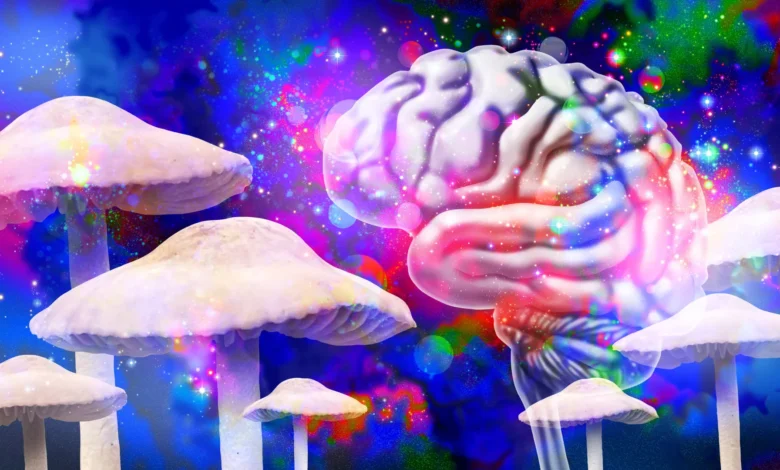
A groundbreaking study conducted by researchers at the University of California, San Francisco (UCSF) and Imperial College London has revealed that a single dose of psilocybin, the active psychedelic compound found in magic mushrooms, can induce physical changes in the brain that persist for as long as a month. This discovery, published in the esteemed journal Nature Communications, offers compelling insights into the therapeutic potential of psilocybin for a range of mental health conditions, including depression, anxiety, and addiction. The research team meticulously investigated the effects of psilocybin on healthy adults who had no prior experience with psychedelics, providing a pristine baseline for understanding the drug’s impact.
Unlocking the Brain’s Potential: Increased Entropy and Psychological Insight
At the core of the study’s findings is the concept of brain "entropy," a measure of the variety and unpredictability of neural activity. The researchers observed that psilocybin temporarily increases this entropy, leading to a more diverse and dynamic pattern of brain activity. This heightened state of neural complexity, they propose, may be directly linked to the promotion of psychological insight, a crucial element in the therapeutic efficacy of psilocybin. The psychedelic experience itself, therefore, appears to play a pivotal role in mediating the drug’s longer-term positive effects on mental well-being.
A significant observation was the correlation between a substantial increase in brain entropy in the hours following a high dose of psilocybin and the degree of emotional insight reported by participants the subsequent day. Notably, individuals who experienced greater psychological insight were also more likely to report sustained improvements in their overall well-being one month later.
Dr. Robin Carhart-Harris, a senior author of the study and the Ralph Metzner Distinguished Professor of Neurology at UCSF, eloquently described the essence of these findings. "Psychedelic means ‘psyche-revealing,’ or making the psyche visible," he stated. "Our data shows that such experiences of psychological insight relate to an entropic quality of brain activity and how both are involved in causing subsequent improvements in mental health. It suggests that the trip — and its correlates in the brain — is a key component of how psychedelic therapy works." This assertion underscores the profound connection between the subjective psychedelic experience and objective neurobiological changes.
Methodological Rigor: Mapping Psilocybin’s Neurobiological Footprint
To meticulously map the multifaceted effects of psilocybin on the brain, the research team employed a sophisticated array of neuroimaging and psychological assessment techniques. Measurements of brain activity, connectivity, and structure were taken at multiple time points: before the administration of psilocybin, during the peak of the psychedelic experience, and crucially, one month after the dose.
The study involved 28 healthy adult volunteers, none of whom had a diagnosed mental health condition. This selection criterion allowed the researchers to conduct a broader range of tests and obtain clearer insights into the fundamental effects of psilocybin without the confounding factors often present in clinical patient groups.
The experimental protocol was designed to systematically isolate the effects of psilocybin. Initially, participants received a low dose of 1 mg of psilocybin, which the researchers treated as a placebo. During this phase, their brain activity was monitored using electroencephalography (EEG), a non-invasive technique that records electrical signals via electrodes placed on the scalp. This provided a baseline understanding of neural activity in a controlled setting.
Following the initial placebo dose and over the subsequent weeks, participants underwent comprehensive psychological evaluations to assess their levels of insight, well-being, and cognitive performance. Alongside these subjective measures, advanced neuroimaging techniques were employed. Functional magnetic resonance imaging (fMRI) was used to study patterns of brain activity, while diffusion tensor imaging (DTI) was utilized to examine the structural connectivity between different regions of the brain. DTI works by tracking the diffusion of water molecules along neural tracts, providing information about their integrity and density.
After a period of observation, the participants were then administered a significantly higher dose of 25 mg of psilocybin, an amount known to reliably produce a profound psychedelic experience. During this high-dose session, brain activity was again recorded with EEG. Following this, the same battery of psychological and neuroimaging assessments were repeated over the ensuing weeks. This robust, within-subject design enabled a direct comparison between the effects of a full psychedelic dose and the observed outcomes after the lower, placebo dose, thereby strengthening the validity of the findings.
Quantifiable Brain Shifts: Psilocybin’s Impact on Neural Structure and Function
The immediate impact of the 25 mg psilocybin dose was striking. Within just 60 minutes of administration, EEG recordings unequivocally demonstrated a significant increase in brain entropy. This surge in neural complexity suggests that under the influence of psilocybin, the brain becomes more adept at generating and processing a wider spectrum of information, moving beyond rigid, habitual patterns of thought.
Perhaps more remarkably, the DTI scans conducted one month after the high-dose psilocybin administration revealed tangible structural changes in the brain. The researchers observed evidence of denser neural tracts and increased integrity within these pathways. This pattern of enhanced connectivity is noteworthy as it represents the inverse of changes commonly associated with aging, a process typically characterized by a diffusion and weakening of neural connections. While the precise functional implications of these structural alterations require further investigation, the researchers highlighted this as an unprecedented indication that psychedelics may facilitate lasting positive changes in brain architecture.
Lasting Gains: Enhanced Insight, Well-being, and Cognitive Flexibility
The subjective experiences reported by participants following the 25 mg dose were profound. On the day after the psychedelic session, a remarkable 27 out of the 28 participants described the experience as the "single most" unusual state of consciousness they had ever encountered. The remaining participant ranked it among the top five most unusual experiences of their life, underscoring the potent nature of the psilocybin-induced altered state.
Crucially, participants reported substantially greater psychological insight after the 25 mg dose compared to the 1 mg placebo. This enhanced capacity for self-reflection and understanding is considered a key therapeutic mechanism for psychedelics.
The positive effects extended beyond immediate insight, manifesting as measurable improvements in well-being. Assessments conducted two and four weeks after the high dose showed significant enhancements in participants’ reported optimism about the future and their ability to effectively manage life’s challenges. These self-reported gains were corroborated by objective measures of cognitive function. One month post-experiment, participants demonstrated improved performance on tests of cognitive flexibility, indicating an enhanced ability to adapt thinking processes and respond effectively to changing circumstances.
Dr. Taylor Lyons, a research associate at Imperial College London and the first author of the paper, elaborated on these findings. "Psilocybin seems to loosen up stereotyped patterns of brain activity and give people the ability to revise entrenched patterns of thought," she explained. "The fact that these changes track with insight and improved well-being is especially exciting." This suggests that the loosening of rigid thinking patterns is not merely a transient effect but can lead to enduring positive psychological shifts.
The Mechanism of Healing: How the Psychedelic Experience Drives Therapeutic Benefits
The study meticulously dissected the causal chain linking psilocybin administration to long-term well-being. The researchers found that individuals who exhibited the largest increases in brain entropy during the initial hours after taking psilocybin were also the most likely to report greater psychological insight the following day. This heightened insight, in turn, was strongly associated with more significant improvements in overall well-being observed one month later. This data provides compelling evidence that the subjective experience of psychological insight, facilitated by psilocybin-induced neurobiological changes, is a primary driver of the enduring therapeutic benefits.
These findings hold significant implications for the future of psychedelic-assisted therapy. By understanding the intricate relationship between dose, brain entropy, insight, and well-being, clinicians may be able to refine treatment protocols. This could involve identifying optimal psilocybin dosages that maximize the potential for meaningful insight without inducing an unnecessarily intense or overwhelming experience for the patient.
"We already knew psilocybin could be helpful for treating mental illness," Dr. Carhart-Harris reiterated. "But now we have a much better understanding of how." This deeper mechanistic understanding moves the field beyond empirical observation towards a scientifically grounded framework for utilizing psychedelics as therapeutic agents.
Broader Context and Future Directions
The current research builds upon a growing body of evidence suggesting the therapeutic efficacy of psilocybin for various mental health conditions. Clinical trials have demonstrated promising results for treatment-resistant depression, anxiety associated with life-threatening illnesses, and addiction. The UCSF and Imperial College London study provides a crucial neurobiological explanation for these observed clinical benefits, linking them to fundamental changes in brain dynamics and structure.
The funding for this pivotal research came from a combination of philanthropic donations to the Centre for Psychedelic Research at Imperial College London, the Alex Mosley Charitable Trust, and the Beckley Foundation. Dr. Carhart-Harris’s work was further supported by the Ralph Metzner Distinguished Professorship and philanthropic donations to the Psychedelics Division, Neuroscape, UCSF, and the Carhart-Harris Lab.
While these findings are highly encouraging, the researchers emphasize the need for further investigation. Future studies will aim to explore the long-term durability of these brain changes and their functional consequences across diverse populations and mental health conditions. The potential for these insights to inform the development of novel, non-psychedelic compounds that mimic some of psilocybin’s beneficial neurobiological effects is also a promising avenue for future research.
The scientific community’s response to this study has been largely positive, with many hailing it as a significant step forward in demystifying the mechanisms of psychedelic action. Experts in psychiatry and neuroscience have lauded the study’s rigorous methodology and its contribution to a more nuanced understanding of how these ancient compounds can be harnessed for modern therapeutic purposes. The ethical considerations and regulatory landscapes surrounding psychedelic research and clinical application continue to evolve, but discoveries like these are undoubtedly accelerating the dialogue and pushing the boundaries of what is considered possible in mental healthcare. The prospect of using psychedelics not just as a treatment but as a catalyst for profound personal growth and lasting psychological well-being is becoming increasingly tangible.