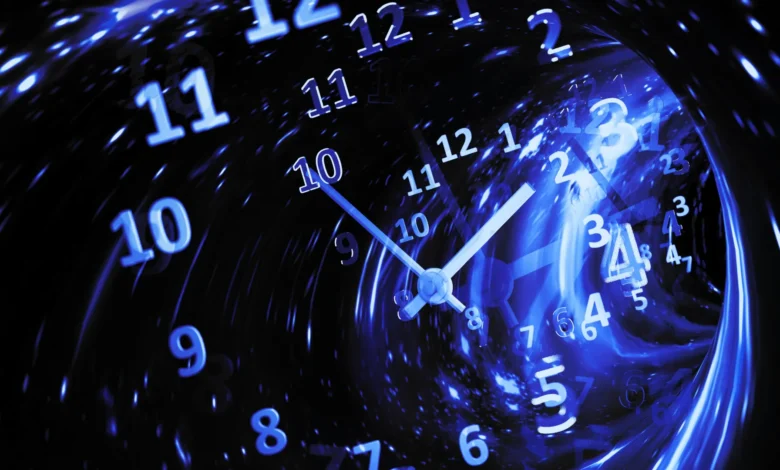
We measure time constantly, from the ticking hands of a clock to the changing numbers on a smartphone screen, yet despite the ubiquity of our temporal measurements, physicists remain locked in a centuries-old debate regarding the fundamental nature of time itself. For most of human history, time was treated as a Newtonian absolute—an unyielding, uniform backdrop against which the events of the universe unfolded. Albert Einstein’s theory of general relativity shattered this perception, revealing that time is fluid, malleable, and inextricably linked to the fabric of space. Under Einstein’s framework, time does not pass at the same rate for every observer; rather, it dilates based on velocity and the intensity of the gravitational field experienced by that observer.
While relativity governs the macro-scale, quantum mechanics governs the subatomic realm, introducing a landscape of profound uncertainty. In this domain, a clock can theoretically exist in a state of "superposition," where it follows multiple potential paths or states simultaneously. Because relativity dictates that motion and gravity influence the flow of time, a clock in quantum superposition could, in principle, experience multiple rates of time at once. This theoretical intersection—the "quantum superposition of times"—has long remained an elusive concept, existing only in the margins of mathematical models. However, a new international research initiative, led by Kyushu University, has proposed a pathway to move this phenomenon from the realm of abstract theory into experimental reality.
A Multidisciplinary Theoretical Breakthrough
The research, published in the journal Physical Review Letters, represents a collaborative effort between global institutions, including the Stevens Institute of Technology, the University of Waterloo, the National Institute of Standards and Technology (NIST), Colorado State University, and Stockholm University. The team has developed a theoretical framework that leverages the extreme precision of trapped-ion atomic clocks to detect the quantum superposition of time.
Atomic clocks operate by measuring the resonant frequency of electrons within atoms—typically cesium or strontium—as they transition between energy levels. Because these atomic transitions are among the most stable phenomena in the universe, they serve as the gold standard for timekeeping. Modern iterations of these devices are so sensitive that they can resolve time dilation effects over distances as small as a few millimeters, a feat that demonstrates just how far our measurement technology has progressed since the mid-20th century.
The Mechanism of Entanglement and Precision
The core of the researchers’ discovery lies in the concept of quantum entanglement. Entanglement describes a condition where the quantum states of two or more objects become correlated, such that the state of one cannot be described independently of the others, regardless of the distance separating them. The research team identified that an atomic clock’s internal quantum motion can become entangled with its internal energy states.
According to Associate Professor Joshua Foo of Kyushu University, one of the lead authors of the study, this entanglement serves as a diagnostic "signature." When the clock’s motion and energy states link, the system experiences a measurable degradation in certain quantum properties. By carefully manipulating the motion of the trapped ions within the clock, the team has proposed a technique that enhances the sensitivity of these devices by a factor of 100 to 1,000. This enhancement is not merely an incremental improvement; it is the difference between being blind to a phenomenon and having the instrumentation necessary to isolate its effects from background noise.
Chronology of Scientific Inquiry
The quest to harmonize relativity with quantum mechanics has defined physics for the past century.
- 1905–1915: Einstein publishes the theories of Special and General Relativity, establishing the relationship between time, gravity, and speed.
- 1920s–1930s: The foundations of quantum mechanics are laid, introducing the concepts of wave-particle duality and superposition.
- 1955: The first accurate atomic clock is built by Louis Essen and Jack Parry at the National Physical Laboratory in the UK, using cesium-133 atoms.
- 1990s–2010s: Development of optical lattice clocks pushes the precision of timekeeping to one part in $10^18$, capable of detecting gravitational red-shift at the centimeter scale.
- 2024: The current research proposal provides a mathematical bridge, suggesting that these high-precision instruments can be repurposed as sensors for fundamental quantum-gravitational interactions.
Implications for Physics and Technology
The implications of detecting the quantum superposition of time extend far beyond clock-making. If scientists can successfully observe this effect, it would provide the first experimental evidence of how quantum systems interact with the relativistic structure of spacetime. This is a critical hurdle in the search for a "Theory of Everything"—a framework that would unify the smooth, curved geometry of general relativity with the discrete, probabilistic nature of quantum field theory.
Furthermore, this research is intimately tied to the long-sought goal of understanding quantum gravity. Gravity remains the only fundamental force that has resisted integration into the Standard Model of particle physics. If gravity acts upon a quantum system in superposition, it must necessarily affect the "rate" at which that system evolves in time. By using atomic clocks as quantum sensors, researchers hope to observe the influence of gravity on the quantum state directly, potentially unveiling the behavior of gravity at the smallest scales of nature.
Challenges in Experimental Implementation
Despite the excitement surrounding this theoretical framework, the path to a laboratory experiment is fraught with technical challenges. The primary obstacle is the extreme sensitivity of quantum systems to external environmental factors, often referred to as "decoherence." Any interaction with the outside world—thermal vibrations, electromagnetic noise, or even trace fluctuations in magnetic fields—can collapse a superposition state, erasing the very signature the researchers hope to measure.
"Bringing our theoretical model to reality is the big next step," says Dr. Foo. "Developing a detailed experiment that accounts for real-world unpredictability will give us further insight into our model." The transition from the chalkboard to the vacuum chamber will require unprecedented control over the trapped ions, likely necessitating the integration of advanced cryogenic systems and state-of-the-art laser cooling techniques to isolate the ions from their environment entirely.
Broader Scientific Context and Impact
The push for higher precision in atomic clocks is not merely an academic exercise. Modern civilization relies on precise timing for a vast array of critical infrastructure. GPS navigation, which relies on the synchronization of atomic clocks aboard satellites, is sensitive to relativistic time dilation; if the clocks were not calibrated for the effects of gravity and speed as predicted by Einstein, the system would lose accuracy at a rate of roughly 10 kilometers per day.
By refining our ability to measure time, we are not only testing the limits of physics but also potentially opening doors to new sensing technologies. Extremely precise sensors based on these principles could eventually be used to map gravity with unprecedented resolution, potentially identifying underground mineral deposits, detecting tectonic movements, or even assisting in deep-space navigation where traditional GPS is unavailable.
Conclusion: A New Frontier
The research conducted by the team led by Kyushu University provides a sophisticated, actionable blueprint for exploring the most profound mysteries of the physical universe. While we currently perceive time as a singular, unidirectional flow, the quantum realm suggests that time may be far more complex than our daily experiences lead us to believe.
As the scientific community moves to test these predictions, the collaboration between institutions like NIST and international academic partners highlights the necessity of global scientific cooperation in tackling fundamental questions. Whether these experiments eventually confirm the superposition of time or necessitate a revision of our current quantum theories, the endeavor itself underscores the relentless human drive to quantify and comprehend the nature of the reality we inhabit. The atomic clock, once a simple tool for keeping pace with the workday, is now poised to become the primary lens through which we peer into the quantum fabric of the universe.