Global Surge in Violence Against Environmental and Indigenous Defenders Persists Despite Landmark Legal Protections

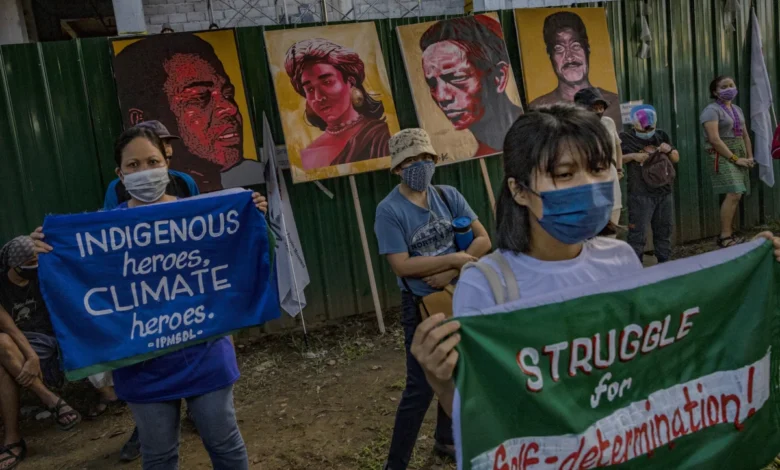
The year 2025 emerged as a period of profound contradiction for the global human rights movement. While international tribunals and high courts issued historic rulings affirming the right to a healthy environment and the necessity of protecting its guardians, the reality on the ground told a far more harrowing story. Environmental and Indigenous rights defenders remained among the most targeted populations globally, facing a lethal combination of physical violence, state-sponsored surveillance, and sophisticated legal harassment. According to the latest annual report from Front Line Defenders, a Dublin-based international human rights organization, at least 358 human rights advocates were murdered in 2025. This figure represents a persistent crisis that shows no signs of abating, even as the global community theoretically moves toward greater environmental accountability.
The data provided by Front Line Defenders paints a grim picture of the risks associated with activism. Of the 358 confirmed killings, nearly one-quarter—84 individuals—were targeted specifically for their efforts to protect land and environmental resources. These activists, many of whom operate without pay or formal institutional support, were killed across a diverse range of nations, including Brazil, Colombia, Ecuador, France, Honduras, Guatemala, Mexico, India, Indonesia, Peru, the Philippines, Turkey, Somalia, and Palestine. Parallel to these figures, Indigenous rights defenders, who often stand at the intersection of land preservation and cultural survival, accounted for an additional 17 percent of the documented fatalities.
The Anatomy of a Global Crisis: Lethal and Non-Lethal Threats
While the death toll captures the most extreme form of suppression, it represents only the tip of a much larger iceberg of repression. The report documented nearly 4,000 non-lethal attacks on human rights defenders across 119 countries over the course of 2025. These incidents include arbitrary detention, enforced disappearances, torture, and invasive surveillance. The authors of the report emphasized that these numbers likely represent a significant undercount. In many jurisdictions, the "total closure of civic space" makes it impossible to verify incidents. In countries such as China, the Democratic Republic of Congo, and Iran, the combination of internet blackouts, media suppression, and the direct targeting of documenters ensures that many violations remain in the shadows.
The methodology of suppression has evolved beyond simple brute force. Activists are increasingly subjected to "economies of violence," a term the report uses to describe the overlapping interests of government officials, multinational corporations, private security firms, and criminal syndicates. This nexus of power operates with relative impunity, particularly in regions where extractive industries—such as mining, oil and gas development, and industrial logging—clash with local communities. Whether the activities of these industries are technically legal or illicit, the response to opposition is frequently the same: a systematic effort to silence the critic.
Case Study in Impunity: The Killing of Efraín Fueres
One of the most visible tragedies of 2025 was the assassination of Efraín Fueres, a 46-year-old Ecuadorian environmental defender. Fueres was a prominent community leader who had become a focal point for opposition against the Ecuadorian government’s aggressive pro-extractive policies. His death occurred during a wave of nationwide protests in the fall of 2025, sparked by government moves to bypass environmental regulations in favor of industrial mining and oil interests.
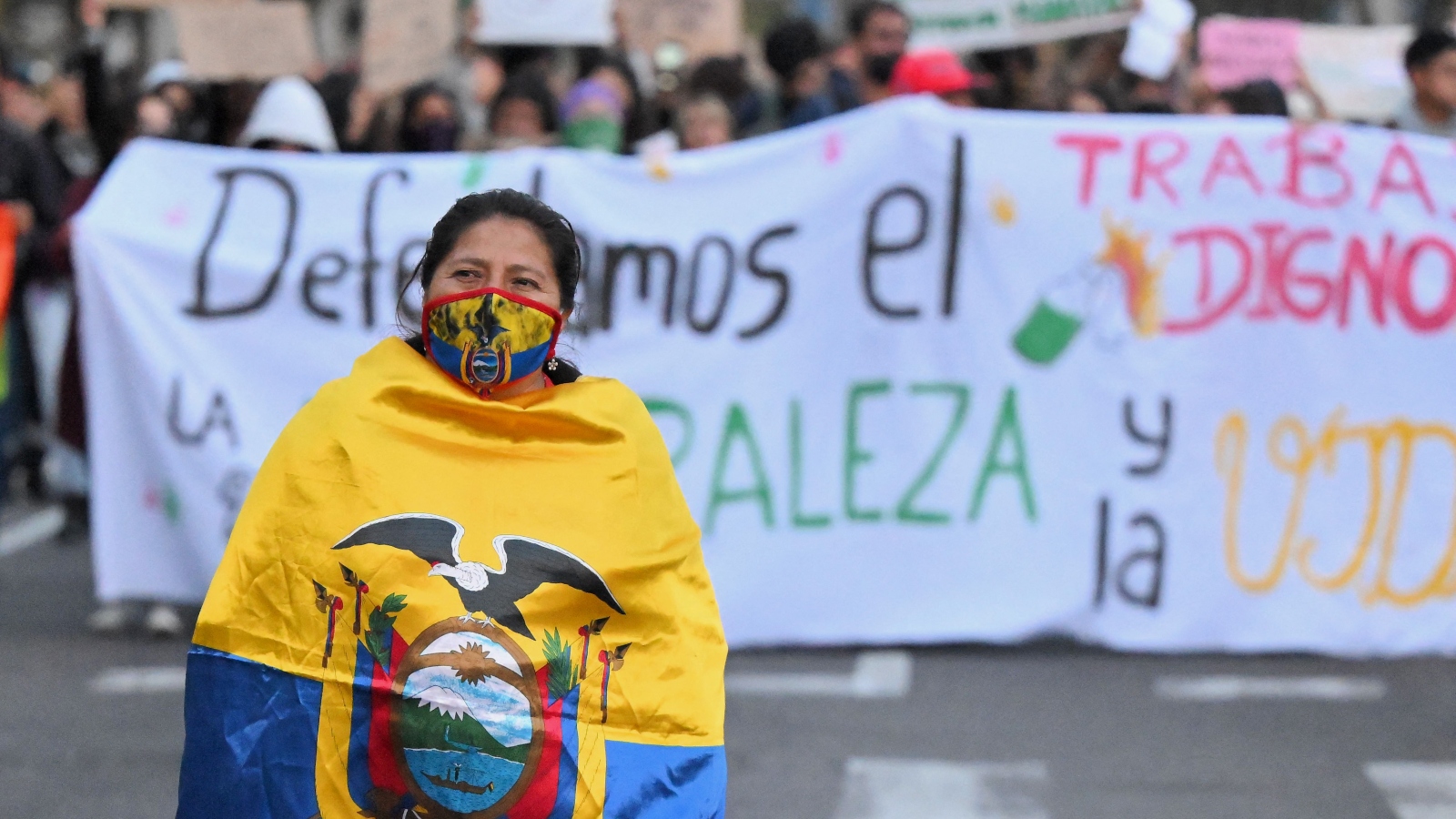
Digital evidence, including social media videos, captured the chilling final moments of Fueres’ life. He was gunned down while participating in a peaceful march. Following the shooting, a military vehicle approached his body as a companion knelt beside him in grief. Rather than providing aid or securing the scene for investigation, armed officers were filmed surrounding the men and repeatedly kicking the mourning companion. To date, neither the Ecuadorian Consulate in Washington, D.C., nor the country’s public prosecutor’s office has provided a formal response to inquiries regarding the incident. The case of Fueres serves as a microcosm of the global trend: the use of state security forces to protect industrial interests at the expense of human life.
The Legal Paradox: Rights on Paper vs. Reality on the Ground
The violence of 2025 occurred against a backdrop of unprecedented legal progress. More than 165 countries have now recognized the human right to a clean, healthy, and sustainable environment. This legal evolution has been bolstered by landmark advisory opinions from international bodies. The Inter-American Court of Human Rights, for instance, recently issued a definitive statement noting that the protection of environmental defenders is fundamental to the strengthening of democracy and the rule of law. The court argued that a healthy environment is a "precondition" for the enjoyment of all other human rights, placing a legal obligation on governments to mitigate climate change and protect those who advocate for the planet.
Similarly, the International Court of Justice (ICJ) has begun to clarify the obligations of states regarding climate change, suggesting that failure to protect environmental activists could constitute a violation of international law. However, these judicial victories have yet to translate into safety for those on the front lines. Experts suggest that as the legal basis for environmental protection strengthens, the "pushback" from those who profit from environmental degradation becomes more desperate and violent.
The Rise of Legal Harassment and SLAPP Suits
In addition to physical violence, 2025 saw a marked increase in the use of "lawfare"—the use of legal systems to intimidate and silence critics. In Ecuador and beyond, governments and corporations are increasingly relying on retaliatory lawsuits and criminal charges to stifle opposition. These are often referred to as Strategic Lawsuits Against Public Participation (SLAPPs).
The Front Line Defenders report highlights that the majority of criminalization cases in Ecuador occurred within the context of socio-environmental conflicts where mining projects were imposed on communities without their Free, Prior, and Informed Consent (FPIC). By labeling activists as "terrorists" or "saboteurs," states can use national security laws to detain defenders indefinitely, drain their financial resources through prolonged legal battles, and tarnish their reputations through state-aligned media smear campaigns.
The Critical Role of Indigenous Defenders
Indigenous populations continue to bear a disproportionate burden of the violence. While making up a small fraction of the global population, they are the primary guardians of the world’s remaining biodiversity. In 2025, the "green energy transition" added a new layer of risk for these communities. The global demand for critical minerals like lithium, cobalt, and copper—essential for electric vehicle batteries and renewable energy infrastructure—has led to a "mining boom" on Indigenous lands.

In Nevada, for example, the expansion of lithium mining has faced stiff opposition from Indigenous groups who argue that the projects threaten sacred sites and local water supplies. While these projects are framed as "green" and "sustainable" by corporations and federal governments, the local reality often involves the same patterns of land dispossession and lack of consent seen in traditional fossil fuel extraction. This creates a moral and practical dilemma for the global climate movement: the tools required to save the planet are being extracted through processes that harm the very people protecting it.
Analysis of Implications: A Threat to Global Climate Goals
The systematic targeting of environmental defenders is not merely a human rights crisis; it is a direct threat to global climate stability. Environmental defenders serve as the world’s early warning system, identifying and resisting projects that contribute to carbon emissions and ecological collapse. When these voices are silenced, the "checks and balances" on industrial expansion vanish, leading to accelerated deforestation and pollution.
Furthermore, the "economies of violence" described in the 2025 report suggest a breakdown in the rule of law that could have long-term economic consequences. When state power is used to facilitate illegal or forced extraction, it creates volatile environments that are prone to conflict and corruption. This instability undermines the international cooperation required to meet the targets set by the Paris Agreement.
Chronology of Key Events in 2025
- January 2025: The UN reaffirms the "Right to a Healthy Environment" as a core pillar of international law, urging member states to implement domestic protections.
- March 2025: A surge in violence is reported in the Amazon basin, linked to illegal gold mining and land grabbing in Brazil and Peru.
- May 2025: International courts issue advisory opinions linking climate change obligations to the physical safety of activists.
- September 2025: Nationwide protests erupt in Ecuador over new mining concessions; Efraín Fueres is killed during a demonstration.
- November 2025: Reports emerge of widespread internet blackouts in conflict zones, hampering the documentation of human rights abuses against land defenders.
- December 2025: Front Line Defenders finalizes its annual data, confirming that 2025 remains one of the deadliest years on record for human rights advocates.
Conclusion and Future Outlook
As the world moves deeper into the decade of climate action, the safety of environmental and Indigenous defenders must be prioritized as a central component of environmental policy. The findings of 2025 suggest that legal recognition of rights is insufficient without robust enforcement mechanisms and international pressure on offending states.
The report from Front Line Defenders calls for a multi-faceted approach: the cessation of legal harassment, the protection of digital spaces for activism, and the mandatory implementation of Free, Prior, and Informed Consent for all industrial projects. Without these changes, the "economies of violence" will continue to thrive, and the individuals standing between the planet and its destruction will remain in the crosshairs. The international community faces a choice: uphold the landmark rulings of its courts or continue to allow the "front line" to be a place of lethal sacrifice.