The Climate Reserve: How Displaced Scientists are Building a Shadow Network to Preserve Vital Environmental Research

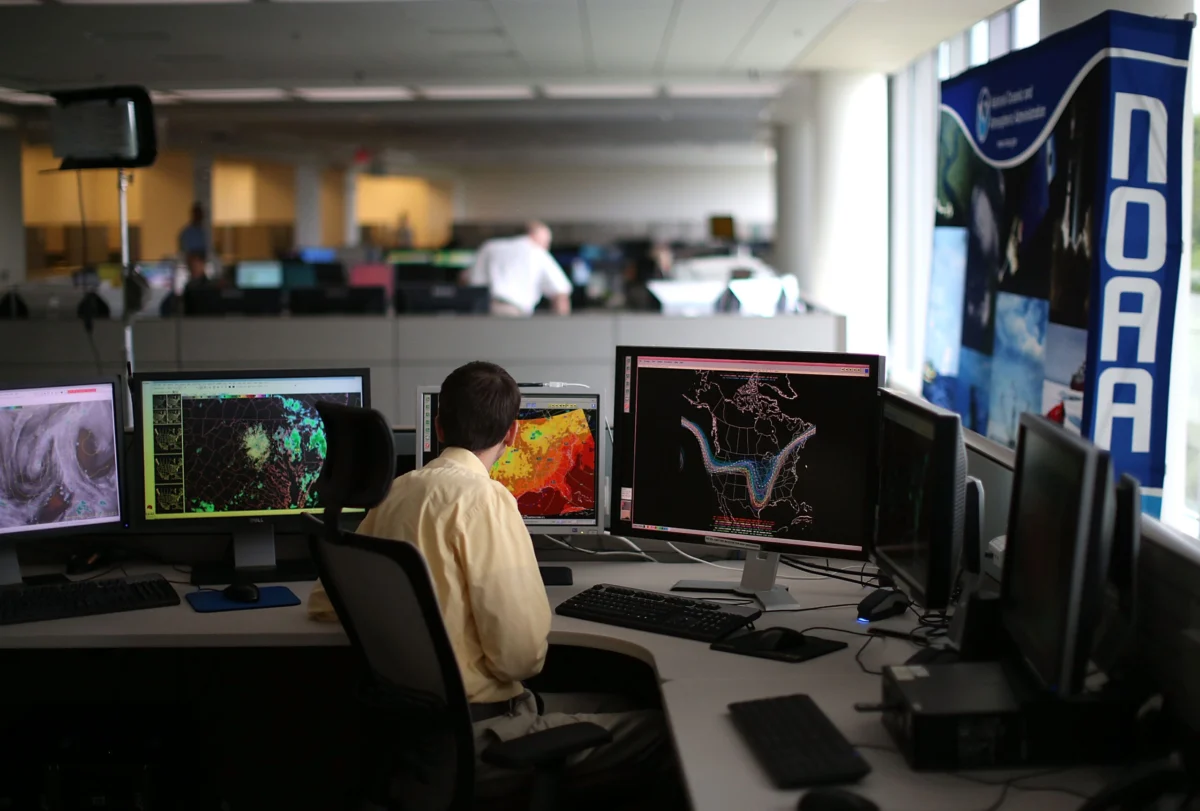
The landscape of American environmental science underwent a tectonic shift last year following a series of aggressive policy maneuvers by the federal administration. Shortly after President Donald Trump commenced his second term, the executive branch initiated a comprehensive campaign to dismantle internal climate research capabilities. This pivot, characterized by the termination of thousands of federal employees and the systematic rescission of billions of dollars in research grants across agencies like the Environmental Protection Agency (EPA) and the National Oceanic and Atmospheric Administration (NOAA), left the scientific community in a state of professional and logistical paralysis.
The vacuum created by these cuts did not merely result in job losses; it threatened the continuity of decades-long climate data collection, atmospheric modeling, and public health initiatives. In response, a grassroots coalition of displaced researchers and institutional leaders has established the Climate Reserve, an agile, privately funded network designed to act as a institutional life raft for the nation’s top climate talent.
A Chronology of Institutional Erosion
The decline of federal climate research did not happen overnight, but it accelerated rapidly during the early months of the current administration. By the end of the first quarter of last year, major climate-tracking programs were shuttered or placed under indefinite review.
The trajectory of this disruption follows a clear timeline:
- January: The administration issues executive orders targeting "excessive regulatory oversight," leading to immediate freezes on departmental hiring and project funding.
- March: Massive budget revisions are submitted to Congress, specifically targeting climate-related initiatives at the EPA and the Department of the Interior.
- May: Thousands of pink slips are issued, primarily affecting mid-to-senior level scientists and policy advisors.
- July: A pivotal workshop held by the Aspen Global Change Institute in Colorado brings together 30 displaced experts. This meeting marks the conceptual birth of the Climate Reserve.
- Current Date: The Climate Reserve has successfully transitioned from an informal network to a fully capitalized initiative, having placed over 50 fellows in new roles across non-governmental organizations (NGOs) and academic institutions.
The Mechanism of the Climate Reserve
The Climate Reserve operates on a model of "movement generosity," a philosophy that rejects the hyper-competitive grant-funding norms of academia in favor of resource sharing and collaborative labor. According to its leaders, including senior climate official Aparna Shrivastava, the organization functions as a bridge between high-level expertise and the organizations best positioned to house that knowledge.
The group identifies "critical climate work in limbo"—projects that were previously government-run but are now orphaned—and brokers agreements with universities, environmental think tanks, and nonprofits to host the researchers necessary to complete the work. This "parachute" strategy ensures that institutional knowledge—such as the complex modeling required for sea-level rise or the maintenance of public pollution-tracking tools—does not vanish during political shifts.
Supporting Data and Scientific Continuity
The impact of these cuts is quantifiable. When federal agencies withdraw from data collection, the loss to the global scientific community is profound. For example, the disruption of satellite-based methane monitoring programs could lead to a decade-long gap in emission tracking, complicating international climate targets.
The Climate Reserve has prioritized the "unsexy" but essential work of data standardization. As noted by Sonia Wang of the Data Foundation, scientific discrepancies in satellite imagery—such as varying wind speed models used by different agencies—can lead to vastly different conclusions about methane leakage. By funding experts to standardize these models, the Climate Reserve is effectively maintaining the integrity of the nation’s environmental data infrastructure, independent of political oversight.
Current projects under the Climate Reserve’s purview include:

- EJScreen: The resuscitation of an online mapping tool that identifies communities most affected by localized pollution, a project that is vital for environmental justice advocacy.
- Global Monitoring: Research into greenhouse gas emissions across five African nations, ensuring that the U.S.-led scientific contribution to international climate goals remains active.
- Ecosystem Feedback Studies: Programs led by researchers at nonprofits like Spark, investigating how wetlands respond to extreme temperature shifts, a critical feedback loop often absent from existing government models.
Official Responses and Institutional Reactions
The administration’s stance remains consistent with its campaign promises, characterizing these funding cuts as a necessary reduction in "bureaucratic overreach." Conversely, the scientific community has viewed these actions as a degradation of national security and public health.
"The people I worked with for years—experts in heat-related illnesses and wildfire smoke—are not just numbers on a ledger," said John Balbus, a former federal health official now working within the Climate Reserve network. "Their expertise is a public asset. When you fire them, you aren’t just saving money; you are blinding the public to the very real threats of a warming climate."
The reaction from the NGO sector has been overwhelmingly supportive. Organizations like the Environmental Protection Network have absorbed several fellows, allowing them to continue their work with minimal interruption. However, the Climate Reserve remains cautious. Due to the punitive nature of the current administration’s funding cuts, many projects are kept under a veil of partial secrecy to protect participants who may still be reliant on federal grants or who hope to seek future government funding once the political winds shift.
Broader Implications: A Shadow Science Infrastructure
The rise of the Climate Reserve suggests a broader, emerging trend in American science: the privatization of essential federal research. While the organization maintains that it is not a replacement for government action, the reality is that the federal government is currently failing to fulfill its role as the primary steward of environmental data.
The long-term implications are twofold. First, this model creates a more resilient scientific community, one that is less dependent on the whims of a single administration. By diversifying funding sources and strengthening ties between academia and the nonprofit sector, scientists are insulating their work against future political instability.
Second, the "movement generosity" approach may change how science is conducted in the United States. If successful, the Climate Reserve could prove that collaborative, non-competitive models are more effective at addressing complex, multi-disciplinary problems like climate change than the traditional, siloed grant systems that have dominated the field for decades.
Looking Ahead
As the Climate Reserve prepares to triple its funding by the end of next year, the organization faces the challenge of sustainability. Relying on private donors and foundation grants is inherently less stable than federal appropriations, yet the organization remains confident.
"We are building a reserve, not unlike the Army Reserve," says Brittany Janis of the Open Environmental Data Project. "When the nation needs this expertise, it should be there, ready to be called up. The need for this work is not going to vanish because an agency budget was cut. If anything, the urgency is only compounding."
The project serves as a stark reminder of the fragile nature of scientific institutions in a polarized political environment. For the 50 experts currently placed, and for the hundreds more waiting for similar opportunities, the Climate Reserve represents more than just a job; it represents a commitment to the fundamental premise that objective science is a cornerstone of a functional society. Whether this "shadow infrastructure" can scale to meet the monumental challenges of global climate change remains the defining question for the organization’s future. For now, however, it stands as the most significant, organized resistance to the systematic dismantling of American environmental intelligence.