San Diego Tries A Different Approach To Fire Prevention A New Spray On Dry Brush

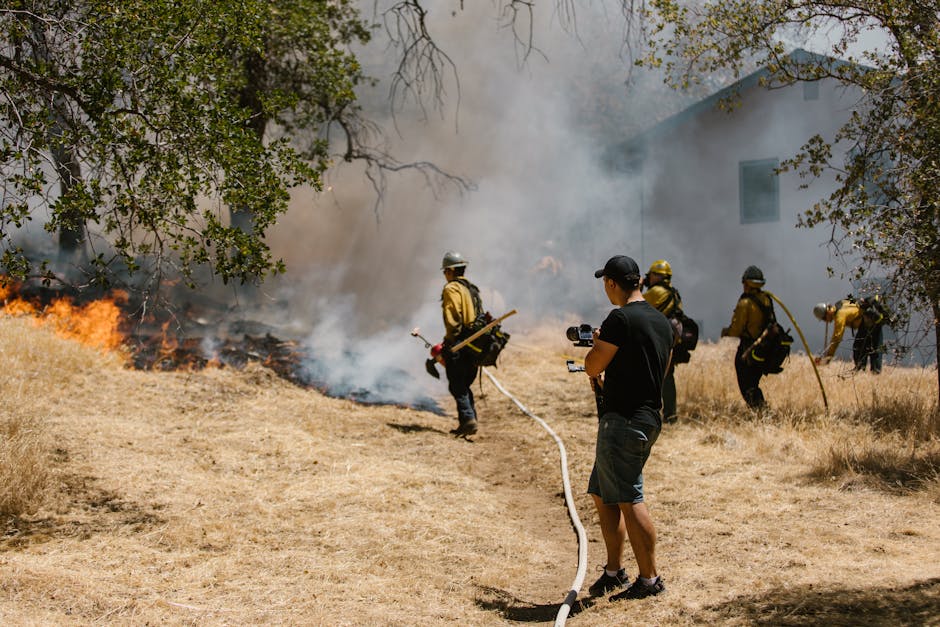
San Diego Employs Innovative "Spray-On" Fire Retardant for Brush Fire Prevention
San Diego’s arid climate and dense coastal sage scrub present a persistent and growing challenge: the threat of devastating wildfires. For years, traditional brush clearing methods, while essential, have faced limitations in terms of effectiveness, cost, and environmental impact. Recognizing the need for a more proactive and innovative approach, the city and its surrounding fire agencies have begun to implement a novel fire prevention strategy: the application of a specialized, long-lasting spray-on fire retardant directly onto dry brush. This method represents a significant shift from reactive firefighting to a more preventative, science-driven model, aiming to create defensible spaces around communities before ignition even occurs. The effectiveness of this approach lies in its ability to alter the flammability of vegetation, significantly slowing or even stopping the spread of wildland fires, thereby providing crucial time for firefighters to respond and gain control.
The core of this new strategy involves the use of a liquid-based fire retardant, often a water-soluble polymer mixture, that is aerially or ground-applied to susceptible vegetation. Unlike the red retardant typically dropped from aircraft during active fires, these preventative sprays are designed to be less conspicuous, often appearing clear or milky white upon application and drying to a near-invisible finish. The chemical composition of these retardants is engineered to achieve several key objectives. Firstly, they aim to reduce the ignition potential of the treated brush by lowering its temperature and making it more difficult for embers to ignite. Secondly, and perhaps more importantly, the retardant forms a protective barrier on the plant surfaces, hindering the rapid combustion and flame propagation that characterizes wildfires. This barrier effectively breaks the "fire triangle" – fuel, oxygen, and heat – by inhibiting the fuel’s ability to readily combust. The application of these retardants is meticulously planned, targeting areas identified as high-risk due to factors such as vegetation type, dryness, topography, and proximity to residential structures.
The selection of the specific retardant formulation is critical. While the exact proprietary blends vary between manufacturers and agencies, the underlying principles remain consistent. Many of these retardants are designed to absorb moisture, effectively acting as a sponge that can suppress combustion even in extremely dry conditions. Others contain hygroscopic salts that draw moisture from the air, providing a continuous barrier against ignition. The polymers within the spray create a durable coating that can adhere to vegetation for extended periods, weathering wind, rain, and UV exposure. This longevity is a key advantage over less persistent methods. Furthermore, modern fire retardants are increasingly formulated with environmental considerations in mind. They are designed to be biodegradable, minimizing long-term ecological impacts. Their application methods, particularly aerial spraying, are also subject to strict protocols to prevent off-target drift and protect sensitive habitats. The goal is not to eliminate all vegetation, but to create a mosaic of treated and untreated areas that can act as firebreaks and slow the spread of flames, allowing for more controlled and effective suppression efforts.
The operational deployment of this spray-on fire retardant system in San Diego is a complex logistical undertaking. It typically involves a phased approach, beginning with comprehensive risk assessments and mapping of high-priority areas. These assessments consider factors such as fuel load density, vegetation type (e.g., chaparral, coastal sage scrub), slope gradient, prevailing wind patterns, and the proximity of structures to wildland-urban interfaces. Once high-risk zones are identified, detailed treatment plans are developed. These plans dictate the specific retardant to be used, the application rate, the timing of the application (often during periods of low fire risk, such as late fall or early spring, before the peak fire season), and the deployment method. Aerial application, utilizing helicopters or fixed-wing aircraft equipped with specialized spray systems, is often favored for large or inaccessible areas. This method allows for rapid and widespread coverage. For more localized or sensitive areas, ground-based application, using trucks or backpack sprayers operated by trained personnel, may be employed. The precise calibration of spray nozzles and flight paths is crucial to ensure uniform coverage and avoid over-application or under-application of the retardant.
The decision to invest in this advanced fire prevention technology is driven by a confluence of factors, chief among them being the escalating cost and devastating impact of wildfires. Traditional fire suppression efforts, while heroic, are inherently reactive and can incur enormous expenses in terms of personnel, equipment, and property damage. The economic toll of wildfires extends beyond immediate suppression costs, encompassing lost revenue, environmental restoration, and the long-term recovery of affected communities. Furthermore, the growing urbanization of fire-prone areas means that more lives and property are at risk. San Diego, with its expanding population and its location within a fire-prone ecosystem, is particularly vulnerable. This proactive "spray-on" approach offers a potential paradigm shift, aiming to mitigate the severity and spread of fires before they reach critical points. By reducing the flammability of vegetation in high-risk areas, the retardant acts as a crucial buffer, slowing the advance of flames and creating valuable time for first responders to reach the scene and implement containment strategies. This can mean the difference between a contained incident and a widespread conflagration.
The effectiveness of this spray-on retardant strategy is not solely dependent on the chemical properties of the product. Community engagement and public education play an equally vital role in its overall success. While the retardant creates a physical barrier to fire, fostering a culture of fire-wise living and ensuring that residents understand and implement fire prevention practices in and around their homes remains paramount. This includes maintaining defensible space, clearing gutters of flammable debris, using fire-resistant building materials, and understanding evacuation routes. The retardant application should be viewed as a complementary tool, not a sole solution. Public outreach campaigns inform residents about the rationale behind the retardant application, its safety, and its benefits in protecting their communities. This transparency helps build trust and buy-in, crucial for the long-term viability of such an initiative. Furthermore, ongoing research and development are continuously refining these retardant formulations, aiming for enhanced efficacy, greater environmental compatibility, and improved application techniques.
Beyond the immediate benefits of reduced fire intensity and spread, the implementation of this spray-on retardant program offers broader ecological advantages. While fire is a natural part of many ecosystems, uncontrolled wildfires can be destructive, leading to soil erosion, habitat loss, and the decimation of native plant and animal populations. By helping to manage the intensity and extent of fires, this preventative measure can contribute to the preservation of biodiversity and the health of the San Diego environment. Treated areas can act as crucial refuges for wildlife during a fire, and by preventing the complete devastation of large tracts of land, the retardant can aid in the faster recovery of ecosystems. Moreover, by reducing the frequency and severity of large, destructive fires, the long-term impact on air quality, which is a persistent concern in Southern California, can also be mitigated. Fewer large fires mean less smoke pollution and fewer harmful particulate matter released into the atmosphere.
The ongoing success of San Diego’s innovative approach to fire prevention hinges on several critical factors. Continued investment in research and development is essential to ensure that the retardant formulations remain at the forefront of fire science, offering improved performance and reduced environmental impact. This includes exploring new chemical compounds, enhancing biodegradability, and developing more efficient and precise application technologies. Rigorous monitoring and evaluation of the treated areas are also crucial. This involves assessing the long-term effectiveness of the retardant under various environmental conditions, identifying any unforeseen ecological consequences, and adapting treatment strategies based on real-world data. Collaboration between fire agencies, scientists, policymakers, and the community is paramount. Sharing knowledge, best practices, and resources will strengthen the collective ability to combat the growing threat of wildfires. Furthermore, as climate change continues to exacerbate dry conditions and increase fire risk, this proactive approach will likely become an increasingly vital component of comprehensive wildfire management strategies across California and beyond. The willingness of San Diego to embrace such innovative solutions underscores a commitment to protecting its residents, its environment, and its future from the devastating impacts of wildland fires. The long-term vision is one of resilience, where proactive measures create a more fire-resistant landscape, safeguarding communities and preserving the natural beauty of the region for generations to come.


