Andy Burnham’s New Government Navigates Early Challenges: Prisoner Release, Fiscal Scrutiny, and Defence Strategy Amidst Shifting Economic Landscape


Prime Minister Andy Burnham’s nascent administration, barely days into its tenure, is confronting a complex array of domestic and international pressures, demanding immediate strategic responses across critical policy fronts. From the emotive debate surrounding prisoner release protocols and the fiscal viability of ambitious cost-of-living pledges to a re-evaluation of national defence commitments and contentious energy policy decisions, the government’s mettle is being rigorously tested. These early challenges are unfolding against a backdrop of a surprisingly positive inflation report, offering a fleeting economic uplift that nonetheless remains vulnerable to global instability.
Justice System Under Scrutiny: The Early Release Review
One of the most immediate and sensitive issues demanding the Prime Minister’s attention is the proposed review of the early prisoner release policy, particularly in light of the tragic case of PC Andrew Harper. Speaking from Bath on Wednesday, 22 July 2026, Andy Burnham affirmed that the main perpetrator in PC Harper’s killing "will not be subject to any early release." This statement comes amidst widespread public concern and direct appeals from PC Harper’s mother, who had described the potential early release of two of her son’s killers as an "insult."
PC Andrew Harper tragically died in August 2019, at the age of 28, after being caught in a strap attached to the back of a car and dragged for over a mile while responding to a quad bike theft in Sulhamstead, Berkshire. Three teenagers were convicted in connection with his death. The driver of the vehicle received a longer sentence and is specifically excluded from the proposed early release scheme, but his two passengers could potentially be eligible to serve only half of their sentences.

The new Sentencing Act, set to come into effect from September, allows for the early release of hundreds of offenders. Crucially, unlike emergency measures enacted by previous Labour governments that saw tens of thousands of prisoners released due to overcrowding, this new legislation reportedly includes no explicit exemptions for individuals convicted of serious crimes, domestic abuse, or terrorism. This absence of exemptions has fueled public and political anxiety, prompting calls for greater clarity and safeguards.
Prime Minister Burnham acknowledged the undeniable pressure on prison places, stating, "Nobody can deny the pressure on prison places. We did not invest in the prison estate when we should as a country, going back a decade or so ago, when it was clear that there was going to be pressure. That has created an unacceptable situation now." However, he pledged a thorough examination of the policy, asserting, "I want to assure myself that everything has been looked at before this policy proceeds, and I can give that assurance that every single part of this I will look into with the justice secretary. I can’t say that I can’t change the policy completely, but I will look at it in detail before we go further forward." This commitment underscores the government’s delicate balancing act between alleviating prison overcrowding, upholding the principles of justice, and responding to the profound anguish of victims’ families.
Fiscal Frictions: Funding Burnham’s Cost-of-Living Pledges
The new government’s ambitious agenda to tackle the cost-of-living crisis is already facing significant fiscal scrutiny. On Wednesday, 22 July 2026, the Prime Minister announced a nationwide cap of £2 on single bus fares across England, effective from January, reducing the previous £3 limit. This follows Tuesday’s commitment to cut VAT on household electricity bills from 1 October. While these measures aim to provide tangible relief to households, questions over their funding have quickly emerged, leading to a heated political exchange.
The government stated the £2 bus fare cap is backed by £454 million. Approximately £400 million of this funding is earmarked to come from a controversial reallocation of international climate finance, switching grants to developing countries into loans. The remaining funds are expected to be sourced from savings within the Department for Energy Security and Net Zero budget. The VAT cut on electricity bills, meanwhile, is slated to be financed by cancelling the digital ID scheme.
However, these funding mechanisms have been met with skepticism. Former cabinet minister Darren Jones, who was recently sacked as the Duchy of Lancaster, publicly suggested that the digital ID scheme cancellation amounted to an "unfunded" saving, arguing that the scheme "was never funded in the first place." He insisted that the government "will have to set out how it will pay for its new policies at the budget."
Transport Secretary Heidi Alexander, appearing on the media rounds, robustly defended the government’s position. She declared herself "100% sure" that the bus fare cap policy was fully funded, attributing it to "reprioritising spending." Alexander firmly reiterated the Prime Minister’s commitment to fiscal responsibility: "The prime minister has been absolutely clear that we’re going to observe the fiscal rules and that you won’t get any unfunded spending commitments from this government." She also countered criticisms regarding the VAT cut, stating, "it was not true to say the money isn’t there to implement the changes on electricity bills." Alexander did, however, admit that details surrounding the terms of the international climate finance loans, including whether developing countries would incur interest, "need to be worked out."
Conservative shadow chancellor Mel Stride echoed Jones’s concerns, demanding to know "Where is the money coming from?" and asserting that the digital ID scheme was "never funded in the first place." The Guardian has also reported that Burnham plans to accelerate the implementation of his national care service promise, a move that could entail significant additional costs before the next election, further intensifying the pressure on the government’s financial planning. The debate highlights the critical early challenge for Burnham’s government: demonstrating that its populist pledges are underpinned by credible and sustainable financial strategies.
Economic Snapshot: Inflation’s Fleeting Dip
In a rare piece of positive economic news for the new government, UK inflation dropped more than expected in June, settling at 2.6%. This figure represents a decline from 2.8% in May and surpassed economists’ forecasts of a more modest reduction to 2.7%. The unexpected fall provides a welcome boost for Prime Minister Burnham’s broader plans to alleviate the cost of living for households.
According to the Office for National Statistics (ONS), the primary drivers behind this downward trend included a significant fall in fuel prices, particularly diesel, a development attributed partly to an "unstable truce" in the ongoing Middle East conflict. Additionally, clothing prices saw a month-on-month decrease, with retailers offering larger summer sale discounts compared to the previous year. Prices for transport and various food items, including chocolate, margarine, and beef, also contributed to the overall moderation in the Consumer Prices Index (CPI). Grant Fitzner, the ONS chief economist, highlighted these factors, noting, "Food prices fell this month, driven by products including chocolate, margarine and beef. Clothing prices also fell with the start of summer sales, with bigger discounts than last year. The cost of raw materials dipped for the first time since January, mainly due to the lower price of crude oil, while the increase in the costs of goods leaving factories slowed again."
Despite this encouraging data, analysts caution that the reprieve may be temporary. Recent escalations of hostilities in the Middle East have already pushed the price of Brent crude oil back above $90 a barrel this week, threatening to reverse the positive trend in fuel costs and potentially reignite inflationary pressures in the coming months. This volatility underscores the fragility of the current economic environment and the external factors that continue to influence domestic pricing.
Redefining Defence: Stepping Up to Global Demands
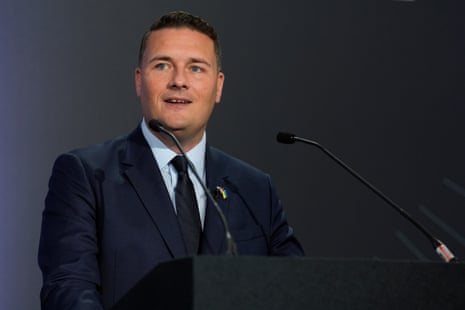
On the international stage, Defence Secretary Wes Streeting delivered a significant address at the Farnborough airshow on Wednesday, 22 July 2026, signalling a recalibration of the UK’s defence strategy. Streeting openly concurred with former US President Donald Trump’s long-standing demand for Europe to shoulder a greater share of its own defence burden. "President Trump has called on Europe to carry a greater share of the burden for our own defence, and he is right to do so," Streeting stated. He affirmed the UK’s historical leadership in defence spending but emphasized the need to "go further" in these "dangerous uncertain times."
Streeting’s remarks come as Trump has been increasingly vocal about Europe’s perceived over-reliance on US security guarantees, pushing for NATO allies to increase their defence spending to 5% of GDP by 2035. While the UK has traditionally met and often exceeded NATO’s 2% target, Streeting confirmed the government’s commitment to a new target of 3.5% of GDP by 2035, a reaffirmation made at a recent NATO summit. To support this, the UK has pledged £298 billion over the next four years, including an additional £15 billion beyond last year’s spending review settlement.

A key pillar of this enhanced defence strategy is a significant investment in cutting-edge technology. Streeting emphasized the urgency for the armed forces to boost their use of artificial intelligence (AI), describing a new deal with BAE Systems as a "groundbreaking moment for UK defence." He stressed, "We must match the speed at which our adversaries are developing AI technology." BAE Systems announced a £708 million contract extension from the Ministry of Defence to continue developing a next-generation combat aircraft as part of the Global Combat Air Programme. This strategic focus on advanced capabilities, alongside increased financial commitment, signals the Burnham government’s intent to reinforce the UK’s standing as a formidable and technologically advanced defence power within NATO and globally.
Environmental Crossroads: The Rosebank Oilfield Dilemma
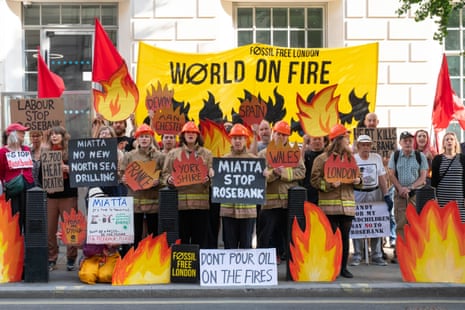
The government’s environmental policies are also under immediate pressure, exemplified by protests against the new Energy Secretary, Miatta Fahnbulleh. Campaigners from Fossil Free London gathered outside the Department for Energy Security and Net Zero on Wednesday morning, demanding the cancellation of the controversial Rosebank oilfield project. Protesters, some dressed as firefighters, held placards bearing messages such as "We’re already putting out fires, don’t start new ones," highlighting their urgent concerns about fossil fuel expansion.
Robin Wells, director of Fossil Free London, articulated the protestors’ fears: "We all deserve to know where our next meal is coming from, to feel safe in our homes and have faith for our future. But the stability of our food supply, the integrity of our homes and the future of organised society is in serious jeopardy due to the gouging of new fossil fuels out of our UK seas. With Rosebank and Jackdaw, Big Oil billionaires are pointing a flame thrower at our health and security and the government could soon pull the trigger."
Recent speculation suggests Prime Minister Andy Burnham is likely to approve both the Rosebank and Jackdaw fields. This potential decision would test the boundaries of Labour’s 2024 manifesto pledge to honour existing exploration licences but not issue new ones. The controversy hinges on the interpretation of "tiebacks," where offshore oil and gas fields are connected to already approved production facilities, potentially providing a loophole for new developments. Critics argue that these new fields are too small to genuinely impact energy bills, significantly enhance energy security, or generate a substantial number of jobs.

Miatta Fahnbulleh’s appointment as Energy Secretary is particularly noteworthy given her previous strong advocacy for climate action and the drive to net-zero emissions. As energy minister in 2025, she notably told the Commons, "We will sprint to clean power, because that is the route by which we achieve energy security for the country… we are on the right side of history and on the side of consumers." Her current position places her at the heart of the government’s dilemma: how to reconcile climate commitments with immediate energy demands and economic pressures. The decision on Rosebank will be a crucial early indicator of the Burnham administration’s direction on environmental policy and its willingness to confront powerful industry interests amidst a global energy transition.
A Government in Motion: Outlook and Implications
The opening days of Andy Burnham’s government paint a picture of an administration swiftly moving to implement its mandate while simultaneously grappling with unforeseen challenges and inherited complexities. From the ethical tightrope walk of criminal justice reform, particularly sensitive in the wake of tragedies like PC Andrew Harper’s death, to the intricate task of financing ambitious public spending pledges amidst calls for fiscal prudence, the government faces a constant test of its decision-making and communication.
The economic landscape, while offering a momentary respite from inflation, remains volatile, subject to geopolitical shifts that lie beyond immediate domestic control. Concurrently, the government is signalling a robust shift in defence posture, aligning with key allies on increased spending and technological advancement, reflecting a pragmatic response to an evolving global security environment. Yet, this pragmatism is challenged by deeply held environmental commitments, as seen in the heated debate surrounding new fossil fuel projects.
The political implications of these early actions are profound. The ability of Burnham’s team to maintain unity amidst internal disagreements (as highlighted by Darren Jones’s comments), to articulate clear and convincing funding strategies, and to balance competing public and ethical demands will define its trajectory. The coming months, particularly leading up to the budget, will reveal whether this new government can effectively navigate these multifaceted pressures, delivering on its promises while establishing a credible and coherent policy framework for the nation.
Related posts: