China Weighs Sale Of Tiktok Us To Musk As A Possible Option

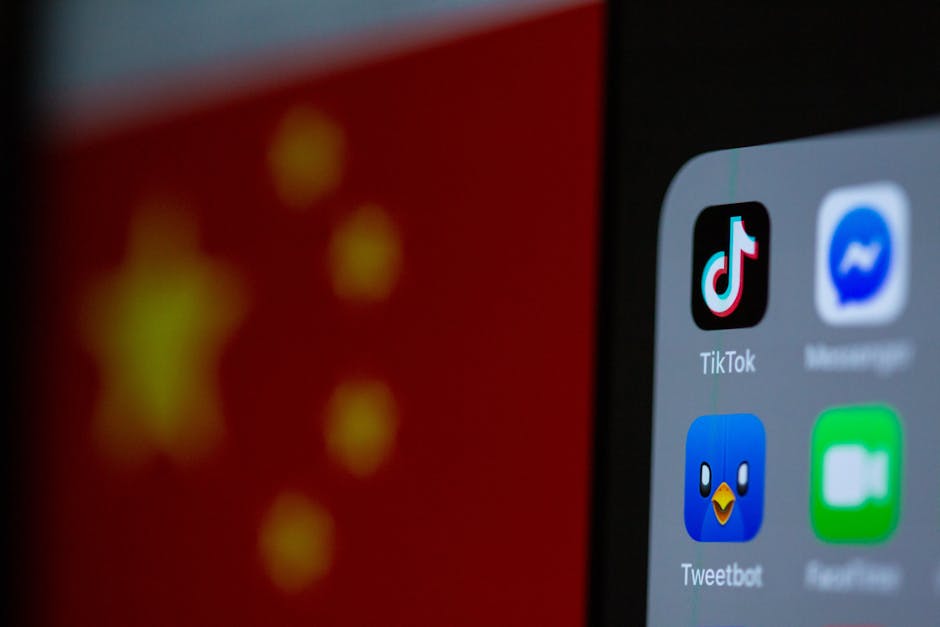
China Weighs Sale of TikTok US to Musk as a Possible Option
Recent reports and leaked information suggest that Beijing is contemplating a significant strategic shift regarding TikTok’s U.S. operations, with the potential sale of the platform to Elon Musk’s X (formerly Twitter) emerging as a distinct possibility. This hypothetical scenario, while complex and fraught with geopolitical and economic implications, represents a stark departure from China’s previous stance and signals a willingness to explore alternative solutions amidst escalating pressure from the United States government. The U.S. has repeatedly voiced national security concerns over TikTok’s ownership by ByteDance, a Chinese company, citing the potential for the Chinese government to access American user data or influence content. The Biden administration has indicated a strong preference for divestiture, pushing for a sale to an American entity to mitigate these perceived risks. In this context, the idea of a Musk-led acquisition, while unconventional, addresses some key U.S. demands for separation from Chinese ownership.
The rationale behind China’s potential openness to such a sale, however, is multifaceted and likely driven by a calculated assessment of risks and benefits. Firstly, the ongoing pressure from the U.S. government, including potential bans and stringent regulatory hurdles, poses a significant threat to TikTok’s substantial revenue streams and global expansion plans. A forced divestiture under duress, while undesirable, might be viewed as less damaging than a complete shutdown or a protracted legal battle that could tie up assets indefinitely. Secondly, the prospect of selling to Elon Musk, a figure known for his disruptive influence and ambitious ventures, might appeal to Beijing for several reasons. Musk’s ownership of X already positions him as a major player in the social media landscape, and his acquisition of TikTok would create a formidable digital conglomerate. This could, in theory, offer China a degree of continued influence or economic benefit, albeit indirectly, compared to a sale to a more traditional, purely American competitor. Furthermore, Musk’s often nationalistic rhetoric and his history of challenging established norms might make him a more palatable buyer in the eyes of some Chinese strategists, who may perceive him as less aligned with conventional U.S. foreign policy objectives.
The United States’ stance on TikTok has been characterized by increasing assertiveness, culminating in legislative action that mandates its sale or face a ban. The Protecting Our Future Act, passed by the House of Representatives and with strong bipartisan support in the Senate, provides ByteDance with a deadline to divest its U.S. operations or face prohibition on app stores and web hosting services. This legislation is rooted in concerns that the Chinese Communist Party (CCP) could compel ByteDance to hand over data on American users, or manipulate the algorithm to spread propaganda or suppress dissenting voices. The underlying fear is that TikTok, as a platform with immense reach and influence over younger demographics, could be weaponized for geopolitical purposes. The Trump administration had previously attempted to ban TikTok, but those efforts were thwarted by legal challenges. The Biden administration, while taking a different approach by prioritizing divestiture over an outright ban, shares similar national security anxieties.
Elon Musk’s potential interest in TikTok, while not formally confirmed, has been widely speculated and is reportedly being considered by Beijing. Musk, as the owner of X, a platform that has itself grappled with content moderation and geopolitical scrutiny, possesses a unique understanding of the social media ecosystem and its inherent complexities. His acquisition of TikTok would immediately solidify his position as a dominant force in digital communication, combining the short-form video juggernaut with the microblogging platform. From a U.S. perspective, a sale to Musk could offer a seemingly cleaner break from Chinese ownership, as Musk is an American citizen and his business empire is primarily based in the United States. However, the nuances of such a transaction are far from straightforward. Musk’s business dealings, particularly his operations in China (such as Tesla’s Gigafactory in Shanghai), have often been pragmatic and sometimes controversial, leading to questions about his ultimate allegiances and his susceptibility to external pressure, including from Beijing.
The implications for U.S. national security under a Musk-owned TikTok are subject to intense debate. Proponents of the sale, or at least those who see it as a less undesirable outcome, would argue that it fulfills the core U.S. demand: severing direct ownership ties with a Chinese entity. They might point to Musk’s independent streak and his public image as an innovator as safeguards against direct CCP control. However, critics would highlight Musk’s significant business interests in China and his past statements that have sometimes appeased or aligned with Chinese government narratives. The concern would be that even with American ownership, Beijing could still exert leverage through business ties, thereby compromising U.S. data security and algorithmic integrity. The question of whether Musk’s acquisition would truly insulate U.S. user data from potential Chinese access remains a significant point of contention.
From China’s perspective, the potential sale of TikTok’s U.S. operations to Elon Musk presents a calculated risk-reward scenario. The primary objective would be to avoid a complete loss of a valuable asset and to salvage some economic benefit while appeasing U.S. demands enough to prevent further punitive actions. A sale to Musk could be viewed as a way to sidestep a more complete capitulation to U.S. demands for divestiture to a purely American entity that might be more inclined to fully sever ties with China. Musk’s known willingness to engage with various global powers and his history of navigating complex international business environments might lead Beijing to believe they could still maintain some level of influence or benefit, perhaps through continued business relationships or even tacit cooperation. Furthermore, the sheer scale of Musk’s potential ownership of both X and TikTok would create a social media behemoth, a prospect that might hold a certain strategic allure for China, even if it means relinquishing direct control.
The technical and operational challenges of such a sale are also considerable. The process of disentangling TikTok’s U.S. operations from ByteDance’s global infrastructure, including its algorithms and data centers, would be a monumental undertaking. This would involve separating vast datasets, migrating intellectual property, and ensuring continuity of service for millions of American users. The valuation of TikTok’s U.S. business is another contentious issue, with ByteDance likely seeking a price that reflects its immense popularity and revenue-generating potential, while U.S. officials and potential buyers might push for a lower valuation, considering the forced nature of the sale. Elon Musk, known for his aggressive negotiation tactics, would undoubtedly seek to drive a hard bargain, which could further complicate the deal.
The geopolitical ramifications of a Musk-led acquisition of TikTok are profound. Such a move would further entrench Musk’s influence over global digital discourse, giving him unprecedented power over two of the world’s most popular social media platforms. This consolidation of power raises questions about antitrust concerns, content moderation policies, and the potential for political influence. For China, it could be seen as a strategic maneuver to maintain a foothold in the U.S. digital market, albeit indirectly, and to potentially foster a more favorable narrative through a platform that is less overtly hostile to its interests than some other potential buyers might be. Conversely, for the U.S., it would present a complex scenario where a significant portion of its digital communication infrastructure is controlled by a single, albeit American, individual whose business interests extend deeply into China.
The long-term implications for the global digital landscape are also worth considering. A combined X and TikTok under Musk’s ownership could reshape the competitive dynamics of the social media industry, potentially leading to greater integration of services and a more centralized control of information flow. The implications for data privacy, algorithmic transparency, and the spread of misinformation would be closely scrutinized. If Beijing views Musk as a more amenable partner than other potential U.S. buyers, it could set a precedent for how other Chinese technology companies facing U.S. pressure might navigate divestiture in the future. This could lead to a more fragmented and politically influenced global internet.
Ultimately, the consideration of selling TikTok’s U.S. operations to Elon Musk represents a pivotal moment, highlighting the intricate interplay of national security, economic interests, and geopolitical strategy in the digital age. Whether this hypothetical scenario progresses beyond speculation remains to be seen, but its contemplation underscores the escalating tensions surrounding Chinese technology and the search for pragmatic, albeit unconventional, solutions to complex international challenges. The move, if it were to materialize, would not be a simple transaction but a strategic realignment with far-reaching consequences for the future of social media and international relations. The core U.S. objective of removing direct Chinese ownership would, on the surface, be met, but the underlying concerns about influence and data security would likely persist, albeit in a new and potentially more complex form.


