Legislative Gridlock Deepens as Save Our Bacon Act Becomes Flashpoint in Federal Farm Bill Negotiations

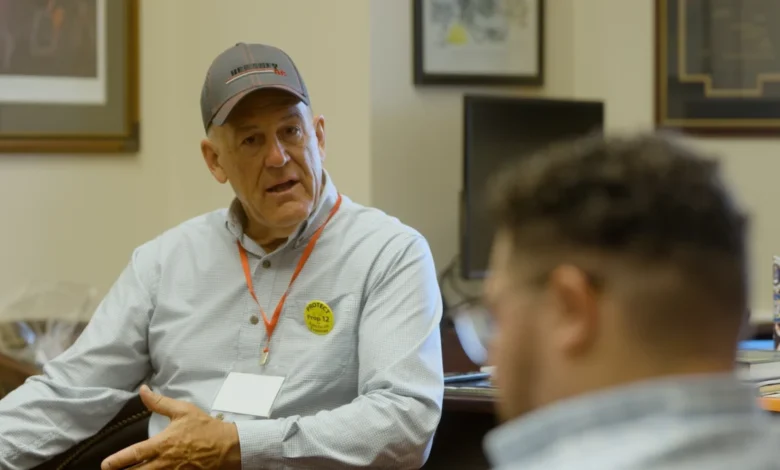
The United States Congress is currently grappling with a significant legislative impasse that threatens the stability of the nation’s agricultural policy, as a sharp divide between the House of Representatives and the Senate over animal welfare standards has stalled the passage of a new Farm Bill. At the heart of this discord is the "Save Our Bacon" (SOB) Act, a controversial measure included in the House draft of the bill but conspicuously absent from the Senate’s version. This legislative friction comes at a critical juncture, as it has been nearly eight years since a full reauthorization of the Farm Bill was successfully navigated through the traditional five-year cycle, leaving farmers, conservationists, and nutrition advocates in a state of prolonged uncertainty.
The Farm Bill is a massive, multi-year omnibus legislative package that governs a vast array of programs under the jurisdiction of the U.S. Department of Agriculture (USDA). Typically renewed every five years, the bill dictates the direction of American food systems, allocating hundreds of billions of dollars toward crop insurance, commodity price supports, rural development, and environmental conservation. Perhaps most significantly, it funds the Supplemental Nutrition Assistance Program (SNAP), which provides food security for millions of low-income Americans. However, the 2024 legislative session has seen these diverse interests overshadowed by a heated debate over state-level regulations and the autonomy of local jurisdictions to set standards for animal husbandry.
The Origins of the Legislative Conflict: Proposition 12 and the SOB Act
The current stalemate centers on California’s Proposition 12, a landmark piece of legislation passed by voters in 2018. Proposition 12 established minimum space requirements for egg-laying hens, veal calves, and breeding pigs. Specifically, for the pork industry, it bans the sale of products in California that originate from farms using "gestation crates"—metal enclosures so small that a sow cannot turn around or fully extend her limbs. Given that California represents roughly 15% of the U.S. pork market, the law has had a ripple effect across the entire national supply chain.
In response to Proposition 12, and a subsequent Supreme Court ruling in 2023 that upheld the state’s right to regulate products sold within its borders, Republican lawmakers in the House, led by Agriculture Committee Chairman G.T. Thompson, introduced the Save Our Bacon Act. The act is designed to preempt state and local laws that impose higher standards on agricultural products than those found in the states where the products are produced. Proponents of the SOB Act argue that a "patchwork" of state regulations creates an undue burden on interstate commerce and increases costs for consumers and producers alike.
Conversely, the Senate Agriculture Committee, under the leadership of Chairwoman Debbie Stabenow, released a draft that pointedly excludes the SOB Act. This omission signals a fundamental disagreement over federalism and the role of the Farm Bill in mediating social and ethical concerns regarding food production.
A Chronology of Delays and Extensions
The path to the current Farm Bill has been marked by repeated setbacks and short-term fixes. The last comprehensive Farm Bill was signed into law in 2018 and was originally set to expire in September 2023. As the expiration date approached, lawmakers were unable to reconcile differences over climate-smart agriculture funding and SNAP work requirements, leading to a one-year extension that expires in September 2024.
- 2018: The Agriculture Improvement Act of 2018 is signed into law.
- November 2018: California voters pass Proposition 12 with nearly 63% of the vote.
- May 2023: The U.S. Supreme Court rules in National Pork Producers Council v. Ross, upholding Proposition 12 and affirming that states can regulate the health and safety of products sold in their markets.
- Early 2024: House Agriculture Committee Chairman G.T. Thompson includes the SOB Act in the House draft of the Farm Bill.
- June 2024: The Senate Agriculture Committee releases its "Rural Prosperity and Food Security Act" draft, which excludes the SOB Act, creating a clear legislative schism.
- Present: Negotiations remain stalled as both chambers face a looming deadline before the 2024 election cycle further complicates the legislative calendar.
The Economic and Environmental Data Behind the Debate
The debate over gestation crates is not merely a matter of ethics; it is backed by significant economic and environmental data. According to a recent analysis by the USDA, approximately 27% of hog operations in the United States have already transitioned to Prop 12-compliant systems. This suggests that a substantial portion of the industry has already invested the capital necessary to meet the new market demands.
For those who have converted, the SOB Act represents a threat to their return on investment. Converting a traditional hog barn to a group-housing or crate-free system can cost hundreds of thousands of dollars. Farmers who made these changes did so with the expectation that they would capture a "premium" market—selling pork at higher prices to consumers who prioritize animal welfare. If the SOB Act were to pass and nullify Prop 12, these farmers would find themselves competing on price alone against industrial operations that did not incur those conversion costs.
Environmentally, the shift away from extreme confinement is linked to broader sustainability goals. High-density confinement operations generate concentrated volumes of manure, often stored in massive open-air lagoons. These facilities are frequently cited by the Environmental Protection Agency (EPA) and local advocacy groups for their roles in water contamination and air pollution. Transitioning to pasture-raised or more spacious housing systems is often associated with improved waste management practices, though critics argue that any large-scale animal agriculture still poses environmental risks.
A "Civil War" Within the Pork Industry
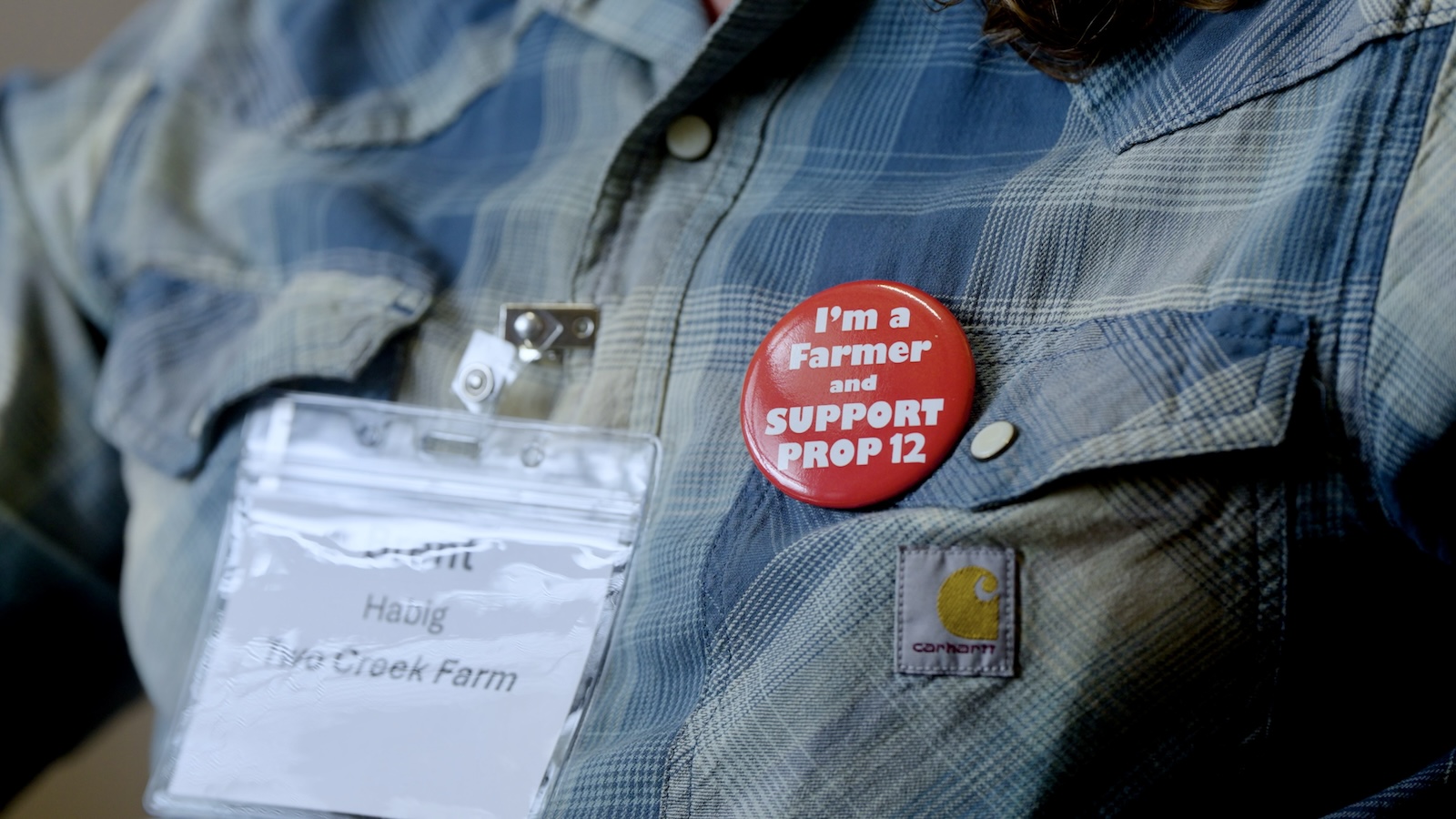
The legislative battle in Washington reflects a deep "civil war" among pork producers on the ground. While major industry trade groups like the National Pork Producers Council (NPPC) have historically fought against Prop 12, newer organizations like the American Meat Producers Association (AMPA) have emerged to defend state-level welfare standards.
Brent Hershey, a Pennsylvania hog farmer and AMPA member, represents the growing segment of the industry that views animal welfare as a business opportunity rather than a regulatory hurdle. "The industry is completely divided on this," Hershey noted, explaining that his own farm has been crate-free for three years. For producers like Hershey, the SOB Act is seen as a betrayal of those who took the risk to innovate. "Passing SOB would be devastating for producers who invested time and money into improving their operations," he added.
Holly Bice, president of AMPA, emphasized that Prop 12 has been a lifeline for independent farmers who are struggling to compete with massive, consolidated agribusinesses. By catering to specific consumer demands, smaller operations can remain viable in a market that otherwise favors the largest players.
Advocacy and Official Responses
Environmental and animal welfare organizations have been vocal in their opposition to the SOB Act. Molly Armus, an animal agricultural policy expert at Friends of the Earth, argued that the Farm Bill should not be used as a tool for large industry lobbies to circumvent the democratic process. "It should not be a way for large industry groups to overturn the will of voters," Armus stated, highlighting that 14 states currently have similar animal welfare laws on the books.
On the legislative front, the tension is palpable. Senator John Boozman, the ranking member of the Senate Agriculture Committee, notably did not include the measure in his own Republican-led framework, a move that some analysts interpret as an acknowledgment that the SOB Act lacks the necessary support to clear the Senate’s 60-vote filibuster threshold. Sara Amundson, president of the Humane World Action Fund, praised the Senate’s restraint, noting that keeping "noise" on the issue is essential to preventing the House version from becoming law.
Broader Implications for Federalism and Public Health
Beyond the pork industry, legal experts warn that the Save Our Bacon Act could set a dangerous precedent for federal overreach. J.W. Glass, a senior policy specialist at the Center for Biological Diversity, raised concerns that if the federal government can nullify state animal welfare laws, it could eventually do the same for other environmental and public health protections.
"How does it impact state laws to restrict the use of pesticides?" Glass asked, pointing out that many states have stricter chemical and safety regulations than the federal government. If the Farm Bill establishes that states cannot set higher standards for agricultural products, it could lead to a "race to the bottom" where the least-regulated states dictate the standards for the entire country. This could undermine decades of progress in local environmental protection and food safety.
The Path Forward: Gridlock or Compromise?
As it stands, the future of the Farm Bill remains murky. If the House remains adamant about including the SOB Act and the Senate remains firm in its exclusion, the two chambers may be unable to reconcile their differences in a conference committee. This could lead to yet another one-year extension, pushing the substantive debate into 2025.
For the American farmer, this gridlock is more than a political nuisance; it is an economic risk. Without a new Farm Bill, programs related to soil health, carbon sequestration, and rural infrastructure remain in limbo. Furthermore, as the climate crisis continues to impact crop yields through extreme weather events, the lack of updated "climate-smart" agricultural policies leaves the U.S. food system more vulnerable.
The "Save Our Bacon" Act has transformed from a specific industry grievance into a symbol of the larger ideological divide in American politics—pitting states’ rights against federal preemption, and traditional industrial practices against an evolving consumer landscape. Whether Congress can find a middle ground or if the Farm Bill will continue to be a casualty of the culture wars remains to be seen. In the meantime, the hogs, the farmers, and the voters wait for a resolution that balances the complexities of a modern global food economy with the local values of the American public.