The Illusion of Protection: Why Global Marine Conservation Targets Are Falling Short of Their Promise


Earlier this year, ocean conservationists reached a milestone that was heralded as a definitive victory for the planet: officially, 10 percent of the world’s oceans had been designated as Marine Protected Areas (MPAs). This target, set by the United Nations as a baseline for safeguarding biodiversity, was intended to serve as a vital step toward the more ambitious "30×30" initiative—a global commitment to protect 30 percent of the Earth’s land and sea by 2030. Yet, as the international community celebrates this numerical achievement, a growing body of scientific evidence suggests that the map of global ocean protection is deceiving. New research published in the journal PNAS reveals that while the acreage of protected water is rising, the actual ecological benefit is lagging significantly behind, casting doubt on the efficacy of the world’s current conservation strategy.
The Disconnect Between Geography and Biology
The primary issue, according to the research team led by Ella Clausius, a postdoctoral research fellow at the University of Tasmania, is a fundamental confusion between "protection on paper" and "protection in practice." While 10 percent of the ocean is technically under some form of regulatory umbrella, the researchers estimate that only 2 percent of the global ocean is currently covered by MPAs that are actively fostering ecosystem recovery.
The disparity arises from a widespread lack of compliance. Many of these designated zones are "paper parks"—areas that exist as lines on a nautical chart but remain subject to clandestine fishing, industrial runoff, and inconsistent enforcement. The study found that even within protected boundaries, illegal fishing is rampant. In some instances, the very individuals tasked with enforcement have been observed exploiting these zones, a testament to the lack of oversight and the immense economic value of the resources contained within these "protected" waters.
A Chronology of Global Conservation Targets
To understand how the world arrived at this numeric fixation, one must look back at the evolution of international environmental policy. The journey began in earnest at the 2002 World Summit on Sustainable Development, where global leaders first expressed a desire to establish networks of protected areas. However, these early discussions lacked specific, binding targets.
The push for quantitative metrics gained momentum in 2004 during a meeting of the Convention on Biological Diversity (CBD). Member nations formally agreed to conserve at least 10 percent of each of the world’s ecological regions. By 2010, the target was formalized as a goal to protect 10 percent of the global ocean by 2020. When the international community failed to meet that 2020 deadline, the focus shifted to the Global Biodiversity Framework and the 30×30 initiative.
The reliance on these metrics is not accidental. Angelo Villagomez, a senior fellow at the Center for American Progress, notes that quantitative goals are inherently attractive to policymakers because they are easy to communicate to the public and measure against national budgets. "It is easy to measure and communicate," Villagomez explains, noting that the simplicity of the 10 percent figure was instrumental in securing the necessary political capital to get conservation on the global agenda. However, this focus on area-based targets has inadvertently incentivized governments to prioritize quantity over quality.
Assessing Ecological Effectiveness
The research conducted by Clausius and her colleagues utilized a robust modeling approach to determine what constitutes "ecologically effective" conservation. By analyzing real-world observational data from shallow reefs and linking those findings to four key indicators—level of protection, regulatory compliance, size, and age—the team extrapolated a broader picture of global ocean health.
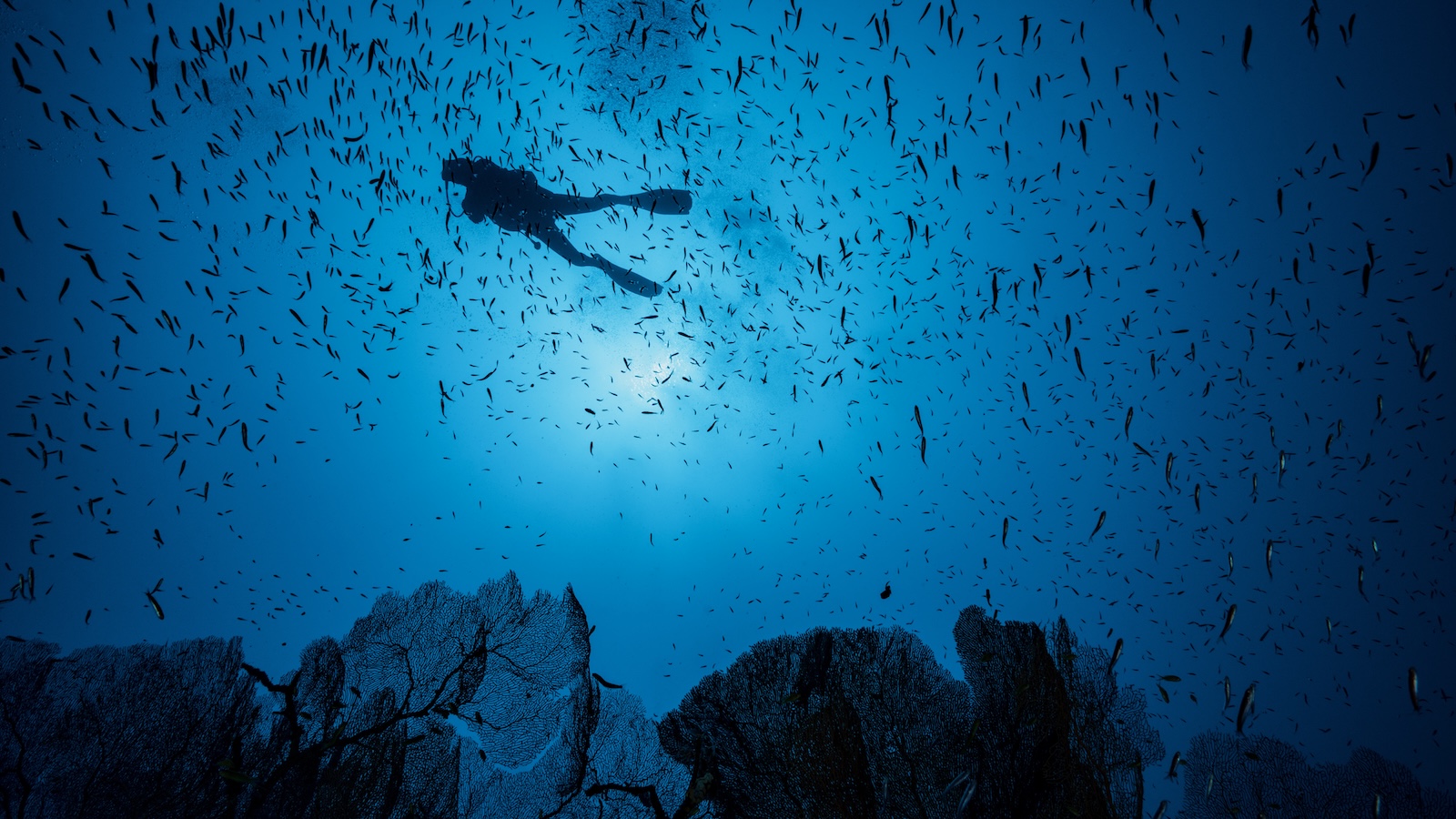
The results were sobering: only one-fifth of the total area classified as an MPA is effectively contributing to a doubling in fish biomass. This metric, which the authors define as a hallmark of success, is rarely achieved because so few areas offer "full protection," a status that prohibits all extractive activities. When fishing is allowed in any capacity, the ecosystem’s ability to regenerate is severely curtailed.
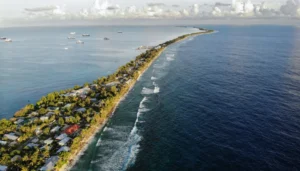
The study underscores a critical reality: the current strategy of designating large, remote, and often uninhabited areas as MPAs allows nations to hit their 30×30 targets without disrupting significant commercial fishing interests. These distant, isolated parks are often low-hanging fruit, but they do little to protect the high-biodiversity coastal zones where marine life is under the most intense pressure from human activity.
Reimagining the Metric: Beyond 30×30
The findings from the PNAS study have ignited a debate among conservationists regarding the future of the 30×30 goal. Callum Roberts, a professor of marine conservation at the University of Exeter, argues that the international community must pivot away from square mileage and toward functional metrics. He suggests two primary indicators: the level of protection from commercial extraction and the "stage of establishment," which tracks whether a park is merely a proposal or an actively managed and enforced ecosystem.
Similarly, the NEOLI framework—an acronym for "no-take, enforced, old, large, and isolated"—has been championed by researchers like Bruce Mann as a more accurate indicator of success. These criteria acknowledge that for an MPA to function as an ecological engine, it must be completely off-limits to fishing, strictly monitored, and strategically placed in areas where biodiversity is high.
However, developing a universal metric is fraught with complexity. Different ecosystems require different management styles. A policy that works for a coral reef in the Pacific might be entirely ineffective for a deep-sea trench or a seagrass meadow in the North Atlantic. Clausius warns that we cannot rely on a one-size-fits-all solution, as the threats facing the ocean—from deep-sea mining to coastal plastic pollution—are as diverse as the marine life they threaten.
The Political and Economic Reality
Despite these criticisms, supporters of the 30×30 target maintain that the initiative has been a net positive for global environmental policy. Villagomez argues that the political pressure generated by these targets has unlocked billions of dollars in philanthropic and government funding that would otherwise have remained untapped. By forcing the issue into the spotlight, 30×30 has elevated marine conservation from a niche scientific interest to a central pillar of international diplomacy.
The challenge now, according to experts like George Branch of the University of Cape Town, is to avoid the "overambitious" trap. Branch suggests that the focus should shift from the rapid expansion of new MPAs to the intensive management of existing ones. "It may be more helpful to improve the effectiveness of existing MPAs than to add more," he suggests, pointing to the need for better funding for enforcement, training for local patrol teams, and community-led management models that incorporate local fishing practices rather than banning them outright.
A Holistic Vision for Ocean Management
The most pressing implication of this research is the realization that the remaining 70 percent of the ocean—the vast areas outside of any protected zone—cannot be left to the whims of unregulated exploitation. Even if the world were to meet the 30 percent protection goal, the health of the global ocean depends on what happens in the other 70 percent.
Effective ocean management requires a dual approach: rigorous, science-based "no-take" zones in critical hotspots, and sustainable, strictly regulated management in all other areas. This involves implementing science-based catch limits, reducing agricultural and industrial runoff, and restricting coastal development.
"It needs to be a global oceans picture," says Clausius. The path forward requires a shift from the performative politics of map-making to the rigorous, often tedious work of management, monitoring, and enforcement. While the 30×30 target has successfully galvanized the world’s attention, the true measure of success will not be found in the percentage of ocean area on a map, but in the measurable, biological recovery of the species that reside beneath the surface. As the deadline for 2030 approaches, the international community faces a choice: continue chasing the comfort of an easy, flawed number, or commit to the harder, more expensive, and ultimately more rewarding work of protecting the ocean in reality.