Physicists at CERN reach a major milestone in the four-decade hunt for the rarest beauty particle decay

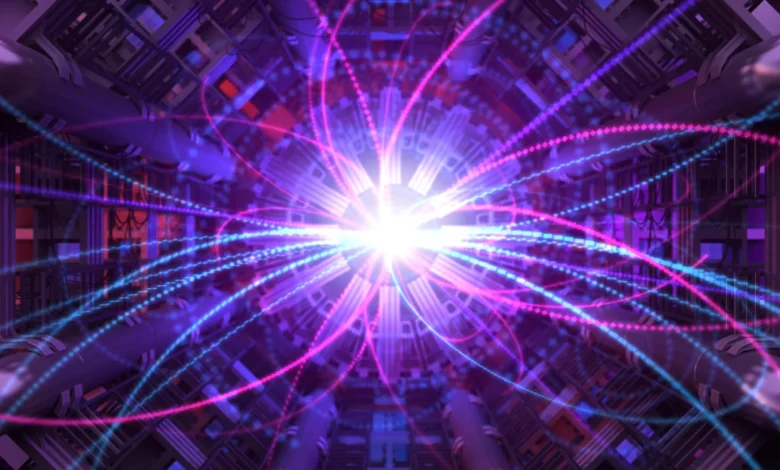
After more than forty years of persistent effort, researchers at the European Organization for Nuclear Research (CERN) have achieved a landmark breakthrough in the study of particle physics. Using the LHCb experiment at the Large Hadron Collider (LHC), scientists have detected compelling evidence for one of the most elusive processes in the subatomic realm: the decay of a neutral B-meson, specifically the $B_d$ particle, into a pair of muons. This transition is theoretically expected to occur only once in every 10 billion beauty particle decays, making it an exceptionally rare phenomenon that has remained just out of reach for generations of researchers.
The announcement, delivered during a formal seminar at CERN, marks the first time a single experimental collaboration has provided sufficient data to meet the threshold for scientific evidence regarding this specific decay. Beyond its inherent rarity, the event is considered a "golden channel" for high-energy physics, providing a unique diagnostic tool to investigate the existence of heavy, undiscovered particles that currently lie beyond the energy threshold of direct production at the LHC.
The Scientific Significance of Rare Decays
In the standard framework of particle physics, known as the Standard Model, the behavior of fundamental particles is governed by precise mathematical predictions. While the Standard Model has successfully withstood decades of rigorous testing, physicists have long understood that it is incomplete. It fails to account for gravity, the nature of dark matter, and the observed matter-antimatter asymmetry in the universe. Consequently, researchers look for "physics beyond the Standard Model" by searching for deviations from theoretical predictions in high-precision experiments.
The decay of a $B_d$ meson—a particle consisting of a beauty quark and a down antiquark—into a muon and an antimuon ($B_d to mu^+ mu^-$) is particularly sensitive to these deviations. Because this process is so rare, it is susceptible to "quantum interference." According to the principles of quantum mechanics, virtual particles—transient states that pop in and out of existence—can influence the decay rate. If heavy, unknown particles exist in nature, they could appear as virtual intermediaries in the $B_d$ decay process, subtly altering the frequency at which it occurs. By comparing the measured decay rate with the highly precise Standard Model prediction, physicists can indirectly "feel" the presence of particles that are otherwise too massive to be created directly in the LHC’s high-energy collisions.
A Chronology of the Four-Decade Quest
The pursuit of this signal is a story of incremental progress spanning four decades. Theoretical interest in rare B-meson decays began in the late 1970s and early 1980s, shortly after the beauty quark was discovered. However, detecting the $B_d$ decay presented a formidable challenge due to its extreme scarcity.
- 1980s–1990s: Theoretical foundations are laid. Physicists realize that $B_s$ and $B_d$ decays into muons are ideal probes for new physics, but the technology to isolate these events does not yet exist.
- 2010–2012: The LHCb experiment begins regular data collection, providing a significantly higher yield of beauty particles than previous experiments.
- 2015: A watershed moment occurs when the LHCb and CMS collaborations publish a joint analysis in the journal Nature, confirming the discovery of the related $B_s to mu^+ mu^-$ decay. The same paper reports the first hints of the even rarer $B_d$ decay.
- 2016–2018: Subsequent analyses using larger datasets yield ambiguous results. The signal for the $B_d$ decay fails to reach the required statistical significance, leading to a period of uncertainty.
- 2024–2025: Following a comprehensive upgrade of the LHCb detector and the implementation of advanced machine learning algorithms, the collaboration successfully isolates the signal with newfound clarity, achieving a statistical significance of 3.2 standard deviations.
Technological Advancements and Data Analysis
The success of the 2024-2025 campaign is largely attributed to the hardware and software upgrades implemented during the second long shutdown of the LHC. The upgraded LHCb detector now captures data at a rate five times higher than that of the original configuration used between 2010 and 2018. This increase in luminosity—the number of collisions occurring per unit area per unit time—is essential for capturing events that occur on such a rare timescale.
Furthermore, the team employed sophisticated machine learning architectures, specifically boosted decision trees and deep neural networks, to sift through the "background noise" generated by the trillions of other particle interactions occurring within the detector. Distinguishing a specific pair of muons produced by a $B_d$ decay from the high-occupancy environment of the LHC is akin to finding a single specific grain of sand on a vast beach. The integration of real-time processing and improved vertex reconstruction allowed the researchers to identify these muon pairs with unprecedented accuracy.
Statistical Significance and Interpretation
In particle physics, the gold standard for claiming a discovery is a significance of 5.0 standard deviations, which corresponds to a one-in-3.5-million chance that the signal is a statistical fluke. The current result of 3.2 standard deviations qualifies as "evidence" of the process. While this falls short of the "discovery" threshold, it represents a massive leap forward from previous attempts that were largely inconclusive.
Marco Santimaria, a co-leader of the analysis team, emphasized the intensity of the work. "Physicists have been chasing this decay for more than forty years," Santimaria noted. "The challenge has always been the overwhelming background. To extract this signal, we required extreme precision in our detector calibration and a rigorous statistical approach to validate that what we are seeing is a genuine physical process."
The results also provided the most precise measurement to date of the $B_s to mu^+ mu^-$ decay, reinforcing the consistency of the Standard Model while simultaneously tightening the constraints on potential "New Physics" models, such as Supersymmetry, which had predicted higher decay rates that have not been observed.
Future Implications and The High-Luminosity Era
The journey is far from over. The current evidence provides a tantalizing glimpse, but it is not yet the final word. The scientific community is now looking toward the High-Luminosity LHC (HiLumi-LHC) project, slated for 2030, which promises a ten-fold increase in the data acquisition rate.
Harry Cliff, the LHCb’s Rare Decays Convener, highlighted the broader implications of the findings. "Seeing evidence of this rare decay is incredibly exciting, as it opens up new possibilities to probe beyond the direct reach of the LHC," Cliff said. "The future upgrades will allow us to observe many more of these decays. As we increase our dataset, the statistical uncertainty will shrink. If the current measurement continues to align with the Standard Model, we will effectively ‘corner’ any new physics theories. If it deviates, we may finally be looking at the first direct evidence of a new force or particle."
The impact of this discovery extends beyond just confirming a decay rate. It validates the capability of the upgraded LHCb to function in an increasingly data-dense environment, setting the stage for a new era of "precision frontier" physics. By analyzing these "golden channels," the global physics community is systematically closing the gaps in our understanding of the universe, testing the limits of known laws, and searching for the subtle fingerprints of a more complex reality that remains just beyond the current horizon.
As the experiment moves forward, the focus will shift toward increasing the statistical significance of the $B_d$ decay to the five-sigma level. Should this be achieved, it would solidify the $B_d to mu^+ mu^-$ decay as the rarest beauty particle decay ever recorded, cementing its status as a cornerstone of experimental particle physics. For now, the evidence stands as a testament to four decades of human ingenuity, international collaboration, and the relentless drive to uncover the fundamental secrets of the cosmos.