The Legacy of Wendell Berry: A Life Rooted in Land, Literature, and Resistance


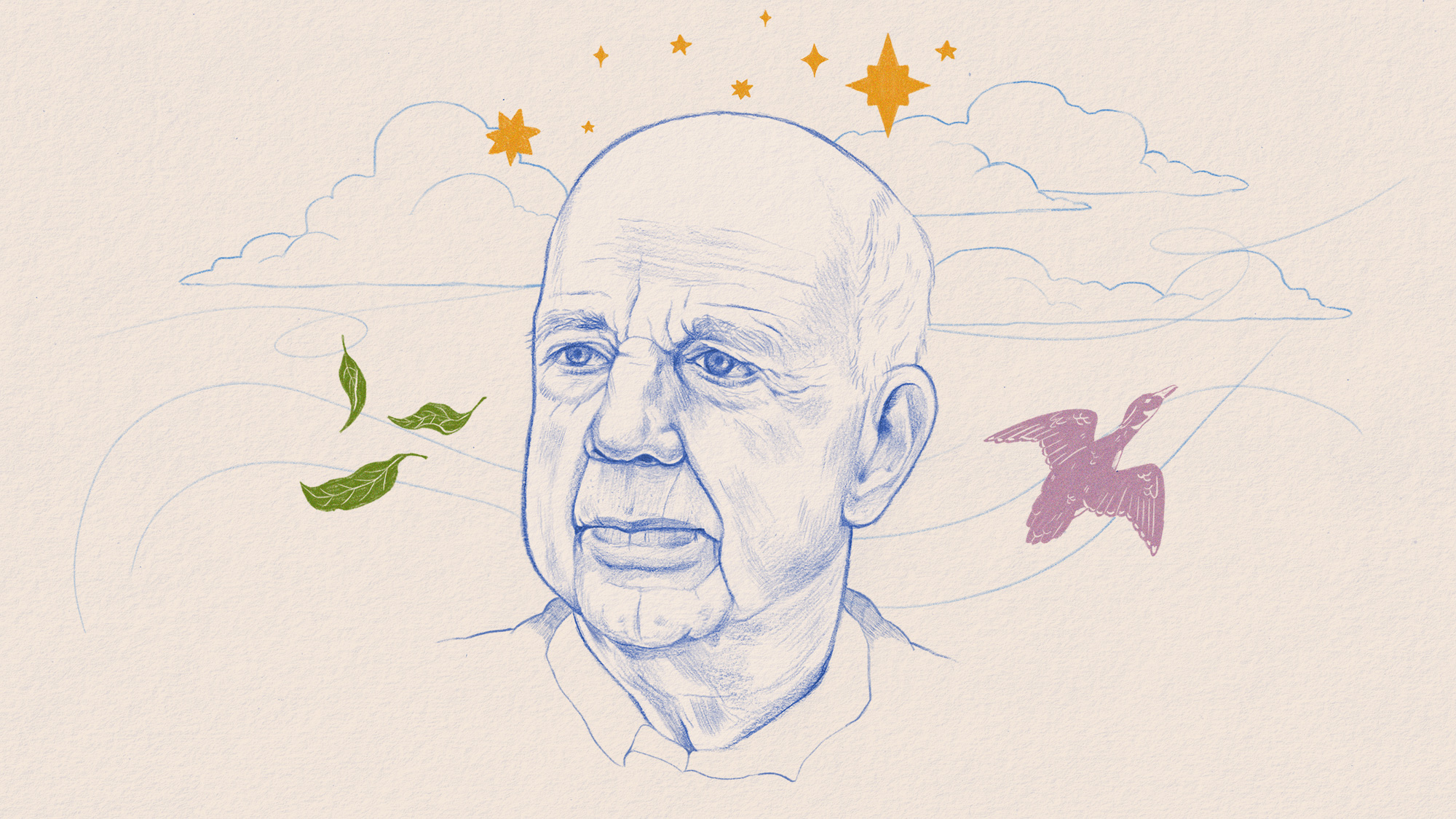
The passing of Wendell Berry at age 92 marks the conclusion of a singular, six-decade career that challenged the trajectory of modern American life, industry, and environmental stewardship. A farmer, poet, novelist, and philosopher, Berry operated from his ancestral home in Henry County, Kentucky, cultivating a worldview that prioritized local responsibility over global abstraction. His death, which occurred last week, closes a chapter on one of the 20th century’s most profound voices—a man who famously rejected the digital revolution in favor of pencil, paper, and the physical toil of the small-scale farmer.
As a writer of more than 50 books, Berry’s work spanned the genres of fiction, poetry, and essay. However, his influence transcended literature; he served as a moral compass for the environmental movement, consistently arguing that ecological health is inextricably linked to the integrity of local communities and the dignity of manual labor.
A Chronology of Advocacy and Resistance
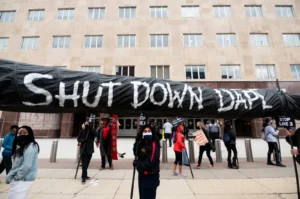
Wendell Berry’s activism was not a departure from his life as a farmer, but a direct extension of it. While he preferred the quiet of the fields to the noise of the picket line, his public record of dissent spanned over four decades.
- 1972: Publication of Think Little, a seminal essay that critiqued the environmental movement’s reliance on political lobbying, urging instead a fundamental change in individual lifestyle and local commitment.
- 1979: Berry was arrested for his participation in protests against the construction of the Marble Hill nuclear power plant in Indiana.
- 1987: He published Why I Am Not Going to Buy a Computer in Harper’s Magazine, a manifesto that solidified his reputation as a critic of industrial technology and cemented his identity as a modern Luddite, prioritizing human craftsmanship over machine efficiency.
- 2011: Berry participated in a high-profile sit-in at the Kentucky Governor’s office, protesting the environmental degradation caused by mountaintop removal coal mining.
- 2015: He famously withdrew his personal papers from the University of Kentucky archives to protest the institution’s acceptance of a $7 million donation from Alliance Coal, citing the conflict between academic values and the extraction industry.
The Philosophy of the Local
At the heart of Berry’s philosophy was the conviction that environmental crises are, at their root, domestic and community-based. He argued that the separation of modern life from the land has led to a "rupture" that cannot be healed by legislation alone.
Data from the U.S. Department of Agriculture (USDA) during the latter half of the 20th century illustrates the trend Berry fought against: the rapid consolidation of American farms. Between 1950 and the early 2000s, the number of farms in the United States dropped by more than 50%, while the average farm size increased by over 60%. Berry saw this not merely as an economic shift, but as the erosion of the "neighborhood" as a functional, self-sustaining unit. By advocating for "agrarianism," he wasn’t merely romanticizing the past; he was proposing a model of land management that prioritized long-term soil health over short-term industrial yield.
Responses and Intellectual Legacy
The academic and literary communities have responded to the loss of Berry with a recognition of his cross-partisan influence. Jeffrey Bilbro, an English professor at Grove City College and author of several critical works on Berry, notes that the writer’s appeal stemmed from his refusal to engage in modern political tribalism.
"Berry recognized that we live in a fallen world where pure choices are rarely available," Bilbro noted in a recent reflection. "He taught that our hands are all, in some sense, dirty. The challenge he presented was not to achieve a state of perfect environmental purity, but to act with integrity despite the necessity of compromise."
This sentiment is echoed by many who find in Berry a rare bridge between conservative traditionalism—focused on family, community, and land stewardship—and progressive environmentalism. His critique of capitalism was not rooted in Marxist theory, but in the observation that globalized industry alienates the human being from the consequences of their consumption.
The Conflict of the Modern Activist
Berry’s relationship with the environmental movement was famously fraught. He often expressed frustration with the "apocalyptic" tone of modern environmentalism, which he believed alienated the very people needed to enact change. To Berry, the environment was not a commodity to be saved from a cataclysmic end; it was a living cycle.
In his famous poem, Manifesto: Mad Farmer Liberation Front, he challenged his readers to "invest in the millennium," a call to plant trees that one will never see reach maturity. This long-term view was a hallmark of his approach to both farming and policy. He argued that the act of planting a seedling in a strip-mined landscape is a radical act of hope—an acknowledgement that, while we may not live to see the forest return, the responsibility to begin the work remains ours.
Fact-Based Analysis: The "Luddite" Misconception
The label of "Luddite," frequently applied to Berry by critics, is historically misunderstood. While often used as a pejorative to describe someone who fears technology, the original 19th-century Luddites were textile workers protesting the way new machines were being used to devalue their labor and destroy their communities.
When analyzed through this lens, Berry’s refusal to adopt a computer was not an anti-intellectual stance. It was a conscious effort to maintain his work’s quality and his personal autonomy. By avoiding the efficiency-obsessed digital tools of the 20th and 21st centuries, he maintained a "discipline" that allowed his prose to remain deliberate, cyclical, and deeply human.
Implications for a Warming World
As society grapples with the accelerating impacts of climate change, the relevance of Berry’s work has seen a resurgence. Recent studies in regenerative agriculture have begun to validate his long-held claims that soil health—specifically the sequestration of carbon through diverse, small-scale farming practices—is a critical component of climate mitigation.
However, the challenge remains that the industrial system Berry criticized has only deepened its roots since he first began writing in the 1960s. The tension between the "fast-paced" global economy and the "slow-paced" rhythm of the land remains the primary conflict of the 21st century.
A Final Discipline
In the final years of his life, Berry’s work turned increasingly toward the concept of the "discipline of death." He wrote frequently about the necessity of accepting our own mortality as a way to better care for the living world.
In A Discipline, he wrote: "It is the time’s discipline to think of the death of all living, and yet live."
This, perhaps, is his most enduring legacy. Berry did not offer a panacea for the world’s environmental woes. He did not offer a technological fix or a political shortcut. Instead, he offered a mode of existence: a practice of tending to one’s own patch of earth, honoring the cycles of life and decay, and maintaining a commitment to one’s neighbors and the land, even when the broader trajectory of society seems bent toward destruction.
As his papers are curated and his books continue to be read by new generations, the impact of the man from Henry County is likely to grow rather than diminish. In a world defined by the speed of the internet and the abstraction of global markets, the "small, local" life that Wendell Berry lived serves as a persistent, grounded alternative—a testament to the idea that we are not separate from the natural world, but a part of its ongoing, fragile, and beautiful cycle.