Deep Diving Robots Reveal the Hidden Mechanisms Behind the Dramatic Shift in Antarctic Sea Ice Dynamics

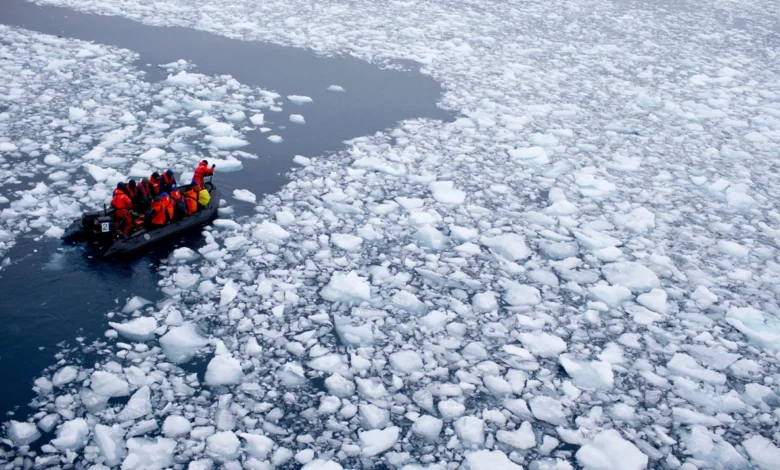
For decades, the frozen fringes of Antarctica presented a scientific paradox that challenged the prevailing narratives of global warming. While the Arctic experienced a steady and catastrophic decline in sea ice, the Southern Ocean’s ice extent remained remarkably resilient, even expanding slightly from the late 1970s through 2014. This phenomenon, often cited by climate skeptics to question the pace of global warming, came to a crashing halt in 2016. In a sudden and unprecedented shift, the Antarctic sea ice underwent a dramatic contraction, reaching record lows that have persisted for nearly a decade. Now, a groundbreaking study led by researchers at Stanford University has utilized a fleet of sophisticated underwater robots to solve this mystery, identifying a complex interplay of salinity, wind patterns, and deep-ocean heat as the primary drivers of this transition.
The research, published in the journal Proceedings of the National Academy of Sciences (PNAS), suggests that the Southern Ocean has been acting as a massive thermal battery, charging for decades behind a "shield" of fresh water before finally discharging its heat in a violent upheaval. This discovery has profound implications for global climate modeling and sea-level rise projections, as the stability of the Antarctic ice sheet—which contains enough water to raise global sea levels by 190 feet—depends heavily on the protective buffer of the surrounding sea ice.
The Evolution of the Antarctic Paradox
To understand the current crisis, scientists have spent years analyzing the historical behavior of the Southern Ocean. Since satellite monitoring began in 1979, Antarctic sea ice showed a modest but steady increase of about 1 percent per decade. This stood in stark contrast to the Arctic, where sea ice has been disappearing at a rate of roughly 13 percent per decade.
For a long time, the expansion of Antarctic ice was attributed to several factors, including changes in wind patterns and the cooling effect of the ozone hole. However, the new study suggests that the ocean’s internal structure played a more dominant role than previously understood. According to Earle Wilson, a polar oceanographer at Stanford and the study’s lead author, the ocean modulates how sea ice varies over decades. During the period of expansion, the Southern Ocean was undergoing a process of "stratification."
Increased precipitation and the melting of ice shelves added a layer of relatively fresh water to the ocean’s surface. Because fresh water is less dense than the salty water below, it formed a cap that prevented the layers from mixing. This "freshwater lid" insulated the surface from the warmer, saltier water residing in the deep. Under these conditions, the cold Antarctic air could easily freeze the surface water, allowing the sea ice extent to grow even as the planet’s overall temperature rose.
The Argo Float Revolution: Data from the Deep
The breakthrough in understanding this mechanism came not from satellites, but from a network of autonomous, torpedo-shaped robots known as Argo floats. These instruments have revolutionized oceanography by providing a "real-time" look at what is happening beneath the surface in some of the most inaccessible environments on Earth.
The Argo program consists of nearly 4,000 floats distributed across the global ocean. Each robot is programmed to sink to depths of up to 2,000 meters (about 6,500 feet), drifting with the currents for several days while recording temperature and salinity profiles. They then ascend to the surface, transmitting their findings to satellites before beginning the cycle again.
In the Southern Ocean, where sea ice and extreme storms make traditional ship-based research nearly impossible during winter months, these robots provided the "grunt work" necessary to map the ocean’s vertical structure. The data revealed that while the surface appeared to be cooling or remaining stable, the deep ocean was steadily accumulating heat. The stratification that allowed sea ice to expand was simultaneously trapping a massive amount of thermal energy in the lower layers of the water column.
The 2016 Turning Point: A Violent Release of Heat
The equilibrium that allowed for ice expansion was fragile, and in 2016, it reached a breaking point. The study identifies a shift in atmospheric conditions—specifically intensified and shifting winds—as the catalyst for the sudden collapse of the sea ice.
As the atmosphere warmed, the temperature gradient between the equator and the poles sharpened, driving more powerful westerly winds. These winds began to churn the Southern Ocean, breaking the stratification that had been in place for decades. This "churning" acted like a giant spoon stirring a pot, bringing the pent-up heat from the depths to the surface.
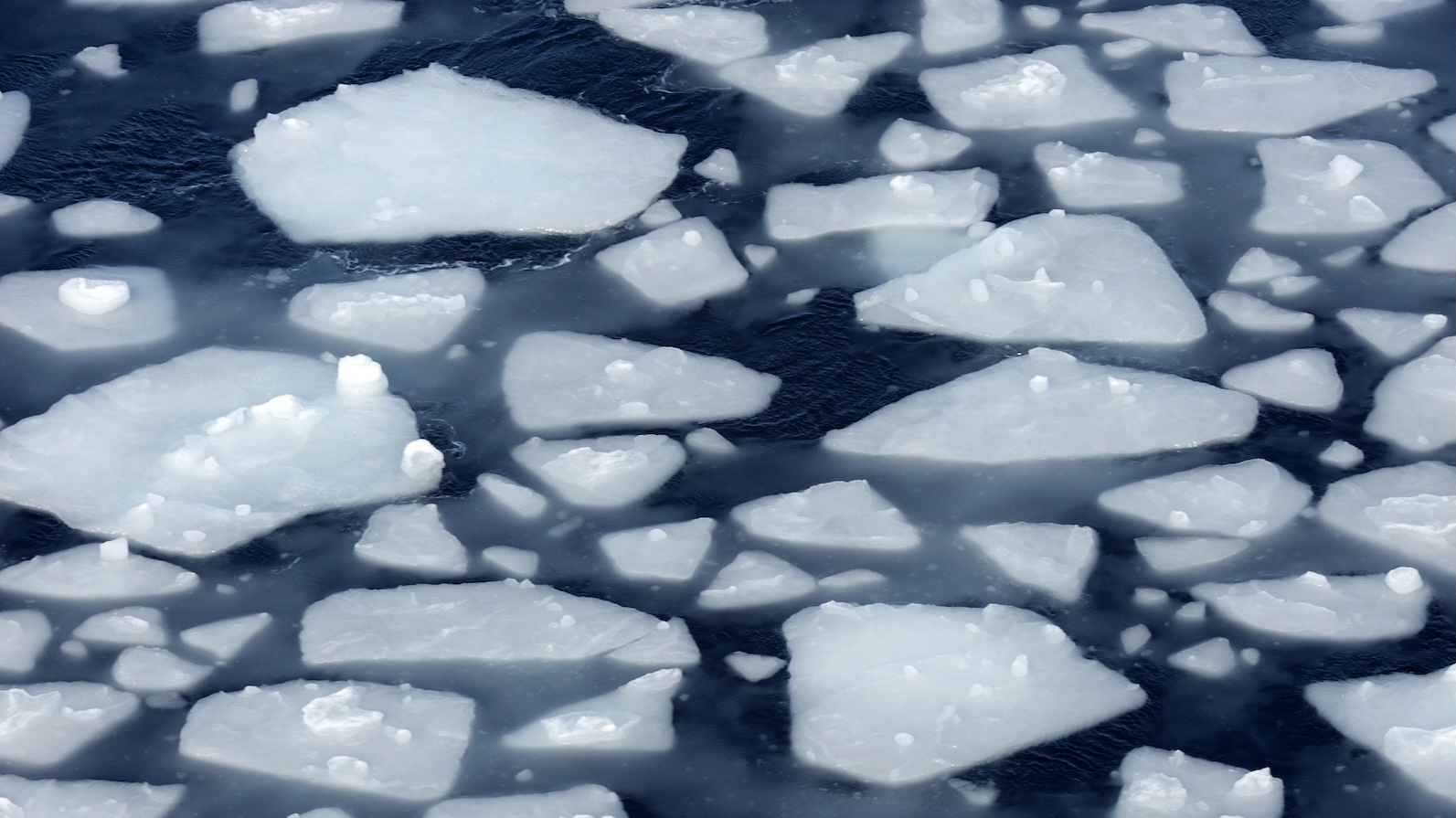
"What we witnessed was basically this very violent release of all that pent-up heat from below that we linked to the sea ice decline," Wilson explained. This thermal release was so significant that it effectively "melted the ice from below," preventing it from recovering in subsequent winters. Since 2016, Antarctic sea ice has remained at or near record-low levels, signaling what many scientists fear is a "regime shift" in the Southern Ocean’s climate system.
The Role of Climate Change vs. Natural Variability
One of the most pressing questions for climate scientists is the extent to which this shift is driven by anthropogenic (human-caused) climate change versus natural internal variability. The Southern Ocean is known for its long-term cycles, such as the Southern Annular Mode (SAM), which influences wind and pressure patterns.
However, the intensity of the current sea ice decline suggests that human activity has tipped the scales. Zachary Labe, a climate scientist at Climate Central who was not involved in the Stanford study, noted that both atmospheric and oceanic warming are likely contributors to the post-2016 trend. While natural variability may have dictated the timing of the 2016 event, the underlying accumulation of heat in the deep ocean is a direct consequence of the global ocean absorbing more than 90 percent of the excess heat trapped by greenhouse gas emissions.
The strengthening of the winds that eventually broke the ocean’s stratification is also a recognized fingerprint of climate change. As the planet warms, the Southern Hemisphere’s jet stream has been shifting poleward and intensifying, a trend that models suggest will continue as carbon concentrations rise.
Global Implications: The 190-Foot Threat
The loss of Antarctic sea ice is not merely a regional concern; it is a global security issue. Sea ice serves as a critical buffer for the massive Antarctic ice sheet that sits on the continent’s landmass. While the melting of sea ice itself does not significantly raise sea levels (as it is already floating), its disappearance accelerates the melting of the land-based ice.
Antarctica’s ice shelves—tongues of ice that extend from the land onto the ocean—act as "corks in a bottle," holding back the flow of glaciers into the sea. Sea ice protects these shelves from the erosive power of ocean waves. Without the sea ice buffer, waves can crash directly against the ice shelves, causing them to fracture and collapse.
Furthermore, sea ice plays a vital role in the Earth’s albedo effect. Bright white ice reflects up to 80 percent of incoming solar radiation back into space. When that ice is replaced by dark open water, the ocean absorbs that heat instead, creating a feedback loop that further warms the region and prevents new ice from forming.
If the land-based ice sheet were to melt entirely, it would drive sea levels up by 190 feet (approximately 58 meters). While such a total collapse would take centuries, even a small fraction of that melt would be enough to submerge coastal cities around the world, from New York and London to Shanghai and Mumbai.
Looking Ahead: A Permanent State of Low Ice?
The scientific community is now racing to determine if the Southern Ocean has reached a "point of no return." The Stanford study suggests that the ocean’s role in modulating ice levels is more significant than previously accounted for in climate models. This means that future predictions must better integrate the vertical dynamics of ocean heat and salinity.
"The big question now is whether we’re witnessing a permanent state of low sea ice, or whether atmospheric and oceanic conditions might swing back enough to encourage years of growth," the researchers noted. While there may be short-term fluctuations or years where the ice makes a partial recovery, the long-term outlook remains grim. Earle Wilson suggests that the multidecade trend will almost certainly be negative as the planet continues to warm.
To improve these forecasts, scientists are calling for an expansion of the Argo float network and other monitoring systems. The Southern Ocean remains one of the most data-sparse regions on the planet, yet it is arguably the most influential in terms of global sea-level rise.
"Overall, we need more international support to continue building observing networks across the Antarctic polar region," Zachary Labe emphasized. "This is critical given the rapid changes we are beginning to observe… with potentially significant consequences for global sea level rise."
As the robotic floats continue their silent patrol of the Antarctic depths, they are providing a clearer—and more sobering—picture of a world in transition. The "strange swirling" in the waters of the far south is no longer a mystery; it is a warning of the profound shifts occurring in the Earth’s most remote and vital climate stabilizers.