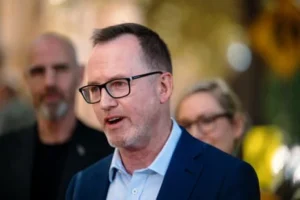
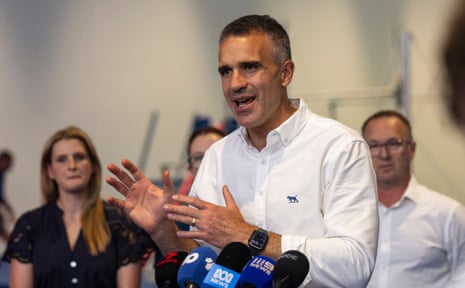
South Australian Premier Peter Malinauskas has issued a direct and forceful warning to the federal Albanese government, urging federal leaders to resist engaging in a political "race to the bottom" over immigration figures to appease populist forces such as Pauline Hanson’s One Nation. Speaking during a high-profile address in Sydney, Malinauskas argued that succumbing to anti-immigration sentiment represents a profound act of economic self-harm and cautioned that mainstream political discourse is increasingly drifting into counterproductive culture wars.
The premier’s intervention comes at a critical juncture for Australian politics, as national debates intensify around population growth, demographic shifts, housing affordability, and international student caps. Drawing on his own family history as the grandson of post-World War II European migrants, Malinauskas contended that the wave of global populism has firmly established itself within domestic Australian politics. However, rather than adopting restrictive policies to mirror populist rhetoric, he insisted that progressive and mainstream leaders must mount an assertive defense of Australia’s historically robust immigration framework.
The Economic Imperative and the Danger of Political Appeasement
Malinauskas underscored that slashing migration for short-term political gains is fundamentally counterintuitive, particularly given Australia’s looming demographic pressures. Projections indicate that the nation’s aging population will soon result in a workforce structure where citizens aged over 65 outnumber those under 15. In this context, a steady, well-calibrated migration intake is not merely an option, but an absolute necessity to sustain economic productivity, fund public services, and fill chronic skills shortages across multiple sectors.

Focusing heavily on the construction sector, the South Australian premier pointed out the inherent contradiction in targeting migration while simultaneously attempting to resolve a severe national housing shortage.
"We need to explain that Australia doesn’t really have a migration crisis so much as a housing crisis," Malinauskas stated during a subsequent media appearance on the ABC’s AM program. "If we have a housing crisis, we would do well to focus our skills policy on making sure that we’re bringing in the very workers that we require in the housing construction industry. Australia’s got a massive shortage of almost every trade."
Rather than establishing arbitrary caps on overall migration or international student numbers—a policy move he dismissed as "crazy"—Malinauskas advocated for a bottom-up approach. He argued that intake targets should be directly derived from verified, localized data measuring regional economic growth and specific labor demands, rather than being driven by political expediency or fear of electoral backlash from minor populist parties.
To emphasize the severity of undermining key economic drivers, Malinauskas drew a parallel to Australia’s powerful resources sector, questioning the political reaction if similar restrictions were imposed on mining. "Imagine if we did this to the mining industry," he remarked. "There would be an ad on every television station and mobile phone about how we’re killing the goose that lays the golden egg. It is crazy."
Broader Geopolitical and Domestic Developments in Canberra
The fierce debate over migration unfolded against a backdrop of intense legislative and diplomatic activity in the nation’s capital during the final sitting fortnight of the parliamentary calendar. While domestic issues dominated question time—including ongoing disputes over federal grant funding allocations and contentious debates surrounding the government’s proposed digital duty of care legislation—foreign policy and international relations also featured prominently in the national conversation.
Former Prime Minister Kevin Rudd returned to Canberra this week for a series of high-profile addresses following the conclusion of his tenure as Australia’s ambassador to Washington, D.C. Speaking at the Australian Institute of International Affairs, Rudd delivered a compelling pitch for Australia to reinforce its commitment to multilateral diplomacy.
Addressing an audience of diplomats, policymakers, and academics, Rudd urged the nation to "put our shoulders to the wheel" to support multilateral institutions within the United Nations framework. This call to action comes amid growing international friction following the United States’ continued withdrawal from various global organizations under the administration of Donald Trump. Rudd argued that Australia, acting as a leading middle power in close partnership with European and Asian allies, must step forward to fill institutional and financial gaps.
"There remains an opportunity for Australia, in partnership with other middle powers around the world, to put our shoulders to the wheel in supporting those UN multilateral institutions which now find themselves under financial and institutional pressure as a result of the US withdrawing," Rudd said. He added that such a proactive foreign policy stance would effectively implement the broader multilateral cooperation strategies previously outlined by international leaders such as Canadian Prime Minister Mark Carney at Davos.

Regional Crime Concerns and Trade Policy Debates
Domestic pressures extended beyond federal migration and foreign policy, with significant developments emerging across state jurisdictions. In Victoria, new data released by the Insurance Council of Australia (ICA) revealed a sharp surge in property crime that has intensified political pressure on state authorities. According to the statistics, Melbourne recorded a higher volume of insurance claims for vehicle theft and break-ins than all other Australian capital cities combined.
The ICA reported that Victorian households and businesses lodged more than 12,300 claims for stolen or damaged vehicles over the past financial year, amounting to a staggering $244 million in payouts. ICA Chief Executive Andrew Hall noted that the frequency of vehicle-related property crimes equates to a car being stolen or broken into every 43 minutes across the state, while residential burglaries occur roughly every two hours. In response to these alarming figures, insurance bodies have called for comprehensive statewide policy interventions, including enhanced intelligence-sharing frameworks, centralized clean-up arrangements, and the complete abolition of stamp duty on essential business and home insurance products.
Meanwhile, international trade tensions also intersected with domestic politics as British parliamentarians weighed in on Australia’s foreign policy posture regarding the Middle East. Emily Thornberry, chair of the United Kingdom’s foreign affairs select committee, addressed the ABC’s 7.30 program following the UK government’s historic announcement of a formal trade ban on imported goods originating from illegal Israeli settlements in the occupied West Bank.
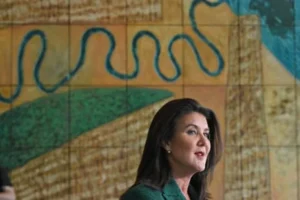
Thornberry acknowledged that while British officials had "hoped" Australia might align its trade sanctions with the UK’s newly enacted measures, sovereign governments must ultimately make independent strategic determinations. On Wednesday, Australian Foreign Minister Penny Wong defended the federal government’s measured approach, expressing concern that a blanket trade ban could trigger unintended economic and humanitarian consequences for Palestinians, Israelis, and Australian businesses alike. Wong reiterated that Australia remains steadfastly committed to preserving the viability of a two-state solution while carefully calibrating its sanctions regime.

Fact-Based Analysis of Implications
The convergence of Peter Malinauskas’s stark warnings on migration, Kevin Rudd’s strategic blueprint for middle-power diplomacy, and ongoing domestic challenges in housing, crime, and trade highlights a period of intense policy friction for Australian leadership.
For the Albanese government, Malinauskas’s intervention presents a delicate political balancing act. Labor must navigate mounting public anxiety regarding housing affordability and cost-of-living pressures without institutionalizing exclusionary policies that alienate progressive voters or damage long-term economic growth. By tying the debate directly to workforce sustainability, aging demographics, and targeted skills acquisition, the South Australian premier has reframed the migration discussion from a polarizing culture war into an essential economic necessity.
As parliament concludes its current sitting fortnight, the federal government faces mounting scrutiny from both state leaders and international partners. Whether Canberra will heed Malinauskas’s call to resist populist appeasement on migration—and how it ultimately balances domestic pressures with its broader international obligations—will remain a defining test of political leadership in the months leading toward the next federal electoral cycle.
Related posts: