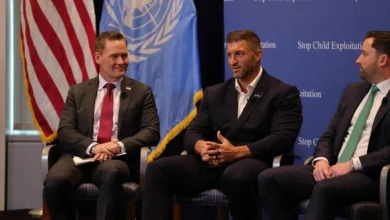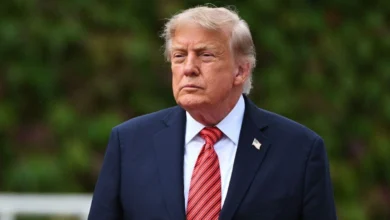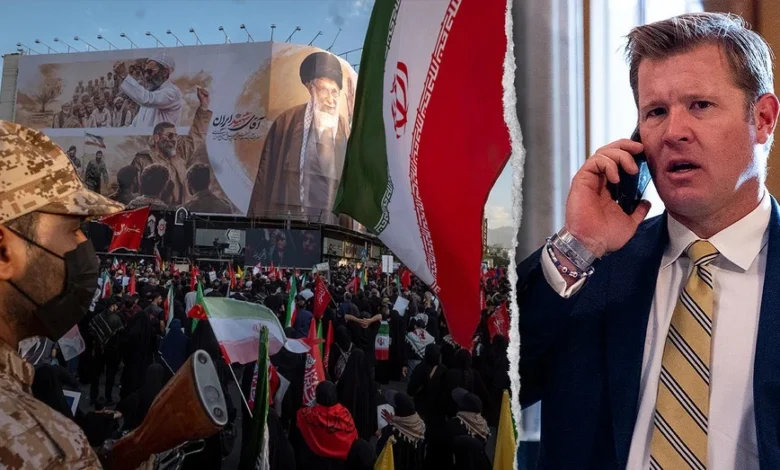
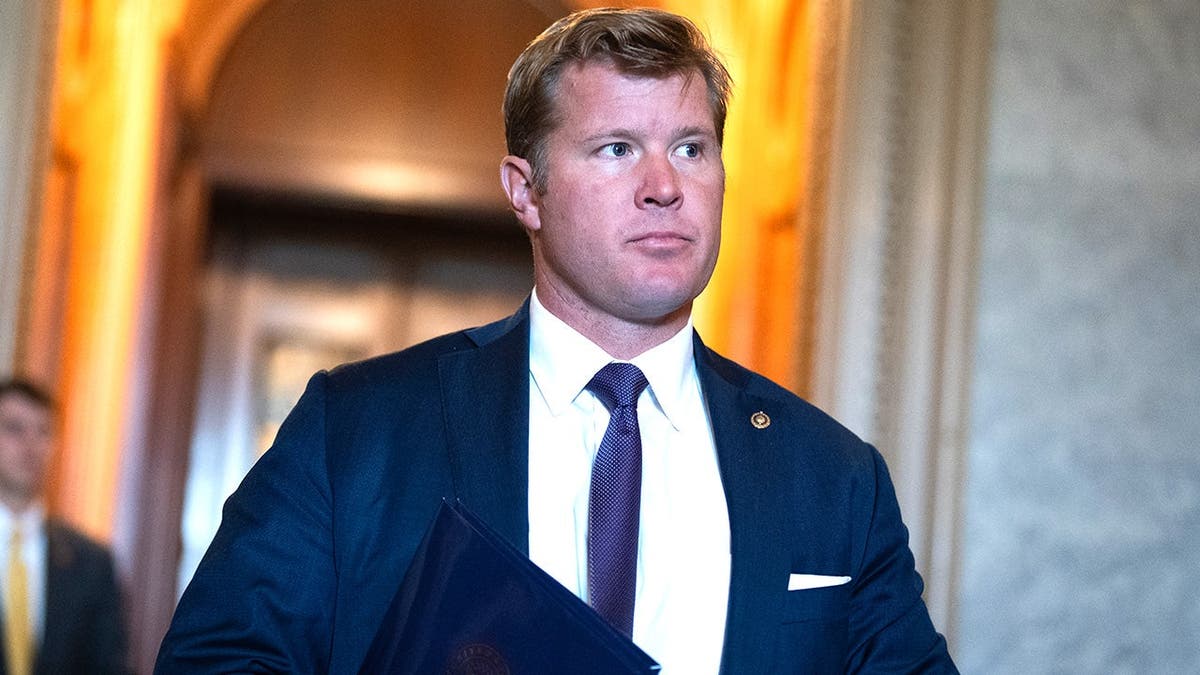
Senator Tim Sheehy, R-Mont., delivered a profoundly emotional address on the Senate floor, visibly choking up as he referenced a bracelet honoring a fallen friend, whom he tragically stated was "cut in half" by an Iranian bomb. His poignant remarks transformed a Democratic-led initiative to curtail President Donald Trump’s war powers into a stark and urgent warning about the perilous costs of failing to confront the Iranian regime. Sheehy’s intervention came during a critical debate over an Iran War Powers Resolution, which ultimately failed to advance, highlighting the deep partisan divisions and complex foreign policy considerations surrounding U.S. engagement with Tehran.
The Senate Confronts War Powers and Iran
The legislative measure in question, the Iran War Powers Resolution, sought to mandate the withdrawal of U.S. forces from hostilities against Iran unless explicitly authorized by Congress. This resolution, largely championed by Democratic lawmakers, aimed to reassert congressional authority over military engagements, a power traditionally vested in the legislative branch by the U.S. Constitution. The Senate’s vote on Thursday, which saw the measure rejected by a narrow 47-49 margin, underscored the reluctance of a significant portion of the chamber to constrain presidential actions against Iran, particularly amidst ongoing tensions in the Middle East.
Sheehy, a combat veteran and former Navy SEAL, vehemently opposed the resolution, framing it not as a matter of preventing a new conflict, but as a continuation of a decades-long struggle initiated by Iran. "We didn’t start this war, we did not. But, we will finish it," Sheehy asserted from the Senate floor, directly challenging the narrative that U.S. actions were unilaterally escalating tensions. He acknowledged the widespread sentiment against "forever wars" across the political spectrum but emphasized that military personnel deployed overseas remain unified in their mission, regardless of domestic political affiliations. "When you’re fighting for your country, you don’t care what party’s in office," he stated, appealing to a sense of national purpose beyond partisan divides.
Historical Context of Congressional War Powers
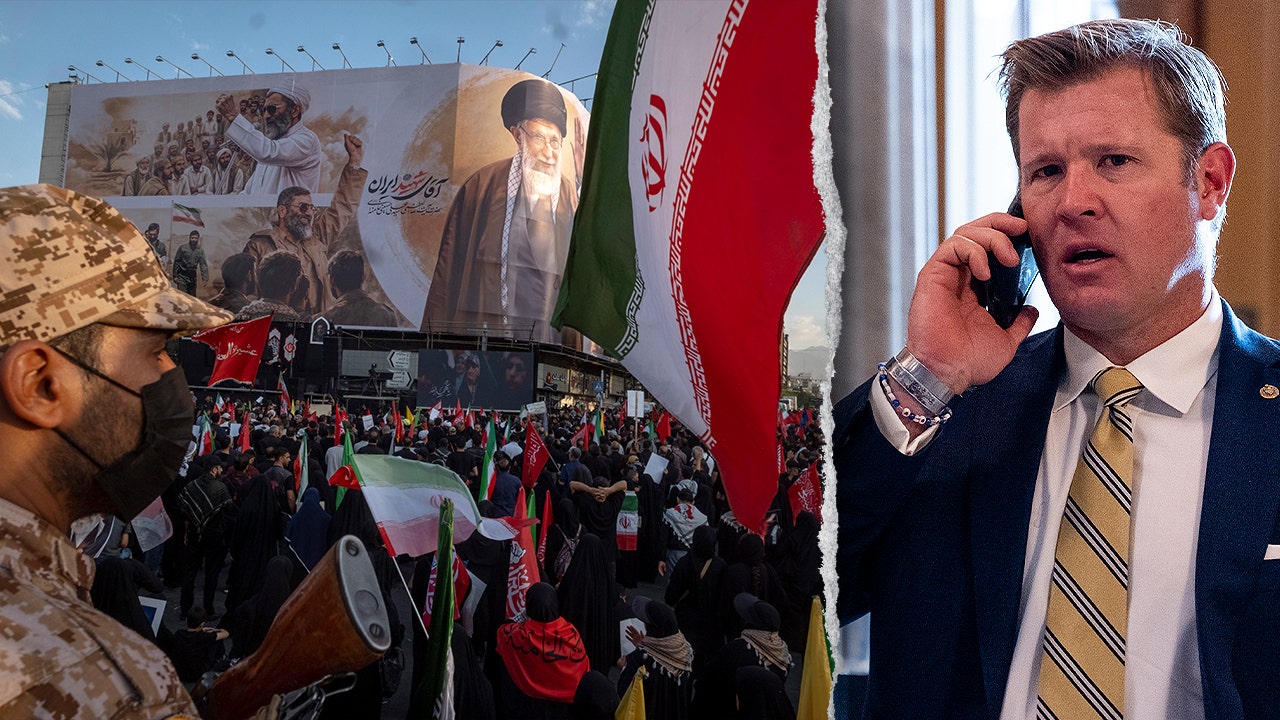
The debate over the Iran War Powers Resolution is deeply rooted in the constitutional framework dividing war-making powers between the executive and legislative branches. Article I of the Constitution grants Congress the power to declare war, raise and support armies, and provide and maintain a navy. Conversely, Article II designates the President as Commander-in-Chief of the armed forces. This division has historically led to friction, particularly in the post-World War II era, as presidents have increasingly deployed U.S. forces abroad without formal declarations of war.
The War Powers Resolution of 1973 was enacted over President Richard Nixon’s veto in the aftermath of the Vietnam War, aiming to curb presidential authority by requiring congressional notification and approval for military deployments. It stipulates that the President must notify Congress within 48 hours of deploying armed forces into hostilities or situations where hostilities are imminent. Furthermore, it mandates that forces be removed within 60 days (with a 30-day extension for troop withdrawal) unless Congress authorizes their continued presence. However, presidents have often interpreted this resolution broadly, sometimes viewing it as an infringement on their executive powers, leading to a persistent tug-of-war between the branches. The recent resolution on Iran represented another attempt by Congress to exercise its oversight, particularly concerning actions against a state actor like Iran, which has been a persistent source of regional instability and a designated state sponsor of terrorism by the U.S. government.
Iran: A "War of Choice" Initiated Decades Ago
Senator Sheehy conceded that the conflict could be labeled a "war of choice" but sharply diverged on who made that choice. For Sheehy, the decision to engage in hostilities was made by the Iranian regime nearly five decades ago, following the 1979 Islamic Revolution. "This is a war of choice. The Democrats are correct," Sheehy acknowledged. "It’s a war of choice that was begun by a radical, lunatic band of terrorists that took over a beautiful nation 47 years ago." This perspective reframes the current U.S. posture not as an aggressive initiation of conflict, but as a long-overdue response to enduring aggression.
He then meticulously cataloged a series of historical attacks and acts of aggression that he attributed to Iran and its proxies, painting a grim picture of a regime committed to undermining U.S. interests and regional stability. This chronological recounting served to bolster his argument that Iran’s hostile actions predate recent U.S. military responses and necessitate a firm stance.
A Chronology of Iranian Aggression and Proxy Attacks
Sheehy’s speech underscored a pattern of Iranian-backed hostility, citing several pivotal incidents:
- 1983 Marine Barracks Bombing in Beirut: On October 23, 1983, a suicide bomber drove a truck filled with explosives into the U.S. Marine barracks in Beirut, Lebanon, killing 241 American servicemen, including 220 Marines. This devastating attack, carried out by Hezbollah, a Lebanese Shiite militant group established with significant Iranian backing and ideological guidance, remains one of the deadliest attacks on U.S. military personnel in history. The U.S. government has consistently attributed direct Iranian involvement in the formation, funding, and training of Hezbollah, viewing it as a critical proxy in Iran’s regional strategy.
- The Abduction and Death of William Buckley (1984-1985): William F. Buckley, the CIA station chief in Beirut, was abducted by Hezbollah operatives in March 1984. He was subjected to brutal torture during his captivity, which lasted over a year, before succumbing to his injuries in June 1985. His body was later recovered. Sheehy highlighted the extreme brutality of Buckley’s treatment, stating he was "skinned alive on camera by the Iranians," emphasizing the regime’s alleged barbarity and direct responsibility for such acts through its proxies. This incident served as a stark reminder of the personal cost of Iran’s sponsored terrorism.
- The Achille Lauro Hijacking (1985): In October 1985, Palestinian Liberation Front (PLF) terrorists hijacked the Italian cruise ship Achille Lauro in the Mediterranean Sea. During the hijacking, American passenger Leon Klinghoffer, a wheelchair-bound Jewish man, was murdered and thrown overboard. While the PLF was the direct perpetrator, Iran’s broader support for various Palestinian militant groups and its overarching anti-Western stance provided a conducive environment for such acts. Sheehy likely invoked this to illustrate the wide reach of state-sponsored terrorism that Iran indirectly fuels.
- USS Cole Bombing (2000): On October 12, 2000, the guided-missile destroyer USS Cole was attacked by al-Qaeda suicide bombers in Yemen, killing 17 American sailors and injuring 37 others. While al-Qaeda, a Sunni extremist group, was directly responsible, Sheehy’s inclusion of this event in a list of Iran-tied attacks reflects a broader perception of Iran’s role in fostering an environment of anti-American militancy in the Middle East through various actors and proxies, even if direct Iranian state involvement in this specific attack is not typically cited. Iran’s long history of supporting militant groups across the sectarian divide, when strategically advantageous, contributes to this broader narrative of culpability.
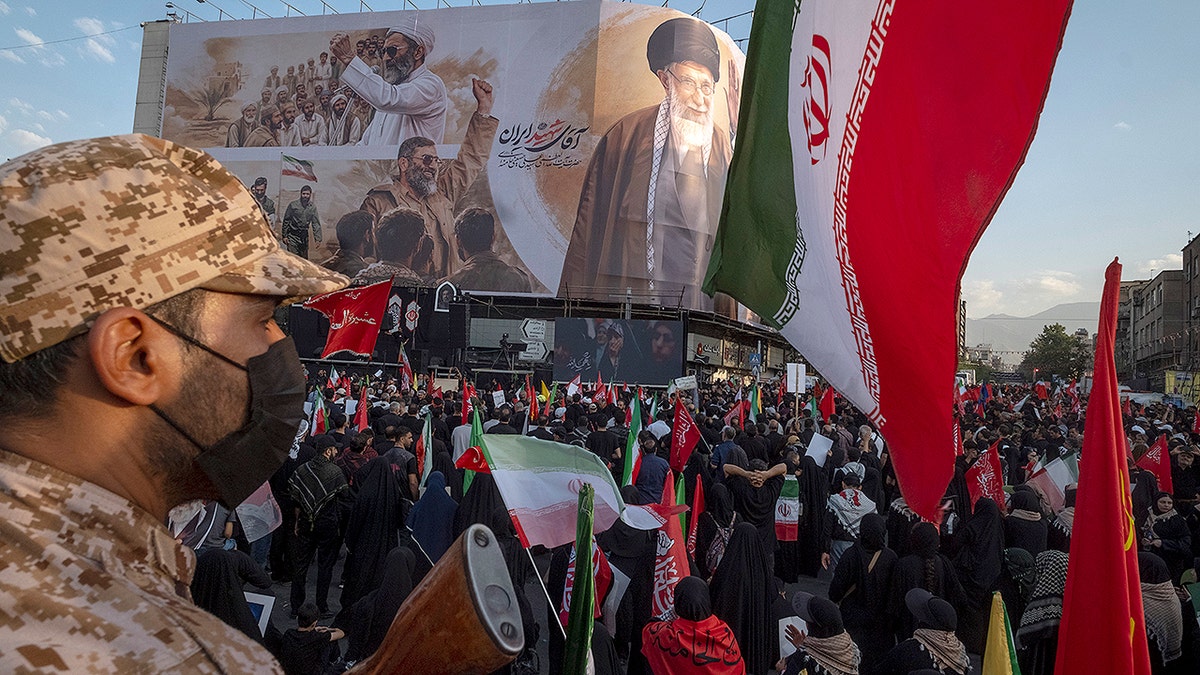
- Modern Proxy Networks: Hamas, Hezbollah, Houthis: Sheehy further invoked contemporary terrorist organizations and militant groups—Hamas in Gaza, Hezbollah in Lebanon, and the Houthi rebels in Yemen—all of whom receive significant financial, material, and logistical support from Iran. These proxies are instrumental in Iran’s strategy of projecting power and destabilizing rival states without direct military confrontation. Their recent actions, including Hamas’s October 7, 2023, attack on Israel, Hezbollah’s ongoing confrontations along the Israel-Lebanon border, and the Houthis’ attacks on international shipping in the Red Sea and on U.S. forces in the region, serve as ongoing evidence of Iran’s persistent hostile posture.
- Recent Attacks on U.S. Personnel: The senator explicitly referenced recent attacks on U.S. military members in the Middle East, including the January 2024 drone attack on Tower 22, a U.S. military outpost in Jordan, which killed three American soldiers and injured dozens. This attack, carried out by Iranian-backed militias in Iraq and Syria, was a direct catalyst for increased U.S. retaliatory strikes and heightened calls for a firmer policy against Iran.
"This regime that we are fighting does not care about our partisan politics," Sheehy emphasized. "They don’t care who you voted for, who you pray to, or where you live. They want to kill all of us. And they don’t just say it, they actually do it. And they’ve been doing it for 47 years."
Broader Geopolitical Implications and Analysis
The Senate’s debate and subsequent vote on the Iran War Powers Resolution reflect a deeper geopolitical struggle with significant implications for U.S. foreign policy, regional stability, and the constitutional balance of power.
U.S. Foreign Policy and the Trump Doctrine:
Under the Trump administration, U.S. policy toward Iran shifted dramatically from the Obama-era strategy of diplomatic engagement and the Joint Comprehensive Plan of Action (JCPOA), or Iran nuclear deal. Trump withdrew the U.S. from the JCPOA in 2018 and implemented a "maximum pressure" campaign, reinstating and expanding sanctions with the goal of compelling Iran to negotiate a more comprehensive agreement on its nuclear program, ballistic missiles, and support for proxy groups. Senator Sheehy’s stance aligns with this more confrontational approach, arguing that a strong, decisive response is necessary to deter Iranian aggression and protect American interests and personnel. The rejection of the War Powers Resolution indicates a prevailing sentiment among many Republicans and some Democrats that presidential flexibility is necessary in confronting a complex and aggressive actor like Iran.
Regional Stability and Escalation Risks:
The Middle East remains a volatile region, with numerous interconnected conflicts involving Iran and its proxies. From the civil war in Yemen to the ongoing Syrian conflict and tensions between Israel and various militant groups, Iran’s influence is a constant factor. Critics of an overly aggressive U.S. posture warn of the potential for unintended escalation, drawing the U.S. into a broader regional conflict. Proponents of the War Powers Resolution often articulate concerns that unchecked executive power could lead to such a scenario, emphasizing the need for congressional deliberation before committing U.S. forces to sustained hostilities. Conversely, those like Sheehy argue that failing to confront Iran emboldens the regime and its proxies, leading to more, not less, instability and increasing the risks to U.S. allies and personnel.
The Role of Deterrence:
The debate also touches upon the efficacy of deterrence. Sheehy’s argument suggests that Iran’s “flailing” attacks are not a sign of strength but of a “nation in collapse,” implying that continued pressure and decisive responses are undermining the regime. This perspective posits that a robust military stance and a willingness to retaliate decisively can deter further aggression. However, others contend that such actions could be perceived by Iran as escalatory, potentially leading to a miscalculation and a broader conflict. The balance between deterrence and de-escalation is a constant challenge for U.S. policymakers in the region.
Domestic Political Divide:
Iran policy remains a deeply partisan issue in the United States. Democrats often emphasize diplomatic solutions, multilateral engagement, and congressional oversight, while many Republicans advocate for a more assertive, unilateral approach, prioritizing military strength and direct confrontation with the Iranian regime and its proxies. The vote on the War Powers Resolution vividly illustrates this divide, with party lines largely holding firm. This political polarization makes it challenging to forge a consistent, long-term U.S. strategy towards Iran.
Sheehy’s Concluding Call to Action
Senator Sheehy concluded his passionate address by portraying Iran’s recent actions, such as missile strikes on commercial boats and attacks on U.S. military members, not as signs of strength, but as "the flailings of a nation in collapse." He urged his congressional colleagues to consider the immense sacrifices of deployed service members, those "standing on that wall with a loaded weapon who volunteered to defend our country and our way of life," describing their mission as a "just war."
His final words were a powerful condemnation of what he views as half a century of unanswered Iranian aggression. "Last time I checked, we wiped these bastards out… because they deserve it," Sheehy declared, referring to past military actions. "We did not start a war with the Iranian Revolutionary Guard (IRGC), they started it with us 47 years ago and their attacks have gone unanswered for half a century. It is time to fix this problem and make sure another generation of Americans does not have to fight this murderous, savage adversary." His remarks underscored a deep conviction that the U.S. has a moral and strategic imperative to confront Iran decisively, not merely to respond to individual attacks, but to fundamentally alter the trajectory of a decades-long conflict.
The rejection of the Iran War Powers Resolution signifies the U.S. Senate’s decision to maintain the executive branch’s flexibility in addressing Iranian threats, at least for now. While the debate over war powers and U.S. engagement in the Middle East will undoubtedly continue, Sheehy’s emotional appeal brought a stark personal dimension to the complex geopolitical calculations, reminding lawmakers of the human cost of a persistent, and often unseen, conflict.
Related posts: