Conservative Super PAC "Defending Our Values" Makes Inaugural AI-Focused Investments in Critical House Races to Secure GOP Majority

A newly influential conservative super PAC, Defending Our Values PAC, has strategically initiated its first campaign investments, channeling significant support towards two Republican candidates in pivotal House races. These endorsements, exclusively learned by Fox News Digital from a source familiar with the PAC’s operations, target contests deemed critical for the Republican Party’s ambition to maintain its tenuous control of the U.S. House of Representatives in the upcoming 2026 midterm elections. The move underscores a growing recognition within conservative circles of artificial intelligence (AI) as a paramount policy battleground, advocating for a distinctly conservative approach to its regulation and development.
The beneficiaries of Defending Our Values PAC’s initial financial backing are Rhett Marques, vying for Alabama’s 2nd Congressional District, and Scott Singer, a candidate in Florida’s 25th Congressional District. Both candidates are navigating crowded Republican primaries, with the super PAC’s investment designed to bolster their visibility and campaign infrastructure ahead of what are anticipated to be fiercely contested general elections. The PAC’s proactive engagement highlights a calculated effort to not only influence electoral outcomes but also to shape the national discourse around AI, ensuring conservative voices are at the forefront of this rapidly evolving technological frontier.
The Strategic Nexus of AI Policy and Electoral Power
Artificial intelligence has rapidly ascended to become one of Capitol Hill’s most complex and pressing policy debates. Lawmakers grapple with the intricate challenge of fostering innovation while simultaneously establishing robust regulatory frameworks to mitigate potential risks associated with this transformative technology. This balancing act is further complicated by geopolitical considerations, particularly the imperative for the United States to maintain a technological edge over rivals like China. Defending Our Values PAC asserts that conservatives, rather than predominantly tech-centric Silicon Valley executives, should be the primary architects of these crucial policies, emphasizing a values-driven approach that prioritizes national security, economic competitiveness, and societal well-being.
The super PAC’s entry into these specific races is a testament to its broader strategy. Republicans currently hold only a slender majority in the House, rendering every competitive district a potential determinant of future congressional control. The source close to Defending Our Values PAC indicated that both the Alabama 2nd and Florida 25th districts represent prime opportunities to fortify the Republican position, ensuring a legislative environment conducive to their policy agenda, particularly concerning AI and Big Tech.
Defending Our Values: A Deep Dive into the Super PAC’s Mission and Resources
Defending Our Values PAC was established with a clear mandate: to champion conservative principles in an era increasingly defined by rapid technological advancement. While the PAC publicly announced a substantial $15 million election effort last week, the specific candidates designated to receive support had remained undisclosed until now. This initial allocation to Marques and Singer marks the official commencement of that broader financial commitment.
The organization’s selection criteria for these candidates are rooted in their perceived potential to become formidable advocates for the PAC’s core objectives in Congress. These objectives include advocating for robust policies to curb the unchecked power of "Big Tech," implementing stronger online protections for children and families, and spearheading initiatives to ensure American preeminence in artificial intelligence innovation, particularly in the face of burgeoning competition from China. A Fox News poll, referenced by the PAC, indicated that voters increasingly perceive "Big Tech" as a greater threat to the U.S. than even "Big Brother," underscoring the public’s growing apprehension and the political salience of regulating large technology companies.
Super PACs, officially known as "independent-expenditure only committees," play a significant role in modern American elections by raising and spending unlimited amounts of money to support or oppose political candidates. Unlike traditional PACs, they cannot contribute directly to candidates or parties but can engage in unlimited independent expenditures. Defending Our Values PAC’s $15 million war chest signals its intent to be a major player in shaping the legislative landscape surrounding AI and tech policy, channeling resources into races where it believes its investments will yield the most strategic returns. This substantial financial commitment allows the PAC to engage in extensive advertising, voter outreach, and other campaign activities designed to elevate its chosen candidates and their policy platforms.
Rhett Marques: A Conservative Standard-Bearer for Alabama’s 2nd District
Rhett Marques, an Alabama State Representative, is the chosen candidate for the 2nd Congressional District, a seat made newly competitive by recent redistricting. Marques’s political journey has been characterized by his commitment to conservative principles, and his candidacy for Congress is seen by Defending Our Values as an opportunity to inject a strong, principled voice into the national AI debate.
The 2nd Congressional District of Alabama is a diverse region encompassing parts of the state’s capital, Montgomery, as well as rural areas and growing suburbs. Historically, the district has seen shifts in its political leanings, and the latest redistricting efforts have made it a battleground district, attracting significant attention from both national parties. Marques is currently navigating a crowded Republican primary, a testament to the district’s potential for a competitive general election. His campaign has already garnered high-profile endorsements, notably from former President Donald Trump and current U.S. Senator Katie Britt (R-Ala.), signaling his standing within the Republican establishment. These endorsements are crucial in a primary contest, providing both momentum and a fundraising boost.
Marques’s platform, particularly as it relates to technology, aligns seamlessly with the priorities of Defending Our Values PAC. He has publicly expressed concerns about the influence of large technology corporations, the need for enhanced online safety measures for minors, and the strategic importance of American leadership in AI development to counter foreign adversaries. His supporters view him as a pragmatic conservative capable of translating these concerns into effective legislative action. The special Republican primary in Alabama’s 2nd Congressional District is scheduled for August 11, setting the stage for a critical contest that will determine who carries the Republican banner into the general election. Should Marques secure the nomination, he is expected to face incumbent Rep. Shomari Figures, a Democrat, in what promises to be one of the nation’s most closely watched races.
Scott Singer: Advocating for Responsible AI Governance from Florida’s 25th District
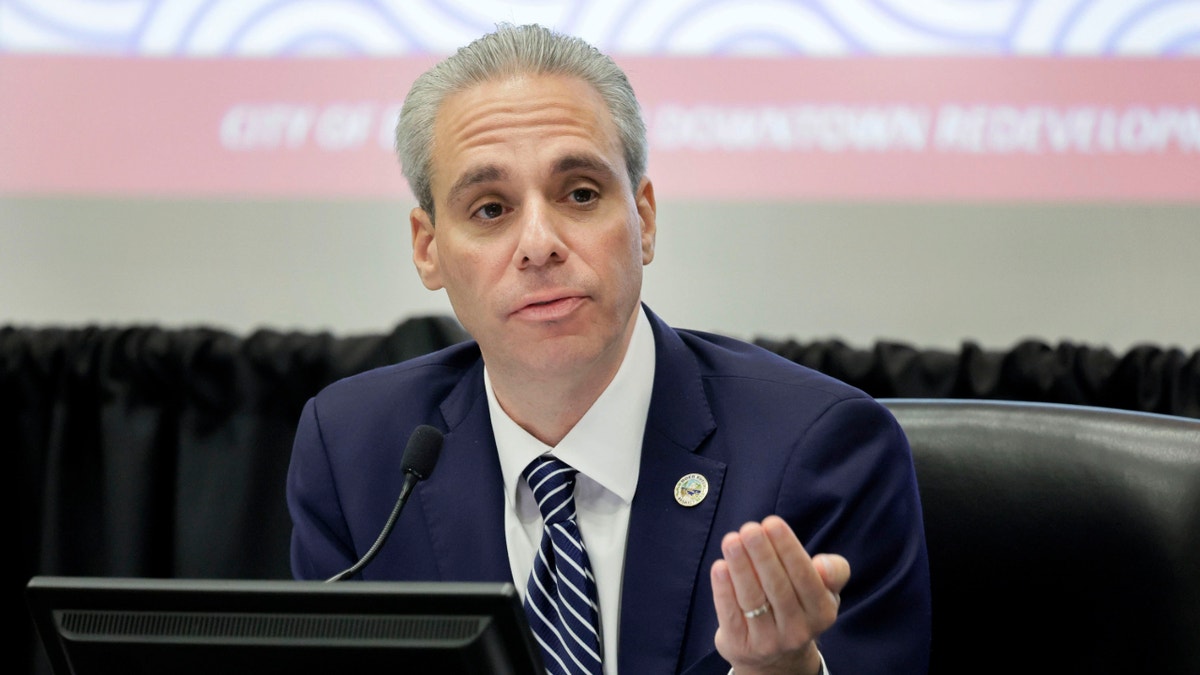
In Florida’s 25th Congressional District, Defending Our Values PAC has thrown its weight behind Scott Singer, the current Mayor of Boca Raton. Singer brings a background in local governance and a demonstrated track record of public service to his congressional bid. His tenure as mayor has been marked by efforts to promote economic growth, enhance public safety, and manage the rapid development of his city, experiences he argues prepare him for the complex challenges of federal policymaking, including those posed by AI.
Florida’s 25th Congressional District is situated in a dynamic part of South Florida, characterized by a mix of affluent communities, urban centers, and a diverse population. The district has seen competitive races in recent cycles, and the current political climate suggests another hotly contested election. Singer, like Marques, is competing in a crowded Republican primary, indicating the high stakes and broad interest in this particular seat. He has received endorsements from prominent Florida Republicans, including Attorney General James Uthmeier, further solidifying his position as a viable contender.
Singer’s policy positions align strongly with the super PAC’s emphasis on AI and technology governance. He has articulated a vision for AI policy that prioritizes American innovation while also ensuring ethical deployment, protecting consumer data, and safeguarding against the potential societal harms of unchecked technological expansion. His experience in local government has likely provided him with insights into the practical implications of technology on communities and individuals, informing his perspective on national policy. The primary election for Florida’s 25th Congressional District is scheduled for August 18. If successful, Singer is anticipated to challenge the incumbent, Rep. Jared Moskowitz, a Democrat who has gained prominence as one of former President Trump’s most outspoken critics in Congress. This potential matchup would represent a significant ideological clash and a high-profile battle for a crucial House seat.
The Broader Electoral Landscape: A Narrow Path to House Control
The Republican Party’s current hold on the House of Representatives is exceptionally narrow, making every competitive district a linchpin in the national struggle for legislative control. With such a slim margin, even a handful of races could tip the balance of power after the 2026 midterm elections. This reality elevates the strategic importance of super PAC investments in districts like Alabama’s 2nd and Florida’s 25th. Political analysts often point to the "swing district" phenomenon, where a relatively small percentage of independent or undecided voters can dramatically influence outcomes. Both AL-02 and FL-25 fit this profile, making them attractive targets for outside spending.
The 2026 midterms are still some time away, but early investments by groups like Defending Our Values PAC are crucial for shaping the narrative, building candidate recognition, and establishing robust campaign infrastructures. Such early engagement can significantly impact primary outcomes, giving favored candidates a distinct advantage in crowded fields. The goal is not just to win the primary but to ensure the chosen candidate emerges strong and well-positioned for the general election. The PAC’s spending is explicitly intended to boost Marques’s and Singer’s name recognition, a vital asset in any election, but especially in districts where voters may be less familiar with candidates beyond local politics.
The Policy Imperative: Navigating the Future of Artificial Intelligence
The urgency surrounding AI policy is multifaceted. Legislators face questions ranging from data privacy and algorithmic transparency to the potential for job displacement, ethical guidelines for autonomous systems, and the implications for national security. The aforementioned Fox News poll highlighting public concern about "Big Tech" underscores a general unease with the power and influence of technology giants, creating a fertile ground for political candidates who promise accountability and regulation.
Defending Our Values PAC’s emphasis on countering China’s AI advancements reflects a growing bipartisan consensus on the geopolitical stakes. China’s national strategy, "Made in China 2025," explicitly aims for global leadership in key emerging technologies, including AI. U.S. policymakers are increasingly concerned that if the U.S. does not aggressively pursue its own AI development and secure its technological infrastructure, it risks falling behind, with profound implications for economic competitiveness, military capabilities, and global influence. The PAC believes that conservative leadership is uniquely positioned to address these challenges, advocating for policies that foster American innovation through market-based solutions while also implementing strategic protections against foreign espionage and technological theft.
Campaign Strategy: Boosting Name Recognition and Shaping the Narrative
The dual focus on primary and general election support by Defending Our Values PAC is a sophisticated campaign strategy. In crowded primaries, differentiating a candidate from a field of often ideologically similar contenders requires significant resources and effective messaging. By investing early, the PAC can help Marques and Singer cut through the noise, raise their profiles, and articulate their specific policy platforms, particularly their stance on AI and tech issues. This early support also enables candidates to build stronger fundraising networks and volunteer bases, critical components for sustained electoral success.
Beyond the primaries, the PAC’s continued investment aims to position Marques and Singer favorably for the general election. In a political climate where technology’s impact on daily life is increasingly apparent, making AI policy a central campaign theme could resonate with a broad spectrum of voters. By framing the debate around "taking on Big Tech," "protecting children and families," and "outpacing China," the PAC is attempting to craft a compelling narrative that appeals to voters concerned about the future implications of technology. The ability to effectively communicate complex tech policy issues in a relatable way will be crucial for these candidates to distinguish themselves and mobilize support.

Reactions and Expert Analysis
While official statements from Defending Our Values PAC spokespersons regarding their specific selection process remain general, the strategic deployment of funds speaks volumes. A hypothetical spokesperson for the PAC might emphasize, "Our investments are meticulously targeted to empower candidates who not only embody conservative values but also possess a keen understanding of the profound challenges and opportunities presented by artificial intelligence. We believe Rhett Marques and Scott Singer are precisely the kind of forward-thinking leaders America needs to navigate this new technological era responsibly and decisively."
Political strategists, observing the PAC’s moves, note the evolving nature of campaign issues. Dr. Evelyn Reed, a professor of political science specializing in campaign finance, commented, "The emergence of super PACs focused on niche but critical issues like AI signifies a maturation of political engagement with technology. It’s no longer just about economic policy or social issues; the future of our digital infrastructure and technological leadership is now a front-and-center campaign concern. The early investment by Defending Our Values in these specific House races suggests a long-term vision to build a legislative bloc that will actively champion their tech policy agenda."
The Democratic Party and tech industry groups may respond with their own narratives. Democratic campaigns, for instance, might criticize such investments as an attempt to inject partisan politics into a complex issue that requires bipartisan cooperation, or argue that the PAC’s conservative approach to AI might stifle innovation. Tech industry advocates, while often preferring less regulation, might also express concern if the PAC’s agenda is perceived as overly restrictive or protectionist, potentially hindering American competitiveness.
Conclusion: The Evolving Role of Technology in American Politics
Defending Our Values PAC’s strategic inaugural investments in Rhett Marques and Scott Singer represent a significant moment in the intersection of technology and American politics. These targeted expenditures underscore the escalating importance of artificial intelligence as a defining policy issue, simultaneously serving as a crucial front in the ongoing battle for control of the U.S. House of Representatives. By backing candidates who pledge to champion conservative principles in the realm of tech policy—from reining in Big Tech to safeguarding children online and ensuring American leadership against China—the PAC aims to forge a legislative pathway for its vision of responsible AI governance.
The outcomes in Alabama’s 2nd and Florida’s 25th Congressional Districts, following their respective August primaries and the general election, will not only dictate the individual political futures of Marques and Singer but will also serve as bellwethers for the broader influence of AI-focused advocacy groups in shaping the national political landscape. As the 2026 midterm elections draw closer, the strategic interplay between campaign finance, technological advancements, and the relentless pursuit of legislative power promises to make these races, and the policy debates they embody, central to the American political narrative. The future of AI, inextricably linked with the future of American governance, is now firmly on the electoral ballot.
Related posts: